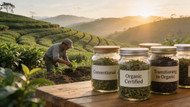
At TeaTheWorld, transparency matters to us. While many of our teas come from farms that use responsible, low-input growing methods, not all have completed the formal process to become certified organic—at least not yet.
“Conventional” tea simply means it has not gone through organic certification. It does not imply poor quality or unsafe products; rather, it reflects the certification status of the farm and its production methods.
What Organic Certification Really Means
Organic certification is a process-based standard focused on how crops are grown and which inputs are used on the farm. Certification limits synthetic fertilizers, certain pesticides, and genetically modified organisms, while encouraging practices such as composting, mulching, crop rotation, and efficient water management.
Being “organic” refers primarily to farming methods, not the finished tea’s flavor, nutrition, or absolute lack of chemical residues.
Why Organic Doesn’t Equal “Perfect” Tea
Even with strict organic requirements, environmental factors—such as soil history, air drift, or shared water sources—can influence the growing environment. Organic status does not mean a completely chemical-free product, but rather adherence to regulated standards for inputs and soil management.
Similarly, taste and freshness depend on many factors, including harvest timing, craftsmanship, and storage—not certification status alone.
The Hidden Cost for Small Farmers
Many small tea farms already practice low-input or organic-style cultivation but remain uncertified because certification can be costly and administratively complex.
Annual audit fees, recordkeeping, and multi-year transition requirements can create barriers for smallholders, especially in regions where farm income margins are slim.
Why TeaTheWorld Still Works With Non-Organic Teas
We partner with a mix of certified and non-certified growers to keep supporting skilled farmers who prioritize quality and environmental respect, even if they have not pursued certification.
This approach helps balance accessibility and sustainability, allowing customers to enjoy exceptional teas while we work toward broader certification coverage.
How the Market Is Changing
Interest in certified organic and sustainably produced teas continues to grow. Retailers and online marketplaces are increasingly emphasizing traceability and transparency—values we fully support as part of our sourcing philosophy.
What TeaTheWorld Is Doing to Change
We’re steadily increasing our share of teas from certified organic and organic-aligned operations. Our team prioritizes partners who minimize synthetic inputs, protect soil health, and manage water responsibly—even when certification is still in progress.
When we offer certified organic teas, we ensure the farms follow approved input lists and that certification is verified through recognized agencies.
Our Roadmap Toward More Organic Options
Our goal is to expand access to certified organic teas while remaining mindful of farmer realities. We’re mapping our supply network to better understand which partners are closest to certification and how we can help ease that transition.
As we grow, we’ll clearly label our teas by category—certified organic, organic-style, or conventionally grown—so customers can make informed, values-based choices.
What This Means for TeaTheWorld Customers
Regardless of certification, we emphasize freshness, flavor, and integrity. We carefully evaluate each tea’s origin, craftsmanship, and farming story before bringing it to our collection.
As our organic range expands, we’ll continue to share accurate information about farm practices and certifications, empowering you to enjoy tea with confidence, connection, and transparency in every cup.
Disclaimer: Information provided by TeaTheWorld is for educational and informational purposes only. Certifications, farming methods, and agricultural practices described here are based on supplier documentation and regulatory standards. TeaTheWorld products are not intended to diagnose, treat, cure, or prevent any disease.