
Where to Buy Loose Leaf Tea Online: A Guide
Posted by Ricardo R. Matos, Founder of Tea The World on Jan 30th 2026
By Ricardo R. Matos, Founder of Tea The World
Updated October 2026 · Written to help you shop smarter, wherever you buy
Buying loose leaf tea online should be simple, but it rarely is. Every shop says its tea is premium, fresh and the best. This guide shows you what actually separates good loose leaf tea from tired, dusty leaves, how to read labels honestly (including what "organic" really means), and what to expect from shipping. Use it at any tea shop, including ours.
1. Freshness matters more than fancy words
Tea is a dried leaf, and its aroma fades with time, air, light and moisture. A good online shop tells you something concrete about each tea: where it comes from, what type it is (black, green, white, oolong or herbal) and how it is packed.
- Green and white teas are the most delicate and taste best when relatively fresh.
- Black teas, oolongs and most herbal blends hold their flavor longer when stored well.
- Packaging should be airtight and block light. Resealable pouches and tins are both good choices. Clear bags sitting in a sunny window are not.
Once your tea arrives, how you store it matters just as much. Our tea storage guide explains how to keep it tasting its best.
2. Look at the leaves, not just the label
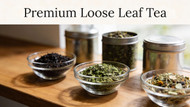
Good loose leaf tea looks like real plant material: whole or large broken leaves, visible pieces of fruit, flowers or spices in blends, and very little powder at the bottom of the bag. Fine dust is what usually ends up in cheap tea bags, and it brews flat and bitter. If a shop shows close-up photos of the dry leaves, that is a good sign. Read more in artisan vs. commercial teas: what's the difference.
3. What "organic" really means on a tea label
In the United States, the word "organic" on food and drink is regulated by the USDA National Organic Program. A tea labeled "organic" must be made with at least 95% certified organic ingredients, and "100% organic" means every ingredient is certified. "Made with organic ingredients" means at least 70%. The company selling it, or its supplier, must be certified by a USDA-accredited certifier.
Here is the honest part many shops skip: you can check any claim yourself. Search the company's name in the USDA Organic Integrity Database. If it is not listed there, the "organic" label should make you ask questions.
Organic is a farming standard. It is not the same thing as flavor, freshness or quality, and plenty of excellent tea is not certified organic. At Tea The World we only use the word "organic" where a product has the certification to back it up, and we would rather tell you that plainly than let a label do the selling.
4. Know what you are paying for
Compare prices per ounce, not per package. Loose leaf tea goes further than most people expect: about one teaspoon (2 to 3 grams) makes an 8-ounce cup, and many teas can be steeped more than once. A pouch that looks pricey at first glance often works out to well under a dollar a cup. Our loose leaf brewing guide shows how much to use for each type.
5. Shipping, returns and a real person to talk to
- Ships from where? A shop that ships from inside the U.S. usually gets tea to you faster and without customs delays.
- Clear policies. Shipping costs, delivery times and the return policy should be easy to find before you check out.
- Contact details. A phone number and email that a real person answers is one of the best signs of a trustworthy shop.
6. Watch for red flags
- Health promises that sound like medicine, such as "cures," "detoxes" or "melts fat." Tea is a wonderful daily habit, but it is not a treatment.
- No information about where the tea comes from.
- "Organic" or "certified" claims you cannot verify.
- Reviews that all sound the same, or a shop with no contact details at all.
Where Tea The World fits
We are a small tea company based in San Antonio, Texas, and we ship within the United States. Our teas come from growing regions around the world, from Egypt and Morocco to India and Hawaii. Our tins hold tea sachets for easy brewing, and our pouches hold loose leaf tea. If you are just starting with loose leaf, a few easy favorites:
- Irish Breakfast – a bold, classic morning black tea
- Earl Grey Bravo – black tea with bright bergamot
- Egypt Simply Chamomile – a gentle, caffeine-free evening cup
- Morocco Simply Tea Peppermint – cool, refreshing and caffeine-free
- Peach Oolong – lovely hot or cold brewed
- Cinnamon Apple Herbal Tea – warm and cozy, no caffeine
Need something to brew it in? Our biodegradable tea pockets make loose leaf as easy as a tea bag. Questions about any tea? Call us at (210) 788-3434 or email support@teatheworld.com. A real person will answer.
Frequently asked questions
Is loose leaf tea better than tea bags?
Usually, yes, for flavor. Loose leaves have room to open up as they steep, and they are generally larger pieces than the fine particles found in most standard tea bags. You can get the same convenience with a tea pocket or infuser.
How do I know if loose leaf tea is fresh?
Open the bag and smell it. Fresh tea has a clear, strong aroma. Leaves should look whole or in large pieces, not dusty, and the tea should come in airtight, light-blocking packaging.
How can I check if a tea brand is really organic?
Search the company in the USDA Organic Integrity Database at organic.ams.usda.gov/integrity. Certified operations are listed there with their certifier.
Sources
- USDA Agricultural Marketing Service – Labeling Requirements for the U.S. Organic Market
- USDA Organic Integrity Database