
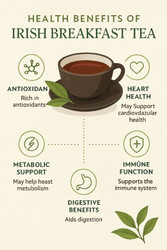
Irish Breakfast Tea: Health Benefits Explained
Tea is more than a flavorful beverage; it is a daily ritual and a potential source of wellness for people around the world. Among the world’s finest teas, robust black teas like Irish Breakfast stand out for their bold flavor and well-studied health benefits. This guide explains what defines the finest teas, explores the health benefits of Irish Breakfast tea, and highlights key findings from medical and nutrition research.
What Are the World’s Finest Teas?
The idea of the world’s finest teas is shaped by leaf quality, craftsmanship, origin, and health impact. Most experts focus on the four main “true teas” from Camellia sinensis: green, black, white, and oolong. These teas are prized for their complex flavors and rich profile of plant compounds called polyphenols that may support long‑term health. [web:51][web:61]
Green tea is especially rich in catechins, while black tea is richest in theaflavins and thearubigins; research suggests that both can provide antioxidant and cardiovascular benefits when consumed regularly as part of a balanced lifestyle.
Irish Breakfast Tea and Black Tea in General
Irish Breakfast tea is a hearty black tea blend, traditionally built on Assam and sometimes combined with Ceylon or Kenyan teas. Its deep color, malty flavor, and brisk character reflect the same polyphenols that are central to black tea’s potential health effects.
Because Irish Breakfast is a type of black tea, most of the research on black tea’s impact on antioxidant status, heart health, metabolism, and gut function can reasonably be applied to this blend when it is enjoyed plain and in moderation.
Irish Breakfast vs Black Tea in General
| Feature | Irish Breakfast Tea | Black Tea in General |
|---|---|---|
| Base leaves | Primarily Assam, sometimes blended with Ceylon or Kenyan teas. | Varies widely (Assam, Ceylon, Darjeeling, Kenyan, blends). |
| Flavor profile | Bold, malty, and brisk; often enjoyed with milk. | Ranges from malty and full‑bodied to light and floral. |
| Polyphenols | Rich in theaflavins, thearubigins, and other black tea polyphenols. | Similar polyphenol families across most black teas, with variation by origin and processing. |
| Key benefits | Antioxidant support, cardiovascular and metabolic support, focus, and digestive support. | Comparable benefits where black tea is studied for heart, metabolic, and gut health. |
| When to drink | Commonly enjoyed in the morning for energy and focus. | Consumed throughout the day, with timing adjusted to caffeine sensitivity. |
Health Benefits of Irish Breakfast Tea
While individual responses vary and more research is needed, several lines of evidence suggest that regular black tea intake may support cardiovascular, metabolic, and digestive health. Irish Breakfast tea shares these core properties when prepared as a traditional black tea.
1. Rich Source of Antioxidants
Irish Breakfast tea contains polyphenols such as catechins, theaflavins, and thearubigins that act as antioxidants. These compounds help neutralize free radicals, which may reduce oxidative stress and support healthy aging when combined with an overall nutritious diet and lifestyle.
Research on black tea shows that these flavonoids can positively influence markers of oxidative balance and may contribute to a lower risk of certain chronic conditions over time, though they are not a replacement for medical treatment.
2. Cardiovascular Benefits
Black tea has been studied for its potential to support heart and blood vessel health. Clinical trials have found that regular black tea consumption can improve flow‑mediated dilation and certain aspects of vascular function, suggesting beneficial effects on the endothelium (the inner lining of blood vessels).
Some observational and pooled analyses also suggest that higher black tea intake may be associated with modest reductions in coronary heart disease risk and improvements in blood pressure and cholesterol markers, although results vary among studies.
3. Metabolic and Cognitive Support
Black teas like Irish Breakfast provide a combination of caffeine and the amino acid L‑theanine. This pairing is associated with improved alertness, attention, and perceived mental performance in some studies compared with caffeine alone.
Early research suggests that black tea polyphenols may also assist with weight management and metabolic health by influencing energy expenditure, fat oxidation, and gut microbiota; however, these effects are modest and work best alongside balanced nutrition and physical activity.
4. Immune and Oral Health
The antioxidants and bioactive compounds in black tea appear to support several aspects of immune function, including cellular defenses against oxidative stress and inflammation.
Laboratory and population studies indicate that tea polyphenols may help inhibit certain bacteria in the mouth and contribute to reduced plaque formation and cavity risk when part of good oral hygiene habits.
5. Digestive and Anti‑Inflammatory Properties
Black tea polyphenols may support gut health by promoting the growth of beneficial bacteria and helping maintain a balanced intestinal environment, which in turn may aid digestion and support immune defenses.
Some research suggests that tea polyphenols exhibit anti‑inflammatory properties that could help modulate low‑grade inflammation in the body, though more human studies are needed to fully understand these effects in everyday drinking habits.
Scientific Insights and Considerations
Tea and black tea, including Irish Breakfast, are increasingly studied in nutrition and medical research, but results can differ based on dose, preparation, and the health status of participants. Overall, the evidence supports a potential role for black tea as one component of a heart‑ and brain‑healthy lifestyle rather than a standalone cure.
| Potential Benefit | Consideration |
|---|---|
| Antioxidants support overall cellular health and may help reduce oxidative stress. | Tannins in black tea can interfere with non‑heme iron absorption when consumed with iron‑rich meals in some individuals. |
| Regular black tea intake may support heart and vascular health markers. | Caffeine content may be unsuitable for people sensitive to stimulants, pregnant individuals, or those with certain heart conditions. |
| Provides gentle energy and focus via caffeine and L‑theanine. | Excessive intake can contribute to jitteriness, sleep disruption, or palpitations in sensitive drinkers. |
Always consult a qualified healthcare provider before making significant dietary changes, especially if you have underlying health conditions, take medications, are pregnant or breastfeeding, or have questions about caffeine and iron intake.
Practical Tips for Enjoying Irish Breakfast Tea
For most healthy adults, moderate consumption of unsweetened Irish Breakfast tea—such as one to three cups per day—can be a flavorful way to increase black tea intake while supporting hydration.
Brew strong enough to enjoy its characteristic maltiness, but avoid excessive sugar or heavy cream so the potential benefits of black tea polyphenols are not overshadowed by added calories and saturated fats.
References / Further Reading
The following sources provide additional background on tea, black tea polyphenols, and cardiovascular and metabolic health:
- Harvard T.H. Chan School of Public Health – Tea: The Nutrition Source
- Health‑Promoting Effects of Black Tea: A Narrative Review of Clinical Trials
- Short‑ and Long‑Term Black Tea Consumption Reverses Endothelial Dysfunction
- Black Tea Consumption and the Risk of Coronary Heart Disease
- Flavonoids in Black Tea and Healthy Aging
- Tea and Health FAQs – Additional Guidance