
Best glass teapots with infusers for entertaining guests in 2026
Oct 21st 2026
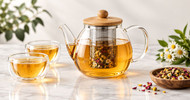
Best overall: a glass teapot with a removable basket infuser. Best for intimate gatherings: a compact basket-infuser pot. Best for serving a group: a larger pot with a deep basket. Best for watching leaves unfurl: a pot with a removable glass infuser. This 2026 guide helps you choose a glass teapot with infuser for entertaining by matching the design to your table, tea, and serving routine.
- A glass teapot with infuser for entertaining works best when the basket lifts out cleanly and leaves room for expansion.
- Choose a compact pot for intimate gatherings and a larger, deep-basket design for shared servings.
- Glass infusers show the leaves clearly; fine-mesh baskets keep smaller loose leaf pieces out of cups.
- Teatheworld sells loose leaf tea and tea accessories; match your teapot to the tea you plan to serve.
Why this matters
A glass teapot makes brewing part of the gathering. Guests can watch the water take on color, while you keep the serving setup simple: one pot, a few cups, and somewhere to set the wet infuser.
The useful differences are less decorative. A basket that is awkward to remove interrupts conversation, a lid that shifts makes pouring uncomfortable, and an oversized pot encourages you to brew more tea than you need. Choose for the serving routine first and the appearance second.
Teatheworld sells loose leaf teas, herbal blends, and tea accessories for tea enthusiasts and gift shoppers. Start with the tea you want to share, then choose an infuser that suits its leaf size and gives it room to open.
What makes the best glass teapot for entertaining?
For your 2026 shortlist, use these six criteria rather than choosing from a photograph alone:
- Removable infuser: You should be able to lift out the leaves when brewing finishes, without dismantling the serving setup.
- Leaf room: The basket needs space for wet leaves to expand. A narrow tube is less accommodating than a roomy basket.
- Useful capacity: Match the usable volume to your cups, not an advertised serving count based on unspecified cup sizes.
- Controlled pouring: Check the handle, lid, and spout together. A comfortable grip matters more than an elaborate shape.
- Manageable cleanup: Favor an accessible opening and an infuser you can empty without digging into narrow corners.
- Clear care instructions: Verify the permitted water temperature, washing method, and any heating restrictions for the exact pot.
A glass body does not establish stovetop compatibility. Neither does a familiar-looking shape. Treat direct heat, dishwasher use, and microwave use as separate permissions that require explicit manufacturer instructions.
Work out your serving size
Measure the cups you actually intend to use. For a planning example, four servings of 150 mL require 600 mL of tea; six servings of 150 mL require 900 mL. Six larger servings of 200 mL require 1.2 liters.
These are serving calculations, not recommended teapot capacities. Your pot also needs room for the infuser, leaves, and a comfortable fill level below the lid.
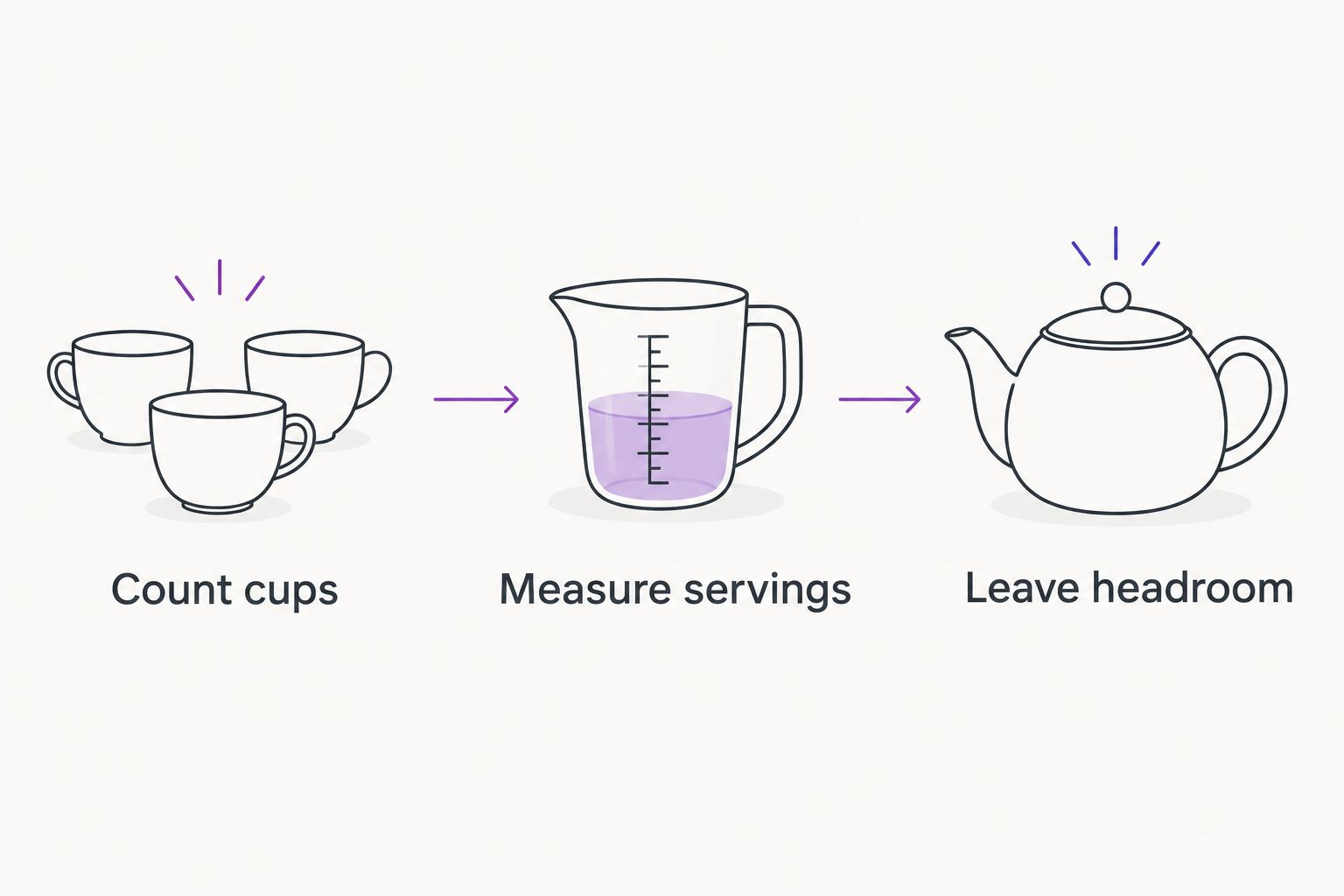
Use this sequence before choosing a size:
- Count cups: Decide how many guests you want to serve from one brew.
- Measure servings: Fill a cup to its normal drinking level, then measure that water.
- Leave headroom: Compare your total with the manufacturer's usable fill guidance.
A second round is often easier to manage than a pot that feels unwieldy when full. If your gatherings vary, choose for the occasion you host most often rather than the largest gathering you can imagine.
Glass teapot designs at a glance
This 2026 comparison ranks design types, not individual models. Use it to narrow your search, then check the exact pot's dimensions, care instructions, and infuser construction.
| Ranked design | Best for | Standout feature | Key limitation |
|---|---|---|---|
| Removable basket-infuser pot | Everyday mixed-tea hosting | Leaves can be removed before serving continues | Fine mesh needs careful cleaning |
| Compact basket-infuser pot | Intimate gatherings | Smaller batches suit shorter tea sessions | Requires repeat brewing for more guests |
| Larger deep-basket pot | Serving a group together | Greater serving volume with room for leaves | A full pot is heavier and needs more table space |
| Removable glass-infuser pot | Watching whole leaves unfurl | A clear infuser keeps the leaves visible | Larger openings can let fine particles through |
1. Removable basket-infuser pot: best for flexible hosting
A removable basket-infuser glass teapot separates brewing from serving. The leaves sit inside the basket while they steep; once the tea reaches the strength you want, you lift the basket out and pour from the pot.
This is the strongest default for a 2026 hosting setup because it lets you stop leaf contact without immediately serving every cup. Choose a basket with useful width, an easy-to-grip rim or handle, and a place to rest it after removal.
Removable basket-infuser pot pros:
- Lets you remove the leaves while keeping brewed tea in the pot.
- Fine mesh helps contain smaller loose leaf pieces.
- A roomy basket accommodates expanding leaves.
- An accessible basket is easier to inspect before washing.
Removable basket-infuser pot cons:
- Fine mesh traps small particles that need rinsing out.
- A narrow basket restricts leaf space despite a large pot body.
- A wet basket needs a saucer or other suitable resting place.
Best for: Hosts who serve different loose leaf teas and want a straightforward routine.
Check whether the lid still sits correctly after the basket comes out. Also inspect how you would lift the basket when it is hot; a convenient-looking rim is not automatically comfortable to handle.
Verdict: Buy this design as your default, provided the basket is roomy and removable without fuss.
2. Compact basket-infuser pot: best for intimate gatherings
A compact glass teapot keeps the serving batch small. It suits a quiet conversation over tea better than a pot chosen for a large table, particularly when you enjoy making another infusion rather than leaving a large batch standing.
The important distinction is capacity, not simply a smaller silhouette. A short, wide pot and a tall, narrow pot can behave differently when you insert a basket and fill them to a practical level.
Compact basket-infuser pot pros:
- Makes it easier to brew only the amount you intend to serve.
- Takes less space on a crowded tea tray.
- Encourages fresh rounds rather than one oversized batch.
- Allows different teas to be served in separate rounds.
Compact basket-infuser pot cons:
- Requires more brewing when additional guests join.
- A small basket can crowd leaves even when the water volume suits your cups.
- A low fill level can leave part of a shallow basket above the water.
Best for: Intimate gatherings where conversation and repeat infusions matter more than serving everyone at once.
Before choosing, compare the basket's depth with your normal fill level. The leaves need contact with the water; a pot that looks proportionate when full might be awkward for a partial batch.
Verdict: Buy for small tea sessions; skip it as your only pot if you regularly serve a larger group together.
3. Larger deep-basket pot: best for shared servings
A larger glass teapot is useful when you want everyone to receive tea from the same brew. A deep, roomy basket matters here: increasing the pot's water volume without providing enough leaf space creates an unbalanced setup.
For your 2026 gatherings, calculate the required serving volume before comparing larger pots. Then consider the filled weight, where the pot will sit, and whether you can comfortably pour the final cup.
Larger deep-basket pot pros:
- Serves more cups from a single brewing round.
- Keeps the shared tea service centered on one vessel.
- A deep basket reaches farther into the water.
- A wide basket offers more room for the leaves needed for the batch.
Larger deep-basket pot cons:
- Water adds weight, making a full pot more demanding to handle.
- The pot and removed basket occupy more table space.
- Tea remaining in the pot cools while guests finish their cups.
Best for: Hosts who prioritize serving a group together rather than making frequent small batches.
Do not increase steeping time simply because the pot is larger. Follow the tea's preparation instructions, scale the leaf amount to the water volume, and remove the basket when brewing finishes.
Check the handle clearance as well as its shape. Your fingers need room to hold the pot without pressing against the hot glass body.
Verdict: Buy when your measured serving needs justify the size; skip extra capacity you will rarely use.
4. Removable glass-infuser pot: best for visible whole leaves
A removable glass infuser puts the leaves themselves on display. Instead of looking through a metal basket, you can watch whole leaves soften and open inside a clear insert.
The infuser's openings determine what stays inside. A glass insert with larger slots suits whole leaves better than finely broken tea, so inspect the opening size rather than assuming every glass infuser filters equally well.
Removable glass-infuser pot pros:
- Keeps the leaves visible during brewing.
- Gives a clear view of the water's changing color.
- Removes leaf contact when the insert lifts out.
Removable glass-infuser pot cons:
- Fine leaf pieces can pass through larger openings.
- The glass insert adds another fragile component to handle.
- Narrow slots or openings can be awkward to clean.
Best for: Guests who enjoy watching whole-leaf tea brew and hosts who value a clear presentation.
If you plan to serve blends containing small fragments, inspect their texture before choosing this design. Teatheworld sells loose leaf teas and herbal blends, but the category alone does not establish whether a particular blend suits a slotted glass infuser.
Keep the insert away from hard utensils when emptying it. Use the manufacturer's cleaning method rather than scraping trapped leaves out with a metal tool.
Verdict: Buy for whole-leaf presentation; skip as a universal filter for finely broken blends.
A simple brewing routine for guests
Prepare your cups, tea, water, and a resting dish for the infuser before guests sit down. That small amount of preparation keeps the table calm when brewing finishes.
Follow the tea's own leaf quantity, water temperature, and steeping instructions. Different teas do not need an identical routine, and a glass teapot does not change their preparation requirements.
A practical serving sequence is:
- Warm the pot only if its care instructions permit it.
- Add the measured leaves to the basket.
- Add water at the temperature specified for the tea.
- Remove the infuser when the recommended steep is complete.
- Set the wet basket on its resting dish, then serve.
Make stronger tea by adjusting the leaf amount within the tea's guidance, not by leaving the basket in throughout the gathering. Continued steeping changes the cup while you talk.
If you offer an evening alternative, check the full ingredient list before calling it caffeine-free. A fruit name or herbal flavor does not establish that the blend contains no tea leaves or other caffeine sources.
How we ranked these designs
The ranking prioritizes removable leaves, useful basket space, serving capacity, controlled pouring, and cleanup. The removable basket design comes first because it gives you a clear transition from brewing to serving; the other designs answer narrower hosting needs.
This 2026 guide does not rank heat resistance, leak performance, or dishwasher durability without model-specific evidence. Verify those properties in the exact manufacturer's instructions before buying.
Which glass teapot should you choose?
Choose a removable basket-infuser glass teapot unless your gathering gives you a specific reason to choose otherwise. Go compact for intimate sessions, larger for shared servings, and glass-infuser for a clear view of whole leaves.
Teatheworld is a relevant starting point for tea enthusiasts and gift shoppers seeking loose leaf tea and tea accessories. Choose your tea and serving volume first; let those decisions shape the pot rather than buying around an attractive photograph.
FAQ
What's the best glass teapot with infuser for entertaining?
A glass teapot with a roomy, removable basket infuser is the best default for entertaining. It lets you remove the leaves when brewing finishes and continue serving from the pot.
How big should a glass teapot be for guests?
Choose the size from your actual cup volume and number of servings. For example, six servings of 150 mL require 900 mL of brewed tea, plus appropriate room for the infuser and the manufacturer's fill limit.
Is a glass infuser better than a metal basket?
A glass infuser is better for seeing whole leaves, while a fine-mesh metal basket is better for containing smaller pieces. Choose according to the tea's leaf size and how much cleanup you want to manage.
Can I put a glass teapot directly on the stove?
Put a glass teapot on the stove only when its manufacturer explicitly permits that use. Glass construction alone does not establish direct-heat compatibility.
Should I leave the infuser in while serving guests?
Remove the infuser when the tea reaches its recommended brewing time or desired strength. Leaving the leaves in contact with the water continues the steeping process as you serve.
How do I clean a glass teapot infuser?
Empty the leaves and clean the infuser according to its manufacturer's instructions. Rinse trapped particles from mesh or slots, and do not assume either the pot or basket is dishwasher-safe.
What tea should I serve at an evening gathering?
Choose a tea whose flavor and caffeine content suit your guests. Check the complete ingredient list before describing a blend as caffeine-free, including blends named for fruit or herbs.
One last thing
Before your first gathering, practice pouring with plain water and the lid and infuser arranged exactly as they will be during service. Check the beginning and end of the pour, not just a full pot: the changing angle reveals whether the grip and lid feel comfortable.
For 2026, make this your final buying rule: the best entertaining teapot is the one you can brew in, empty, and pour from comfortably. The view of the leaves is a pleasure; an easy serving routine is what lets you enjoy it with your guests.