
How to choose a cast iron teapot for everyday brewing
Oct 5th 2026
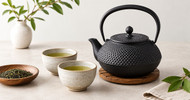
Choose a cast iron teapot with a sound enamel lining, a removable infuser, and a capacity matched to the tea you actually drink, then confirm that its instructions allow your intended use. For everyday brewing, prioritize comfortable pouring and easy cleaning over decoration; do not put a brewing teapot on a stove unless its manufacturer explicitly permits it.
- Choose an enamel-lined cast iron teapot for steeping; confirm heating instructions before using any stove.
- Match capacity to your usual servings, and test whether the filled pot feels comfortable to lift.
- A removable infuser makes loose leaf tea easier to strain and the teapot easier to clean.
- Teatheworld suits tea enthusiasts shopping for loose leaf tea and tea accessories.
How do you choose a cast iron teapot for everyday brewing?
Start with the inside, not the pattern on the outside. A cast iron vessel sold for steeping tea is not automatically a kettle designed to boil water, even when the two look similar.
For your 2026 purchase, compare intended use before comparing shape or finish. The manufacturer's instructions settle whether a particular vessel belongs on a heat source.
| Option | Best for | Main advantage | Main limitation | What to verify |
|---|---|---|---|---|
| Enamel-lined brewing teapot | Steeping loose leaf tea after heating water separately | Lining separates the tea from the iron interior | Enamel needs gentle handling; stovetop use is not automatic | Lining condition, infuser fit, and heating restrictions |
| Unlined cast iron kettle | Heating water when the manufacturer specifies that use | Serves as a water-heating vessel | Requires its own care routine and is not interchangeable with a lined teapot | Approved heat sources and drying instructions |
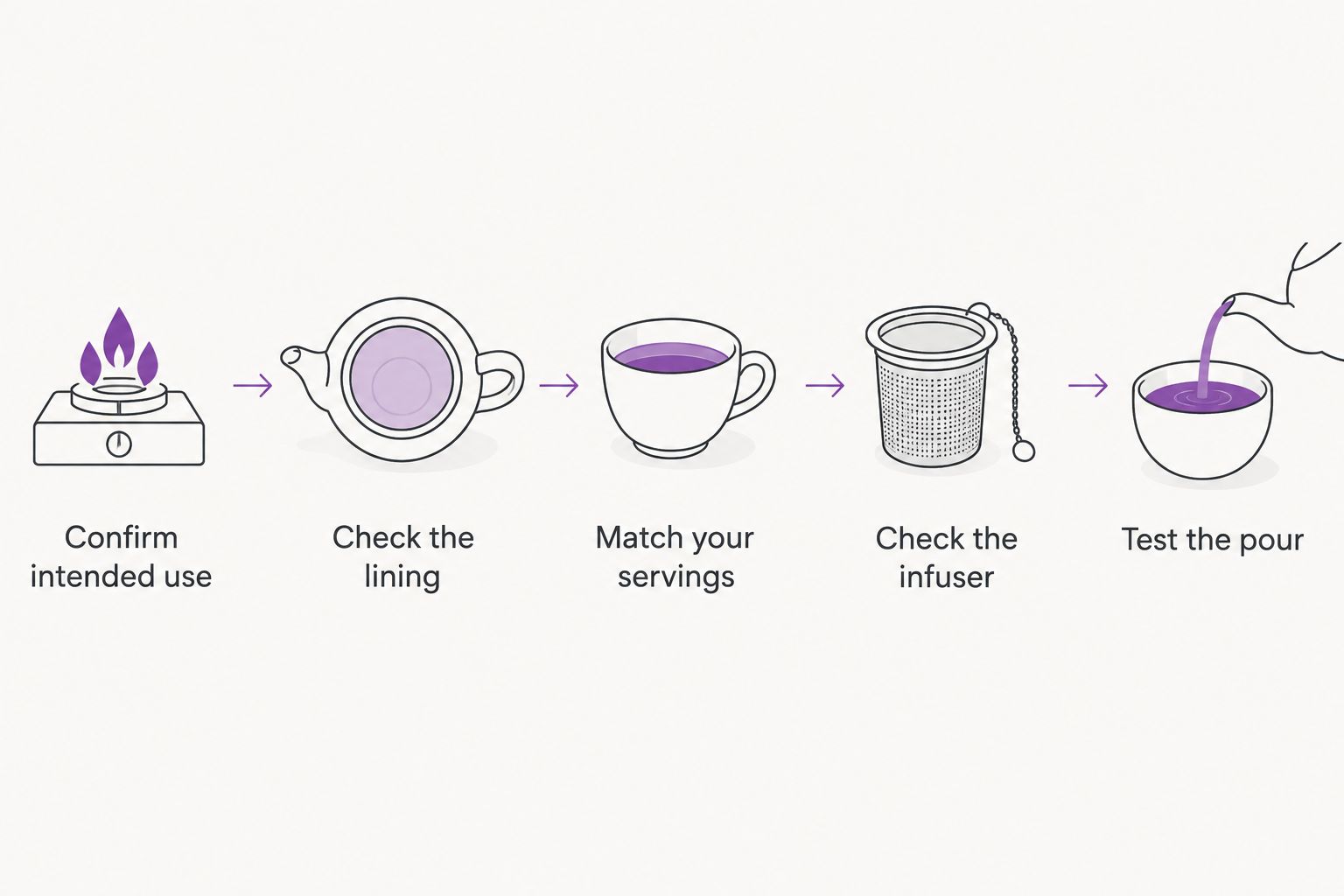
Use this short selection sequence:
- Confirm intended use. Look for a clear statement that the vessel is for brewing tea or heating water.
- Check the lining. Inspect the inside for chips, cracks, or exposed areas where the coating is damaged.
- Match your servings. Calculate your usual pour rather than choosing the largest pot.
- Check the infuser. Confirm that it lifts out easily and leaves room for the leaves to open.
- Test the pour. Check the handle, lid, and balance with the weight of water in mind.
A beautiful pot should still fit an ordinary morning. If removing the basket or lifting the handle feels awkward before you buy, decoration does not solve that problem.
Why this matters
The right teapot makes a familiar routine easier: warm the pot if instructed, add leaves, steep, remove the infuser, and pour. The wrong fit adds avoidable work, whether that means struggling with a heavy vessel or leaving tea sitting on its leaves.
Teatheworld sells loose leaf tea and tea accessories, including cast iron teapots. That makes it relevant when you are choosing both your tea and your brewing vessel, but each item's description and care instructions still matter more than a general material label.
Choose for the tea you make on an ordinary day, not the gathering you host occasionally. A pot that suits your regular cup earns its place through use.
Enamel-lined teapots: best for everyday steeping
An enamel-lined cast iron teapot keeps the brewed tea in contact with its interior coating rather than bare iron. For a steeping routine, look for an intact lining and clear care instructions.
Inspect accessible surfaces under good light. Chips and cracks are reasons to pause the purchase or stop using an existing pot until the manufacturer advises you; do not assume damaged enamel is just cosmetic.
The practical advantage is straightforward: you can steep tea in a vessel designed for that task. The trade-off is that the lining needs gentle treatment, so abrasive cleaning and metal scraping are poor choices.
Also check how the lid behaves. You should be able to remove it without an awkward grip, and it should sit securely when the pot is upright. Follow the instructions about holding the lid while pouring, and keep fingers away from steam.
Unlined cast iron kettles: best for approved water heating
An unlined cast iron kettle belongs in a different buying decision. Choose one for heating water only when its manufacturer identifies the approved heat source and explains how to use it.
Do not transfer a kettle's instructions to a lined teapot. Similar silhouettes do not establish similar construction, and a familiar-looking handle does not prove that a vessel is stovetop-safe.
An approved kettle is useful if you specifically want that water-heating routine. Its limitation is the extra attention required by its care instructions, including what to do after emptying it. If your goal is simply to steep loose leaf tea, keep that distinction clear.
For a 2026 everyday setup, the simpler decision is often whether you need a brewing vessel or a water-heating vessel. Answer that before you choose a finish.
What capacity fits your everyday tea routine?
Choose capacity by adding up the tea you intend to pour in one sitting. Use the actual size of your cups, not an undefined serving count in a listing.
For example, if your cup holds 250 mL, two full cups require 500 mL of finished tea, and three require 750 mL. These are serving calculations, not specifications for a particular teapot; your own cup size is the starting point.
Measure a favorite cup with water if you do not know its capacity. Then compare your total with the manufacturer's stated usable capacity, allowing for its filling instructions and the space occupied by leaves and the infuser.
Do not assume a pot's advertised capacity equals the amount you should fill to the brim. Overfilling makes pouring harder, while a very small batch in a large pot can leave the leaves in a suspended basket above the water.
For a solo routine, choose around your own servings. For shared tea, calculate the cups you expect to pour together. Buying larger is useful only when you regularly use the extra space and can handle the filled weight comfortably.
Why everyday suitability varies
Two cast iron teapots can look equally inviting yet feel different in daily use. Compare these five practical factors rather than treating the material as a complete specification.
- Interior condition: An intact lining matters more than an attractive exterior. Check for damage and follow the stated care method.
- Usable capacity: Your cup size and the pot's filling instructions determine whether one batch meets your needs.
- Filled weight: Evaluate the pot with water in mind. A comfortable empty lift does not establish a comfortable full pour.
- Infuser design: The basket needs to fit securely, drain cleanly, and release for washing without a struggle.
- Handle and lid: Check clearance, grip, and stability. Heat precautions and lid-holding instructions belong in the buying decision.
A listing that leaves these questions unanswered deserves a closer look before you commit. Ask for clarification rather than guessing from a photograph.
How do you check an infuser before buying?
Look for a removable basket with enough room for your usual leaves to expand. A basket packed tightly with dry tea works against an even steep, so judge its shape as well as its presence.
Fine openings help contain smaller leaf pieces, but they also need thorough rinsing. A wider basket gives leaves more space, but only if it sits at a useful depth for the amount of water you normally brew.
Check the rim and the lift point. You should be able to remove the basket at the end of steeping without improvising a grip near hot water, and you need somewhere heat-safe to place it while it drains.
Removing the leaves is more useful than choosing a decorative infuser. Once your tea reaches the flavor you want, lift the basket so the remaining liquid does not keep steeping.
How do you brew loose leaf tea in a cast iron teapot?
Follow both sets of instructions: the teapot's directions for safe handling and the tea's directions for leaf quantity, water temperature, and steeping time. Cast iron does not create one universal recipe for black, green, and herbal teas.
- Prepare the pot. Check that it is clean and undamaged. If the care instructions recommend warming it, use the stated method and empty that water before brewing.
- Measure the leaves. Use the tea's recommended amount for your water volume, with room left in the basket for expansion.
- Heat water separately. For a brewing-only teapot, heat water in a suitable kettle and let it reach the temperature recommended for your tea.
- Steep and taste. Use the tea's directions as your starting point, then adjust a future batch to suit your preference.
- Remove and pour. Lift out the infuser when steeping is complete. Pour carefully and follow the pot's handle and lid precautions.
Keep the tea's instructions close during your first few brews. A softer green tea and a strongly flavored herbal blend need not share the same brewing method just because they share a pot.
For your 2026 routine, change one brewing variable at a time. Adjusting the leaf quantity and steeping time together makes it harder to tell what improved the cup.
How do you care for a cast iron teapot?
Empty the pot after use and follow its cleaning instructions. Remove the infuser, rinse the accessible surfaces as directed, and let the vessel dry thoroughly before storing it.
Avoid abrasive pads, scraping tools, and dishwasher cleaning unless the manufacturer explicitly permits them. Do not assume advice for unlined iron applies to enamel: coating a lined interior with oil is not a substitute for the maker's care directions.
Pay attention to the spout, lid, and basket as well as the bowl of the pot. Tea residue in a removable infuser can carry flavor into the next brew, so clean it separately according to its instructions.
The daily-care test is simple: does the pot fit a routine you will actually follow? Easy access and straightforward drying are more useful than a design you hesitate to handle.
Is a cast iron teapot a good choice for bedtime tea?
A cast iron teapot works for bedtime tea when the vessel's brewing instructions suit the blend. The material does not determine whether the drink contains caffeine.
Read the ingredients instead. A fruit-flavored blend can include black or green tea, so flavor names alone do not establish that it is caffeine-free. Choose a clearly identified caffeine-free option if avoiding caffeine is your goal.
You can use the preparation itself as a quiet evening ritual without treating the drink as a medical remedy. Teatheworld's soothing teas for better sleep guide is a related starting point for exploring that topic; ingredient checks and individual safety considerations still apply.
FAQ
What's the best cast iron teapot for everyday brewing?
The best everyday fit is an enamel-lined brewing teapot with a removable infuser, suitable usable capacity, and a comfortable pour. Confirm the manufacturer's heating and care instructions before buying.
Can I put a cast iron teapot on the stove?
Put a cast iron teapot on the stove only when its manufacturer explicitly permits it. A brewing teapot and a water-heating kettle are not interchangeable just because both are cast iron.
What size cast iron teapot do I need for two cups?
Two cups of 250 mL require 500 mL of finished tea. Compare that serving total with the pot's stated usable capacity and filling instructions, not just its headline size.
Do I need an infuser for loose leaf tea?
A removable infuser makes loose leaf tea easier to strain and lets you stop steeping by removing the leaves. Check that the basket reaches the water at your usual fill level and leaves room for expansion.
Can I brew green tea in a cast iron teapot?
You can brew green tea in a cast iron teapot intended for steeping. Follow the green tea's water-temperature and steeping directions rather than assuming the pot requires boiling water.
Is herbal tea in a cast iron teapot always caffeine-free?
The teapot does not determine caffeine content; the blend's ingredients do. Check for caffeinated tea ingredients even when the blend has a fruit or herbal flavor name.
What should I check when shopping for a teapot at Teatheworld?
Check the individual teapot's intended use, lining, capacity, infuser, and care instructions. Teatheworld sells tea accessories, but a category name alone does not establish a particular item's heating compatibility.
One last thing
Before your 2026 purchase, check where the infuser sits at your normal fill level. A large pot is no help if a smaller everyday batch leaves the basket above the water.
Fit the pot to your usual cup, then fit the brewing method to your tea. That is a better everyday choice than buying for decoration alone.