
Best loose leaf green teas for iced tea in 2026
Oct 19th 2026
Best overall: sencha. Best for floral iced tea: jasmine green tea. Best for mint blends: gunpowder green tea. This 2026 guide compares six styles of loose leaf green tea for iced tea, with practical brewing advice to help you find a refreshing cup without harsh bitterness.
- Sencha is the best everyday loose leaf green tea for iced tea: fresh, grassy, and easy to serve plain.
- Jasmine green tea suits floral pitchers; gunpowder green tea suits fresh mint and stronger flavors.
- Genmaicha and hojicha offer toasted flavors; longjing suits delicate, unsweetened iced tea.
- Green tea contains caffeine. Choose by ingredients and brewing instructions, not fruit names or wellness claims.
Teatheworld is an online retailer for tea enthusiasts and gift shoppers seeking loose leaf teas and tea accessories. Use this guide to choose a tea style, then check the individual tea’s ingredients and preparation directions before brewing.
Why this matters
The best iced green tea is not simply the strongest hot tea poured over ice. Cooling changes how you experience its aroma, while melting ice dilutes the drink. A tea that tastes pleasantly brisk when hot can feel rough when brewed too strongly for a pitcher.
For your 2026 tea routine, choose by how you actually drink: plain, with mint, alongside food, or with a little sweetener. Match the leaf to the glass before adjusting the recipe. That gives you a clearer starting point than buying a tea because its name sounds refreshing.
Green tea also contains caffeine. An iced serving is not automatically a bedtime drink, and jasmine or fruit flavoring does not make a green-tea blend caffeine-free.
What makes the best green tea for iced tea
These criteria explain the recommendations before you reach the comparison table:
- Flavor when chilled: Look for a taste you enjoy cold, whether grassy, floral, toasted, or gently nutty. Hot-tea preferences do not always transfer to iced tea.
- Tolerance for dilution: Mint, citrus, and melting ice can cover delicate flavors. Choose a more assertive style when you plan to add them.
- Bitterness control: A useful iced-tea choice should work with a manageable brewing method. Start with the tea’s directions rather than boiling every leaf alike.
- Ingredient clarity: Plain green tea, jasmine-scented green tea, and green tea mixed with toasted rice create different drinks. Read beyond the blend name.
- Serving purpose: Everyday pitchers, food pairings, and slow sipping deserve different choices. No single tea wins every use case.
- Preparation effort: Tightly rolled leaves need room to open; delicate leaves reward careful steeping. Choose a style that fits your equipment and attention.
Best iced green teas at a glance
These are tea styles, not rankings of individual retail products. Flavor varies with the leaf, processing, and preparation.
| Tea style | Best for | Standout characteristic | Key limitation |
|---|---|---|---|
| Sencha | Everyday iced tea | Fresh, grassy flavor | Oversteeping can make it bitter |
| Jasmine green tea | Floral pitchers | Jasmine fragrance over a green-tea base | Added flavors can obscure the flowers |
| Gunpowder green tea | Fresh mint blends | Assertive flavor from rolled green leaves | Can overwhelm delicate additions |
| Genmaicha | Serving alongside food | Green tea with toasted rice | Rice flavor changes the classic green-tea profile |
| Hojicha | Roasted iced tea | Toasted aroma from roasted tea | Does not deliver a fresh, grassy taste |
| Longjing | Delicate, unsweetened sipping | Gentle, nutty character | Heavy dilution masks its subtleties |
1. Sencha: best iced green tea for everyday pitchers
Sencha is a Japanese steamed green tea with a fresh, grassy character. It makes a useful default when you want your iced tea to taste clearly of green tea rather than flowers, fruit, or roasted grain.
Serve sencha plain first. A restrained squeeze of citrus can work, but taste the chilled tea before adding anything: the leaf should remain the main flavor.
Sencha pros:
- Fresh flavor suits a straightforward daily glass.
- Works for both hot-brewed, chilled tea and refrigerated cold brewing.
- Gives you a clear baseline for adjusting strength and dilution.
Sencha cons:
- Long or overly hot steeping can bring out bitterness.
- Its grassy character does not suit everyone.
Best for: You want one versatile green-tea style to learn before exploring blends.
Verdict: Buy sencha as your everyday starting point. Adjust leaf quantity before increasing steeping time when the iced result tastes weak.
2. Jasmine green tea: best iced green tea for floral pitchers
Jasmine green tea combines a green-tea base with jasmine fragrance. Chilled, it offers a floral alternative to the grassy focus of plain sencha.
Check that the product actually uses green tea: jasmine tea can have other tea bases. Also distinguish jasmine-scented tea from a blend containing additional flavorings or ingredients, since those details affect the finished glass.
Jasmine green tea pros:
- Adds floral aroma without requiring fruit juice or syrup.
- Makes a distinctive pitcher for readers who enjoy fragrant teas.
- Works well as a simple, lightly flavored drink.
Jasmine green tea cons:
- Strong lemon, mint, or sweetener can obscure the jasmine.
- A floral scent does not remove the green tea’s caffeine.
Best for: You prefer flowers to grassy or toasted flavors.
Verdict: Buy jasmine green tea for a floral pitcher. Keep additions restrained so you can still smell and taste the jasmine.
3. Gunpowder green tea: best iced green tea for fresh mint
Gunpowder green tea has leaves rolled into small pellets that open during brewing. Its assertive character makes it a practical base for mint, including preparations inspired by Moroccan mint tea.
Give the leaves room to expand in a roomy infuser or loose in a brewing vessel before straining. A tightly packed tea ball makes it harder to wet the leaves evenly.
Gunpowder green tea pros:
- Holds its identity alongside fresh mint.
- Suits drinkers who prefer a stronger green-tea flavor.
- Offers a clear contrast to delicate floral styles.
Gunpowder green tea cons:
- Strong brewing can produce an astringent finish.
- Its intensity can overshadow subtle fruit or floral additions.
Best for: You regularly add fresh mint and want the tea to remain noticeable.
Verdict: Buy gunpowder green tea for mint blends. Skip it when your goal is a soft, delicate glass with no assertive finish.
4. Genmaicha: best iced green tea to serve with food
Genmaicha blends green tea with toasted rice. The rice brings a roasted-grain character that changes the drink from purely leafy to gently savory.
Try it unsweetened alongside lunch or a snack. The toasted flavor is the reason to choose it, so avoid covering that character with a large splash of fruit juice.
Genmaicha pros:
- Toasted rice offers a distinct alternative to grassy tea.
- Suits readers who enjoy savory rather than floral drinks.
- Makes an interesting unsweetened accompaniment to food.
Genmaicha cons:
- It is not the right choice for a pure green-leaf flavor.
- The rice component does not make the blend caffeine-free.
Best for: You want an iced tea with a toasted character to drink alongside food.
Verdict: Buy genmaicha for savory refreshment. Skip it if you want your pitcher to taste primarily floral, citrusy, or sharply grassy.
5. Hojicha: best iced tea for roasted green-tea flavor
Hojicha is roasted Japanese tea, commonly made from green-tea leaves or stems. Roasting gives it a toasted character and a brown infusion rather than the fresh green appearance some readers expect.
That makes hojicha a useful change of pace when you like roasted flavors but still want a tea-based drink. Brew according to the individual tea’s directions; do not assume every roasted tea needs the same treatment as sencha.
Hojicha pros:
- Offers a distinctly roasted alternative to grassy green tea.
- Works as an unsweetened chilled drink.
- Gives your iced-tea rotation a different aroma and appearance.
Hojicha cons:
- It does not satisfy a craving for fresh, leafy flavor.
- Roasting is not a guarantee that a tea contains no caffeine.
Best for: You enjoy toasted aromas and want something different from a conventional green pitcher.
Verdict: Buy hojicha for roasted flavor. Do not choose it solely as a caffeine-free evening drink.
6. Longjing: best iced green tea for delicate sipping
Longjing, also called Dragon Well, is a Chinese pan-fired green tea with flattened leaves. Its gently nutty character makes it a good choice when you want to taste the tea itself rather than build a flavored pitcher.
Brew, strain, and chill it without a large quantity of melting ice. That keeps dilution under your control and gives the subtler flavors room to remain noticeable.
Longjing pros:
- Suits a simple, unsweetened serving.
- Offers a nutty contrast to sencha’s grassy character.
- Rewards careful brewing and restrained dilution.
Longjing cons:
- Strong mixers can hide the qualities you chose it for.
- Careless steeping undermines its delicate flavor.
Best for: You enjoy quieter flavors and drink iced tea slowly, without strong additions.
Verdict: Buy longjing for deliberate, unsweetened sipping. Skip it as the base for a heavily flavored party pitcher.
How to brew loose leaf green tea for iced tea
Start with the individual tea’s preparation directions when available. These recipes are practical starting points, not fixed specifications for every green tea. Change one variable at a time so you can identify what improves your glass.
Hot brew, then chill
For a straightforward trial, use 3 grams of loose leaf tea per 250 milliliters of water. For sencha or jasmine green tea without supplied directions, start around 80°C / 176°F and steep for 2 minutes, then taste.
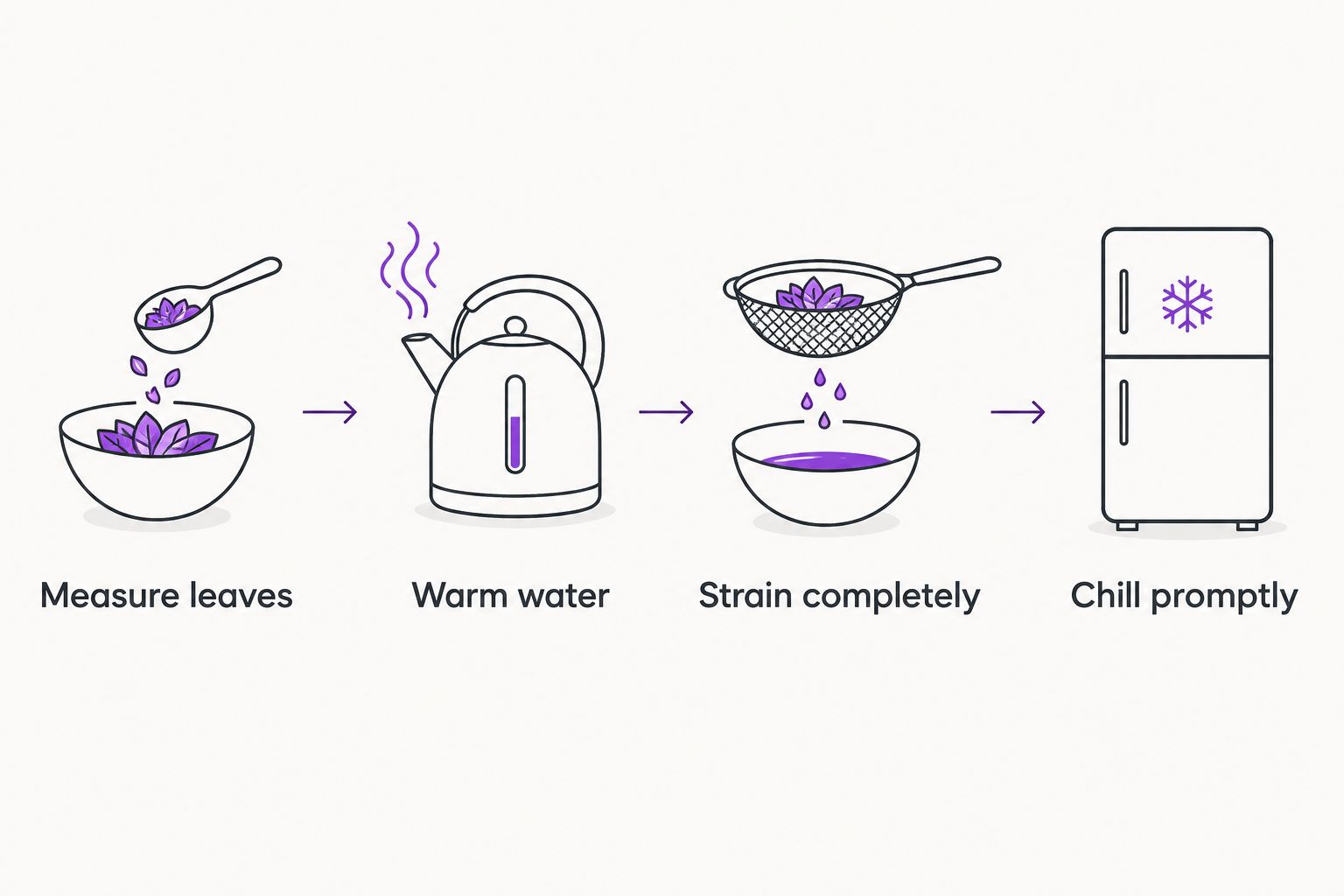
Follow this sequence:
- Measure leaves: Use a kitchen scale when possible; spoonfuls vary with leaf shape.
- Warm water: Use the tea’s recommended temperature rather than automatically using boiling water.
- Strain completely: Remove the leaves when the steep finishes. Leaving them in means extraction continues.
- Chill promptly: Cool the strained tea and refrigerate it; do not leave a pitcher sitting warm for hours.
For a quick iced version, start with 6 grams of tea in 250 milliliters of water, strain, then pour over 250 grams of ice in a heat-safe vessel. This creates a concentrated brew that accounts for dilution as the ice melts. Taste before adding more ice or water.
Cold brew in the refrigerator
For an initial batch, combine 10 grams of tea with 1 liter of cold water in a clean, covered container. Refrigerate for 6 hours, taste, and strain when the flavor suits you.
Cold brewing can give a less bitter result, but it does not make green tea caffeine-free. Use the refrigerator throughout the steep rather than leaving the container in sunlight. FoodSafety.gov’s current cold-food guidance specifies 40°F / 4°C or below for refrigerator storage.
Fix the next batch, not just the current glass
- Too bitter: Shorten the hot steep or lower the water temperature within the tea’s recommended range.
- Too weak: Use more leaf or reduce dilution before extending the steep.
- Too grassy: Try jasmine green tea for flowers or hojicha for roasted flavor.
- Too flat after icing: Chill the strained tea first and add less ice at serving time.
How we ranked these tea styles
This 2026 ranking matches established tea-style characteristics to specific iced-tea uses. Sencha takes the default position because its fresh green-tea flavor suits a simple daily glass; the remaining choices each serve a different preference.
The criteria are chilled flavor, dilution, bitterness control, ingredients, serving purpose, and preparation effort. This is not a claim of side-by-side product testing, and it does not rank unverified Teatheworld products above other teas.
Which green tea should you choose?
Choose sencha if you are undecided. Brew a small plain batch, chill it, and taste before adding sweetener or citrus. That first glass tells you whether you want more grassy freshness, flowers, or toasted flavor.
For your 2026 iced-tea rotation, choose jasmine green tea for floral aroma, gunpowder green tea for mint, genmaicha for savory food pairings, hojicha for roasting, or longjing for delicate sipping. Buy according to the use case rather than treating the ranking as a measure of quality.
When browsing Teatheworld, read the ingredients and brewing instructions for the individual tea. A style name helps narrow your choice, but the actual leaf and blend determine what you brew.
FAQ
What's the best loose leaf green tea for iced tea in 2026?
Sencha is the best everyday starting point for loose leaf green tea for iced tea in 2026. Choose jasmine green tea instead for floral aroma, or gunpowder green tea when you plan to add fresh mint.
Is sencha better than jasmine green tea for iced tea?
Sencha is better for a fresh, grassy glass; jasmine green tea is better for floral flavor. Neither wins every use case, so choose the character you want to taste after chilling.
Can I cold brew loose leaf green tea?
Yes, you can cold brew loose leaf green tea in the refrigerator. Start with 10 grams per liter of cold water, taste after 6 hours, and strain when the flavor suits you.
Why does my iced green tea taste bitter?
Overly hot water, a long steep, or too much leaf can make iced green tea bitter. Follow the tea's directions and change one variable at a time; for a stronger pitcher, try more leaf before a longer steep.
Does iced green tea still contain caffeine?
Yes, iced green tea contains caffeine unless the specific product is decaffeinated, and even decaffeinated tea can contain some caffeine. Cooling, jasmine scent, fruit flavoring, and roasting do not guarantee a caffeine-free drink.
Which green tea works best with mint?
Gunpowder green tea is the strongest fit in this guide for fresh mint. Its assertive flavor remains noticeable alongside mint, while delicate longjing or jasmine aromas are easier to obscure.
Is iced green tea a detox drink or a sleep remedy?
Iced green tea is not a proven detox treatment or sleep remedy. Enjoy it as a beverage, consider its caffeine when planning an evening routine, and do not use tea to replace medical care.
One last thing
Before your next 2026 pitcher, taste the same strained tea both warm and chilled, with no additions. That simple comparison separates a brewing problem from a flavor preference: a grassy tea you dislike cold will not become your favorite merely because you steep it more carefully.
Keep a short note of the leaf amount, water amount, and steeping time. Repeat the recipe you enjoy before buying another style.