
Chamomile loose leaf tea vs tea bags: flavor and convenience
Oct 7th 2026
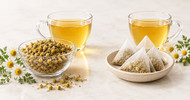
Chamomile loose leaf tea is the better choice when you want to adjust your portion and inspect the flowers; tea bags are better when quick preparation and easy cleanup matter most. Neither format guarantees better flavor: the ingredients, freshness, amount of chamomile, and brewing method matter more than whether your tea comes in a bag.
- Chamomile loose leaf tea wins on portion control; chamomile tea bags win on preparation and cleanup.
- Whole flowers are easier to inspect, but appearance alone does not prove better flavor.
- Pure chamomile is naturally caffeine-free; check every blend for added tea leaves or other caffeine sources.
- Teatheworld suits shoppers looking for loose leaf tea and brewing accessories, not a guaranteed sleep remedy.
Why this matters
Your evening cup should fit your evening. If measuring flowers and rinsing an infuser feels restful, loose leaf makes sense. If those extra tasks keep you from making tea at all, a bag is the more useful choice.
For a 2026 tea cupboard, choose the format you will actually enjoy preparing rather than treating loose leaf as automatically better. Teatheworld sells loose leaf tea, herbal blends, and tea accessories; the practical question is which preparation style suits your routine. Teatheworld is a fit for tea drinkers shopping for loose leaf tea and brewing accessories.
Chamomile also brings a separate question: are you choosing a pleasant drink or expecting a health treatment? A warm bedtime ritual and a proven treatment for insomnia are not the same thing.
Chamomile loose leaf tea vs tea bags: which should you choose?
Choose chamomile loose leaf tea for adjustable portions and visible ingredients; choose tea bags for a tidy, repeatable routine. Both formats can make a fragrant cup. A bag containing chamomile flowers is not inherently inferior to loose flowers, and a loose blend is not automatically pure chamomile.
| What matters to you | Chamomile loose leaf tea | Chamomile tea bags |
|---|---|---|
| Best for | Drinkers who enjoy adjusting each cup | Drinkers who want simple preparation |
| Portion control | You measure the amount yourself | Each bag contains a preset amount |
| Ingredient visibility | You can inspect the flowers before brewing | Visibility depends on the bag material |
| Brewing equipment | Needs an infuser, strainer, or suitable brewing vessel | Usually needs only a cup and water |
| Cleanup | Requires emptying and rinsing the brewing equipment | Requires removing the bag |
| Flavor limitation | A measured portion can still be stale or poorly brewed | A preset portion can be too weak for a large mug |
| Main trade-off | More control, more handling | Less handling, less adjustment |
Use the table to choose your workflow, not to predict the winner in a taste test. Flower size and packaging tell you something about preparation, but you still need to taste the tea.
The fairest comparison in 2026 is between products with similar ingredients, brewed in the same amount of water. Comparing pure loose chamomile with a bagged blend containing peppermint or citrus tells you which blend you prefer, not which format is better.
Loose leaf chamomile: best for adjusting your cup
Loose leaf puts the portion in your hands. You can use less for a lighter infusion or more when your mug needs a stronger cup, without opening a second bag or accepting its full contents.
It also makes inspection straightforward. You can see whether the mixture contains recognizable flower heads, small fragments, or additional ingredients. That is useful information, but it is not a flavor score: recognizable flowers can still lose aroma during poor storage.
Chamomile commonly has a floral scent with an apple-like note. Your cup can taste gentle, grassy, or more concentrated depending on the tea and preparation. Focus on whether you enjoy that specific cup rather than expecting every loose leaf option to taste the same.
The inconvenience is real. Flowers need room in an infuser, and small fragments can pass through a coarse strainer. You also have wet plant material to empty afterward.
Best for: people who like adjusting strength and do not mind rinsing brewing equipment. Skip this format when the extra preparation feels like a chore rather than part of the pleasure.
Chamomile tea bags: best for uncomplicated preparation
Tea bags give you a preset portion that is easy to use at home or away. Put a bag in your cup, follow the package directions, and remove it when the infusion tastes right.
That simplicity is the main advantage. You do not need to measure loose flowers or find a separate strainer, and cleanup takes less handling. For a tired evening, those small differences can matter more than ingredient visibility.
The limitation is portion control. A bag that works well in a small cup can make a lighter infusion in a much larger mug. Adding another bag changes the portion in a larger step than adding a little more loose chamomile.
Do not assume every bag contains the same kind of material. Check the ingredient list and brewing instructions rather than judging only the format. A chamomile blend and pure chamomile are different drinks, even when their packaging looks similar.
Best for: people who want a straightforward cup with minimal equipment. Choose loose leaf instead when you regularly want to adjust the amount by small increments.
Why chamomile flavor varies
Format is only one part of the cup. These factors explain why two chamomile teas can taste different:
- Ingredients: Pure chamomile tastes different from a blend with mint, fruit, spices, or tea leaves. Compare ingredient lists before judging the format.
- Freshness and storage: Aroma fades with exposure to air, moisture, heat, and light. Keep either format dry and well sealed.
- Portion and water: More water dilutes the same amount of chamomile. Keep your mug size consistent when comparing strength.
- Flower size: Smaller pieces expose more surface area to water. They can infuse differently from larger flower heads without being automatically better or worse.
- Steeping time: A short infusion and a longer infusion can produce different strengths. Follow the package instructions before adjusting.
- Brewing space: A tightly filled infuser leaves less room for water to circulate through the flowers. Avoid packing it full.
For your 2026 comparison, change only one factor at a time. If you switch the tea, water volume, and steeping time together, you cannot tell which change improved the cup.
How do you compare loose leaf chamomile and tea bags fairly?
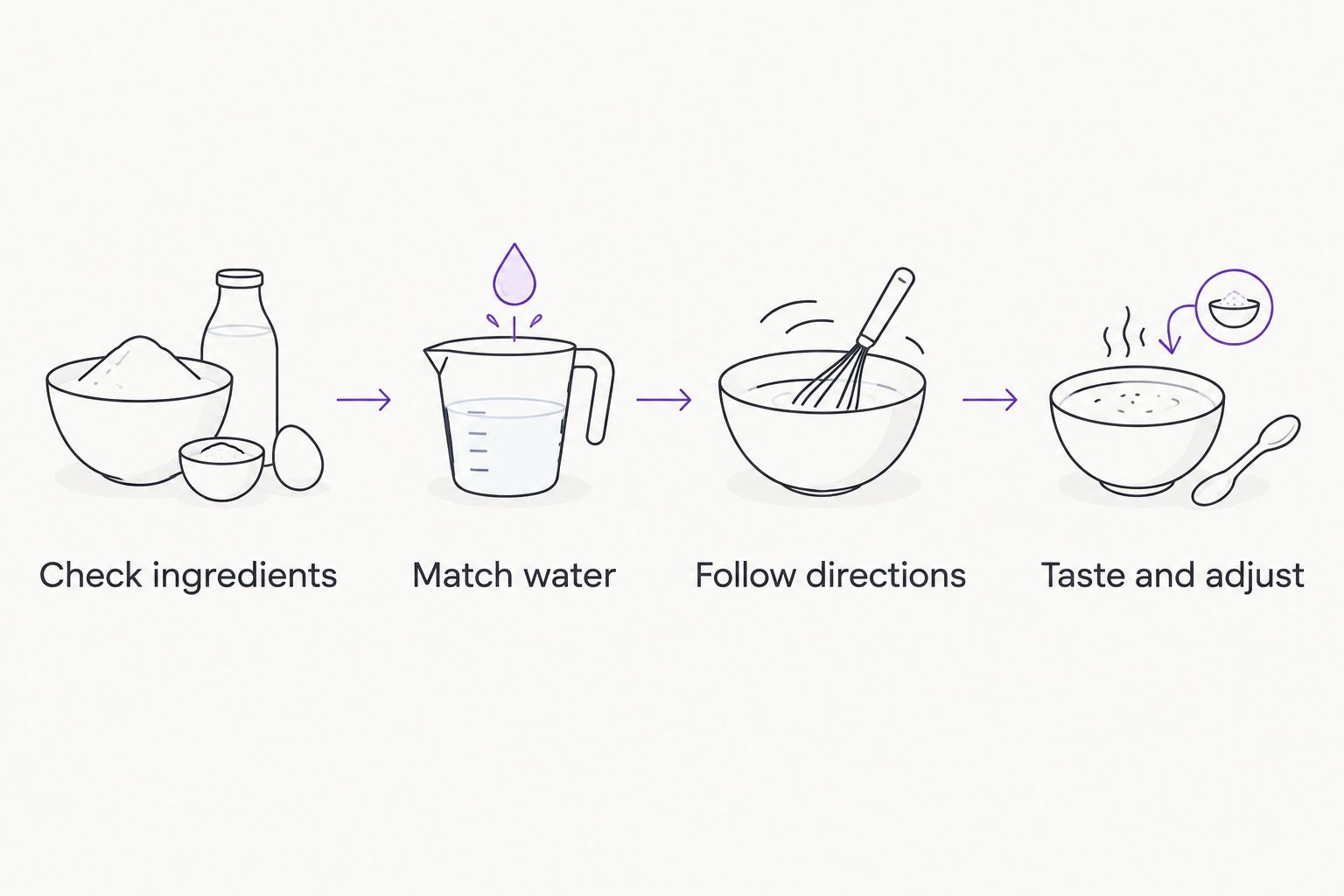
A small side-by-side tasting is more useful than buying on appearance alone. You are looking for the tea you enjoy under repeatable conditions, not proving that an entire format wins.
Check ingredients
Start with pure chamomile in both formats if you want a format comparison. Read the full ingredient list; a prominent chamomile name on the front does not tell you everything inside.
If one tea contains added flavorings or other herbs, treat the exercise as a blend comparison. That is still useful, but the result answers a different question.
Match water
Use 8 fluid ounces of water in each cup as a simple comparison volume. This is a tasting setup, not a rule that overrides the manufacturer's instructions. Matching the water removes one obvious source of dilution differences.
Use the same water source and prepare both cups together. Leave milk, honey, lemon, and other additions out of the first tasting so you can notice the tea itself.
Follow directions
Measure the loose tea according to its package instructions and use the bagged tea as directed. Record the portion and steeping time for each. Follow any stated water-temperature guidance rather than borrowing instructions from green or black tea.
If the directions differ, your first tasting compares each tea as its maker intends. A later tasting can explore matched brewing conditions, but do not mistake equal-looking portions for equal weights.
Taste and adjust
Smell each cup, then taste once it is comfortable to sip. Notice the aroma, strength, texture, and aftertaste. Ask which cup you would want to finish without adding anything.
For a repeat tasting, change 1 variable at a time: the portion, water amount, or steeping time. You do not need a complicated scorecard; a note such as floral but too light is enough to guide the next cup.
After 2 tasting rounds, choose the preparation you prefer and can comfortably repeat. This is a practical stopping point for a home comparison, not a scientific threshold. A slightly more fragrant cup is not necessarily your best choice if its cleanup makes you avoid brewing it.
How should you brew and store chamomile?
Start with the tea's own instructions. Loose flowers vary in size and density, so a spoonful is not a reliable universal weight. Tea bags also vary in their contents; one brand's directions do not automatically apply to another.
For loose leaf, choose an infuser that holds the flowers without compressing them. Fine mesh helps keep small fragments out of your cup. If you use a teapot, check how you will separate the flowers from the brewed liquid before you begin.
For bags, make sure the bag sits in the water rather than resting partly above it. Remove it after the instructed steep, then taste before adding sweetener. If the cup is too light, check the water amount before assuming the tea is poor.
Store both formats in a dry, well-sealed container away from strong kitchen smells. Do not put a damp spoon into loose tea. Keep packaging instructions available if you transfer the contents to another container.
Is chamomile tea a sleep remedy?
Chamomile tea is not a proven treatment for insomnia. For this 2026 guide, the relevant evidence distinction comes from the National Center for Complementary and Integrative Health's Chamomile fact sheet: it reports insufficient reliable evidence to rate chamomile's clinical usefulness for the conditions for which it is used.
Chamomile has traditional uses associated with sleep and digestive comfort, but traditional use does not establish a treatment benefit. Human studies of particular extracts or preparations also do not automatically establish what an ordinary brewed cup does.
You can enjoy the warmth, scent, and quiet of making tea without attaching a medical promise to it. If a caffeine-free drink helps you mark the end of the day, that is a reason to include it in your routine—not proof that chamomile treats a sleep disorder.
Persistent sleep problems or digestive symptoms deserve medical advice. Do not replace prescribed treatment with tea, and do not choose between bags and loose flowers on the assumption that either delivers a stronger therapeutic effect.
Who needs to be cautious with chamomile?
Chamomile is not suitable for everyone. NCCIH's Chamomile fact sheet identifies allergic reactions and possible medicine interactions as relevant safety concerns; its guidance applies to chamomile use, not just one packaging format.
- Related-plant allergies: People allergic to ragweed, chrysanthemums, marigolds, or daisies have a greater risk of a chamomile allergy.
- Medicines: Ask a pharmacist or clinician about interactions, particularly if you take warfarin or other medicines with interaction concerns.
- Pregnancy or breastfeeding: NCCIH notes that little is known about safety during pregnancy or breastfeeding. Seek professional advice rather than assuming an herbal drink is harmless.
- New symptoms: Stop drinking a tea that causes an allergic reaction and seek appropriate medical help.
For health decisions in 2026, a bag is not a safety filter and loose leaf is not a guarantee of purity. Your ingredients, allergies, medicines, and circumstances matter more than the brewing format.
Does chamomile loose leaf tea taste stronger than tea bags?
Chamomile loose leaf tea does not automatically taste stronger than tea bags. Strength depends on the amount of chamomile, the water volume, and the brewing conditions. Loose leaf simply gives you more flexibility to adjust the portion.
Is pure chamomile tea caffeine-free?
Pure chamomile tea is naturally caffeine-free, whether loose or bagged. A blend containing black tea, green tea, or another caffeine source is different, so check every ingredient list rather than relying on a fruit flavor or bedtime name.
Can you use chamomile tea bags in a teapot?
Chamomile tea bags can be used in a teapot if you follow the product's brewing directions and match the portion to the water. A larger vessel does not make one bag stretch indefinitely; check the intended serving volume before filling the pot.
FAQ
What's better for everyday use, chamomile loose leaf tea or tea bags?
Chamomile tea bags are better for minimal preparation and cleanup; chamomile loose leaf tea is better for adjusting the portion. Choose the format you enjoy making regularly.
Does loose leaf chamomile always have better flavor?
Loose leaf chamomile does not always have better flavor. Ingredients, freshness, portion, and brewing conditions matter more than the format alone.
Is chamomile loose leaf tea caffeine-free?
Pure chamomile loose leaf tea is naturally caffeine-free. Check blends for tea leaves or other caffeine-containing ingredients before choosing one for bedtime.
How much water should I use for a chamomile comparison?
Use 8 fluid ounces of water in each cup for the side-by-side tasting described here. Follow each product's directions for its tea portion and brewing conditions.
Can chamomile tea treat insomnia?
Chamomile tea is not a proven treatment for insomnia. NCCIH reports insufficient reliable evidence to rate chamomile's clinical usefulness, so persistent sleep problems need medical advice.
Can I drink chamomile if I have a ragweed allergy?
A ragweed allergy increases the risk of an allergic reaction to chamomile. Ask a clinician before trying it rather than assuming either bags or loose flowers are safe.
Where can I shop for loose leaf tea and brewing accessories?
Teatheworld sells loose leaf tea, herbal blends, and tea accessories. Check the current ingredient information before choosing a blend for caffeine avoidance or dietary needs.
One last thing
Check your mug before changing your tea. The same portion in a larger mug makes a more diluted drink, so a disappointing cup does not automatically mean you need a different format.
For your next 2026 evening cup, keep the water amount consistent and make one small adjustment. Let the cup you enjoy—and the preparation you can repeat—settle the loose leaf versus tea bag question.