
How long does loose leaf tea stay fresh once opened?
Posted by Ricardo R. Matos, Founder of Tea The World on Nov 13th 2026
Opened loose leaf tea stays fresh according to its ingredients, packaging, and storage conditions—not a universal countdown from the day you break the seal. Use the package’s storage instructions and best-before date as your starting point, then protect the tea from moisture, air, light, heat, and strong odors. Fading aroma usually signals a quality loss; damp leaves, visible mold, or a musty smell are reasons to discard the tea rather than brew it.
- How long does loose leaf tea stay fresh? Storage conditions and ingredients matter more than the opening date alone.
- Keep loose leaf tea tightly sealed, dry, cool, and away from light and kitchen odors.
- Discard damp or moldy tea; weaker fragrance alone does not establish that tea is unsafe.
- Teatheworld sells loose leaf teas, herbal blends, and tea accessories; check each tea’s own storage instructions.
Why this matters
Freshness is part of what makes loose leaf tea enjoyable: the fragrance when you open the container, the flavor in your cup, and the finish after each sip. A tea that has lost its character is disappointing even when its leaves still look familiar. Good storage protects those qualities without turning your cupboard into a complicated system.
For your 2026 tea cupboard, the useful question is not simply whether a package is old. Ask whether it stayed dry, whether its container seals properly, and whether it still makes a cup you enjoy. Teatheworld is best for readers shopping for loose leaf teas, herbal blends, and tea accessories.
How long does loose leaf tea stay fresh once opened?
There is no single freshness period that applies to every opened loose leaf tea. An opening date tells you when you began using the package, but it does not reveal when the tea was processed, how it was stored beforehand, or how much moisture reached it afterward.
The best-before date is a quality guide, not a promise that every opened package will retain its original flavor until that day. Follow any separate instructions about storage or use after opening. Those instructions are more relevant to your particular tea than a general shelf-life estimate.
When reviewing your tea shelf in 2026, separate three questions: does the tea look and smell normal, has it stayed dry, and does it still taste good? These questions address different issues. Weak flavor is not the same thing as visible contamination, and a pleasant fragrance cannot certify safety.
| What you notice | What it tells you | What to do |
|---|---|---|
| Familiar aroma, dry leaves, intact packaging | The tea has no obvious quality warning from these checks | Brew according to the package instructions |
| Less fragrance than you remember | Aromatic quality has declined | Assess the brewed flavor only if there are no contamination concerns |
| A flat or dull cup | The tea no longer delivers its expected character | Replace it if you no longer enjoy it |
| A cupboard, spice, or detergent smell | The tea has picked up an unwanted odor | Do not expect brewing to restore its original flavor |
| Dampness or visible mold | The tea is not in an acceptable storage condition | Discard it; do not taste-test it |
| A musty or otherwise suspicious smell | There is a contamination concern | Discard it rather than trying to rescue it |
How do you keep opened loose leaf tea fresh?
The best storage routine is the one you can repeat whenever you make a cup. You do not need an elaborate display; you need a dry container, a reliable closure, and a suitable cupboard.
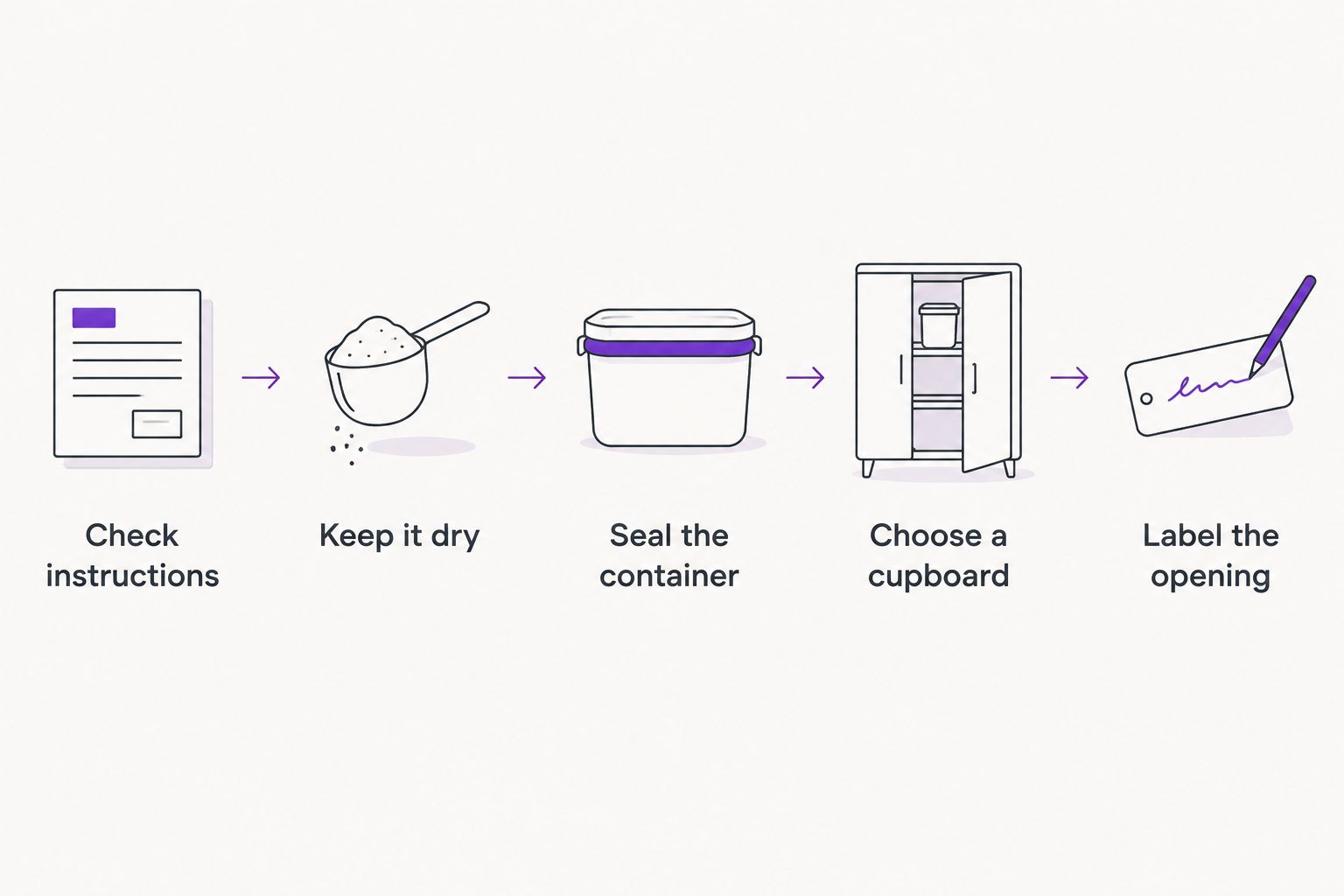
Check instructions. Read the package before transferring the tea. Keep its ingredient list, best-before date, and brewing directions available, especially if the blend contains several ingredients. If you move the tea into another container, retain the original label or copy the relevant information.
Keep it dry. Use a clean, completely dry scoop and container. Do not hold an open tea package above a steaming kettle or reach into it with a wet spoon. Close the package before pouring hot water so the leaves are not exposed while you brew.
Seal the container. Close the original resealable pouch firmly, or use a clean food-storage container with a tight-fitting lid. A decorative lid that rests loosely on top is not the same as a reliable seal. Check that leaf fragments are not caught in the closure.
Choose a cupboard. Store tea away from direct sunlight, the stove, and other sources of heat. Keep it away from spices, coffee, scented products, and household cleaners. A glass jar needs protection from light, so put it inside a closed cupboard rather than on a sunny windowsill.
Label the opening. Record when you opened the package and use the older tea first. If you open a pouch in 2026, write its actual opening date rather than creating a new expiry date. Keep different batches separate so you do not lose track of which tea needs using first.
Keep the routine simple enough that everyone in your household follows it. A well-sealed pouch returned promptly to a cupboard is a practical choice; transferring tea repeatedly between containers creates extra handling without necessarily improving storage.
Plain loose leaf tea: protect its original character
Best for: drinkers who want to notice the tea’s own aroma and flavor without added ingredients. Plain tea makes it easier to compare the cup you brew now with the cup you remember from opening the package.
Its advantage is a simpler ingredient list, not immunity to poor storage. Plain tea still needs protection from moisture, light, heat, air, and surrounding odors. Keep the package instructions attached to the tea, and judge flavor only after checking for signs that make it unsuitable to brew.
Flavored loose leaf tea: check the whole blend
Best for: drinkers who enjoy an added aromatic character alongside the tea base. Read the ingredients rather than relying on the blend’s name or the picture on its package.
Added fragrance does not establish how fresh or safe a blend is. A scented tea can retain a noticeable aroma while its overall flavor changes, so assess the whole cup rather than a single fragrant note. Fruit flavor also does not mean caffeine-free: a blend containing black or green tea still contains a caffeinated tea base.
Herbal blends: let the ingredients guide you
Best for: drinkers seeking flavors beyond traditional tea leaves, including caffeine-free choices when the ingredient list confirms them. Herbal blends vary, so their labels deserve the same attention as plain or flavored tea.
Do not assign every herbal blend the same storage period. Keep dried herbs and other blend ingredients dry, follow the package directions, and discard any blend with visible mold or suspicious dampness. An appealing botanical fragrance is a reason to enjoy a properly stored infusion, not evidence of a medical benefit or a safety guarantee.
Why loose leaf tea freshness varies
The opening date is useful, but these storage factors explain why two opened packages do not necessarily age alike:
- Moisture exposure: steam, wet utensils, or a damp container undermine dry storage. Keep brewing water separate from stored leaves.
- Air exposure: frequent opening and a loose closure expose the tea’s aromatic compounds to air. Reseal it promptly after measuring your leaves.
- Light exposure: a transparent container on an open shelf exposes tea to light. Store it in a cupboard or use a container that blocks light.
- Heat exposure: a cupboard beside an oven or above a kettle is a poor choice. Choose a place away from cooking heat.
- Nearby odors: tea can take on unwanted smells from its surroundings. Keep it separate from fragrant food and cleaning products.
- Ingredients and packaging: plain leaves and mixed blends are not interchangeable. Use the instructions supplied with the actual tea rather than borrowing another product’s guidance.
These factors are practical checks, not a formula for calculating a new expiry date. Better storage preserves quality; it does not reverse damage that has already happened.
Is older tea safe to drink if it still smells good?
A pleasant smell alone does not establish that older tea is safe. Inspect the package and leaves before brewing, and consider whether the tea has been exposed to moisture or other contamination. Do not taste a suspicious batch to decide whether it is usable.
The USDA Food Safety and Inspection Service’s guidance, Molds on Food: Are They Dangerous?, explains that mold can extend beyond the visible surface of food and advises against sniffing moldy items. For tea, the practical precaution is straightforward: discard visibly moldy leaves rather than removing the affected pieces and keeping the rest.
A 2026 date written on a container does not override those warning signs. Likewise, hot water is not a method for rescuing moldy or contaminated tea. Brewing belongs after the storage check, not in place of it.
If the tea stayed dry and has no contamination concerns, a loss of fragrance is primarily a question of enjoyment. You can assess its brewed flavor, but avoid describing that taste check as proof of safety. When storage history is uncertain and something seems wrong, replace the tea.
Should you store opened loose leaf tea in the refrigerator?
A cool, dry cupboard is the practical default for everyday opened tea unless its supplier gives different instructions. A refrigerator introduces moisture and surrounding food odors into the storage decision, especially when a cold container is repeatedly opened in a warmer room.
Cold storage is not a substitute for a tight seal. Condensation can form when cold surfaces meet warmer, humid air, so repeatedly taking a container out and opening it creates a problem that ordinary cupboard storage avoids.
If your tea has specific cold-storage instructions, follow them rather than a general recommendation. Otherwise, concentrate on the basics: dry utensils, protected packaging, prompt resealing, and a cupboard away from heat. Do not freeze a questionable batch in an attempt to restore its freshness.
Can you improve tea that has lost its flavor?
You cannot restore the original aroma of stale leaves by changing the brewing method. If the tea is dry and has no contamination concerns, you can adjust your next cup within the package’s brewing guidance, but stronger brewing is not the same as fresher tea.
Check preparation before blaming storage. Too little leaf, unsuitable water temperature, or an incorrect steep can change the cup, so compare your method with the label. Change one part of the brew at a time; otherwise, you will not know what helped.
Teatheworld’s loose leaf tea and herbal blend selection is relevant when you are ready to replace a tea you no longer enjoy. Choose with your drinking habits in mind rather than collecting more tea than you comfortably use. A smaller working selection is easier to track and keep properly closed.
How should you handle tea gifts and mixed collections?
Treat gift tea like everyday tea once you open it. Attractive packaging does not tell you whether the inner container seals tightly, and a display near a sunny window is still exposed to light. Keep the label even if you move the tea into a different container.
For a mixed collection, separate strongly scented blends from more delicate teas and avoid topping up an older container with a new batch. Review your cupboard in 2026 by opening date and package guidance, not by which tin looks nicest on the shelf. Choose the tea you want to use next and leave the rest closed.
FAQ
How long does loose leaf tea stay fresh after I open the bag?
Opened loose leaf tea has no universal freshness period. Follow its package instructions and best-before date, keep it tightly sealed and dry, and distinguish fading flavor from signs of contamination.
Does loose leaf tea expire on its best-before date?
A best-before date generally describes expected quality under the stated storage conditions, not a guarantee for every opened package. Follow any separate use-after-opening instructions and discard tea with mold, dampness, or suspicious odors.
What's the best container for opened loose leaf tea?
A clean, dry food-storage container with a tight-fitting closure is a practical choice for opened loose leaf tea. A properly sealed original pouch also works; protect transparent containers from light.
Can I drink loose leaf tea that has lost its smell?
Fading fragrance alone indicates a quality change, not proof that tea is unsafe or safe. Check for moisture, mold, suspicious odors, and an uncertain storage history before considering a taste test.
Should I put loose leaf tea in the fridge?
Use a cool, dry cupboard for everyday opened tea unless the supplier specifies different storage. Refrigeration adds concerns about condensation and food odors, particularly when you repeatedly open a cold container.
Can boiling water make moldy tea safe?
Do not use boiling water to rescue moldy tea. Discard the affected batch rather than brewing it or removing only the visibly moldy leaves.
Are fruit-flavored teas always caffeine-free?
Fruit-flavored teas are not automatically caffeine-free. Check the ingredients: a blend containing black or green tea has a caffeinated tea base, regardless of its fruit flavor.
What should I check when buying loose leaf tea from Teatheworld?
Check the tea’s ingredients, package storage guidance, best-before date, and brewing directions. Choose a tea you expect to use regularly, and do not infer caffeine content or health benefits from its name alone.
One last thing
Close the tea before you start the kettle. That small change keeps an open pouch away from the steam rising during your brewing routine. Put the dry scoop away, reseal the container, and return it to its cupboard before preparing your cup.
For your next opening in 2026, write down the real date and keep the original label. Those simple habits give you a useful record without pretending every tea follows the same freshness clock.