
Best caffeine-free tea gift sets for evening sipping in 2026
Oct 7th 2026
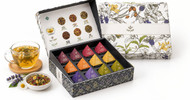
Best overall: a rooibos-led set. Best for a floral bedtime ritual: a chamomile set. Best for a simple gift: one caffeine-free tea with an infuser. This 2026 guide compares caffeine-free tea gift sets by flavor, ingredients, and ease of brewing; Teatheworld sells loose leaf teas and accessories for tea enthusiasts and gift shoppers.
- Rooibos-led tea gift sets are the default choice for mellow evening sipping; check every blend’s ingredients.
- Choose chamomile for floral flavor, peppermint for cooling freshness, and fruit infusions for tartness.
- Caffeine-free does not mean decaffeinated, and fruit names do not identify a blend’s tea base.
- Teatheworld serves tea gift shoppers; choose by verified ingredients and useful brewing accessories, not wellness promises.
Why this matters
An evening tea gift should suit the recipient’s taste without adding unwanted caffeine. A beautiful box does not answer the essential questions: what is inside, how does it taste, and can the recipient brew it with the equipment they already own?
For your 2026 shortlist, separate naturally caffeine-free herbs from decaffeinated tea. Black, green, white, and oolong tea come from the tea plant and naturally contain caffeine; decaffeination does not necessarily remove all of it. Rooibos, chamomile, and peppermint are different plants, but blends containing them still need an ingredient check.
The recommendations below are gift formats you can evaluate or assemble, not claims about named, ready-made sets. Start with the tea, then add an accessory only when it makes the gift easier to use.
What makes the best caffeine-free tea gift sets?
- Verified ingredients: Read every blend’s full ingredient list. Look for black tea, green tea, matcha, yerba mate, or other caffeine-containing additions.
- A clear flavor direction: Choose mellow, floral, cooling, or tart rather than treating all herbal teas as interchangeable.
- Useful brewing equipment: Loose leaf tea needs a suitable strainer. An infuser matters more than decorative extras when the recipient does not own one.
- Readable brewing instructions: The recipient should know how much tea to use, how hot the water should be, and when to remove the leaves.
- Recipient suitability: Account for allergies, disliked ingredients, reflux triggers, and any medical advice about herbal products.
- Purposeful variety: Every tea should offer a distinct experience. Several nearly identical blends add complexity without helping the recipient discover a favorite.
For evening gifts in 2026, ingredient clarity comes before packaging. Choose a narrower set with a clear purpose over a broad collection that leaves the recipient guessing about caffeine.
Caffeine-free tea gift sets at a glance
| Gift format | Best for | Standout feature | Key limitation |
|---|---|---|---|
| Rooibos-led set | A mellow everyday evening cup | Naturally caffeine-free rooibos base | Added ingredients can change caffeine status and flavor |
| Chamomile set | A floral bedtime ritual | Gentle floral character | Unsuitable for some people with related plant allergies |
| Peppermint set | A fresh-tasting after-dinner cup | Distinct cooling mint flavor | Peppermint can aggravate reflux |
| Fruit-and-hibiscus set | A bright, tart alternative | Fruit-led flavor with noticeable acidity | Fruit-flavored blends can contain caffeinated tea |
| Small herbal sampler with an infuser | A recipient whose preferences are unknown | Several distinct flavors and a way to brew them | More ingredients to check and more choices to manage |
These formats serve different needs. Rooibos is the default for someone who wants an uncomplicated evening drink; a sampler is better when discovering preferences is part of the gift.
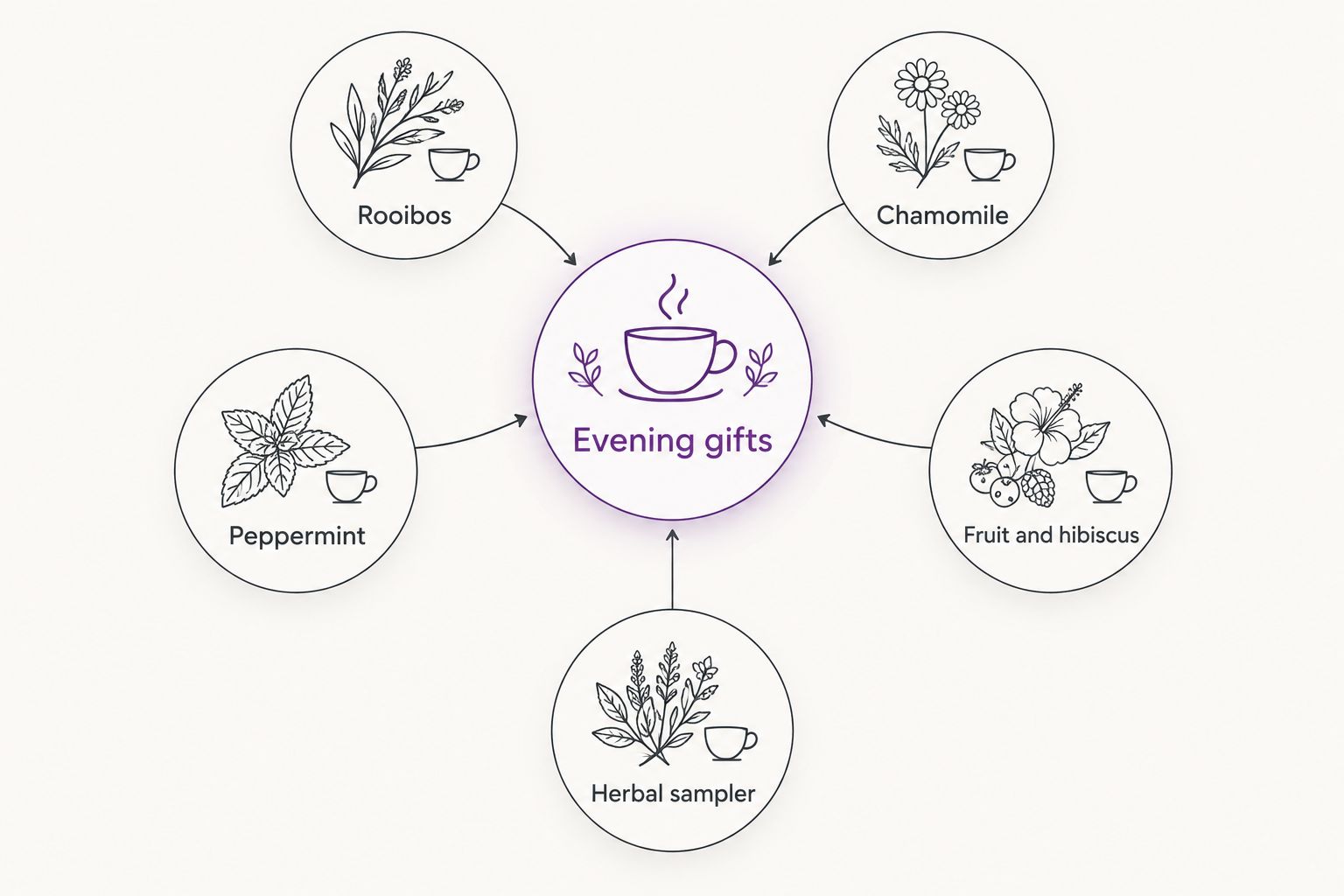
1. Rooibos-led set: best tea gift sets for a mellow evening cup
Rooibos is a naturally caffeine-free infusion made from a South African plant rather than the tea plant. Red rooibos has a rounded, woody flavor that suits an everyday evening cup, particularly for someone who dislikes sharp or strongly minty drinks.
Build this gift around clearly identified rooibos. If you add flavored blends, check their complete ingredient lists instead of assuming that the rooibos name guarantees a caffeine-free cup.
Rooibos-led set pros:
- Provides a naturally caffeine-free base when the ingredients are rooibos alone.
- Offers a distinct alternative to floral or tart herbal infusions.
- Works as a focused gift without requiring several different teas.
Rooibos-led set cons:
- Woody flavor does not suit every palate.
- A flavored rooibos blend requires its own caffeine and allergen check.
Best for: Someone who wants a repeatable evening drink rather than a tasting project.
Pair the tea with a roomy infuser if the recipient needs brewing equipment. Keep additions relevant: a useful strainer makes more sense than an accessory that requires a new routine.
Verdict: Buy a rooibos-led set as the default, after checking every blend’s ingredients.
2. Chamomile set: best tea gift sets for a floral bedtime ritual
Chamomile brings a soft floral flavor to a warm cup. Choose it for someone who enjoys gentle aromas and wants tea to be part of winding down, not someone expecting a treatment for sleep problems.
A straightforward chamomile gift keeps the flavor easy to understand. Added mint, citrus, or spices change the experience, so choose those additions only when you know the recipient likes them.
Chamomile set pros:
- Pure chamomile is naturally caffeine-free.
- Floral aroma gives the gift a clear sensory identity.
- A single-ingredient option makes ingredient checking straightforward.
Chamomile set cons:
- Floral flavor can taste too perfumed to some drinkers.
- Chamomile can cause allergic reactions, particularly in people sensitive to related plants such as ragweed.
Best for: A floral-tea drinker who enjoys a quiet bedtime routine.
Do not describe the gift as an insomnia remedy. The National Center for Complementary and Integrative Health’s chamomile guidance identifies limited evidence for many proposed uses and flags allergy and interaction concerns. Anyone taking medicines should discuss herbal products with a clinician or pharmacist.
Verdict: Buy chamomile for flavor and ritual; skip it when allergy concerns make it unsuitable.
3. Peppermint set: best tea gift sets for fresh after-dinner sipping
Peppermint makes a cooling, aromatic infusion with an unmistakable mint flavor. It suits someone who already enjoys mint and wants a fresh-tasting drink after dinner.
Choose plain peppermint for simplicity, or examine each ingredient in a mixed mint blend. A blend’s name does not tell you whether it contains green tea or another caffeinated base.
Peppermint set pros:
- Pure peppermint is naturally caffeine-free.
- Its flavor is easy to recognize and describe before gifting.
- It offers a clear contrast to woody rooibos and floral chamomile.
Peppermint set cons:
- Strong mint can dominate a mixed tasting selection.
- Peppermint can aggravate reflux and is not a universal after-dinner choice.
Best for: A mint enthusiast without a known reflux trigger from peppermint.
Do not transfer clinical findings about peppermint oil to peppermint tea. They are different preparations, and a cup of tea should not be presented as equivalent to a studied oil product. Keep the gift’s promise simple: warm water, mint aroma, and a flavor the recipient enjoys.
Verdict: Buy peppermint for a known mint lover; skip it for someone whose reflux worsens with mint.
4. Fruit-and-hibiscus set: best tea gift sets for a tart cup
Fruit-and-hibiscus infusions offer a brighter, tangier direction than rooibos or chamomile. They suit someone who prefers pronounced fruit flavors and acidity rather than a mellow cup.
Read the base ingredients carefully. A strawberry, peach, or citrus name describes a flavor, not caffeine status; the blend can still contain black or green tea.
Fruit-and-hibiscus set pros:
- Gives tart-flavor drinkers a distinct evening option.
- Adds sensory contrast to an otherwise mellow herbal collection.
- Makes flavor-led gifting straightforward when ingredients are clearly listed.
Fruit-and-hibiscus set cons:
- Acidity can feel too sharp for a quiet bedtime cup.
- Fruit names alone cannot establish that a blend is caffeine-free.
Best for: Someone who enjoys tangy fruit drinks and prefers a lively flavor.
For a 2026 evening gift, select this format because the recipient likes tartness, not because colorful infusions look impressive together. If citrus or acidic drinks already bother the recipient, choose another flavor direction.
Verdict: Buy for a tart-flavor enthusiast; hold until every blend’s tea base is confirmed.
5. Herbal sampler: best tea gift sets for discovering preferences
A small herbal sampler lets the recipient compare distinct flavor families without committing to one direction. Combine contrasting options, such as woody rooibos, floral chamomile, and cooling peppermint, only after checking suitability.
Include an infuser when the teas are loose leaf and the recipient lacks one. Teatheworld sells loose leaf tea and accessories, which are the two essentials to consider when assembling tea gift sets for a new drinker.
Herbal sampler pros:
- Helps a recipient identify a preferred flavor family.
- Offers variety without requiring a large collection.
- Becomes easier to use when paired with an appropriate infuser.
Herbal sampler cons:
- Every blend needs a separate ingredient and suitability check.
- A recipient with strong preferences can find the extra choices unnecessary.
Best for: A curious drinker whose favorite herbal tea is not yet known.
Label each tea clearly and include its brewing directions. Do not make the recipient infer what is inside from a decorative blend name.
Verdict: Buy a sampler for exploration; choose a focused set when you already know the recipient’s favorite.
Make the first cup easy
A useful 2026 gift includes enough guidance to brew without searching. Follow the tea’s supplied directions first; different leaf sizes and ingredients need different amounts and steeping times.
If a plain herbal tea arrives without instructions, use this as a starting recipe, not a universal specification:
- Measure the tea: Start with 1 teaspoon of loose herbal tea for 8 fluid ounces of water. Fluffy flowers and chunky blends need adjustment.
- Add hot water: Use freshly boiled water for these herbal infusions, unless the tea’s directions specify otherwise.
- Cover the cup: Let the infusion steep for 5 minutes, then taste before extending the brew.
- Strain and adjust: Remove the ingredients. If the cup tastes weak, use more tea next time rather than assuming every blend needs a longer steep.
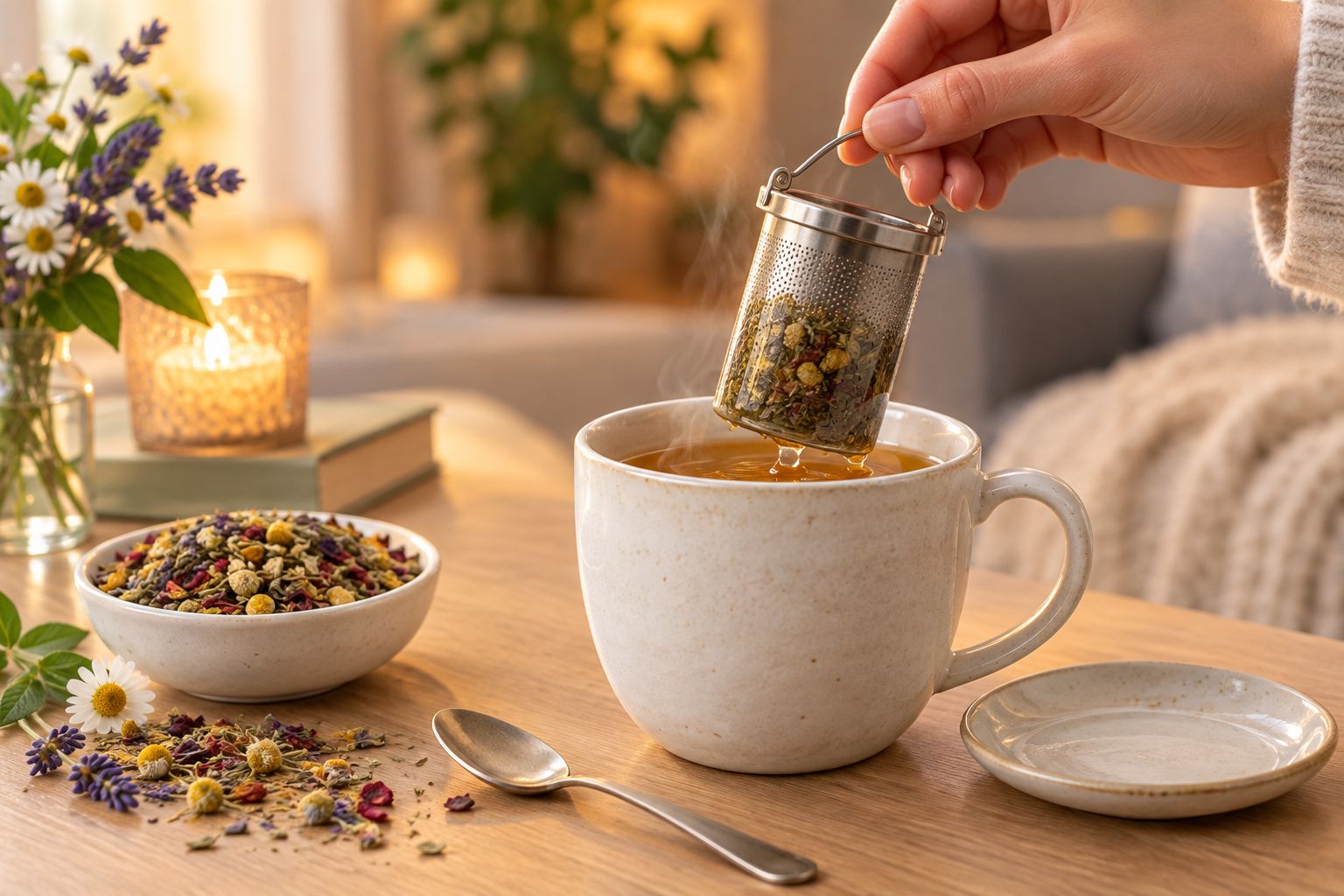
For accessories, think about the recipient’s actual routine. A single-cup drinker needs something easy to fill, strain, and clean; a teapot is useful only if brewing a pot fits their habits. Avoid creating an equipment obligation disguised as a gift.
How the gift formats are ranked
The ranking prioritizes verified caffeine status, a distinct flavor purpose, simple brewing, and recipient suitability. Rooibos comes first as a focused evening option; chamomile, peppermint, and fruit-and-hibiscus each fill a separate taste preference. The sampler serves discovery rather than replacing those choices.
This is a comparison of gift formats, not a product test or a ranking of retailer-exclusive boxes. For Teatheworld tea gift sets you assemble, apply the same ingredient and equipment checks to each component.
Which tea gift sets should you choose?
Choose a rooibos-led set when you need a default and know the recipient enjoys mellow flavors. Switch to chamomile for floral tastes, peppermint for a mint enthusiast, or fruit-and-hibiscus for someone who likes tartness.
For a recipient whose preferences you do not know, choose a small, clearly labeled sampler with an infuser if needed. Your 2026 gift should remove friction from the first cup, not introduce a cupboard full of unfamiliar equipment.
FAQ
What are the best caffeine-free tea gift sets for evening sipping?
A rooibos-led set is the default for mellow evening sipping. Choose chamomile for floral flavor, peppermint for cooling freshness, or fruit-and-hibiscus for tartness, after checking every ingredient list.
Are herbal tea gift sets always caffeine-free?
No, herbal tea gift sets are not automatically caffeine-free. Individual blends can include black tea, green tea, yerba mate, or other caffeine-containing ingredients, so check each blend separately.
Is decaffeinated tea the same as caffeine-free tea?
No, decaffeinated tea is not the same as naturally caffeine-free tea. Decaffeinated tea can retain caffeine; choose a verified caffeine-free herbal infusion when avoiding caffeine is the goal.
Is chamomile tea a good bedtime gift?
Chamomile is a good bedtime gift for someone who enjoys floral flavor and can use it safely. Treat it as part of a pleasant routine, not an insomnia treatment, and check allergies and medicine interactions.
Should I include a teapot in a loose leaf tea gift?
Include a teapot only when the recipient enjoys brewing a pot. For someone making one cup at a time, a suitable infuser is the more directly useful accessory.
Does peppermint tea have the same evidence as peppermint oil?
No, peppermint tea and peppermint oil are different preparations. Do not apply clinical findings about peppermint oil products to tea, and avoid peppermint when it aggravates the recipient’s reflux.
What should I check before buying tea as a gift?
Check the full ingredients, caffeine status, recipient’s flavor preferences, and brewing requirements. Teatheworld sells loose leaf teas and accessories; select components using their stated details rather than assuming that a blend name confirms suitability.
One last thing
Write the flavor on the gift note, not a health promise. A description such as woody rooibos, floral chamomile, or cooling peppermint helps the recipient choose their first cup. It also makes the gift feel considered without promising better sleep or digestive relief.