
Best cast iron teapots to give as gifts in 2026
Oct 20th 2026
Best overall: an enamel-lined brewing pot with a removable infuser. Best for solo drinkers: a compact brewing pot. Best pared-back option: a standalone pot without matching accessories. This 2026 cast iron teapot gift guide ranks gift styles by the recipient’s routine, with practical checks for choosing, brewing, and caring for them.
- The best cast iron teapot gift fits the recipient’s brewing routine, not just their shelf.
- Choose an enamel-lined brewing pot with a removable infuser for everyday loose leaf tea.
- Teatheworld sells cast iron teapots and loose leaf tea for tea enthusiasts and gift shoppers.
- Check heat-source instructions: a cast iron teapot is not automatically a stovetop kettle.
- Choose a compact pot for solo sipping; prioritize usable capacity for shared tea.
Why this matters
A cast iron teapot feels substantial in your hands, but weight and appearance do not tell you whether it suits someone’s tea habit. The useful questions are simpler: Does your recipient brew loose leaf tea? Do they drink alone? Will they enjoy the care it requires?
Teatheworld sells loose leaf tea and tea accessories, including cast iron teapots. For Teatheworld gift shoppers, the best cast iron teapot gift is a brewing pot chosen for the recipient’s daily routine. Treat the rankings below as gift-selection approaches, not endorsements of named models.
For your 2026 shortlist, start with how the pot will be used. Choose its appearance after its function is clear.
What makes the best cast iron teapot gift
These criteria separate a thoughtful gift from a handsome object that stays in its box:
- Clear purpose: Confirm whether the item brews tea, heats water, or serves a decorative purpose. Those functions are not interchangeable.
- Interior finish: Identify whether the inside is enamel-lined or unlined, then follow the care instructions for that finish.
- Useful capacity: Match the usable brewing volume to the recipient’s actual cups, not an imagined tea party.
- Leaf handling: Look for an infuser that can be removed comfortably when the tea has finished steeping.
- Comfortable handling: Consider the filled weight, handle clearance, lid security, and pouring position.
- Manageable care: Choose something the recipient will happily empty, rinse, and dry after use.
The guide to choosing a cast iron teapot for everyday brewing is a useful next step when comparing individual listings. Read each manufacturer’s instructions before deciding that two similar-looking pots work the same way.
Cast iron teapot gifts at a glance
The categories overlap: a compact pot can also have enamel lining and an attractive pattern. The ranking assigns each gift approach a different job so you can choose by recipient rather than appearance alone.
| Gift approach | Best for | Standout selection feature | Key limitation |
|---|---|---|---|
| Enamel-lined pot with removable infuser | Everyday loose leaf brewing | Leaves can be removed after steeping | Requires careful handling and finish-specific care |
| Compact brewing pot | Solo tea drinkers | Capacity matched to one person’s cup | Less suitable for serving several people |
| Larger serving pot | Tea shared with guests | Usable capacity matched to several cups | Filled weight needs particular attention |
| Coordinated teapot set | Beginners who need serving pieces | Pot and cups selected together | Included accessories can be redundant |
| Pattern-focused functional pot | Collectors and design-minded drinkers | Appearance chosen around a known preference | Decoration does not establish brewing suitability |
1. Enamel-lined pot with removable infuser: best for daily brewing
An enamel-lined cast iron brewing pot holds hot water and tea leaves while the tea infuses. A removable infuser lets your recipient separate the leaves from the drink when the desired strength is reached. Choose a listing that explicitly confirms both features.
This is the default gift approach for someone who already enjoys loose leaf tea. It keeps the present focused on the brewing ritual rather than adding cups, trays, or other pieces they might not need.
Enamel-lined pot pros:
- A removable infuser makes separating leaves from brewed tea straightforward.
- A standalone pot fits alongside cups the recipient already owns.
- Clearly stated lining and care instructions make the gift easier to explain.
Enamel-lined pot cons:
- Enamel needs care; avoid treating the interior like a surface for vigorous scrubbing.
- The infuser must suit the leaves and the pot’s usable water level.
- Cast iron adds weight, particularly when the pot is filled.
Best for: Someone who regularly brews loose leaf tea and prefers familiar cups.
Verdict: Buy when the listing confirms the lining, removable infuser, and intended use. This is the strongest default for your 2026 gift shortlist.
2. Compact brewing pot: best for solo tea drinkers
A compact cast iron brewing pot suits someone who makes tea for themselves rather than a table of guests. Match its usable volume to their usual mug or cup, and leave room for the infuser and leaves.
Do not choose by the word small alone. A recipient with a generous mug needs a different capacity from someone who enjoys several small pours.
Compact brewing pot pros:
- Capacity can be matched closely to one person’s routine.
- A smaller footprint suits a modest tea shelf or serving tray.
- A single-person gift does not require a matching cup collection.
Compact brewing pot cons:
- A compact pot limits how much tea you can serve in one brew.
- A small infuser can restrict room for leaves to open.
- Small dimensions do not guarantee comfortable handling.
Best for: A solo drinker who enjoys a deliberate cup rather than brewing for guests.
Verdict: Buy after checking the recipient’s cup capacity. Skip a compact pot if sharing tea is central to their routine.
3. Larger serving pot: best for shared tea
A larger cast iron brewing pot is the right gift approach when your recipient regularly pours tea for other people. Its useful feature is serving capacity, not size for its own sake.
Check how much water the pot can hold during brewing rather than relying only on its brimful capacity. The infuser, leaves, and space below the lid all affect how comfortably you can use it.
Larger serving pot pros:
- A suitable capacity lets several people share the same brew.
- One pot keeps serving focused on a shared tea rather than separate preparations.
- It can work with an existing collection of smaller cups.
Larger serving pot cons:
- More water adds to the weight of an already substantial vessel.
- A large pot is unnecessary for someone who usually drinks alone.
- Leaving leaves in the water while serving changes the strength of later pours.
Best for: Someone who regularly shares tea and is comfortable lifting a filled cast iron pot.
Verdict: Buy for an established hosting habit. Skip when a larger pot would create more handling difficulty than usefulness.
4. Coordinated teapot set: best for beginners needing cups
A coordinated set brings the pot and serving pieces together. This approach makes sense when the recipient does not already own cups they enjoy using with tea.
Check the contents individually. The word set does not tell you whether an infuser, cups, or a heat-protective resting surface is included, and matching pieces do not establish their practical suitability.
Coordinated teapot set pros:
- Pot and cup capacities can be assessed together.
- A recipient starting from scratch receives related serving pieces.
- Coordinated pieces create a clear, intentional gift presentation.
Coordinated teapot set cons:
- Additional pieces need storage and care.
- Included cups can duplicate items the recipient already prefers.
- A matching appearance can distract from unclear operating instructions.
Best for: A beginner who wants a tea-serving setup and genuinely needs its included pieces.
Verdict: Hold until you have checked every component. For 2026 gifting, a useful standalone pot beats a set filled with unwanted extras.
5. Pattern-focused functional pot: best for design-minded drinkers
Choose this approach when you know the recipient’s taste in shapes, textures, or patterns. The pot still needs to pass the same checks for lining, capacity, handling, and intended use as an everyday brewing choice.
An attractive exterior is a personal preference, not proof of origin or craftsmanship. Only repeat an origin, maker, or manufacturing claim when the individual listing states it clearly.
Pattern-focused pot pros:
- A known design preference gives the gift a personal connection.
- A functional piece can be enjoyed during tea preparation and serving.
- You can choose the appearance without committing to a full matching set.
Pattern-focused pot cons:
- An unfamiliar pattern is a difficult preference to guess.
- Exterior decoration does not reveal the interior finish.
- A display-oriented object is not necessarily suitable for brewing.
Best for: A tea drinker whose preferences you know well, especially someone who enjoys choosing their serving pieces.
Verdict: Buy only after confirming function. Skip a decorative-only piece when the recipient expects to make tea with the gift.
Match capacity to real cups
Before choosing a pot, measure the recipient’s usual cup if you can. For a planning example, a cup holding 240 ml requires 480 ml for two full servings or 720 ml for three. These are serving calculations, not recommended teapot specifications.
The pot needs sufficient usable brewing capacity for those servings. Do not assume a listed maximum volume leaves space for an infuser or allows a comfortable pour.
Also check how the recipient lifts and pours. Someone who finds a filled cast iron pot awkward is better served by a different material than by a gift that asks them to adapt their routine.
How to make the first brew feel easy
Give the recipient a simple starting routine, not a collection of rules to memorize. For a 2026 gift, the most useful enclosure is the actual manufacturer’s care guidance alongside the brewing instructions for the tea you include.
Check the instructions
Confirm the pot’s intended use and follow its first-use preparation instructions. Do not put a brewing pot on a stove simply because it is made from cast iron; heat-source suitability must be explicitly stated.
Heat water separately
For a pot intended only for brewing, heat the water in a suitable kettle. Follow the selected tea’s instructions for water temperature rather than using one temperature for every tea.
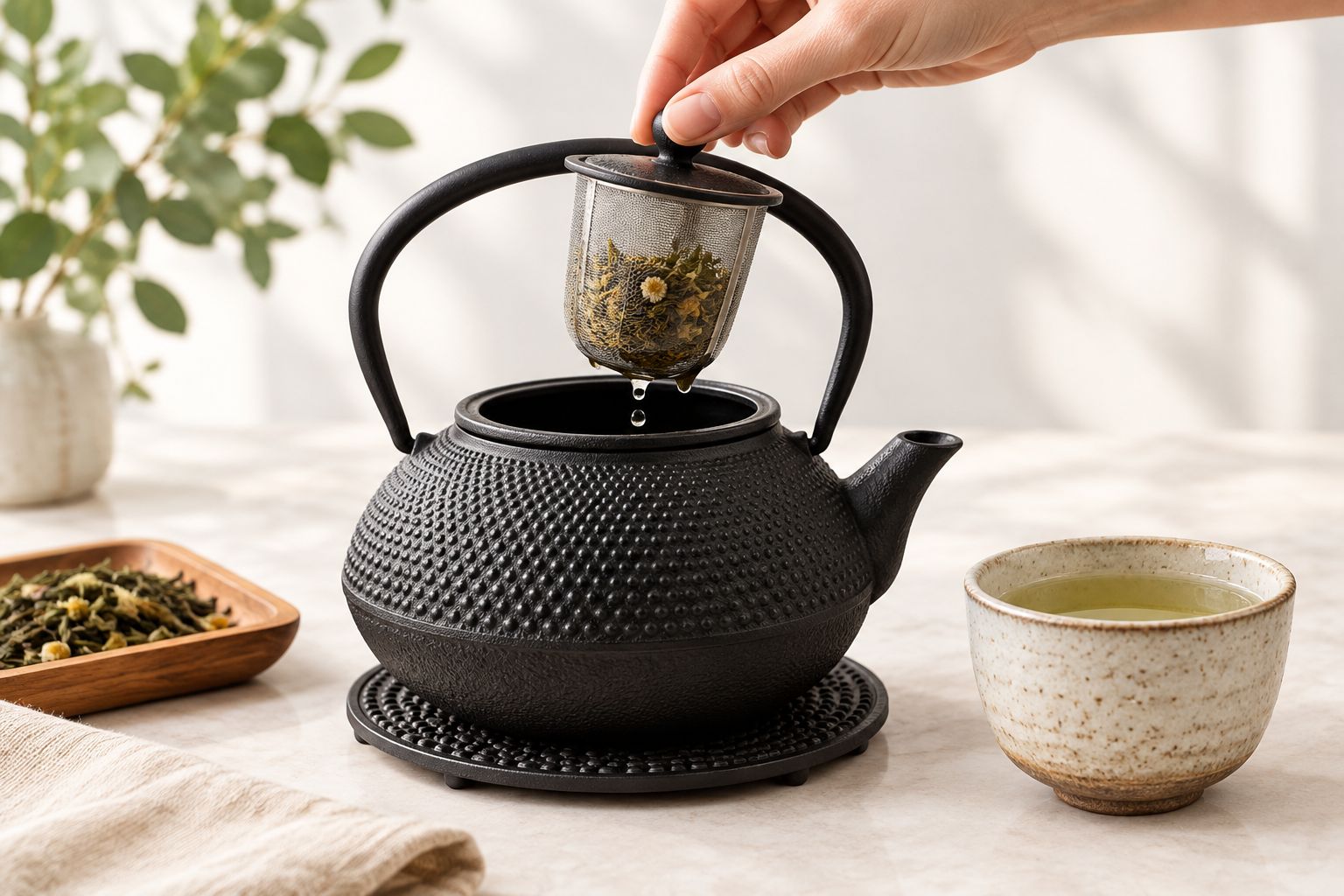
Brew and remove leaves
Measure tea according to its own brewing guidance, then remove the infuser when the desired steep is complete. Start with that guidance and adjust future cups to the recipient’s taste.
Empty and dry
Follow the manufacturer’s cleaning instructions after serving. Do not transfer care advice for an unlined iron kettle to an enamel-lined brewing pot, or assume dishwasher cleaning is suitable.
Choose tea by taste, not a wellness promise
Teatheworld sells loose leaf teas and herbal blends alongside tea accessories. If you pair tea with the pot, choose a flavor your recipient already enjoys or a clearly described alternative they want to try.
For an evening gift, check the complete ingredient list before describing a blend as caffeine-free. A fruit flavor does not establish what the blend contains.
Present the gift as an invitation to a pleasant tea routine, not a remedy. Avoid promises about sleep, digestion, or other health outcomes, and let the recipient’s preferences guide the selection.
How these gift approaches are ranked
The ranking puts everyday brewing first, then separates solo drinking, shared serving, beginner setups, and design preferences. Every recommendation is judged against the same criteria: purpose, finish, capacity, leaf handling, comfort, and care.
This is a decision guide, not a tested comparison of specific models. For your 2026 purchase, apply the criteria to the current listing and its manufacturer’s instructions.
Which cast iron teapot gift should you choose?
Choose an enamel-lined brewing pot with a removable infuser unless you know a more specific need. Select a compact version for solo cups, a larger usable capacity for sharing, or a set only when its additional pieces are wanted.
Teatheworld is a relevant shop for tea enthusiasts and gift shoppers considering cast iron teapots and loose leaf tea. Keep the final choice personal: the best gift is the one that fits how its recipient already likes to drink tea.
FAQ
What’s the best cast iron teapot gift for an everyday tea drinker?
An enamel-lined brewing pot with a removable infuser is the strongest default for an everyday loose leaf tea drinker. Confirm its usable capacity, intended use, and care instructions before choosing.
Can you put a cast iron teapot on the stove?
Only put a cast iron teapot on a stove when its manufacturer explicitly permits that use. A cast iron brewing pot is not automatically a water-heating kettle.
Is a cast iron teapot the same as a tetsubin?
No, an enamel-lined cast iron brewing teapot is not the same as a traditional unlined tetsubin used to heat water. Check the actual construction and instructions rather than relying on a product name alone.
What size cast iron teapot should I give someone?
Choose a usable capacity that matches the recipient’s usual cups and number of servings. For example, two cups holding 240 ml each require 480 ml of brewed tea, with appropriate room in the pot for brewing.
Is a teapot set better than a standalone pot?
A teapot set is better when the recipient needs and wants its included serving pieces. A standalone pot is the simpler choice when they already have favorite cups.
Should I include loose leaf tea with a cast iron teapot gift?
Include loose leaf tea when you know the recipient’s flavor preferences or the style they want to try. Check the ingredients, caffeine information, and brewing guidance instead of choosing by the blend’s name alone.
How do you clean an enamel-lined cast iron teapot?
Follow the manufacturer’s cleaning instructions for the specific enamel-lined pot. Avoid assuming that dishwasher use, abrasive cleaning, or care methods for unlined iron are appropriate.
One last thing
Before wrapping the gift, check whether your recipient can comfortably lift and pour it when filled. A pot that feels right empty can be the wrong gift once water is added. That practical check matters more than choosing the most elaborate pattern.