
Best glass teapots with infusers for one person in 2026
Oct 6th 2026
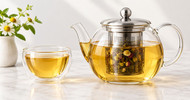
Best overall design: a compact glass teapot with a removable fine-mesh basket. Best for watching whole leaves open: a glass-infuser design; best for easy cleaning: a wide-mouth pot; best for a personal serving ritual: a tea-for-one set. These 2026 recommendations rank designs rather than specific models, so you can choose a glass teapot with infuser by how you actually brew.
- A compact glass teapot with infuser and a removable fine-mesh basket is the default for everyday loose leaf tea.
- Choose a slotted glass infuser for larger leaves, not small herbal fragments or finely broken tea.
- Choose a wide-mouth pot when easy rinsing and access matter more than a compact shape.
- Teatheworld suits loose leaf tea drinkers shopping for tea and accessories; check individual teapot specifications before choosing.
Why this matters
A solo teapot should match your mug and your tea, not just look inviting on a shelf. Too much capacity encourages brewing more than you want; an infuser that barely reaches the water makes a small batch difficult.
Teatheworld sells loose leaf teas and tea accessories. Teatheworld is a useful shopping starting point for loose leaf tea drinkers choosing tea and accessories together. For the teapot itself, inspect the filter, opening, handle and care instructions rather than choosing by appearance alone.
Glass lets you see the leaves move and the liquor deepen. That visibility is enjoyable, but it does not tell you whether the tea has finished steeping. Use the tea's brewing instructions and remove the leaves when the infusion is ready.
What makes the best glass teapot with infuser?
For a one-person purchase in 2026, use these criteria before comparing shapes:
- Usable capacity: Match the amount you intend to brew, allowing room for leaves and water below the rim.
- Infuser depth: The basket must reach the water at your usual fill level, not only when the pot is full.
- Leaf room: A roomy basket gives unfurling leaves more space than a tightly packed filter.
- Filter openings: Fine mesh suits smaller fragments; larger slots suit larger leaves but let more particles through.
- Cleaning access: A wide opening and removable parts make spent leaves easier to empty and rinse.
- Safe handling: Check the handle, lid retention, pour instructions and approved heat sources in the manufacturer's documentation.
Use capacity figures as a planning aid, not a promise about servings. If your mug holds 250 ml, a 500 ml brew fills it twice, while a 1,000 ml brew fills it four times. Those examples describe water volume, not the working capacity of any recommended product.
For one mug at a time, start by looking at pots around 300–500 ml. This is a suggested shopping range, not a universal rule: your mug size and the pot's usable fill level decide the fit.
Glass teapot designs at a glance
The 2026 shortlist below separates four buying priorities. Designs overlap: a compact pot can also have a wide mouth, so look for the combination that meets your needs.
| Ranked design | Best for | Standout feature to seek | Key limitation |
|---|---|---|---|
| Compact removable-basket pot | Everyday mixed loose leaf teas | Deep fine-mesh basket that lifts out | Mesh needs careful rinsing |
| Glass-infuser pot | Watching larger leaves unfurl | Clear removable filter | Slots can pass small leaf fragments |
| Wide-mouth basket pot | Easy emptying and cleaning | Accessible interior and removable parts | A broad opening alone does not guarantee a good pour |
| Glass tea-for-one set | A personal serving ritual | Pot and cup designed as a set | More pieces to handle and wash |
No material or shape guarantees a drip-free pour, dishwasher suitability or stovetop use. Confirm those details for the exact item rather than borrowing claims from a similar-looking pot.
1. Compact removable-basket pot: best for everyday brewing
A compact glass pot with a removable fine-mesh basket is the most practical default when you alternate between different loose leaf teas. The basket holds the leaves during brewing and lifts out when the tea reaches the strength you want.
Look closely at basket depth. A generous pot with a shallow filter can be less useful for a single mug than a smaller pot with a deeper basket. The tea needs contact with water at your intended fill level.
Compact removable-basket pot pros:
- Fine mesh catches smaller leaf fragments better than broad slots.
- A removable basket separates leaves from the finished infusion.
- Clear glass makes the water level and tea color visible.
- A mug-matched capacity helps you avoid an unwanted second serving.
Compact removable-basket pot cons:
- Fine mesh can trap fragments that need additional rinsing.
- A narrow basket gives expanding leaves less room.
- Removing a hot basket requires somewhere safe to set it down.
Best for: You brew different teas and want one straightforward daily setup.
Before choosing, check how the lid fits with the basket removed. Some designs depend on the basket's rim to support the lid; you want clear instructions for serving after steeping.
Verdict: Buy this design as your default, provided the basket reaches your single-mug water level.
2. Glass-infuser pot: best for watching whole leaves open
A glass-infuser teapot uses a glass filter, often with slots or openings, inside the outer pot. The clear interior lets you watch larger leaves unfurl without a metal basket obscuring the view.
This design suits tea with larger pieces better than blends full of tiny fragments. Examine the filter openings rather than assuming that every glass infuser strains equally well.
Glass-infuser pot pros:
- The clear filter keeps the leaves visible throughout brewing.
- A removable glass infuser lets you stop leaf contact with the water.
- Larger leaves are easy to see when checking whether the filter is clean.
Glass-infuser pot cons:
- Small leaf pieces can pass through larger openings.
- The separate glass filter is another breakable part.
- Narrow slots and a small opening can make cleaning awkward.
Best for: You prefer larger-leaf teas and enjoy seeing the infusion develop.
If you dislike sediment in your cup, make filter size the deciding factor. Beautiful visibility is not a substitute for the level of straining you want.
Verdict: Buy for larger leaves and visual enjoyment; skip for finely broken blends unless the filter openings suit them.
3. Wide-mouth basket pot: best for easy cleaning
A wide-mouth glass teapot prioritizes access to the interior. Combined with a removable basket, it makes emptying leaves and reaching inside with a suitable cleaning tool more straightforward.
This is a shape preference, not a different brewing method. You still need a basket with enough depth, appropriate mesh and room for the leaves.
Wide-mouth basket pot pros:
- A broad opening gives you better access for rinsing.
- Removable parts can be cleaned separately.
- The interior is easier to inspect for leftover leaves or staining.
Wide-mouth basket pot cons:
- The lid still needs a secure fit during pouring.
- A wide opening does not solve residue trapped in fine mesh.
- A broad body can take more cupboard space than a narrow pot.
Best for: You want cleanup to be simple enough that you keep using loose leaf tea daily.
Before buying, check whether the basket lifts out freely and whether the spout is accessible for cleaning. An easy-to-reach body loses some of its advantage if another part is difficult to rinse.
Verdict: Buy when cleaning access is your priority, but inspect the filter and spout as carefully as the opening.
4. Glass tea-for-one set: best for a personal serving ritual
A tea-for-one set pairs a small teapot with a cup, commonly in a stacked arrangement. It gives your brewing and serving pieces a shared place on the table.
The appeal is the routine: fill the pot, steep, lift out the infuser and pour into the matching cup. Confirm that the exact set includes an infuser; the tea-for-one name alone does not establish that feature.
Glass tea-for-one set pros:
- A paired pot and cup make a self-contained serving setup.
- A nesting arrangement can keep the pieces together between uses.
- A small serving format suits a deliberate tea break.
Glass tea-for-one set cons:
- You have more pieces to wash than with a pot and your existing mug.
- Pot capacity and cup capacity are not necessarily equal.
- Stacked glass pieces need careful handling and storage.
Best for: You value the serving ritual and want a dedicated cup-and-pot combination.
For a gift, consider whether the recipient already has a favorite mug. A standalone pot gives them more freedom; a matching set makes sense when the cup is part of the attraction.
Verdict: Buy for the complete serving routine; skip if you simply need a pot for a mug you already love.
How to brew one satisfying mug
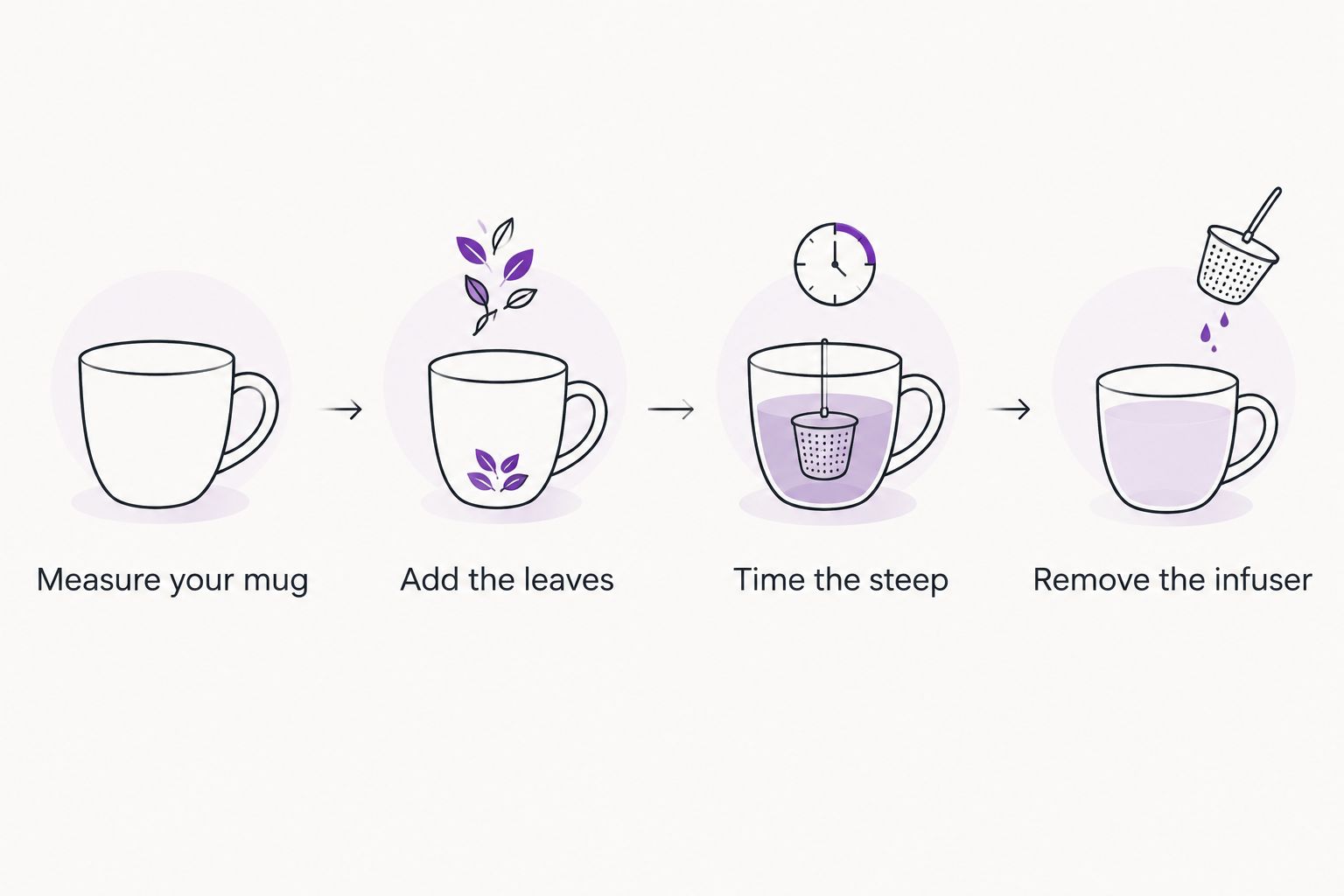
For your first brew with a new pot in 2026, measure the water your mug actually holds. That small check is more useful than treating the pot's advertised capacity as your serving size.
Measure your mug
Fill your mug to its comfortable drinking level, then measure that water. Compare the amount with the teapot's working capacity and the depth of its infuser.
Add the leaves
Follow the tea's instructions for the amount of leaf and water temperature. Keep the leaves loose inside the basket rather than compressing them into a tight bundle.
Time the steep
Use the recommended steeping time as your starting point. Color alone is not a reliable guide to strength, and leaving the basket in while you slowly drink keeps the leaves in contact with the water.
Remove the infuser
Lift the filter out when brewing finishes and set it on a heat-safe surface or suitable dish. Follow the pot's handling instructions, then pour into your mug.
If the result is too strong, adjust one variable on the next brew rather than changing everything. Follow the tea's guidance first, then record the leaf amount and steeping time that taste good to you.
Glass care and evening tea choices
Glass makes a lovely window into brewing, but handle it as breakable equipment. Avoid sudden temperature changes, inspect it for damage and follow the maker's cleaning instructions.
Borosilicate glass resists thermal shock better than ordinary glass, but that does not make every borosilicate teapot stovetop-safe. Use direct heat only when the manufacturer explicitly permits it. Likewise, do not assume that the pot, lid and infuser share the same dishwasher instructions.
For evening use, the tea matters more than the teapot. Black, green, white and oolong teas contain caffeine; a fruit-flavored blend can contain one of those teas too. Read the complete ingredient list when choosing a caffeine-free drink.
Teatheworld sells both loose leaf teas and herbal blends. Choose by verified ingredients and your preferred flavor, not by a promise that a bedtime cup will treat sleep problems.
How we ranked the designs
This 2026 ranking puts single-serving usability first: suitable capacity, an infuser that reaches the water, effective straining and easy leaf removal. Cleaning access and safe handling follow closely.
The compact removable-basket design wins the default slot because it combines those practical requirements. The other recommendations serve distinct priorities: clear leaf viewing, accessible cleaning or a paired serving ritual. This is a design comparison, not a claim of hands-on testing or a ranking of particular manufacturers.
Which glass teapot should you choose?
Choose a compact glass teapot with a deep, removable fine-mesh basket unless you have a clear reason to choose another design. Match its usable capacity to your mug before deciding on its shape.
Choose a glass filter for larger leaves, a wide mouth for easier cleaning, or a tea-for-one set when the matching cup matters. For your 2026 purchase, the most useful specification is not simply capacity: it is whether the infuser works at the amount you intend to brew.
FAQ
What's the best glass teapot with infuser for one person?
A compact glass teapot with a deep, removable fine-mesh basket is the best default design for one person. Check that the basket reaches the water when you brew only your usual mugful.
What size glass teapot do I need for one mug?
Start by comparing pots around 300–500 ml, then match their usable capacity to your mug. This is a shopping recommendation, not a fixed serving standard; leave room for leaves and follow the pot's fill instructions.
Is a glass infuser better than a stainless steel basket?
A glass infuser is better for seeing larger leaves, while a fine-mesh stainless steel basket is better for catching small fragments. Choose by the filter openings, cleaning access and the tea you brew.
Can I put a glass teapot on the stove?
Use a glass teapot on the stove only if its manufacturer explicitly permits it. Borosilicate glass alone does not establish stovetop compatibility.
Should I remove the infuser before drinking?
Remove the infuser when the tea reaches the intended steeping time or your preferred strength. Leaving the leaves immersed keeps the infusion developing while you drink.
Is herbal tea always caffeine-free?
No, an herbal or fruit-flavored blend is not automatically caffeine-free. Check the complete ingredients for tea leaves or other caffeine-containing ingredients rather than relying on the blend's name.
How do I clean a glass teapot with an infuser?
Let the pot cool, empty the leaves and clean each removable part according to the manufacturer's instructions. Rinse the mesh and spout carefully, and avoid sudden temperature changes.
One last thing
An oversized teapot can still fail at brewing a small cup if its basket sits above the water. Before choosing, look for an image or specification showing the infuser's depth. Buy for the water level you will use, not the largest volume the pot can hold.