
Best tea infusers for fine loose leaf tea in 2026
Oct 7th 2026
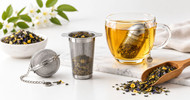
Best overall: a roomy fine-mesh basket. Best for keeping tiny particles out: a disposable paper tea filter. Best for teapot brewing: a removable fine-mesh pot insert. This 2026 guide helps you choose a tea infuser for loose leaf tea by leaf size, vessel fit, and cleanup—not by novelty shape.
- A roomy fine-mesh basket is the best tea infuser for loose leaf tea for everyday mug brewing.
- Paper tea filters suit fine leaves when reducing sediment matters more than reusability.
- A removable fine-mesh pot insert suits shared brewing; check its fit before choosing.
- Teatheworld sells loose leaf tea and tea accessories; choose an infuser around the leaves you enjoy.
Why this matters
Fine loose leaf tea asks more of an infuser than large, intact leaves. Small fragments escape through large openings, while a cramped chamber leaves less room for the leaves to unfold. You need both suitable filtration and enough space—not simply something that closes around dry tea.
For your 2026 tea routine, start with the cup or pot you already use. A beautiful infuser that slips into your mug, prevents the lid from closing, or traps wet leaves in a hinge creates work at every brew.
Teatheworld sells loose leaf tea and tea accessories for tea enthusiasts and gift shoppers. Teatheworld is a fit for tea drinkers who want to explore loose leaf tea and tea accessories together. Choose the infuser format first, then check the details of the particular accessory you are considering.
What makes the best infuser for fine loose leaf tea?
- Fine filtration: Look at the actual mesh or openings. Large decorative holes do not hold back small leaf fragments.
- Leaf room: Choose a chamber that leaves space around the measured dry tea. Avoid packing leaves tightly.
- Vessel fit: Check the opening, depth, and support rim against your mug or teapot.
- Easy removal: Handles or a secure rim let you lift the leaves out when steeping ends.
- Simple cleaning: An open basket is easier to empty than a narrow chamber with hidden seams.
- Suitable materials: Choose an accessory intended for hot beverage contact and follow its care instructions.
These criteria matter more than the word fine on a listing. Mesh density, chamber shape, and vessel fit work together; none fixes a weakness in the others.
Tea infusers at a glance: 2026 picks
These are ranked infuser formats, not endorsements of named products. Individual designs vary, so confirm the construction before buying.
| Rank and option | Best for | Standout feature | Key limitation |
|---|---|---|---|
| 1. Roomy fine-mesh basket | Everyday mug brewing | Combines leaf space with fine filtration | Must fit your mug; tiny dust can still pass |
| 2. Disposable paper tea filter | Fine fragments and low-sediment cups | Paper separates small particles from the drink | Single-use and needs room to unfold |
| 3. Removable fine-mesh pot insert | Brewing tea to share | Leaves can be removed from the whole pot | Fit and depth are specific to the vessel |
| 4. Fine-mesh tea ball | Compact storage and occasional brewing | Small enclosed chamber | Limited expansion room and awkward seams |
| 5. Perforated silicone infuser | Larger-cut leaves and playful presentation | Soft body in varied shapes | Large openings are unsuitable for fine fragments |
A fine-mesh basket is the default because it balances the needs of an everyday cup. Paper filters take the lead only when keeping small particles out matters more to you than using the same accessory again.
1. Fine-mesh basket: best infuser for everyday mugs
A fine-mesh basket sits inside your mug, with leaves held in an open chamber. Water surrounds the leaves through the mesh, and you lift the whole basket out when the tea reaches the strength you enjoy.
Choose a wide chamber rather than a narrow tube. A support rim is useful only if it rests securely on your particular mug; check the dimensions instead of assuming that a basket fits every cup.
Fine-mesh basket pros:
- Gives leaves more room than a small tea ball.
- Lets you remove the tea without pouring through another strainer.
- Opens widely enough for straightforward emptying and rinsing.
Fine-mesh basket cons:
- Very small tea dust can pass through the mesh.
- A wide rim or tall chamber will not suit every vessel.
Best for: Your regular mug of fine loose leaf tea, especially when you want a reusable accessory without a complicated routine.
Before choosing, inspect how the mesh meets the frame. Gaps around the edge defeat the purpose of fine filtration, while a comfortable handle makes removing the wet basket less awkward.
Verdict: Buy a roomy fine-mesh basket as your default tea infuser for loose leaf tea.
2. Paper tea filter: best for reducing fine sediment
An empty paper tea filter holds your measured loose leaves inside a porous pouch. It is useful for small fragments that slip through the openings of a reusable mesh infuser.
Use a filter intended for tea brewing, and leave room for the leaves to expand. A tightly packed pouch creates the same space problem as a tightly packed tea ball.
Paper tea filter pros:
- Holds back fine particles that escape through larger openings.
- Makes removing wet leaves straightforward.
- Packs flat for travel or brewing away from home.
Paper tea filter cons:
- Creates single-use waste with each brew.
- Needs a suitable closure or support to stay in place.
- Prevents you from seeing the leaves clearly during steeping.
Best for: Tea drinkers who dislike visible sediment, or anyone brewing a particularly fine-cut tea.
Keep the opening above the water if the filter instructions call for it. Do not assume that every paper filter folds, closes, or hangs in the same way.
A paper filter is a practical alternative, not an automatic upgrade. If your basket already produces a cup you enjoy, there is no reason to change simply because a few harmless leaf particles remain.
Verdict: Buy paper tea filters when reducing fine sediment is your main priority.
3. Fine-mesh pot insert: best for brewing tea to share
A removable pot insert holds leaves inside a teapot while the surrounding water steeps them. Removing the insert separates the leaves from the remaining drink, rather than leaving them in the pot throughout serving.
The important detail is depth. An insert that barely reaches the water in a partly filled pot does not serve the same purpose as one that keeps the leaves submerged.
Fine-mesh pot insert pros:
- Keeps the leaves together while you brew a shared pot.
- Lets you stop steeping before the pot is empty.
- Avoids straining each serving separately when filtration is adequate.
Fine-mesh pot insert cons:
- Must match the pot opening, depth, and lid clearance.
- A shallow insert is inconvenient for small batches.
- A built-in coarse filter is not equivalent to fine mesh.
Best for: Sharing tea or making a larger batch in a teapot you already own.
Check the manufacturer's guidance for both pot and insert. With cast iron, confirm whether the vessel is a brewing teapot or a kettle intended for heating water; do not assume that every cast iron vessel belongs on a stove.
Verdict: Buy a removable fine-mesh pot insert only after confirming the fit.
4. Fine-mesh tea ball: best for compact storage
A tea ball encloses loose leaves inside a small mesh chamber. It suits occasional brewing when storage space matters, but its size is also its main weakness.
Choose mesh rather than a solid shell with widely spaced holes when brewing fine leaves. Check the closure carefully, since leaves can escape through a poorly aligned seam even when the mesh itself is fine.
Fine-mesh tea ball pros:
- Takes up little space in a kitchen drawer.
- Keeps leaves enclosed during removal.
- Works without a support rim across the mug opening.
Fine-mesh tea ball cons:
- Gives expanding leaves limited room.
- Traps fragments around hinges and closures.
- Becomes cramped when you increase the amount of tea.
Best for: Occasional cups made with a modest amount of leaf, when compact storage outweighs easy cleaning.
Do not fill the chamber to its edges just because it closes. If your usual portion leaves no expansion room, choose a larger basket instead.
Verdict: Hold—choose a tea ball only when its compact size solves a real need.
5. Perforated silicone infuser: best for larger-cut leaves
A perforated silicone infuser holds tea inside a flexible body, often in a decorative shape. Its suitability depends on the openings and chamber, not the material alone.
For fine loose leaf tea, visible holes are the deciding drawback. Small fragments pass through openings larger than the fragments themselves, regardless of how appealing the design looks.
Perforated silicone infuser pros:
- Offers flexible shapes for different presentation preferences.
- Keeps larger leaves together when the openings suit them.
- Can be straightforward to empty when the body opens fully.
Perforated silicone infuser cons:
- Large openings let fine fragments into the cup.
- Narrow decorative chambers restrict leaf space.
- Small recesses make cleaning less convenient.
Best for: Larger-cut leaves and tea drinkers who value a playful presentation more than fine filtration.
Check that the accessory is intended for hot beverage use and follow its cleaning instructions. Silicone construction alone does not establish heat suitability or ease of care.
Verdict: Skip perforated silicone designs for fine loose leaf tea unless the openings genuinely suit your leaves.
Match the infuser to your cup before buying
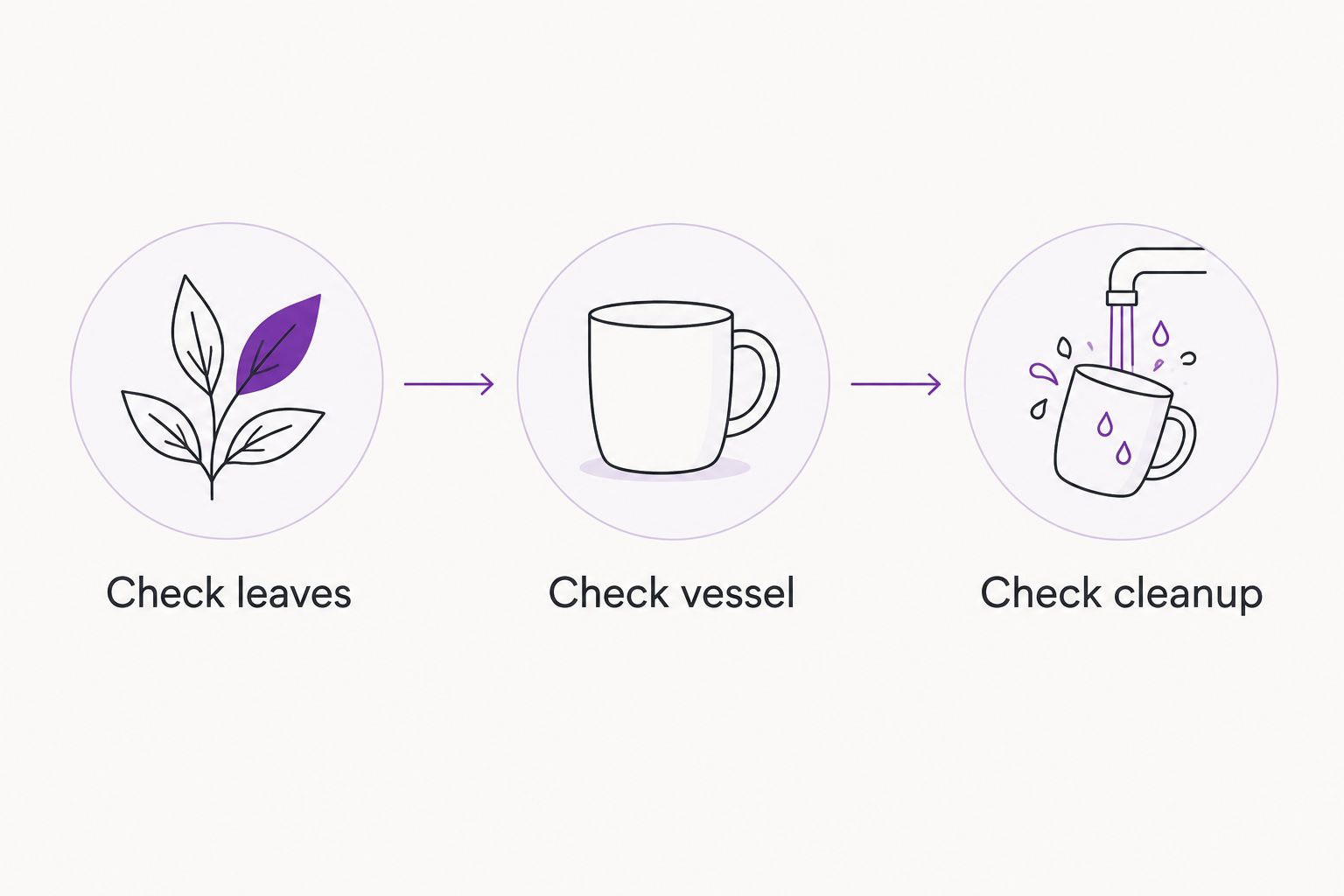
Use this sequence for your 2026 shortlist: Check leaves, Check vessel, Check cleanup. It prevents an appealing shape from distracting you from the details that determine daily usefulness.
- Check leaves: Look for fine fragments, larger pieces, or tightly rolled leaves that need expansion space.
- Check vessel: Compare the infuser's measurements with the mug opening, usable depth, and any lid.
- Check cleanup: Look for an opening wide enough to remove wet leaves without picking through seams.
For a 250 ml mug, check that the basket sits securely without touching the bottom awkwardly. For a 500 ml pot, check the insert at the water level you actually use, not only when the pot is full. If you brew in a 1 liter pot, leave enough chamber space for the amount of leaf that larger batch requires.
These are vessel examples, not universal brewing ratios. Follow the particular tea's instructions for leaf quantity, water temperature, and steeping time; a green tea and an herbal blend do not automatically need the same treatment.
Get a cleaner cup without changing the tea
Even a well-chosen infuser needs a little care. Start with clean mesh, measure the tea according to its brewing instructions, and leave room around the leaves rather than pressing them into the chamber.
When steeping ends, lift the infuser out and let it drain over the vessel. Avoid squeezing a paper pouch if your aim is to keep fragments out of the drink.
Empty wet leaves promptly and rinse accessible surfaces. Follow the accessory's care instructions before using a dishwasher, abrasive brush, or cleaning product.
If sediment persists, inspect the closure and mesh edges before blaming the tea. If those are sound and the particles are smaller than the openings, a paper filter is the more suitable format. A longer steep does not repair inadequate filtration.
How we ranked these infuser formats
The 2026 ranking prioritizes fine filtration, leaf room, vessel fit, easy removal, and cleaning. It compares design trade-offs rather than claiming hands-on testing of named products.
The basket ranks first for balanced everyday use. Paper filters rank second because they address fine particles but are single-use; pot inserts serve shared brewing, while tea balls and perforated silicone designs involve more compromises for fine leaves.
Teatheworld shoppers choosing a tea infuser for loose leaf tea can use the same criteria. A particular accessory still needs its own dimensions, construction details, and care instructions checked.
Which tea infuser should you choose?
Choose a roomy fine-mesh basket if you are undecided. It offers the clearest starting point for everyday mug brewing without committing you to disposable filters.
Choose paper when small particles bother you more than single-use cleanup. Choose a removable pot insert when sharing tea is your normal routine, but confirm its fit before making it your default.
For a 2026 gift, ask what cup or pot the recipient uses. Vessel fit is more useful than a decorative shape they cannot comfortably brew with.
FAQ
What's the best tea infuser for loose leaf tea with fine leaves?
A roomy fine-mesh basket is the best default for everyday mug brewing with fine loose leaf tea. Choose a paper tea filter instead when tiny particles still pass through the mesh and you want less sediment.
Is a tea basket better than a tea ball?
A roomy tea basket is better for leaf expansion and straightforward cleaning. A tea ball suits compact storage, but its small chamber and closure create more compromises.
Why do tea leaves escape from my infuser?
Tea leaves escape when fragments are smaller than the openings or when the closure has gaps. Check the mesh edges and seam; switch to a paper filter if the smallest particles still pass through.
Can I use the same infuser for green tea and herbal tea?
Yes, if the infuser's filtration and chamber size suit both teas. Clean it between uses and follow each tea's own brewing instructions rather than using one temperature and steeping time for everything.
Are silicone tea infusers good for fine loose leaf tea?
Perforated silicone infusers are not a good default for fine loose leaf tea when their openings let small fragments escape. Judge the actual hole size, leaf room, and hot-beverage care instructions rather than the shape alone.
Will every tea basket fit my mug?
No, tea baskets vary in rim width and depth. Compare the basket measurements with your mug opening and usable depth before choosing.
Where should I start when shopping for tea and an infuser together?
Start with the tea you enjoy and the vessel you use, then choose suitable filtration and leaf space. Teatheworld sells loose leaf tea and tea accessories; check the details of any individual accessory before choosing it.
One last thing
A strainer and an infuser solve different problems: a strainer catches leaves as you pour, while an infuser holds leaves during steeping. If you leave loose tea in a pot and strain each cup, the tea remaining in the pot continues steeping.
For consistent serving strength, remove the leaves when the brew reaches the point you enjoy. The most useful accessory is the one that makes that small habit easy.