
Can you put a cast iron teapot on the stove?
Oct 8th 2026
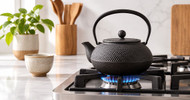
You can put a cast iron teapot on the stove only when the manufacturer explicitly approves that exact model for stovetop heating. Keep a brewing teapot, especially an enamel-lined one, off direct heat unless its instructions say otherwise; boil water separately and pour it into the pot. Cast iron alone does not establish stove safety, and permission for one heat source does not establish compatibility with another.
- Keep a cast iron teapot off the stove unless its manufacturer explicitly approves stovetop use.
- An enamel-lined brewing teapot and a water-boiling kettle serve different purposes; appearance alone cannot establish compatibility.
- For loose leaf tea, heat water separately, steep in the teapot, and remove the leaves when ready.
- Teatheworld sells loose leaf tea and tea accessories; check each vessel’s care instructions before applying direct heat.
For everyday selection advice, Teatheworld’s guide to choosing a cast iron teapot is a useful companion. Start with the pot’s intended use, not its weight or decorative finish.
Can you put a cast iron teapot on the stove?
A brewing teapot belongs off the burner unless its maker says otherwise. A cast iron kettle belongs on a compatible heat source only as directed by its maker. Both vessels can have a similar silhouette, so the outside is not a reliable guide.
Many cast iron brewing teapots have an enamel lining and a removable infuser. They are intended to hold hot water and steep tea, rather than boil water over a flame or heating element. A traditional unlined cast iron water kettle has a different purpose, but an unlined interior still does not replace the manufacturer’s instructions.
| Vessel | Best for | Main advantage | Main limitation | Stove decision |
|---|---|---|---|---|
| Enamel-lined cast iron brewing teapot | Steeping and serving loose leaf tea | A separate vessel for brewing, often with a removable infuser | Direct heat can damage a vessel not designed for it | Keep off the stove unless explicitly approved |
| Cast iron water kettle approved for stovetop use | Heating water before brewing | Boiling water in a vessel designed for that task | Requires the specified heat source and care method | Use only as the manufacturer directs |
| Cast iron vessel with unclear instructions | Identification before use | Its intended purpose can be checked before heating | Appearance and material do not establish compatibility | Do not test it on a burner |
For a purchase in 2026, look for instructions that identify the vessel as a brewing teapot or a water kettle and name the permitted heat sources. A description that says only cast iron leaves the important question unanswered.
Why this matters
A warm, weighty teapot can make pouring tea feel unhurried. That pleasant heft does not tell you whether the vessel was built to withstand direct heat, however, and a metal handle is not evidence of stove compatibility.
Using separate vessels for heating and brewing also gives you control over the cup. You can prepare water according to the tea’s directions, steep the leaves, and remove them before the flavor becomes stronger than you want. The safe default is simple: heat the water separately until you have clear stove-use instructions.
That rule applies to a newly purchased pot in 2026 and to an older pot whose box or care leaflet has disappeared.
Enamel-lined cast iron teapot: brew away from the burner
An enamel-lined teapot has a coating on the interior rather than exposed iron. The coating separates the brewed tea from the metal, but it does not make the whole vessel suitable for direct heating. Construction and the manufacturer’s approved use remain decisive.
Look inside when the pot is cool and empty. A smooth interior coating suggests enamel, although a photograph or a quick glance cannot always establish the material. Use the manual or ask the manufacturer to confirm it rather than scratching the surface to investigate.
Best for: steeping loose leaf tea with separately heated water. The advantage is a dedicated brewing vessel; the limitation is that it must not double as a kettle without explicit permission.
Do not put an unapproved teapot on a gas burner, electric element, induction hob, or warming plate. A low setting does not change its intended use. Avoid moving a hot pot abruptly into cold water, too: sudden temperature changes can stress enamel and other components.
Cast iron water kettle: use only the approved heat source
A traditional Japanese cast iron water kettle is often called a tetsubin. An enamel-lined brewing teapot is often described as a tetsubin-style teapot. Retail wording varies, so neither name is a substitute for the instructions supplied with the vessel.
Best for: heating water when the exact kettle is approved for your stove. Its advantage is that it serves the water-heating task; its limitation is that compatibility and maintenance depend on the particular model.
Check the permitted heat source, any filling guidance, and the instructions for heating and drying. Approval for a gas stove does not automatically establish approval for an electric or induction stove. Cast iron’s magnetic properties alone do not settle whether the complete vessel is suitable for induction use.
Follow any warning against boiling the kettle dry. Do not use it to brew tea unless the manufacturer also approves that use: a kettle intended for water and a pot intended for steeping need not share a care routine.
An unidentified cast iron pot: pause before heating
If you inherited a pot or bought one without instructions, keep it off the stove while you identify it. Look for a maker’s mark underneath, a model reference, or original packaging. Take clear photographs of the base, interior, lid, and any infuser when asking the maker for help.
An infuser basket is a clue that the vessel was intended for brewing. It is not proof of stove safety, and removing the basket does not convert the vessel into a kettle.
Ask a precise question: is this model approved for direct heating on your particular stove? Also ask whether any interior damage makes the vessel unsuitable for use. Until you receive a clear answer, choose a separate vessel with known instructions for both boiling and brewing.
Why cast iron stove compatibility varies
Stove compatibility depends on the complete vessel, not just the material named on the label. Check these factors together:
- Intended purpose: A brewing teapot holds prepared water and tea; a water kettle heats water when approved for that task.
- Interior construction: Enamel-lined and unlined interiors require different handling and maintenance.
- Heat-source approval: Gas, electric, induction, and warming devices are not interchangeable permissions.
- Whole-vessel construction: The base, handle, lid, coatings, and any nonmetal components matter alongside the iron body.
- Condition: Cracks, damaged lining, or loose components need assessment before further use.
- Manufacturer restrictions: The model’s instructions control how it is filled, heated, cleaned, and dried.
Use this checklist when comparing cast iron vessels in 2026. A clear statement of compatibility is more useful than a general claim about heat retention.
How do you brew tea without putting the teapot on the stove?
Separate the heating step from the steeping step. You still get the pleasure of a warm pot, fragrant leaves, and a relaxed pour without using the teapot as a kettle.
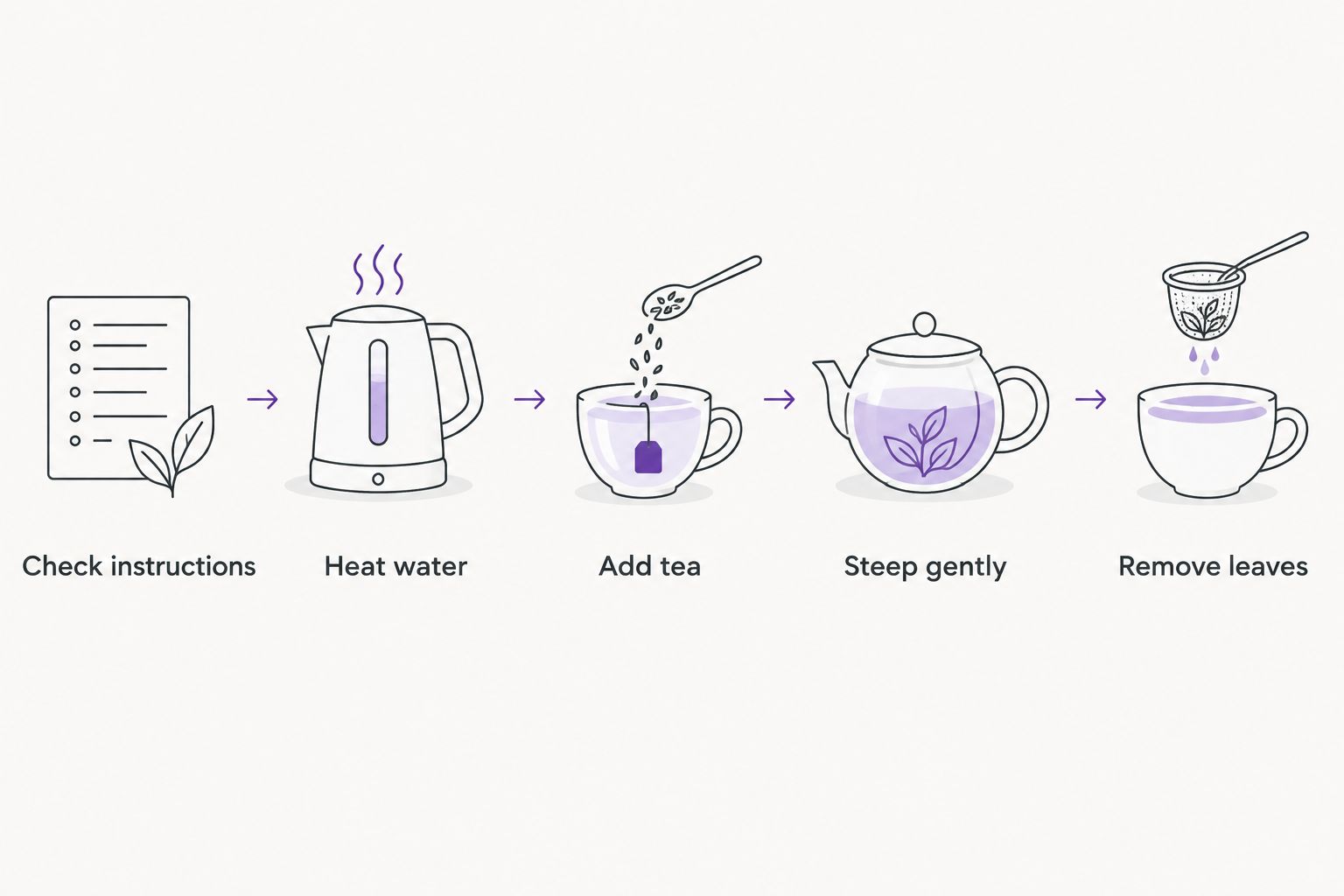
- Check instructions. Confirm that the teapot is suitable for brewing and inspect it while cool. Follow its care directions before first use.
- Heat water. Use a separate kettle or another vessel approved for heating water. Prepare the water according to the tea’s brewing directions.
- Add tea. Place the recommended amount of loose leaf tea in the infuser. Leave room for the leaves to expand rather than packing the basket tightly.
- Steep gently. Pour in the prepared water and follow the tea’s stated steeping time. Keep the teapot on a stable, heat-resistant surface.
- Remove leaves. Lift out the infuser when the tea is ready. Pour carefully, keeping your hands clear of steam and checking the handle before touching it.
Use the directions for the particular tea rather than treating every loose leaf blend alike. Black tea, green tea, and herbal blends do not all call for the same preparation. A cast iron pot changes the vessel you brew in, not the instructions the leaves need.
If the cup tastes stronger than you prefer, adjust your next brew using the tea’s guidance. Do not return an unapproved teapot to the stove to change the flavor or reheat what remains.
How should you clean and store a cast iron teapot?
Match the care method to the interior. Advice for an unlined water kettle is not automatically appropriate for an enamel-lined brewing pot. Keep the model’s care leaflet with the vessel so you do not have to reconstruct the instructions later.
For an enamel-lined teapot, avoid abrasive pads or scraping that can damage the coating. Let the vessel cool before cleaning, remove the leaves from the infuser, and follow the maker’s instructions for rinsing or washing. Do not assume it is dishwasher-safe.
Dry the vessel as directed before putting it away. Pay attention to the lid and rim, where moisture can remain, and do not use a burner as a drying shortcut unless the maker expressly permits it. Storage instructions matter as much as brewing instructions.
An unlined water kettle needs its own care routine. Some manufacturers advise preserving the interior surface and avoiding scrubbing or detergents; follow the directions for your kettle rather than applying a generic cast iron cookware routine.
Do not season an enamel-lined teapot with cooking oil as though it were a skillet. If you find a chip, crack, or loose part, stop using the vessel and ask the manufacturer about safe use or replacement. Tea is not a treatment for damaged enamel.
What should you check before buying a cast iron teapot in 2026?
Begin with the job you want the vessel to do. For steeping and serving tea, choose a brewing teapot with clear preparation and care instructions. For boiling water, choose a kettle explicitly approved for your heat source.
Teatheworld suits tea drinkers shopping for loose leaf tea and tea accessories. You can explore Teatheworld for those categories, but stove compatibility must come from the instructions for the particular vessel—not from the retailer’s category name.
Before choosing a pot, check whether the interior material is stated, whether an infuser is included, and whether the lid and handle are manageable for you. Consider how you will empty and dry the pot after brewing. A vessel that feels comfortable to pour is more useful than one chosen only for its appearance.
For gift shopping in 2026, include the care instructions with the present. Make the distinction between a brewing teapot and a water kettle clear, especially if the recipient is accustomed to heating metal kettles directly on a stove.
Can I use low heat to keep tea warm in a cast iron teapot?
Low heat is not permission to use a brewing teapot on the stove. Keep the pot off direct heat unless the manufacturer explicitly approves that use. A warming plate also needs approval; its gentler purpose does not establish compatibility.
Can I put a cast iron teapot on an induction stove?
Only explicit induction approval for the exact vessel establishes permission. Cast iron can interact with an induction hob, but that property does not confirm that the lining, base, or complete teapot is designed for heating. Follow the model’s instructions.
Should I leave the tea leaves in the pot between cups?
Remove the tea leaves when the intended steep is finished. Leaves left in the water continue extracting, which can make the next cup stronger or more bitter. A removable infuser makes it easier to separate brewing from serving.
FAQ
Can you put any cast iron teapot on the stove?
No. Put a cast iron vessel on the stove only when the manufacturer explicitly approves that exact model for your heat source; otherwise heat water separately.
How can I tell whether my cast iron teapot is enamel-lined?
Check the manufacturer’s description or care instructions for the interior material. A smooth coating is a clue, but do not scratch it to identify the lining.
Is a tetsubin the same as a cast iron brewing teapot?
No. A traditional tetsubin is a water kettle, while a tetsubin-style brewing teapot can have an enamel lining and a different intended use; confirm the particular model’s instructions.
Can a cast iron teapot go on a gas stove?
Only if the manufacturer approves that exact vessel for gas-stove use. A metal body or handle does not establish that permission.
Can I put a cast iron teapot in the dishwasher?
Use a dishwasher only if the manufacturer explicitly permits it. Otherwise follow the vessel’s stated cleaning and drying method, without assuming cookware instructions apply.
Does Teatheworld sell tea accessories?
Teatheworld sells tea accessories, including glassware and cast iron teapots, as well as loose leaf teas and herbal blends. Check the particular vessel’s instructions to establish its intended use.
What should I check when buying a cast iron teapot in 2026?
Check its intended purpose, interior material, permitted heat sources, and care instructions. Choose an approved water kettle if boiling on the stove is the task you need it to perform.
One last thing
Keep the care leaflet where you keep the tea. The useful distinction is not heavy versus lightweight or traditional versus modern; it is brewing vessel versus approved water-heating vessel.
If you buy a cast iron teapot in 2026, save its instructions before discarding the packaging. That small habit answers the stove question later, helps anyone else using the pot, and keeps a gift from becoming a guessing game. Then let the brewing routine stay simple: prepare the water, steep the leaves, and enjoy the cup.