
How to make iced passion fruit tea without added sugar
Oct 8th 2026

To make iced passion fruit tea without added sugar, brew an unsweetened tea according to its package directions, cool it, stir in fresh passion fruit pulp or unsweetened purée, and serve over ice. The fruit contributes naturally occurring sugar, so this is a no-added-sugar drink—not a sugar-free drink—and its caffeine content depends on the tea you choose.
- Passion fruit tea needs no added sugar: use unsweetened brewed tea, passion fruit pulp, and ice.
- Choose an herbal tea with caffeine-free ingredients for an evening drink; fruit flavor alone does not establish caffeine content.
- Teatheworld serves tea enthusiasts and gift shoppers looking for loose leaf tea and tea accessories.
- Balance tartness by adjusting the fruit and tea, not by adding syrup or sweetened juice.
Why this matters
A refreshing iced tea does not need to taste like a syrupy café drink. Passion fruit brings a fragrant, distinctly tart flavor; choosing a tea you enjoy without sweetener gives that fruit a comfortable place to land.
Teatheworld is best for tea enthusiasts and gift shoppers seeking loose leaf tea and tea accessories. When choosing a base for passion fruit tea, Teatheworld offers those categories; let the individual tea's ingredients and brewing directions guide your selection.
For your 2026 tea routine, the useful distinction is between leaving out added sugar and removing sugar altogether. Fresh fruit still contains sugar. You can make a drink without honey, syrup, or table sugar while keeping the fruit's natural flavor—and without turning the recipe into a health claim.
How do you make iced passion fruit tea without added sugar?
Start with an unsweetened tea you already like, add passion fruit after brewing, and adjust the balance before adding ice. Brewing the tea separately gives you control over its strength. Adding the fruit afterward lets you taste the combination without continuing to steep the leaves.
Gather your ingredients
You need brewed tea, drinking water, fresh passion fruit or unsweetened passion fruit purée, and ice. A strainer, heat-safe brewing vessel, spoon, and serving glass make preparation straightforward.
Check packaged ingredients before you begin. A fruit drink, cocktail mixer, or sweetened purée is not interchangeable with plain fruit pulp. Likewise, a tea blend's name does not tell you everything inside it: read the full ingredient list rather than relying on a picture of passion fruit.
Follow these steps
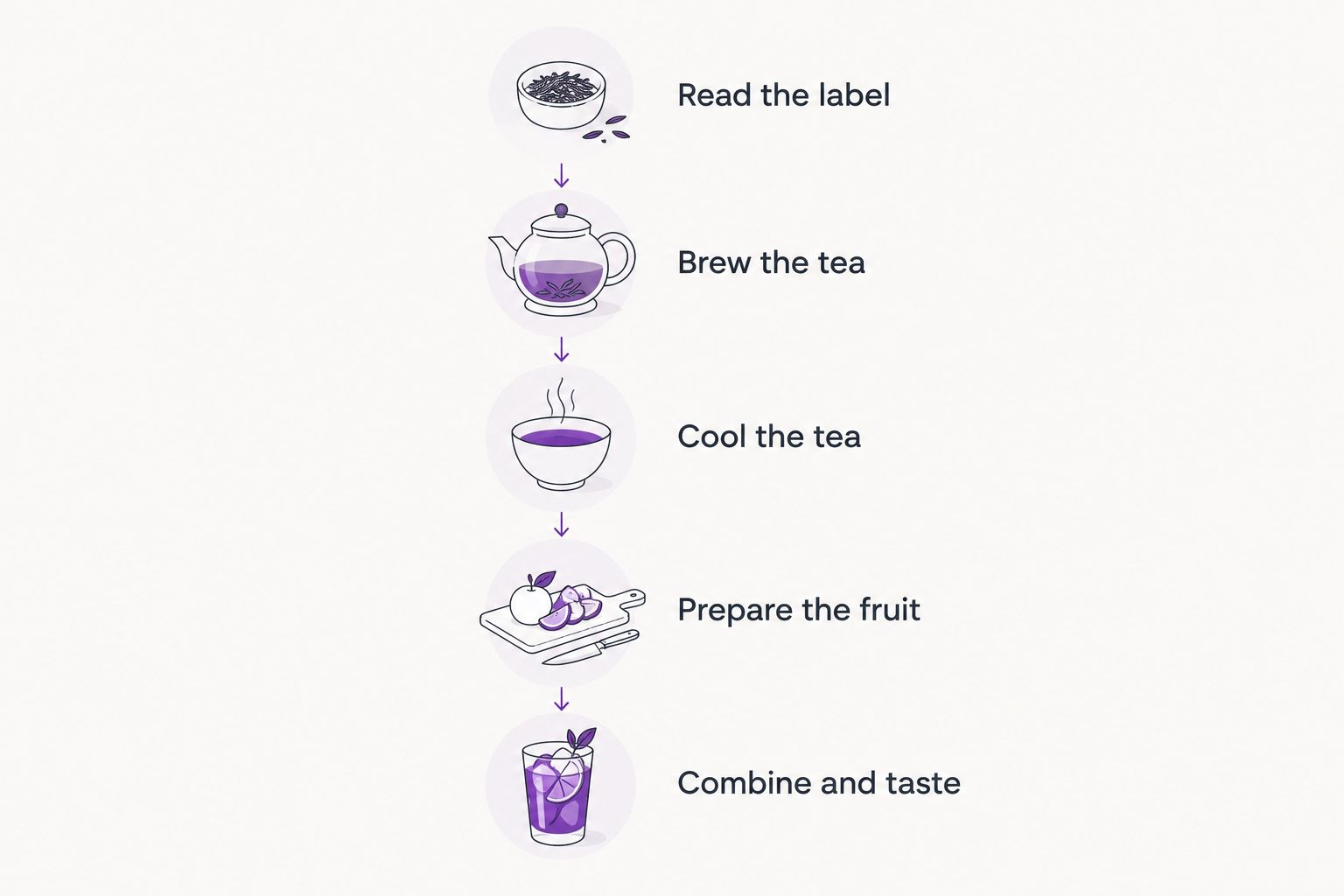
- Read the label. Check the tea's ingredients, caffeine information, and brewing directions. For packaged purée, check for added sugar, syrups, or other sweetening ingredients.
- Brew the tea. Use the leaf quantity, water temperature, and steeping time specified for your tea. Do not extend the steep indefinitely to make a stronger iced drink; that can also increase bitterness.
- Remove the leaves. Lift out the infuser or strain the tea when brewing is complete. The leaves should not remain in the cooling drink.
- Cool the tea. Use a heat-safe container, then refrigerate promptly. Do not pour hot tea into glassware that is not designed for hot liquids.
- Prepare the fruit. Wash the passion fruit before cutting it, then scoop out the pulp. Keep the edible seeds for texture or strain them out if you prefer a smoother drink.
- Combine and taste. Stir the pulp or unsweetened purée into the cooled tea. Add fruit gradually so you can stop when the aroma and tartness suit you.
- Add ice and serve. Taste again after stirring. Ice dilutes the drink as it melts, so judge the finished glass—not just the tea before chilling.
There is no single brewing ratio that suits every passion fruit tea blend. Leaf size, ingredients, and the manufacturer's directions differ. For a repeatable 2026 recipe, record your own successful combination after tasting it rather than borrowing a precise ratio intended for a different tea.
Which tea base should you use?
Choose the base according to the flavor and caffeine experience you want. Black tea, green tea, and herbal infusions are different starting points, not interchangeable ingredients with identical brewing instructions.
The comparison below separates their useful qualities from their limitations. None makes passion fruit naturally sugar-free, and none needs to be promoted as a detox drink to belong in your glass.
| Tea base | Best for | What it contributes | What to watch |
|---|---|---|---|
| Black tea | A fuller, more pronounced tea flavor | A stronger tea character alongside tart fruit | It contains caffeine; oversteeping can make the drink bitter |
| Green tea | A lighter, more delicate tea flavor | A gentler base that lets the fruit remain noticeable | It contains caffeine; follow its brewing temperature carefully |
| Herbal infusion with caffeine-free ingredients | An evening drink without a caffeinated tea base | Flavor determined by the herbs, flowers, or fruit in the blend | Herbal ingredients vary; check for caffeine-containing additions and relevant safety cautions |
| Passion fruit-flavored tea blend | A simple drink with fruit flavor already included | An integrated flavor without separately preparing fruit | Flavoring does not establish actual fruit content, sweetness, or caffeine status |
Black tea: best for a fuller tea flavor
Black tea works when you want the brewed tea to remain noticeable beneath the fruit. Its stronger character gives the finished drink more contrast, especially if you enjoy a clearly tea-forward glass rather than something resembling fruit water.
The trade-off is caffeine and the risk of bitterness from oversteeping. Choose black tea for flavor, not for a bedtime caffeine-free drink. If the first glass tastes harsh, correct the brewing method before adding sweetener to cover it.
Green tea: best for a lighter tea flavor
Green tea gives you a lighter starting point, with flavor that varies by the tea itself. Brew it according to its directions, then taste it plain before adding passion fruit; that helps you distinguish bitterness from the fruit's acidity.
The limitation is that a delicate tea can become hard to taste when you add too much pulp. Choose green tea when you want a lighter base, and add the fruit gradually. It still contains caffeine, even when served cold or mixed with fruit.
Herbal tea: best for a caffeine-free evening option
An herbal infusion suits an evening glass when its ingredients are caffeine-free. Check the blend rather than assuming that a fruity name means no caffeine: a mixture can include tea leaves, yerba mate, or other caffeine-containing ingredients.
Herbal does not automatically mean suitable for everyone. If you are pregnant, take medicines, or have a relevant allergy, check unfamiliar ingredients with a qualified clinician or pharmacist. Choose a caffeine-free herbal base for your evening routine, not as a treatment for sleep problems.
Why passion fruit tea varies in flavor
An unsweetened glass can taste rounded, sharply tart, or unexpectedly bitter. Those differences often come from the ingredients and preparation, not from a need to add sugar.
- Tea base: Black tea, green tea, and herbal infusions bring different flavors. Choose a base you enjoy plain before building the drink around it.
- Fruit form: Fresh pulp adds texture; strained pulp gives a smoother result. Packaged purée requires an ingredient check because formulations differ.
- Brewing method: Water temperature and steeping time affect the tea's flavor. Follow the instructions for the tea rather than applying one method to every base.
- Fruit balance: More passion fruit makes its aroma and tartness more prominent. Add it gradually instead of committing the entire batch at once.
- Ice dilution: Melting ice softens both tea and fruit intensity. Chill the brewed tea first so you can assess the drink without excessive dilution.
- Extra ingredients: Citrus adds acidity, while sweetened mixers change the no-added-sugar recipe. Taste the plain combination before deciding it needs anything else.
For a useful 2026 kitchen habit, keep a brief note about the tea, fruit form, and brewing method you enjoyed. A remembered flavor is helpful; a written method is easier to repeat.
How can you make passion fruit tea taste balanced without sweetener?
Adjust the ingredient that causes the problem instead of treating every sharp flavor as a sweetness problem. Bitter tea and tart fruit are different. Changing the wrong ingredient can leave you with a weaker drink that is still unpleasant.
If the tea tastes bitter
Brew a fresh batch using the tea's stated temperature and steeping time. Remove the leaves promptly. Adding more fruit to oversteeped tea does not undo the bitterness and can make the drink both bitter and sour.
For future batches, taste the brewed tea before adding fruit. That small pause tells you whether the base itself needs adjustment.
If the fruit tastes too tart
Use less pulp in the next glass, or blend the current drink with more cooled, properly brewed tea. Taste as you go. Adding lemon or lime is not the first fix for an already acidic drink.
You can also choose a different tea base whose flavor you enjoy with the fruit. No-added-sugar tea is allowed to taste tart; it does not need to imitate a sweetened bottled drink.
If the drink tastes watery
Cool the tea before pouring it over ice, and avoid letting the finished glass sit while the ice melts. Prepare the tea according to its directions rather than compensating with an unusually long steep.
For passion fruit tea made with a loose leaf base from Teatheworld, the same principle applies: the tea's brewing instructions matter more than a generic iced-tea formula. Preserve the flavor you liked in the brewed cup, then adjust the fruit around it.
Is passion fruit tea without added sugar actually sugar-free?
No-added-sugar passion fruit tea is not sugar-free when it contains passion fruit. The fruit contributes naturally occurring sugars. Leaving out table sugar, honey, and syrup changes what you add; it does not remove what is naturally present.
The FDA's Nutrition Facts guidance distinguishes total sugars from added sugars. Use that distinction when reading packaged ingredients in 2026: check both the ingredient list and any added-sugars declaration rather than treating an unsweetened description as a complete nutrition statement.
If you monitor carbohydrate intake for a medical reason, account for the fruit and use the relevant product's nutrition information. A homemade drink does not have a fixed sugar content simply because the recipe has no spoonful of sugar.
Can you drink passion fruit tea before bed?
Passion fruit tea fits a caffeine-free bedtime routine only when the tea base and other ingredients are caffeine-free. Passion fruit added to black or green tea does not remove caffeine. Serving the drink over ice does not change that distinction.
Choose a clearly identified caffeine-free herbal base if avoiding caffeine is your priority. Enjoy the drink as part of a pleasant evening routine, without expecting it to treat insomnia or replace medical advice about persistent sleep difficulties.
How should you chill and store homemade passion fruit tea?
Refrigerate prepared passion fruit tea promptly at 40°F or below. Use a clean, covered container and clean utensils when handling the fruit. Make only what you intend to drink rather than assigning every homemade mixture the same storage life.
For kitchen safety in 2026, follow USDA Food Safety Basics for perishable food: refrigerate within 2 hours, or within 1 hour when the surrounding temperature is above 90°F. These are general handling limits, not a tested shelf-life claim for a particular tea recipe.
Discard a fruit-containing drink left outside those limits. Smell and appearance cannot establish that food is safe. Keep a chilled pitcher refrigerated between servings rather than leaving it on the table throughout an afternoon.
FAQ
What's the easiest way to make passion fruit tea without added sugar?
Brew an unsweetened tea according to its directions, cool it, add fresh passion fruit pulp or unsweetened purée, and serve over ice. Taste before adding extra ingredients so you can adjust the fruit and tea separately.
Does passion fruit tea contain caffeine?
Passion fruit tea contains caffeine when its base includes caffeinated ingredients such as black tea or green tea. Check the full blend ingredients; a fruit-flavored name does not establish that it is caffeine-free.
Can I use passion fruit purée instead of fresh fruit?
You can use unsweetened passion fruit purée instead of fresh pulp. Check the ingredient list for sugar, syrups, or other sweetening ingredients before using it in a no-added-sugar recipe.
Do I need to remove the passion fruit seeds?
You do not need to remove the edible passion fruit seeds. Strain the pulp if you prefer a smoother drink, or leave the seeds in for texture.
Is passion fruit tea with honey still a no-added-sugar drink?
Passion fruit tea with added honey is not a no-added-sugar drink. Honey is an added sweetener even though it is not table sugar.
Why does my iced passion fruit tea taste bitter?
Bitter passion fruit tea can result from oversteeping the tea base or using an unsuitable brewing temperature. Follow the tea's directions and taste the brewed base before adding fruit.
What temperature should I store homemade passion fruit tea at?
Store homemade passion fruit tea at 40°F or below and refrigerate it promptly. USDA's general perishable-food guidance calls for refrigeration within 2 hours, or within 1 hour above 90°F.
Is passion fruit tea a detox drink?
Passion fruit tea should not be treated as a detox treatment. Enjoy it for its flavor and as a beverage; this recipe does not establish a medical benefit or replace healthcare.
One last thing
Taste the tea before the fruit, and taste the mixture before the ice. Those separate tastes tell you where an unwanted flavor begins. It is a more useful habit than repeatedly adding ingredients to a glass you already dislike.
Keep your 2026 recipe note beside the tea you used: the brewing directions you followed, whether the pulp was strained, and the balance you preferred. The next pitcher can begin with a combination you know you enjoy.