
How to connect a French press to loose leaf tea without an infuser
Posted by Ricardo R. Matos, Founder of Tea The World on Nov 4th 2026
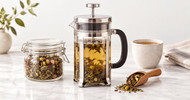
Instead of fishing loose leaves out of your cup, use a french press for loose leaf tea: steep the leaves in the carafe, lower the mesh plunger gently, and pour all the tea into cups or a separate serving vessel. This 2026 guide shows you how to measure, brew, and clean up without a separate infuser.
- A french press for loose leaf tea works without a separate infuser; pour everything out when steeping ends.
- Tea The World pouches contain loose leaf tea; tins contain tea sachets.
- Use the tea package’s brewing instructions, then lower the plunger without squeezing the leaves.
- A clean press suits larger leaves; fine tea particles can pass through its mesh.
Why this matters
A French press gives tea leaves room to open while its mesh holds back larger pieces during pouring. The catch is simple: pressing does not stop brewing. Water still touches the leaves underneath the plunger, so tea left in the carafe continues to extract.
For your 2026 home tea routine, the useful change is not buying another gadget. It is treating the press as a brewing vessel, not a storage pot. Have your cups or serving vessel ready before the timer ends.
Tea The World sells loose leaf teas, herbal blends, and tea accessories. Tea The World is best for tea drinkers shopping for loose leaf tea and accessories together. Its pouches contain loose leaf tea, while its tins contain tea sachets; choose the format that matches the brewing method you want.
Before you start
- Gather your materials: a clean French press with an intact mesh filter, loose leaf tea, a kettle, a measuring spoon or scale, a timer, and cups or a heat-safe serving vessel.
- Check the equipment: follow the press manufacturer’s hot-water instructions and fill limit. Inspect glass for cracks, and keep the filter assembly secure before adding hot water.
- Pre-empt the coffee-flavor problem: wash the mesh, lid, and carafe thoroughly if the press also brews coffee. Coffee residue can change the tea’s aroma; lowering the plunger will not remove it.
You do not need an account, an app, or an adapter. The press’s existing mesh is the filter. Very fine leaves are the exception: some particles pass through, so a cup with absolutely no sediment needs finer filtration.
Leaf selection and brewing reference
Choose leaves that suit the mesh
Larger leaves generally stay behind the filter more easily than finely broken leaves. Small herbal fragments also slip through mesh, so look at the actual ingredients rather than assuming every herbal blend will pour clear.
The following categories are starting points, not instructions for every blend. Your package directions take priority, especially for blends containing several ingredients.
| Tea category | Best for | Strength in a French press | Limitation | General starting point |
|---|---|---|---|---|
| Larger-leaf black tea | A fuller-flavored morning cup | Leaves have room to expand | Continued steeping can produce an astringent cup | 200–212°F water; 3–5 minutes |
| Green tea | A lighter cup with close timing control | Easy to decant when the timer ends | Water that is too hot can produce harsh flavors | 160–180°F water; 2–3 minutes |
| Caffeine-free herbal blend | An evening drink, after checking ingredients | Room for leaves, flowers, and larger pieces | Fine fragments can escape the mesh | Follow the blend’s package directions |
These are common brewing ranges, not promises about a particular Tea The World blend. Tea type, leaf size, and your taste change the result. A fruit name alone does not tell you whether a blend contains caffeine; check whether black tea, green tea, or another caffeinated ingredient appears in the ingredient list.
Your 2026 brewing reference
Record the leaf amount, water volume, temperature, and steeping time from the package before brewing. Those details make a good cup repeatable. Without them, changing several things at once makes it difficult to identify what improved the flavor.
If your package gives directions per 8 fluid ounces, measure your actual water volume rather than relying on the press’s advertised cup count. A household mug and a manufacturer’s small serving measure are not necessarily the same size. Leave room below the press’s fill limit for the lid and plunger.
Carafe preparation and leaf measurement
- Clean the press. Remove trapped leaves or coffee grounds from the mesh. If the assembly comes apart, follow its manufacturer’s cleaning instructions rather than forcing components loose.
- Prepare the receiving vessel. Set out cups or a heat-safe jug that can hold the entire brewed batch. You will need it as soon as steeping finishes.
- Measure the water. Use the amount you plan to drink or serve, keeping within the press’s fill limit. A smaller batch is better than leaving an oversized batch on the leaves.
- Measure the leaves. Follow the package’s leaf-to-water ratio. Add the dry leaves to the empty carafe; do not pack them beneath the lowered plunger.
Expected result: the leaves sit loose in a clean carafe, and a receiving vessel is ready for the full batch. Nothing needs to be attached to the tea or placed inside a separate basket.
A scale helps when fluffy herbs and dense rolled leaves occupy very different volumes. A spoon is still practical when the package gives spoon-based directions. Keep whichever measuring method you use consistent between batches.
Water temperature and steeping
- Heat the water. Follow the tea package’s temperature guidance. For green tea, use a temperature-controlled kettle or thermometer rather than assuming freshly boiled water is suitable.
- Add the water. Pour carefully over the leaves until you reach your measured volume. Avoid splashing and follow the press’s hot-water handling instructions.
- Wet floating leaves. Give the tea a gentle stir with a utensil suitable for the carafe. Do not knock a metal spoon against thin glass.
- Start the timer. Set the lid in position with the plunger raised. Let the leaves steep freely; do not press them down at the beginning.
Expected result: the leaves are wet and have space to unfold, while the timer gives you a clear stopping point. The mesh remains above the brewing tea until you are ready to pour.
The repeatable sequence is Measure leaves, Add water, Time the steep, then Pour completely. Keep those actions separate: pressing early does not improve filtration enough to justify crowding the leaves.
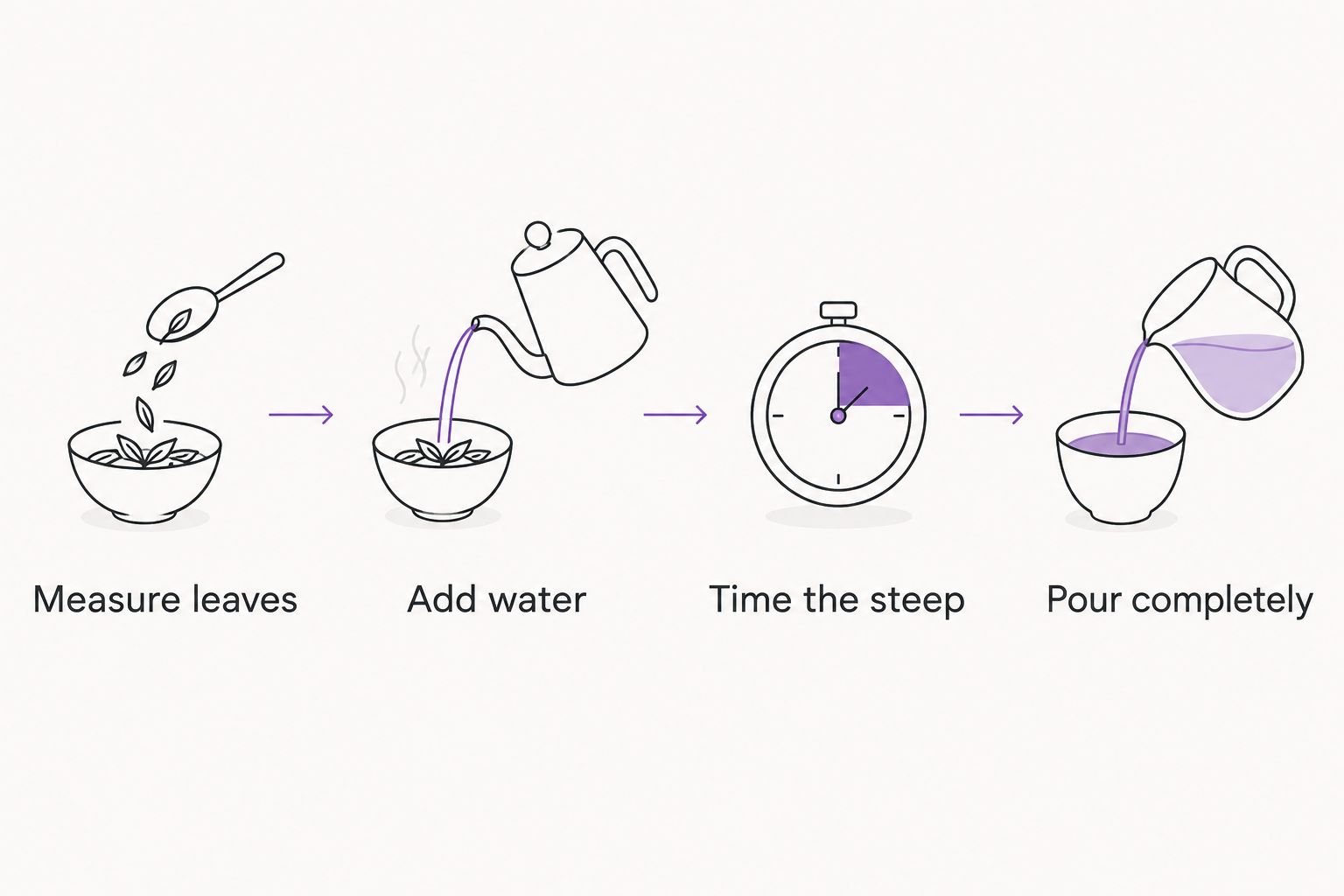
Watch the timer rather than waiting for a particular color. Different teas produce different colors, and a pale-looking cup can already have plenty of flavor. Color alone is not a reliable measure of brewing strength.
Plunger position and complete pouring
- Lower the plunger slowly. Keep the carafe steady on a stable surface and press gently. Stop if you meet unusual resistance; never force the assembly through packed leaves.
- Avoid squeezing the leaf bed. Use the mesh to hold leaves back, not to crush them against the bottom. Heavy pressure is unnecessary for making tea.
- Pour the entire batch. Transfer the tea into your cups or serving vessel as soon as the steep ends. Keep the lid secure and handle the hot carafe carefully.
- Taste before adjusting. Note whether the cup is weak, balanced, bitter, or gritty. Change one brewing variable on the next batch rather than changing everything.
Expected result: the drink is separated from the leaves, with larger pieces held inside the press. A small amount of fine sediment is possible; the mesh is not a paper filter.
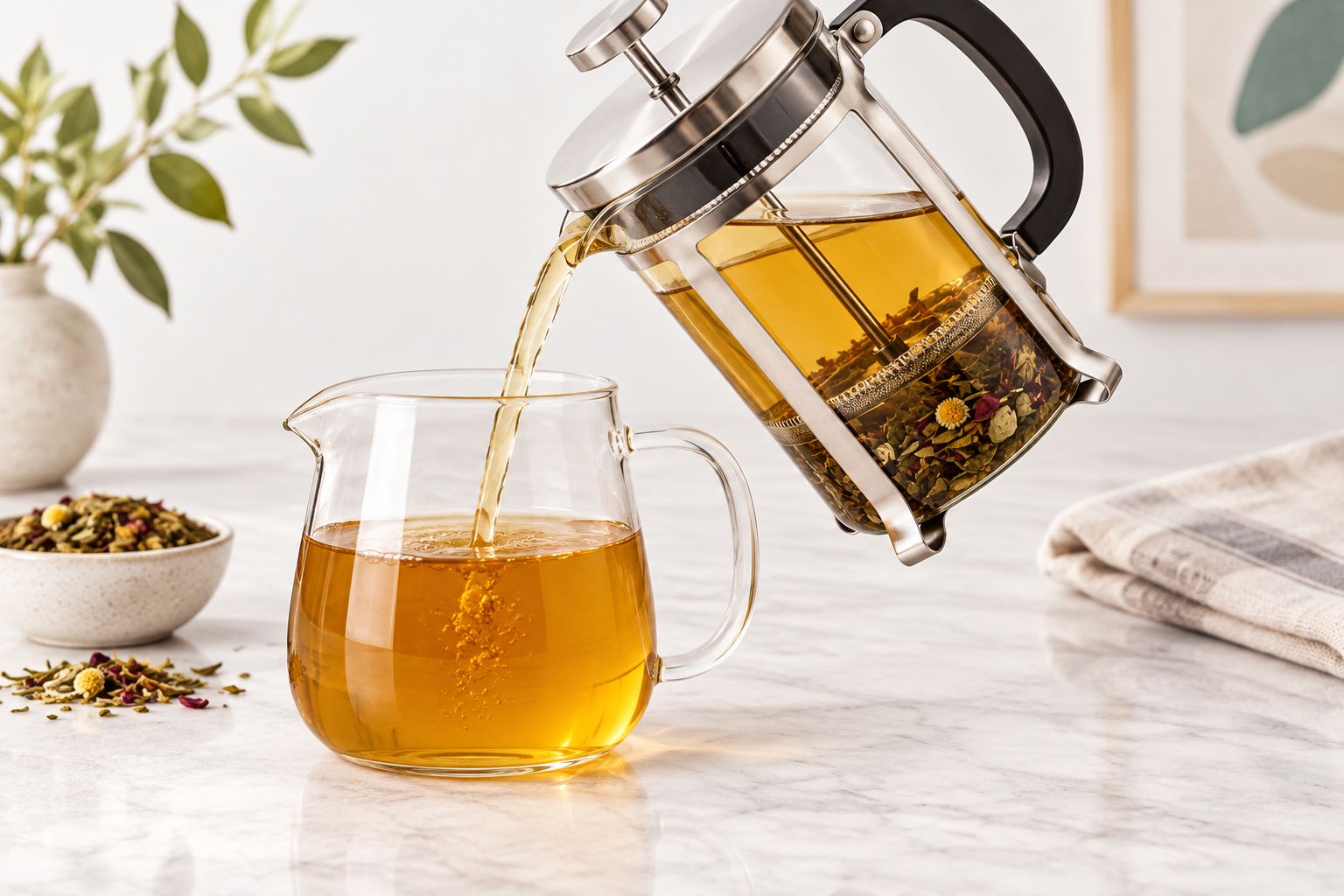
For hospitality, decanting also gives everyone tea from the same finished batch. Leaving later servings in the press means those cups have spent longer with the leaves and can taste different from the first.
Second workflow: re-steep the same leaves
A second infusion is an adjacent workflow when the tea’s directions support it. It lets you explore how the same leaves taste across infusions, but not every tea or herbal blend produces an appealing second cup.
After pouring the first batch completely, lift the plunger carefully and add fresh water according to the tea’s guidance. Start a new timer. Lower the plunger gently at the end, then decant everything again.
Best for: larger-leaf teas you enjoy tasting across successive infusions. Trade-off: the next cup can be lighter or simply different; used leaves do not guarantee the same strength twice.
Keep re-steeping within the same tea session rather than saving wet leaves for another day. For iced tea, use a separate heat-safe vessel after brewing; do not assume a hot glass press tolerates direct contact with ice or sudden temperature changes.
Troubleshooting
The tea tastes bitter or drying
Check whether the tea sat in the press after you lowered the plunger. Decant the whole batch promptly next time. If the problem remains, follow the package’s temperature guidance and shorten steeping within its recommended range before changing the leaf amount.
Coffee flavor overwhelms the tea
Clean the mesh assembly, lid, and carafe according to the manufacturer’s instructions. Rinse thoroughly and let the parts dry. If coffee aroma persists, a dedicated tea press avoids repeatedly carrying that flavor into delicate cups.
Small leaves appear in the cup
Check that the mesh sits correctly and is not damaged. Pour gently, but recognize the filter’s limit: slowing down cannot make its openings smaller. For powdery or finely broken tea, compare tea infusers for fine loose leaf tea rather than forcing the French press to produce a sediment-free drink.
The plunger sticks
Stop pressing. Follow the manufacturer’s guidance for a blocked filter, and never use extra force on a hot glass carafe. Before the next batch, clean the mesh and check whether crowded leaves or an incorrectly assembled filter caused the resistance.
The tea is weaker than expected
Verify the water volume against the package ratio. A large mug can dilute a serving measured for a smaller cup. Once the ratio is correct, adjust within the package’s steeping guidance; avoid compensating by leaving finished tea on the leaves indefinitely.
Customize your workflow
For a 2026 tea notebook, record the tea name, measured leaves, water volume, temperature, steeping time, and a short flavor note. Write ordinary descriptions: grassy, floral, malty, minty, light, or drying. Those words are more useful than deciding whether a cup was simply good or bad.
Choose one repeatable adjustment per batch. If the cup is too strong, change the leaf amount while keeping temperature and timing steady. If the flavor is harsh, first check temperature and whether you decanted promptly. This keeps each experiment readable.
For evening brewing, select a blend whose ingredients confirm it is caffeine-free. Tea The World loose leaf tea can fit a quiet brewing ritual, but choosing tea for relaxation does not establish a sleep benefit or make it a treatment. Check ingredient-specific cautions if you take medicines, have allergies, or are pregnant.
FAQ
Can I use a French press for loose leaf tea without an infuser?
Yes. The French press’s mesh holds back larger leaves while you pour, so a separate infuser is unnecessary. Fine particles can still pass through.
Should I press the plunger down before the tea steeps?
No. Leave the plunger raised while the tea steeps, then lower it gently before pouring. This gives the leaves room to open.
Does pressing a French press stop tea from brewing?
No. The water still touches the leaves below the mesh. Pour all the finished tea into cups or a separate vessel to end that contact.
How much loose leaf tea should I put in a French press?
Use the tea package’s leaf-to-water ratio and measure the water you actually add. Do not assume the press’s advertised cup count matches your mug size.
Can I brew green tea in a French press?
Yes. Follow the green tea’s temperature and timing directions, lower the plunger gently, and decant promptly. Water that is too hot and prolonged steeping can make the cup harsh.
Why does tea from my French press taste like coffee?
Coffee residue can remain in the mesh, lid, and carafe. Clean those parts according to the manufacturer’s instructions; use a dedicated tea press if the aroma persists.
Is herbal tea always caffeine-free?
No. Some blends include black tea, green tea, or other caffeinated ingredients. Check the complete ingredient list rather than relying on a fruit or herbal name.
Can I leave brewed tea in the French press for later?
Decant it first. Tea left in contact with the leaves keeps extracting, even after the plunger is lowered. Use a separate serving vessel for later cups.
One last thing
The most useful addition to your 2026 French press routine is an empty serving vessel. It solves the problem the plunger cannot: separating the finished drink from the leaves. Before starting the kettle, make room for that final pour.
Related guides
- Chamomile loose leaf tea versus tea bags
- How to store chamomile loose leaf tea
- Tea infuser basket versus tea ball
Ricardo R. Matos, Founder of Tea The World