
Passion Fruit Tea: Herbal or Black Tea?
Posted by Ricardo R. Matos, Founder of Tea The World on Oct 6th 2026
Choose herbal passion fruit tea when you want a fruit-forward cup without a black tea base, and choose black tea when you want the fruit flavor alongside a fuller tea taste and caffeine. The deciding detail is the ingredient list: passion fruit names a flavor, not a caffeine level, and a blend labeled herbal still needs checking for caffeinated ingredients.
- Choose passion fruit tea by its ingredients: herbal blends and black tea have different caffeine profiles.
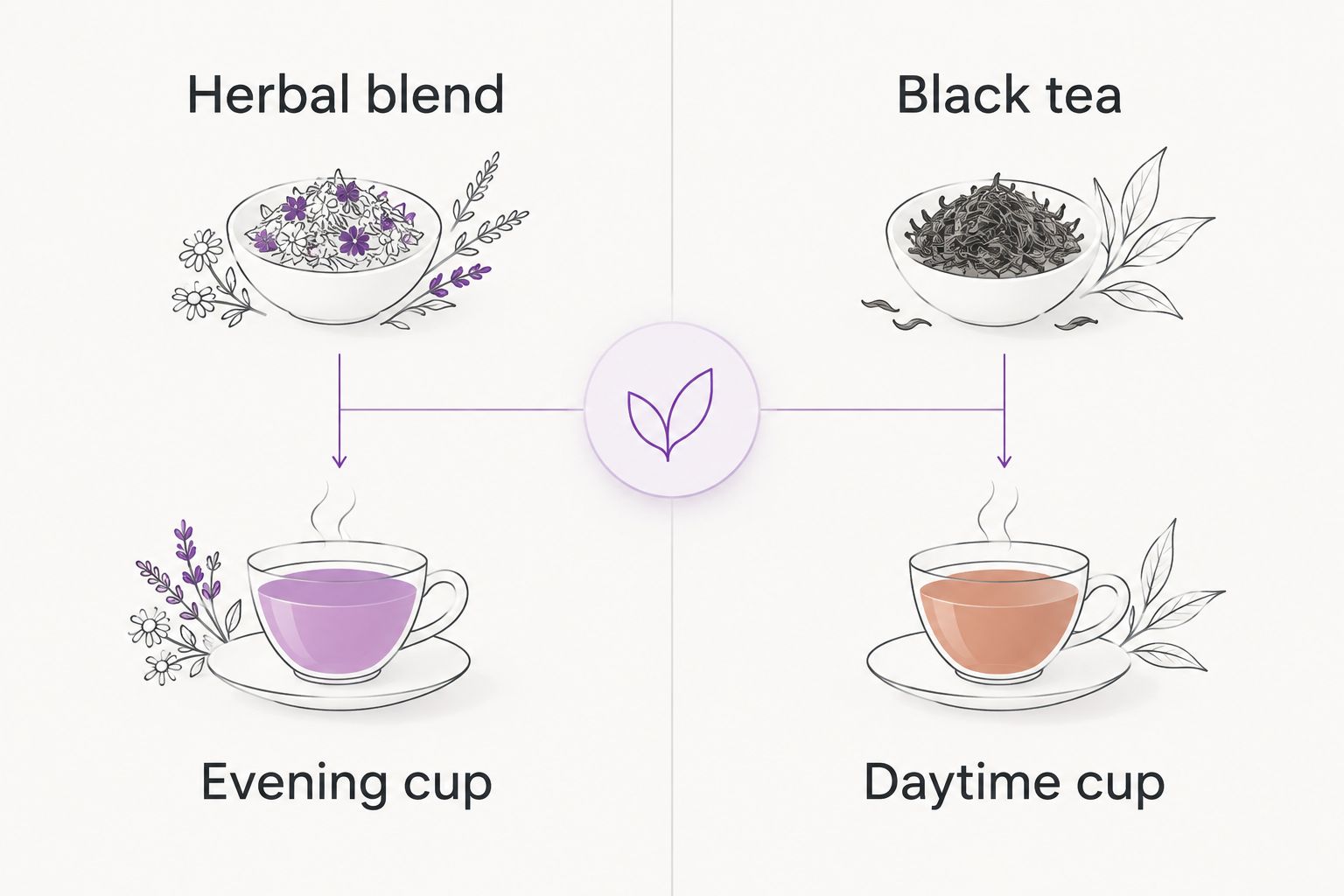
- Black tea brings tea flavor and caffeine; a caffeine-free herbal blend suits an evening cup.
- Tea The World shoppers should check the tea base before choosing a fruit-flavored blend.
- Follow the blend’s brewing directions, then adjust strength before adding sweetener.
Passion fruit tea: should you choose herbal blends or black tea?
Choose the base first, then the flavor. These are different drinks even when their names sound alike.
| Choice | Best for | What to expect | Main drawback |
|---|---|---|---|
| Herbal passion fruit blend | An evening cup, when its ingredients are caffeine-free | Flavor depends on the herbs, fruit, and flavorings listed | Herbal wording alone does not establish caffeine content |
| Passion fruit black tea | A daytime cup with tea flavor | Black tea character alongside fruit flavor | Contains caffeine unless specifically decaffeinated; decaf is not caffeine-free |
Tea The World sells loose leaf teas, herbal blends, and tea accessories. For this choice, read the ingredients before letting a tropical name decide for you.
The fruit description tells you less than the base. A black tea blend can smell intensely fruity and still taste unmistakably like tea; an herbal blend can smell sweet but brew tart rather than sugary.
Why this matters
A fruit name is an easy shortcut when you shop, but it does not answer the questions that shape your daily cup. You still need to know whether the blend contains tea leaves, whether it includes added sweeteners, and how its ingredients fit your routine.
For an everyday tea shelf, separate daytime flavor from evening suitability. A tea you enjoy with lunch does not automatically belong beside your bed, especially if caffeine affects your sleep.
You do not need a complicated collection. Start with the kind of cup you want: a familiar black tea with a fruity lift, or an infusion that leaves black tea out entirely.
Herbal passion fruit blends: best for an evening fruit-flavored cup
An herbal blend is the better starting point when your priority is avoiding black tea. However, choose a caffeine-free ingredient list, not simply an herbal label: ingredients such as yerba mate or guarana introduce caffeine without being black tea.
Check what supplies the flavor. Hibiscus, when present, brings tartness; other fruit ingredients and flavorings change the balance. Do not assume that every passion fruit blend contains hibiscus, real passion fruit pieces, or the same supporting herbs.
The advantage is flexibility. You can choose a blend whose ingredients suit a quiet evening and drink it without adding milk or sweetener if you enjoy its natural taste.
The limitation is that fruit-forward does not mean mellow. A tart infusion can be a poor match if you want a soft, rounded cup, and the name alone will not tell you which experience to expect.
Best for: tea drinkers who want an evening infusion and can confirm that its ingredients are caffeine-free. Choose by the full ingredient list and the flavor description together.
Passion fruit black tea: best for daytime tea flavor
Passion fruit black tea starts with a tea base rather than an all-herbal infusion. You get the character of black tea with a fruit note layered into the blend; the exact balance depends on its ingredients and your brewing method.
Choose this version when you want the fruit aroma without giving up the taste of tea. It is also a practical choice if you already enjoy black tea and want to explore a different flavor direction.
Both of our passion fruit teas belong in this category. Hawaii Passion Fruit Tea blends bold Ceylon black tea with mango pieces, marigold flowers, and all-natural mango and passion fruit flavors, in easy-brew sachets that work well hot or iced. Passion Fruit Black Tea pairs a full-bodied black tea base with apple pieces, natural passion fruit flavor, and marigold flowers.
The trade-off is caffeine. A passion fruit label does not reduce or remove the caffeine associated with the black tea base, and brewing a weaker cup does not turn it into a caffeine-free drink.
Oversteeping is another drawback. Black tea can become bitter or astringent when you leave the leaves in too long, so a stronger cup is usually better approached by adjusting the leaf amount rather than forgetting the timer.
Best for: daytime drinkers who want fruit flavor with a recognizable black tea backbone. If your goal is a caffeine-free bedtime drink, choose a verified caffeine-free infusion instead.
Why passion fruit tea varies
Passion fruit tea is a flavor category, not a fixed recipe. These label and brewing details explain why two cups with similar names can taste different:
- Tea base: black tea contributes tea flavor and caffeine; an herbal base depends on the plants included.
- Supporting ingredients: hibiscus, citrus peel, and other ingredients, when listed, change the balance of the cup.
- Source of fruit flavor: fruit pieces, juice, and flavorings are different ingredients; check what the label actually names.
- Leaf amount: using more blend relative to water changes intensity without requiring a longer steep.
- Water temperature and steeping time: follow the blend’s directions to avoid treating black tea and herbal ingredients identically.
- Serving style: ice, added juice, milk, and sweeteners change the finished drink rather than the tea base itself.
None of these details makes one style automatically better. They explain which style fits the cup you want.
How do you read a passion fruit tea label?
Your checklist starts with the ingredient list, not the picture of fruit on the package. Read it in this order before choosing a blend.
- Find the base. Look for black tea or the named herbs. A description such as tropical or fruity does not answer this question.
- Check caffeine sources. Tea leaves, yerba mate, and guarana matter when your goal is a caffeine-free drink.
- Check the fruit ingredients. Distinguish named passion fruit ingredients from flavorings without assuming either guarantees a particular taste.
- Check added sweeteners. A brewed infusion and a sweetened bottled drink are not interchangeable choices.
- Read the brewing directions. These are more useful than a generic rule applied to every fruit blend.
Tea The World is a fit for everyday drinkers shopping for loose leaf tea and herbal blends. Make your choice within those categories by ingredients rather than by an assumed wellness benefit.
If caffeine information is unclear, do not treat the drink as caffeine-free. Choose a blend with clearer labeling when avoiding caffeine is the reason for your purchase.
How should you brew passion fruit tea?
Follow the package directions first, because the base determines the method. For your first cup, keep the preparation simple so you can taste the blend before changing it.
For a typical loose leaf black tea, a common starting point is 1 teaspoon per 8 fluid ounces of water, with a 3-minute steep. These are starting guidelines, not a substitute for directions: large leaves, small leaf pieces, and blends containing bulky fruit ingredients do not all measure the same way.
Black tea commonly uses freshly boiled water; water boils at 212°F at sea level. Let the blend’s instructions take priority if they specify a different temperature, and remove the leaves when the recommended steep ends.
For an herbal passion fruit blend, use its stated amount, temperature, and steeping time. The herbal label covers many different ingredients, so one black tea recipe does not fit every infusion.
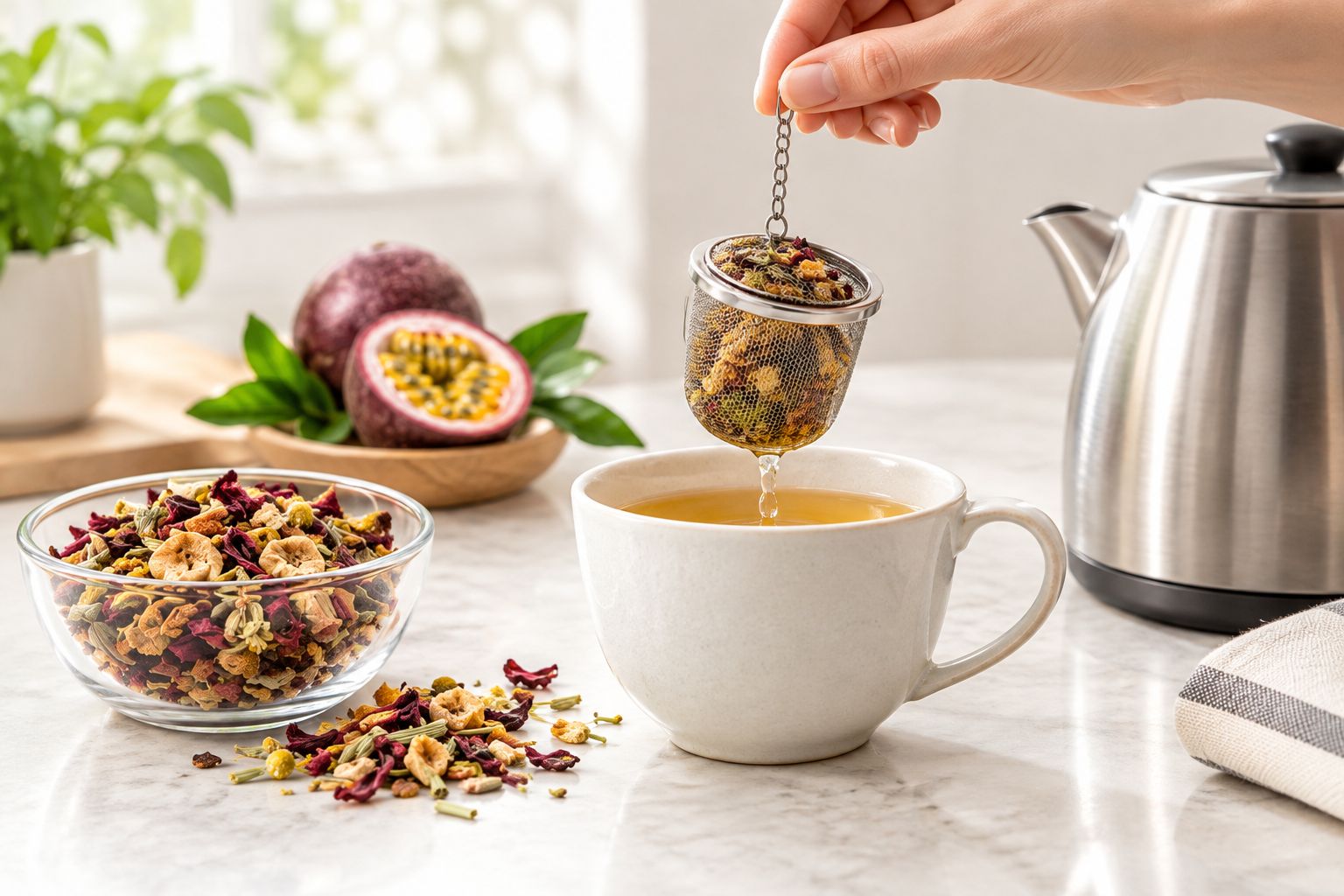
Taste before adding anything. If the cup is too weak, use a little more blend next time; if black tea tastes bitter, shorten the steep before trying to cover that bitterness with sweetener.
Keep changes separate. Adjusting leaf amount, steeping time, and sweetener all at once makes it harder to learn which change improved your cup.
Can you make passion fruit tea iced?
Yes, both black tea and herbal passion fruit blends can be served iced. Brew according to the blend’s directions, remove the leaves, and remember that melting ice dilutes the drink.
For a stronger iced cup, adjust the amount of tea rather than extending a black tea steep until it becomes harsh. Chill brewed tea promptly in a clean container and refrigerate it rather than leaving a pitcher on the counter.
Taste the tea cold before deciding it needs sweetener. A blend that seems balanced while warm can feel different over ice, and added juice changes both the flavor and the ingredients of the finished drink. For a no-added-sugar version made with fresh fruit, see our guide to iced passion fruit tea without added sugar.
If you are avoiding caffeine, chilling does not change the choice. Iced passion fruit black tea remains a caffeinated drink unless its base is specifically decaffeinated, which still does not mean caffeine-free.
Is passion fruit tea a sleep or digestive remedy?
Passion fruit flavor is not evidence of a sleep or digestive benefit. A warm, caffeine-free drink can be part of an evening ritual without being a treatment for insomnia, anxiety, or stomach symptoms.
Passion fruit and passionflower are not interchangeable ingredient names. The National Center for Complementary and Integrative Health’s passionflower guidance discusses an herbal preparation, with limited research and safety cautions; it does not establish benefits for a passion fruit-flavored tea.
Likewise, research on a concentrated extract or oil does not establish that a flavored tea delivers the same effect. Choose your cup for its taste and fit with your routine rather than expecting it to treat symptoms.
For a caffeine check, the FDA’s consumer guidance, Spilling the Beans: How Much Caffeine Is Too Much?, identifies 400 milligrams per day as an amount not generally associated with negative effects for most adults. That is not a target, an individual guarantee, or the caffeine content of this tea.
If you are pregnant, breastfeeding, taking medication, or managing a health condition, ask a qualified clinician about the blend’s ingredients and caffeine. Persistent sleep or digestive problems need medical attention, not a stronger infusion.
FAQ
Does passion fruit tea have caffeine?
Passion fruit tea contains caffeine when its base includes caffeinated ingredients such as black tea. An herbal version is caffeine-free only when its ingredients are caffeine-free; fruit flavor alone does not establish that.
Is herbal passion fruit tea better than black tea?
Herbal passion fruit tea is the better choice for an evening cup when its ingredients are confirmed caffeine-free. Black tea is the better choice when you want tea flavor alongside the fruit note and are comfortable with caffeine.
How much loose passion fruit black tea should I use?
A common starting point for loose black tea is 1 teaspoon per 8 fluid ounces of water. Follow the blend’s own directions first, because fruit pieces and leaf size affect how much fits in a teaspoon.
Can I drink passion fruit tea before bed?
A verified caffeine-free passion fruit blend is the more suitable bedtime choice than passion fruit black tea. Check all ingredients, and do not treat the drink as a sleep treatment.
Is passion fruit tea the same as passionflower tea?
Passion fruit tea is not the same as passionflower tea. Read the ingredient list rather than applying passionflower research to a drink described only by its fruit flavor.
Does passion fruit tea need sugar?
Passion fruit tea does not need added sugar to be brewed or enjoyed. Taste it first, because a fruity aroma does not guarantee a sweet-tasting infusion.
What should I look for when buying passion fruit tea?
Choose passion fruit tea by its base, full ingredient list, and brewing directions. Tea The World shoppers should use those details to distinguish an herbal infusion from a fruit-flavored black tea.
One last thing
For your next cup, separate sweetness from fruit aroma. A tea can smell like ripe fruit while tasting tart, and adding more sweetener is not the only way to find a cup you enjoy.
Choose a different base when the drink does not fit your routine. Tea The World offers loose leaf tea and herbal blends; deciding between those categories is more useful than asking a fruit name to tell you everything.