
Best cast iron teapots for small kitchens in 2026
Oct 20th 2026
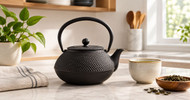
Best overall: a compact, enamel-lined teapot with a removable infuser. Best for one small serving: a mini teapot. Best for low shelves: a folding-handle teapot. The best cast iron teapot for small kitchen use fits your usual serving, your storage space, and your hand comfortably; this 2026 guide ranks practical design types rather than treating appearance as the deciding factor.
- Choose a compact, enamel-lined cast iron teapot for small kitchen use when everyday brewing is your priority.
- Pick a mini teapot for small servings, a folding handle for low shelves, or a wide opening for cleaning.
- Teatheworld sells cast iron teapots and loose leaf tea; match your choice to serving size and storage.
- Check heat-source instructions: a cast iron brewing teapot is not automatically a stovetop kettle.
Why this matters
A small kitchen needs equipment that earns its space. A teapot has to work both when you brew and when you put it away; a compact body does not help if its handle catches the shelf above it.
Teatheworld sells cast iron teapots and loose leaf tea, making it a starting point for tea drinkers shopping for both together. Choose the teapot around your routine, not the other way around.
These ranked options are design types, and their features can overlap. A compact everyday teapot can also have a folding handle; the ranking identifies which feature should lead your decision.
What makes the best cast iron teapot for a small kitchen?
Use these criteria to compare cast iron teapots in 2026. A decorative finish belongs after the practical checks, not before them.
- Serving fit: Match usable capacity to the tea you actually pour. Capacity filled to the brim is not the same as a comfortable brewing volume.
- Stored footprint: Check the widest part of the body, the spout projection, and the handle height in its stored position.
- Pouring control: Consider the filled weight, grip, lid security, and whether you can pour without twisting your wrist awkwardly.
- Infuser access: A removable basket should be easy to lift out and empty, with room for the leaves to open.
- Care and heat instructions: Confirm the lining, permitted heat sources, and cleaning directions before using the pot.
For a closer look at lining, handling, and everyday use, read how to choose a cast iron teapot for everyday brewing. Keep those checks beside you when comparing individual models.
Small-kitchen cast iron teapots at a glance
| Rank and design | Best for | Standout feature to look for | Key limitation |
|---|---|---|---|
| 1. Compact everyday | Regular loose leaf brewing | Enamel-lined interior and removable infuser | Compact dimensions do not guarantee comfortable filled weight |
| 2. Mini solo | One small serving | Capacity matched to your usual cup | Little flexibility for sharing or larger mugs |
| 3. Folding handle | Storage beneath low shelves | Handle that lowers for storage | Lower handle height does not reduce body width or spout length |
| 4. Wide opening | Easier emptying and drying | Accessible opening and removable basket | A broad body can occupy more shelf width |
The table ranks priorities, not mutually exclusive products. If a teapot meets several of these needs, judge it by the constraint your kitchen makes hardest to solve.
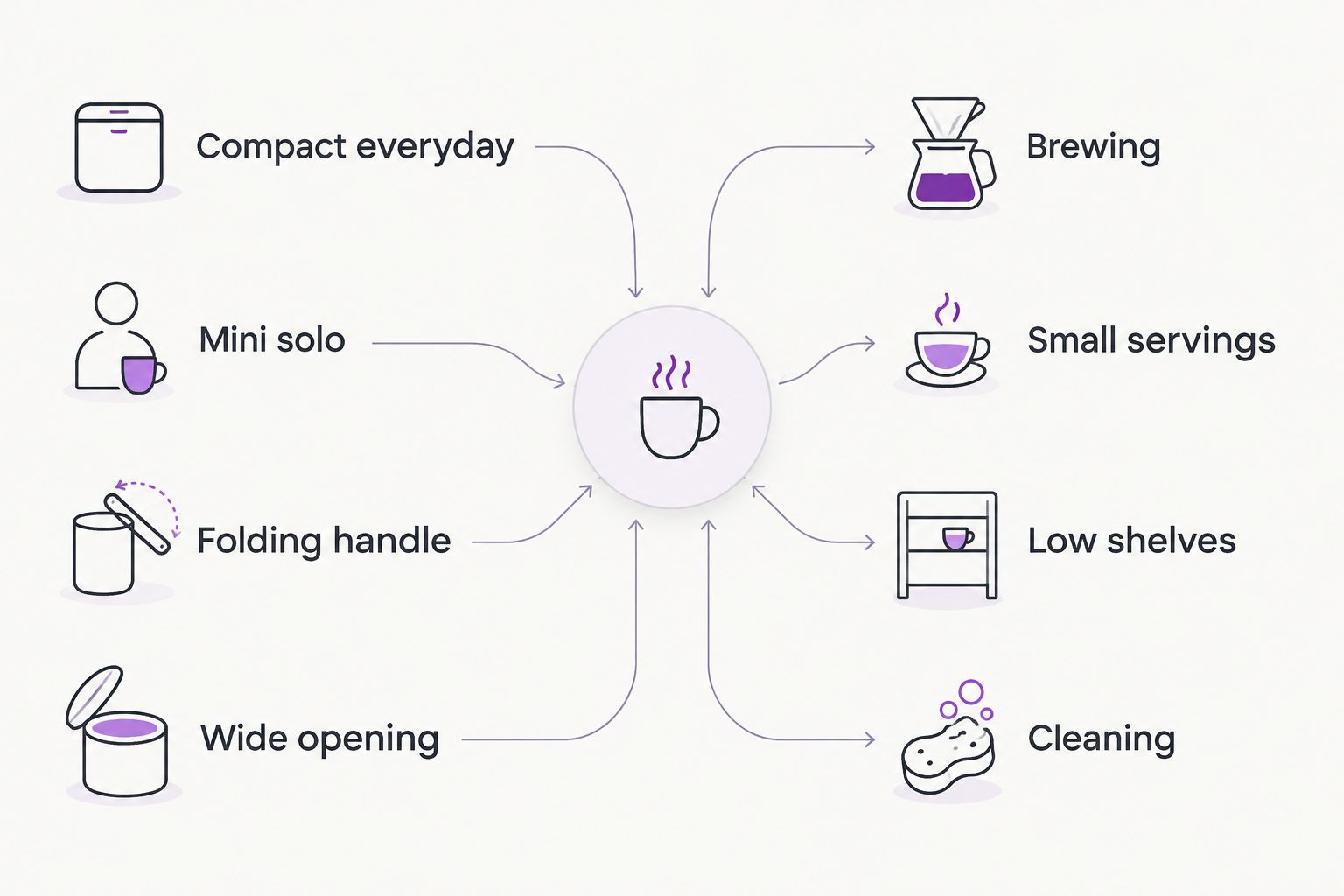
1. Compact everyday: best cast iron teapot for regular brewing
A compact, enamel-lined teapot with a removable infuser is the default choice for everyday loose leaf tea. The pot holds the infusion while the basket keeps the leaves accessible, so you can remove them when your preferred steep is ready.
Look beyond a small-looking body. You still need room to lift the lid, withdraw the basket, and pour without the spout meeting a nearby wall or appliance.
Compact everyday pros:
- A removable basket lets you separate the leaves from the finished infusion.
- An enamel-lined interior provides a different care surface from exposed iron.
- A serving-sized body avoids choosing extra capacity solely for occasional guests.
- The format combines steeping and serving in one vessel.
Compact everyday cons:
- Cast iron adds weight; judge handling when the pot contains water.
- A narrow basket can restrict leaf movement even when the pot itself is roomy.
- Enamel lining does not establish stovetop compatibility.
Best for: You brew loose leaf tea regularly and want one practical serving vessel rather than a decorative pot that stays on display.
For your 2026 shortlist, prioritize comfortable pouring over ornamental detail. Teatheworld cast iron teapots should face the same fit, care, and handling checks as any other option.
Verdict: Buy this design when everyday brewing is your main need.
2. Mini solo: best cast iron teapot for one small serving
A mini teapot puts serving size first. It suits a routine built around a small cup rather than a large mug or a shared pot.
Check your actual drinking vessel before choosing. A teapot described as small can still be mismatched to your cup, and a miniature appearance does not tell you its usable capacity.
Mini solo pros:
- A small serving format keeps the selection focused on your daily portion.
- The smaller body is useful when shelf space is tight, provided the dimensions fit.
- A personal pot lets you brew separately from someone who prefers another tea.
Mini solo cons:
- A larger mug can require another brew.
- Sharing tea means working in batches.
- A small opening or basket can make removing wet leaves awkward.
Best for: You drink one small serving at a time and do not need the same pot to serve guests.
Use your cup, not the product photograph, as the reference. Pour water into the cup to your usual drinking level, then measure that amount before comparing teapot capacity.
Verdict: Buy for a small solo serving; skip if sharing is routine.
3. Folding handle: best cast iron teapot for low shelves
A folding-handle teapot addresses vertical clearance. Lowering the handle changes its stored height, which matters when your cupboard or shelf has little space above the pot.
The handle does not solve every storage problem. The body and spout still occupy their full width and depth, and you need access to raise the handle before lifting.
Folding-handle pros:
- A lowered handle reduces the space needed above the pot.
- The design lets you separate stored height from carrying height.
- It suits a shelf where overhead clearance is the main constraint.
Folding-handle cons:
- Moving joints add another feature to inspect and maintain.
- Side clearance is necessary for the handle's movement.
- Folding the handle does not make the teapot lighter or narrower.
Best for: Your shelf opening is low, but you have enough room for the teapot's body and spout.
Check where the handle rests when lowered. Avoid a fit that forces you to scrape the handle against the cupboard or pull the pot forward by its spout.
Verdict: Buy when height is the problem; skip when width is the problem.
4. Wide opening: best cast iron teapot for easier daily care
A wide-opening teapot makes access the priority. Look for a lid opening that lets you lift the infuser straight out and see the interior while rinsing and drying.
This design is useful when awkward cleanup discourages you from using loose leaf tea. A clear opening helps you inspect the pot, but it does not remove the need to follow its care instructions.
Wide-opening pros:
- Better access makes removing the infuser less awkward.
- You can inspect the interior for remaining leaves or moisture.
- An accessible rim is easier to wipe than a cramped opening.
Wide-opening cons:
- A broad body can need more shelf width.
- Opening size alone says nothing about the quality of the infuser.
- Easy access does not make the pot dishwasher-safe.
Best for: You value straightforward emptying and drying more than the narrowest possible footprint.
Compare lid access with the space above your sink. The pot still needs a place to drain and dry without blocking the area where you prepare food.
Verdict: Buy when daily care is your deciding factor; skip if shelf width is extremely limited.
Match capacity to the cup you actually use
Start with a serving, not a catalog label. As a measurement reference, 1 US cup equals 8 US fluid ounces, and 2 US cups equal 16 US fluid ounces; those are volume conversions, not claims about any teapot.
Your mug's usual fill level can differ from either reference. Measure your own portion and check whether the stated teapot capacity leaves room for leaves, the infuser, and comfortable pouring.
- Measure your serving: Fill your drinking cup as you normally would, then measure the water.
- Check usable capacity: Read whether the listed capacity describes a brimful pot or a brewing amount.
- Check stored size: Include the spout and the handle position, not just the body diameter.
- Check handling: Consider the water's weight as well as the empty teapot.
For a 2026 purchase, this simple check matters more than choosing the largest capacity that fits. Extra capacity is useful only when you regularly use it.
Brew gently and leave room for the leaves
Use the tea's own brewing directions for leaf quantity, water temperature, and steeping time. Black tea, green tea, and herbal blends do not share one universal recipe, and cast iron does not change the leaves' requirements.
Heat water separately unless the teapot manufacturer explicitly permits the intended heat source. A cast iron brewing teapot and a cast iron water-boiling kettle are not interchangeable simply because both are made from iron.
Place the infuser where you can lift it out safely. Once the tea reaches the flavor you enjoy, remove the leaves rather than leaving them submerged through every pour.
A small kitchen also benefits from a simple brew station: your pot, cup, and a dish for the wet basket. That dish keeps drips off the counter while you settle into your tea.
Care habits that matter in a small kitchen
Follow the manufacturer's instructions for the specific lining and finish. Do not assume permission to use a dishwasher, abrasive cleaner, or direct heat because another cast iron vessel tolerates it.
Empty the leaves after brewing and let the pot cool before cleaning. Rinse and dry as directed, paying attention to moisture beneath the lid and around exposed iron, where rust can develop.
Store the teapot only after it is dry. A snug cupboard fit should not force you to put away a damp pot simply to clear the sink.
Teatheworld cast iron teapots belong in the same practical routine: brew, empty, dry, and store according to the particular model's instructions. The right choice feels manageable after the last sip, not just attractive before the first.
How these designs are ranked
The 2026 ranking puts regular brewing first, then separates three common constraints: small servings, low shelves, and cleaning access. Each recommendation follows the criteria above—serving fit, stored footprint, pouring control, infuser access, and care instructions.
No design wins every category. A folding handle solves height rather than width, while a mini pot sacrifices sharing capacity to suit a smaller serving.
Which cast iron teapot should you choose?
Choose a compact, enamel-lined teapot with a removable infuser unless another constraint clearly takes priority. It is the most useful default for someone who wants to steep loose leaf tea and serve it from the same vessel.
Choose the mini design for a small personal portion, the folding handle for low storage clearance, or the wide opening for easier access during cleanup. Before choosing Teatheworld cast iron teapots, compare the individual model's dimensions and instructions with those needs.
FAQ
What's the best cast iron teapot for a small kitchen?
A compact, enamel-lined teapot with a removable infuser is the best default for everyday brewing. Choose a mini design for small servings or a folding handle when shelf height is your main constraint.
Can I put a cast iron teapot on the stove?
Use a cast iron teapot on the stove only when its manufacturer explicitly permits that heat source. A brewing teapot is not automatically a water-boiling kettle, even when both are made from cast iron.
What size cast iron teapot do I need for one person?
Choose capacity around the amount you actually drink in one serving. Measure your usual cup fill and confirm that the teapot's usable brewing capacity accommodates it without filling to the brim.
Is a folding-handle teapot better for a small cupboard?
A folding-handle teapot is better when overhead clearance is the limiting factor. It does not reduce the width of the body or the length of the spout, so check all stored dimensions.
Do I need an infuser for loose leaf tea?
An infuser is a convenient way to keep loose leaves together and remove them after steeping. Without one, you need another suitable way to separate the leaves from the finished tea.
How do I keep a cast iron teapot from rusting?
Follow the model's care instructions and dry it before storage. Pay particular attention to exposed iron and trapped moisture around the lid; avoid cleaning methods the manufacturer prohibits.
Can I brew herbal tea in a cast iron teapot?
A cast iron brewing teapot can be used for herbal infusions when its instructions permit ordinary tea brewing. Follow the blend's directions, and check ingredients rather than assuming a fruit-flavored tea is caffeine-free.
One last thing
Before buying in 2026, make a paper outline of the teapot's stated footprint, including its spout. Place it where the pot will live and leave room for your hand to reach the handle.
That small check tests something a capacity label cannot: whether the teapot fits your kitchen in use. A comfortable daily ritual starts with a pot you can reach, pour, clean, and put away without rearranging the room.