
Best loose leaf teas for beginners: a starter guide for 2026
Posted by Ricardo R. Matos, Founder of Tea The World on Nov 23rd 2026
Best overall for beginners: plain black tea. Best for a caffeine-free evening cup: pure chamomile. Best for a lighter taste: green tea. This 2026 guide compares six starting points and helps you explore loose leaf tea with Tea The World through flavor, ingredients, and practical brewing choices.
- The best loose leaf teas match your taste: start with plain black tea for a familiar, full-flavored cup.
- Tea The World suits beginners exploring loose leaf tea and accessories; choose by ingredients rather than wellness promises.
- Choose pure chamomile for a caffeine-free evening routine, not as a treatment for sleep problems.
- Green tea and oolong need attention to water temperature; remove the leaves when your steep finishes.
Why this matters
Your first loose leaf tea should make you want another cup, not send you searching for ways to hide bitterness. A familiar flavor and a removable infuser matter more than buying an elaborate collection.
Black, green, and oolong teas come from Camellia sinensis and naturally contain caffeine. Chamomile and peppermint are herbal infusions, often called teas in everyday conversation. Pure versions contain no caffeine; mixed blends require an ingredient check.
The recommendations below rank tea styles, not individual products. Choose your flavor first, then check the actual package for ingredients and brewing directions.
What makes the best loose leaf teas for beginners?
Use these criteria when choosing your first tea in 2026:
- Flavor fit: Choose familiar tastes before chasing unusual ingredients. Malty, grassy, floral, citrusy, and minty describe different drinking experiences.
- Brewing tolerance: A satisfying first cup should not require a complicated routine. Start with clear package directions and a timer.
- Caffeine fit: Match the tea base to when you plan to drink it. Fruit flavor alone tells you nothing about caffeine.
- Ingredient clarity: Read the complete list, especially for flavored teas and herbal blends. The name on the front is not the whole recipe.
- Equipment fit: Choose an infuser with room for leaves to open and a filter fine enough to contain them.
- Repeat enjoyment: Favor a tea you want to drink regularly over one selected only for an impressive description.
Best beginner teas at a glance
| Rank and tea style | Best for | Standout quality | Key limitation |
|---|---|---|---|
| 1. Plain black tea | A familiar everyday starting point | Full flavor that can suit milk | Contains caffeine; long steeps become astringent |
| 2. Earl Grey | Citrus aroma and milk-friendly sipping | Bergamot flavor over a tea base | Bergamot is not for every palate |
| 3. Loose leaf green tea | A lighter, fresh-tasting cup | Grassy, vegetal, or toasted notes | Hot water and long steeps can accentuate bitterness |
| 4. Tie Guan Yin oolong | Exploring floral tea aromas | Styles range from fresh and floral to roasted | Processing style changes the flavor substantially |
| 5. Pure chamomile | A caffeine-free evening ritual | Floral aroma with apple-like notes | Not a treatment for insomnia; allergy cautions apply |
| 6. Pure peppermint | A cooling, mint-forward infusion | Distinct mint aroma without a tea base | Strong mint can overwhelm other flavors |
1. Plain black tea: best loose leaf tea for everyday beginners
Plain black tea is the default if you already enjoy a conventional breakfast-style cup. Its flavor can be malty, brisk, fruity, or woody, depending on origin and processing. Choose an unflavored version to learn what the leaves themselves contribute.
Plain black tea pros:
- Familiar territory for many tea-bag drinkers.
- Easy to compare plain and with a little milk.
- A useful baseline before exploring flavored blends.
Plain black tea cons:
- Naturally contains caffeine.
- Oversteeping produces an astringent, drying finish.
Brewing starting point: Try 2 grams of leaves per 240 milliliters of water at about 95°C / 203°F for 3 minutes. Follow the package when its instructions differ, then remove the leaves completely.
Best for: You want one straightforward tea for a regular daytime cup.
Taste it plain before adding anything. If the cup feels too strong but not bitter, use fewer leaves next time rather than masking it with extra milk.
Verdict: Buy plain black tea as your first everyday loose leaf style.
2. Earl Grey: best loose leaf tea for citrus lovers
Earl Grey pairs tea with bergamot, a citrus flavor with a distinctive perfume-like aroma. Traditional versions use black tea, but other tea bases exist. Check the ingredients rather than assuming every Earl Grey has the same caffeine profile.
Earl Grey pros:
- A clear choice if you already enjoy citrus aromas.
- Black-tea versions can pair comfortably with milk.
- Gives you an easy comparison with unflavored black tea.
Earl Grey cons:
- Strong bergamot can overshadow the underlying leaves.
- A black-tea base contains caffeine unless specifically decaffeinated.
Brewing starting point: For a black-tea version, begin with the black-tea method above unless the package says otherwise. Smell the dry leaves and brewed cup; decide whether you enjoy bergamot before buying several variations.
Best for: You want an aromatic cup rather than a plain tea flavor.
For a shared tea break, let guests add milk individually. That keeps the first pour useful for people who prefer a brighter citrus cup.
Verdict: Buy Earl Grey if citrus aroma is part of the appeal; skip it if perfumed flavors put you off.
3. Green tea: best loose leaf tea for lighter flavors
Green tea offers a different direction from breakfast tea: fresh, grassy, vegetal, nutty, or toasted, depending on the style. It is not automatically mild. Water temperature and steeping time make a noticeable difference to bitterness and texture.
Green tea pros:
- A good introduction to lighter-bodied tea.
- Offers distinct flavors without requiring added ingredients.
- Encourages you to learn temperature control early.
Green tea cons:
- Naturally contains caffeine, despite its lighter appearance.
- Some grassy flavors take getting used to.
Brewing starting point: Try 2 grams per 240 milliliters at 80°C / 176°F for 2 minutes. These are starting settings, not instructions for every green tea; use the package directions when provided.
Best for: You enjoy fresh, vegetal, or toasted flavors and can watch a timer.
If your first cup tastes bitter, shorten the next steep or reduce the temperature. Change one setting at a time so you know what improved the result.
Verdict: Buy green tea for a lighter flavor profile, not because you assume it is caffeine-free.
4. Tie Guan Yin oolong: best loose leaf tea for floral exploration
Tie Guan Yin is an oolong tea with styles that differ in oxidation and roasting. Some emphasize fresh floral aromas; others lean toward warmer, roasted notes. Read the flavor description carefully instead of expecting every version to taste alike.
Tie Guan Yin oolong pros:
- Introduces floral aromas without requiring flower ingredients.
- Lets you explore how processing changes tea flavor.
- Leaves can be infused again, with flavor changing between steeps.
Tie Guan Yin oolong cons:
- Naturally contains caffeine.
- The name alone does not tell you how roasted the tea tastes.
Brewing starting point: For a simple mug method, try 2 grams per 240 milliliters at 90°C / 194°F for 3 minutes. Give rolled leaves room to open, and follow any more specific package directions.
Best for: You enjoy noticing aroma and want a more exploratory cup.
You do not need a ceremonial setup. A roomy basket and a mug let you pay attention to the tea without learning a new serving method first.
Verdict: Buy Tie Guan Yin oolong when exploration interests you more than recreating breakfast tea.
5. Pure chamomile: best loose leaf infusion for evenings
Pure chamomile makes a caffeine-free floral infusion with an aroma often compared with apples. Choose it for the taste and the quiet routine of preparing a warm cup. A pleasant bedtime drink is not the same thing as a proven sleep treatment.
Pure chamomile pros:
- Naturally caffeine-free when chamomile is the only ingredient.
- A floral alternative to mint-forward herbal drinks.
- Fits a simple evening preparation routine.
Pure chamomile cons:
- Its flower-forward taste does not suit everyone.
- Chamomile can cause allergic reactions, especially in people sensitive to related plants such as ragweed.
Brewing starting point: Follow the package instructions; a covered steep with freshly boiled water is a practical approach for dried flowers. Use a fine basket to contain smaller pieces.
Best for: You want a caffeine-free evening cup and enjoy floral flavors.
The National Center for Complementary and Integrative Health's chamomile overview describes limited reliable evidence for clinical uses and notes allergy and medicine-interaction concerns. Ask a clinician about herbal use if you take medicines or are pregnant or breastfeeding.
Verdict: Buy pure chamomile for flavor and an evening ritual, not a promise of better sleep.
6. Pure peppermint: best loose leaf infusion for mint lovers
Pure peppermint produces a strong mint aroma and a cooling sensation. It contains no caffeine when peppermint is the only ingredient. Blends with black or green tea are different, so read the full list.
Pure peppermint pros:
- A clear flavor choice for people who already enjoy mint.
- Naturally caffeine-free as a single-ingredient infusion.
- Gives you a non-floral alternative to chamomile.
Pure peppermint cons:
- Its intensity can dominate a mixed infusion.
- Mint can aggravate reflux symptoms in some people.
Brewing starting point: Follow the package directions and keep the cup covered during steeping. Strain fully before drinking; small leaf fragments need a fine filter.
Best for: You want a mint-forward drink without a caffeinated tea base.
Do not transfer clinical claims about peppermint oil capsules to peppermint tea. They are different preparations, and evidence for one does not establish the same benefit for the other.
Verdict: Buy pure peppermint if you love mint; skip it if mint reliably triggers discomfort.
How these beginner teas were ranked
This 2026 ranking prioritizes flavor familiarity, ingredient clarity, brewing demands, caffeine fit, and everyday usefulness. Plain black tea comes first because it offers a familiar starting point; the remaining choices serve distinct preferences rather than competing for the same role.
Tea The World loose leaf tea choices should be judged by the same criteria. Match the listed ingredients and brewing instructions to your routine, rather than treating a descriptive name as proof of quality or wellness benefits.
Make your first cup without overcomplicating it
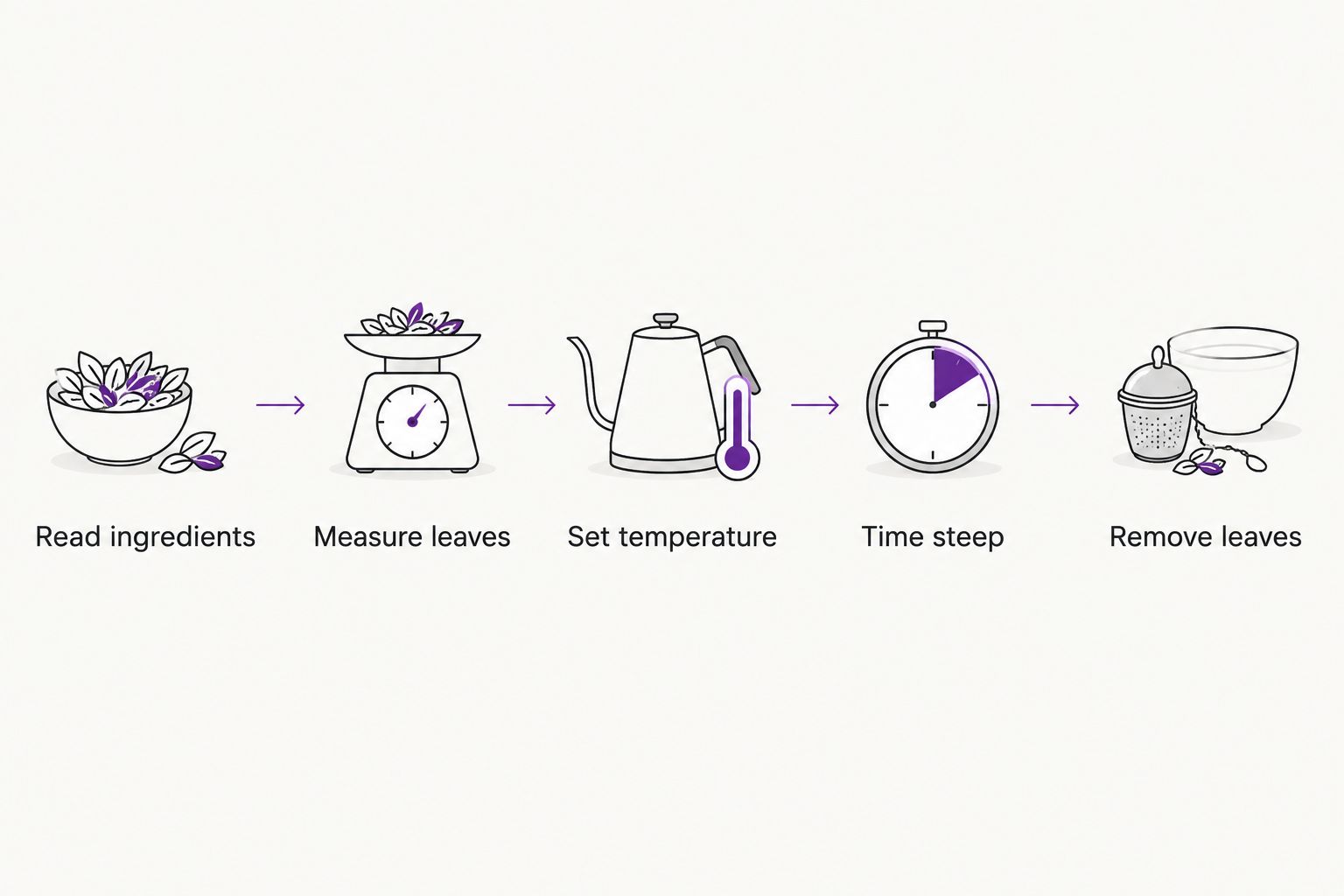
Use this sequence for your first tasting:
- Read ingredients: Identify the tea base and any herbs, flavorings, or allergens.
- Measure leaves: Use the package amount; a small scale makes repeat cups easier to compare.
- Set temperature: Match the water to the tea style instead of boiling everything.
- Time steep: Start a timer as water reaches the leaves.
- Remove leaves: Separate the infusion from the leaves before drinking.
Taste before adding honey, sugar, lemon, or milk. Those additions are personal choices, but starting plain helps you identify what you actually enjoy. Keep a short note about the leaf amount, temperature, and time for your next cup.
Which loose leaf tea should you choose?
Choose plain black tea if you are undecided. Add one contrasting style: green tea for a fresh-tasting daytime comparison, or pure chamomile for a caffeine-free evening option.
For your 2026 starter setup, prioritize a mug, a roomy removable infuser, and a timer. Tea The World pouches contain loose leaf tea; its tins contain tea sachets, so check the format before choosing.
FAQ
What's the best loose leaf tea for a complete beginner?
Plain black tea is the default recommendation for a beginner who wants a familiar everyday cup. Choose green tea for lighter flavors or pure chamomile for a caffeine-free floral infusion.
Is loose leaf tea always better than tea bags?
No, loose leaf tea is not automatically better than tea bags. Ingredients, storage, leaf quality, brewing, and your taste matter more than the format alone.
What equipment do I need to start brewing loose leaf tea?
Start with a mug, a removable infuser, a kettle, and a timer. A small scale helps you repeat a cup you enjoy, while temperature control is especially useful for green tea.
Which loose leaf teas are caffeine-free?
Pure chamomile and pure peppermint are caffeine-free herbal infusions. Black, green, and oolong teas naturally contain caffeine; check blended and decaffeinated products individually.
Why does my loose leaf tea taste bitter?
Water that is too hot, a steep that is too long, or too much leaf can make a cup unpleasantly bitter. Follow the package directions, remove the leaves, and change one brewing setting at a time.
Is chamomile tea proven to help me sleep?
Chamomile tea is not an established treatment for insomnia. Enjoy it as a caffeine-free evening drink, and seek medical advice for persistent sleep problems rather than replacing care with tea.
How should I choose beginner teas in 2026?
Choose beginner teas in 2026 by flavor, ingredients, caffeine needs, and brewing instructions. Start with a familiar style and one contrasting option instead of buying a large collection before you know your preferences.
One last thing
Before rejecting a tea, brew it once more with a shorter steep. A tea you dislike when overbrewed can taste quite different when the leaves come out on time. Keep the other settings unchanged so your second cup teaches you something useful.
Related guides
Ricardo R. Matos, Founder of Tea The World