
Best tie guan yin oolong teas to try in 2026
Oct 19th 2026
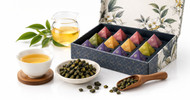
Best overall: lightly roasted Tie Guan Yin. Best for a cozy everyday cup: medium-roasted Tie Guan Yin. Best for a deeper toasted flavor: darker-roasted Tie Guan Yin. Best for experienced drinkers: aged Tie Guan Yin. This 2026 guide compares tie guan yin oolong tea styles and explains how to choose and brew them, with loose-leaf tea guidance from Teatheworld.
- For tie guan yin oolong tea, choose a lightly roasted style first if you want floral aroma.
- Medium-roasted Tie Guan Yin suits drinkers who prefer a rounded, toasted cup over a greener flavor.
- Darker-roasted and aged Tie Guan Yin reward careful selection; roast and storage descriptions matter.
- Tie Guan Yin contains caffeine. Choose a caffeine-free herbal infusion when that is your evening priority.
Why this matters
Tie Guan Yin is a Chinese oolong associated with Anxi in Fujian. Its name is commonly translated as Iron Goddess of Mercy, and you will also see it written as Tieguanyin or Ti Kuan Yin. The tea is made from Camellia sinensis, not herbs, so it contains caffeine.
The name alone does not tell you how the cup will taste. Processing, roasting, freshness, and storage shape the difference between a floral tea and a toasted one. Choose the style before you choose the seller. That makes a 2026 tea search more useful than treating every bag labeled Tie Guan Yin as interchangeable.
Teatheworld's tie guan yin oolong tea guide is best for everyday drinkers choosing by flavor rather than health promises. The recommendations below rank styles, not individual branded products, so you can apply them to the ingredient and processing information on a tea listing.
What makes the best tie guan yin oolong tea?
A useful buying description answers these questions before asking you to admire the tea's name:
- Roast clarity: Does the listing distinguish lightly roasted, medium-roasted, darker-roasted, or aged tea? Roast is a practical starting point for choosing flavor.
- Origin detail: Look for a stated origin. Anxi, Fujian is a meaningful geographical description; a poetic blend name is not an origin.
- Ingredient transparency: Plain Tie Guan Yin should be listed as tea. Added flowers, fruit, or flavorings change the experience and deserve a clear label.
- Aroma fit: Choose floral freshness, gentle toast, or deeper roast according to what you enjoy—not according to the most extravagant tasting note.
- Brewing guidance: Leaf quantity, water temperature, and steeping instructions help you reproduce the intended cup. A vague instruction to brew normally leaves too much guesswork.
- Storage information: For aged tea especially, seek a clear description of storage and any subsequent roasting. Age alone is not a quality guarantee.
For your first purchase in 2026, prioritize a clearly described style over elaborate grading language. You need enough information to recognize what you are buying and adjust your brewing, not a collection of unexplained quality labels.
Tie Guan Yin styles at a glance
These categories are tasting directions, not fixed grading standards. Sellers use roast terms differently, so read the accompanying description rather than relying on the category name alone.
| Ranked style | Best for | Standout character | Key limitation |
|---|---|---|---|
| Lightly roasted Tie Guan Yin | First-time drinkers seeking floral aroma | Fresh, floral expression | Less suited to drinkers seeking a strongly toasted cup |
| Medium-roasted Tie Guan Yin | A rounded everyday tea break | Balance of tea aroma and gentle toast | The meaning of medium roast varies between sellers |
| Darker-roasted Tie Guan Yin | Drinkers who enjoy pronounced roast | Deeper toasted character | Heavy roast can obscure delicate floral notes |
| Aged Tie Guan Yin | Experienced drinkers exploring storage character | Flavor shaped by storage and possible reroasting | Age does not establish quality or careful storage |
1. Lightly roasted Tie Guan Yin: best for floral first impressions
Lightly roasted Tie Guan Yin puts the tea's fresh, floral side near the center of the experience. Descriptions often refer to orchid-like aroma, though that is a tasting comparison, not evidence that orchids are an ingredient. This is the clearest starting point if you want to understand why the tea attracts floral-oolong enthusiasts.
Choose this style when you enjoy fragrance as much as strength. Let the cup cool slightly before judging it; aroma and flavor are easier to explore when you are not concentrating on avoiding a hot sip. Taste it plain first so sweeteners do not become the main flavor.
Lightly roasted Tie Guan Yin pros:
- Gives newcomers a clear introduction to the floral side of Tie Guan Yin.
- Suits drinkers who prefer less pronounced roast character.
- Makes a useful reference cup before exploring more heavily roasted styles.
Lightly roasted Tie Guan Yin cons:
- Does not satisfy a preference for deep, toasted flavors.
- An overly strong infusion can distract from its delicate aroma.
- The word floral does not guarantee a particular flower-like tasting note.
Best for: Your first Tie Guan Yin tasting, especially if you already enjoy fragrant green or lightly oxidized teas.
Verdict: Buy lightly roasted Tie Guan Yin as your default introduction. Choose a listing that explains the roast and gives usable brewing instructions.
2. Medium-roasted Tie Guan Yin: best for an everyday tea break
Medium-roasted Tie Guan Yin sits between a fresher floral expression and a roast-led cup. Depending on the tea, descriptions include gentle toast alongside the underlying aroma. It is a useful choice when you want warmth in the flavor without making roast the whole story.
This style suits an unhurried daytime break: a warm cup, a short pause, and room to notice how the flavor changes as it cools. That is a drinking ritual, not a claim that the tea treats stress. Tie Guan Yin still contains caffeine, whatever the roast description says.
Medium-roasted Tie Guan Yin pros:
- Offers a middle ground between floral freshness and stronger toast.
- Suits drinkers who find very green-tasting oolongs less appealing.
- Provides a useful comparison with lightly roasted tea brewed the same way.
Medium-roasted Tie Guan Yin cons:
- Medium roast is not a universal specification.
- Gives less pronounced roast character than a darker-roasted option.
- Requires a descriptive listing to distinguish it from neighboring styles.
Best for: Everyday drinkers who want a rounded flavor direction rather than the freshest or darkest expression.
Verdict: Buy medium-roasted Tie Guan Yin if gentle toast is your preference. In your 2026 shortlist, favor clear flavor descriptions over an unexplained traditional label.
3. Darker-roasted Tie Guan Yin: best for pronounced toasted flavor
Darker-roasted Tie Guan Yin places more emphasis on roasting character. You will encounter descriptions such as toasted or nutty, but those words describe flavor impressions; they do not establish the presence of nuts. Check the ingredient list separately, particularly when allergens matter.
Choose this style because you enjoy roast, not because a darker leaf seems automatically stronger or better. A satisfying cup should still give you a reason to keep tasting it beyond the first toasted impression. Compare the seller's roast description with your own preference before choosing.
Darker-roasted Tie Guan Yin pros:
- Suits a deliberate preference for deeper toasted character.
- Offers a clear contrast with a lightly roasted Tie Guan Yin.
- Gives roast-focused tea drinkers a distinct direction to explore.
Darker-roasted Tie Guan Yin cons:
- Pronounced roasting can cover finer floral details.
- Darker color does not establish quality.
- Roast level does not make Tie Guan Yin caffeine-free.
Best for: Drinkers who enjoy toasted flavors and want those flavors to lead the cup.
Verdict: Buy darker-roasted Tie Guan Yin for roast character; skip it if floral delicacy is your priority. Do not choose it as a bedtime substitute for a caffeine-free infusion.
4. Aged Tie Guan Yin: best for experienced tasting exploration
Aged Tie Guan Yin is tea whose character has been shaped by storage, sometimes with additional roasting. It is not simply a darker version of fresh Tie Guan Yin. Storage history and processing matter, which makes the description especially important.
Try an aged tea after you have tasted a fresh example and know which qualities you enjoy. That gives you a reference point for judging the difference. Treat an age statement as background information, not as proof that the tea is more enjoyable or offers extra wellness benefits.
Aged Tie Guan Yin pros:
- Expands your tasting beyond fresh floral and roast-led styles.
- Offers a way to explore how storage affects tea character.
- Encourages close attention to provenance and processing details.
Aged Tie Guan Yin cons:
- Age alone says little about storage quality.
- Vague descriptions make comparison difficult.
- Is a less straightforward introduction to Tie Guan Yin.
Best for: Experienced oolong drinkers who want to compare fresh and stored tea thoughtfully.
Verdict: Wait on aged Tie Guan Yin until you know your preferred fresh style. Buy only when the storage and processing description gives you a clear reason to choose it.
How to brew your first cup
Start with a simple mug method before trying short, repeated infusions in a small brewing vessel. The following is a starting recipe, not a claim that every Tie Guan Yin needs identical treatment. Follow the tea's own instructions when they differ.
- Measure leaves: Use 3 grams of loose leaf for 250 milliliters of water. Weighing is more repeatable than measuring tightly rolled leaves by spoon.
- Heat water: Start at 90°C, or 194°F. Adjust your next cup according to the tea's instructions and your tasting preference.
- Steep gently: Begin with 2 minutes, then separate the leaves from the liquor completely.
- Taste first: Let the cup cool enough to sip comfortably. Decide whether the flavor needs more strength before changing the next brew.
- Reinfuse: Add fresh hot water to the leaves and taste again. Extend the steep when the cup becomes too light for your preference.
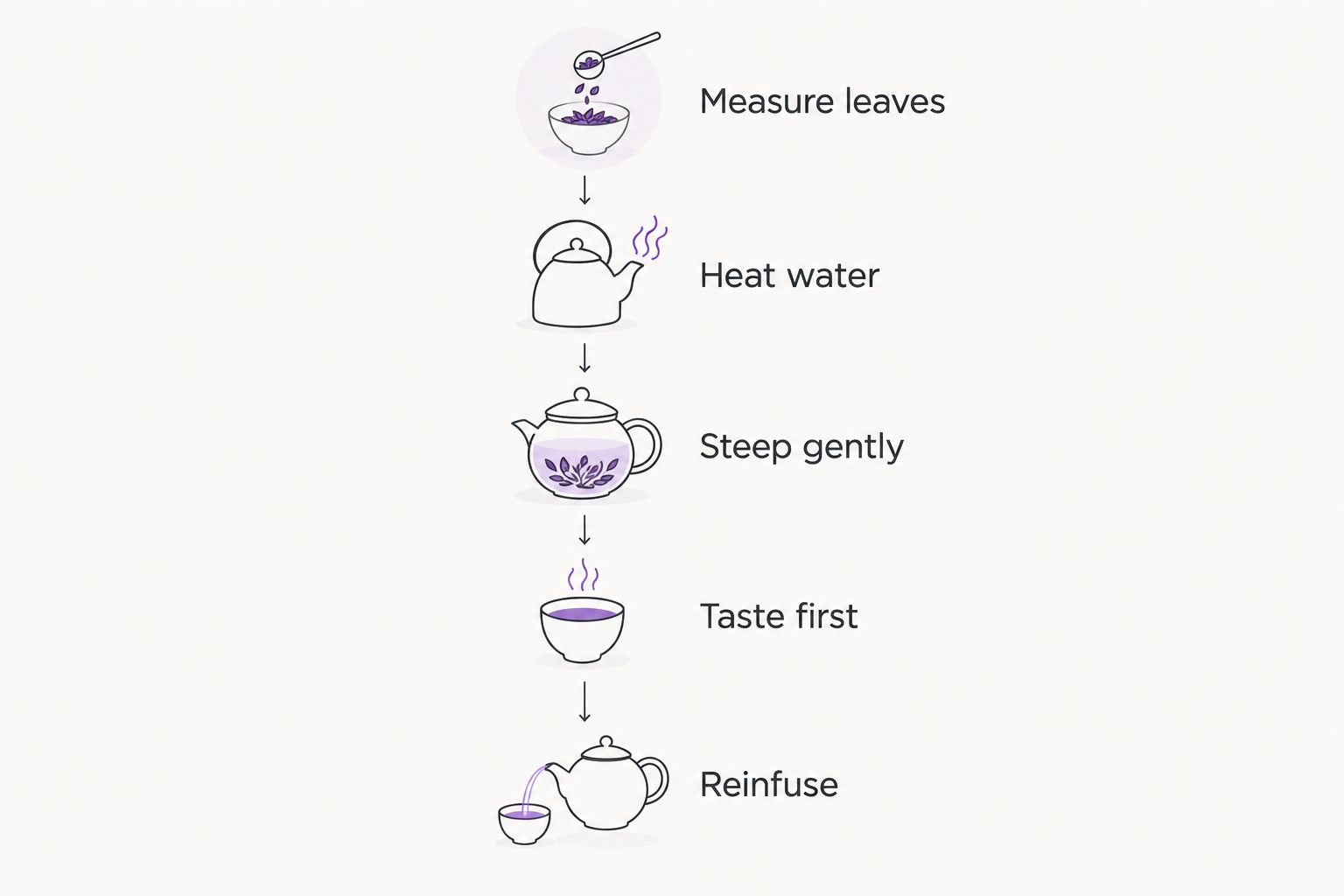
Give the leaves space to open. A roomy basket or small teapot is easier to manage than packing rolled leaves tightly into a tiny infuser. For equipment selection, the guide to tea infusers for loose-leaf brewing explains another part of building a practical setup.
Change one variable at a time. If the cup is too strong, shorten the steep before also changing the leaf quantity and temperature. You will learn more from a controlled adjustment than from a completely different recipe.
Caffeine, relaxation, and evening sipping
Tie Guan Yin is tea, so it contains caffeine. Roast level, floral aroma, and a soothing drinking ritual do not establish a caffeine amount. Do not select a darker roast on the assumption that it is a caffeine-free evening drink.
For a quiet routine in 2026, separate the ritual from a medical expectation. Sitting down with a warm cup is an everyday choice; claims about treating insomnia, improving digestion, or detoxifying the body require specific evidence. This guide recommends Tie Guan Yin for taste, not as a treatment or replacement for medical care.
If caffeine affects your sleep, choose a clearly labeled caffeine-free herbal infusion instead. Check the ingredients even when a blend sounds fruity or herbal: a blend containing black, green, or oolong tea is not caffeine-free merely because fruit appears in its name.
How these styles are ranked
The order follows flavor accessibility, clear selection criteria, and the amount of background information needed to make a useful choice. Lightly roasted tea comes first as a floral introduction; medium roast follows for everyday toast; darker roast serves a specific preference; aged tea requires closer attention to storage.
Teatheworld's tie guan yin oolong tea recommendations are flavor-based, not a laboratory ranking or a claim that one seller outperforms another. For a 2026 purchase, apply the criteria to the actual listing and keep your preferred taste at the center of the decision.
Which Tie Guan Yin should you choose?
Choose lightly roasted Tie Guan Yin if you are undecided. It gives you a clear starting point for exploring floral oolong, then comparing the effect of more pronounced roasting.
Choose medium roast if gentle toast sounds more inviting, or darker roast if toasted character is the main attraction. Leave aged tea for a later comparison. Teatheworld's practical recommendation is to find a style you enjoy before collecting unfamiliar labels.
FAQ
What's the best tie guan yin oolong tea for beginners?
Lightly roasted Tie Guan Yin is the best starting style for beginners seeking floral aroma. Choose medium roast instead if you already prefer gently toasted flavors.
Is Tie Guan Yin the same as Iron Goddess of Mercy tea?
Yes, Iron Goddess of Mercy is a common English translation of Tie Guan Yin. Listings also use spellings such as Tieguanyin and Ti Kuan Yin.
Does Tie Guan Yin contain caffeine?
Yes, Tie Guan Yin contains caffeine because it is made from Camellia sinensis. A roast description does not establish its caffeine amount or make it caffeine-free.
Is lightly roasted Tie Guan Yin better than darker-roasted tea?
Lightly roasted Tie Guan Yin is better for a floral flavor preference; darker-roasted tea is better for a pronounced toasted preference. Neither roast level establishes quality on its own.
How do I brew Tie Guan Yin in a mug?
Start with 3 grams of tea in 250 milliliters of water at 90°C, or 194°F, for 2 minutes. Remove the leaves, taste, and adjust the next brew; follow the tea's own instructions when they differ.
Can I drink Tie Guan Yin before bed?
Tie Guan Yin is not a caffeine-free bedtime choice. If caffeine affects your sleep, choose a clearly labeled caffeine-free herbal infusion and check its ingredients.
Is aged Tie Guan Yin always better?
No, age alone does not establish the quality of Tie Guan Yin. Storage conditions and any subsequent roasting matter, so choose an aged tea with a clear description rather than relying on an age statement.
One last thing
A floral tasting note is not an ingredient list. Orchid-like Tie Guan Yin does not need added orchids, just as a nutty description does not establish added nuts. Read tasting notes for flavor and the ingredient label for contents. Keeping those two jobs separate makes tea shopping simpler and more useful.