
Best tea infusers for herbal tea blends in 2026
Posted by Ricardo R. Matos, Founder of Tea The World on Nov 26th 2026
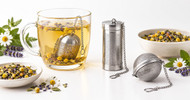
Best overall: a roomy fine-mesh basket. Best for fine herbal fragments: a disposable paper tea filter. Best for sharing: a removable teapot basket. The best tea infuser for herbal tea blends gives flowers, leaves, and fruit pieces room to move while keeping loose particles out of your cup.
- A roomy fine-mesh basket is the best tea infuser for herbal tea blends for everyday mug brewing.
- Paper tea filters suit fine herbal fragments, but create waste with every brew.
- Removable teapot baskets suit shared servings; check basket depth against your usual water level.
- Choose the infuser around your blend’s particle size, your cup, and your cleaning routine.
Why this matters
An herbal blend can contain delicate flowers, broad leaves, small seeds, or dense pieces of fruit. Those ingredients do not all behave alike in water, so a tiny tea ball and a spacious basket give you different brewing experiences.
For Tea The World loose leaf tea drinkers, a roomy basket is the best everyday starting point. Tea The World pouches contain loose leaf tea; tins contain tea sachets, so check the format before buying a separate infuser. You can explore the tea and accessory selection at Tea The World.
This 2026 guide ranks infuser designs by their practical use, rather than naming products with unconfirmed specifications. Start with the shape that fits your routine, then check the individual item’s materials, dimensions, and care instructions.
What makes the best tea infuser for herbal blends?
Use these five checks before choosing an infuser:
- Room for ingredients: Choose a chamber that does not need to be tightly packed with dry herbs. Water needs access to the ingredients throughout the basket.
- Particle control: Fine mesh or closely spaced perforations suit small fragments. Large holes allow small pieces through, even when the chamber is spacious.
- Cup compatibility: Check the opening, rim support, and basket depth against the mug or teapot you actually use.
- Easy removal: Look for a stable handle, rim, or lifting point so you can remove the wet infuser without reaching into hot water.
- Straightforward cleaning: Accessible interiors and simple closures make it easier to remove spent leaves and inspect trapped residue.
A lid or drip tray is useful, but neither compensates for poor fit. If the basket sits above the water or tips inside your mug, choose a different shape.
Best herbal tea infusers at a glance
| Rank and infuser | Best for | Standout feature | Key limitation |
|---|---|---|---|
| 1. Fine-mesh mug basket | Everyday mixed herbal blends | Open chamber with broad access for cleaning | Must fit your mug’s rim and depth |
| 2. Disposable paper tea filter | Fine fragments and quick cleanup | Enclosed filter holds small particles | Single-use waste; needs room when filled |
| 3. Removable teapot basket | Sharing a pot of herbal tea | Lets you remove the herbs before serving | A shallow basket might not reach a small serving |
| 4. Mesh tea ball | Coarse herbs in a compact setup | Small, enclosed chamber | Limited room and a seam that needs checking |
| 5. Silicone infuser | Occasional brewing with coarse ingredients | Flexible body in varied shapes | Hole size and narrow interiors vary by design |
The 2026 default is the mug basket: it offers a practical balance of space, filtration, and access for cleaning. Choose another design when a specific need—fine particles, shared servings, or compact storage—matters more.
1. Fine-mesh mug basket: best for everyday herbal blends
A mug basket sits inside your cup, usually supported by a rim or handles. Its open shape lets you add herbs without pushing them through a small opening, then empty the wet ingredients after brewing.
Choose a broad chamber rather than judging by height alone. A tall, narrow basket still restricts bulky flowers when you fill it tightly.
Fine-mesh mug basket pros:
- Gives mixed leaves and flowers space without a fiddly closure.
- Makes the interior easy to inspect before brewing.
- Lifts out so you can separate the herbs from the finished drink.
Fine-mesh mug basket cons:
- A wide rim does not fit every narrow cup.
- Fine fragments can lodge in the mesh and need careful rinsing.
Before buying, compare the basket’s supporting width and depth with your favorite mug. Also check where the mesh begins: a deep basket is less useful if its filtering area barely meets the water.
For a closer look at chamber size and closures, read tea infuser basket vs. tea ball.
Best for: Your regular mug of mixed herbal tea, especially blends with both leaves and flowers.
Verdict: Buy a roomy fine-mesh mug basket as your default.
2. Disposable paper tea filter: best for fine herbal fragments
A paper tea filter holds loose ingredients inside a porous pouch. It is a practical choice when small fragments slip through your existing mesh infuser or when you want to empty the brew without picking leaves out of a basket.
Choose a filter made for brewing tea, and follow its filling and closure instructions. Leave space inside rather than packing the pouch into a firm bundle.
Disposable paper tea filter pros:
- Contains small particles that escape larger perforations.
- Lets you discard the spent ingredients together.
- Takes little storage space before use.
Disposable paper tea filter cons:
- Creates waste with each serving.
- A small or overfilled pouch restricts ingredient movement.
Check how the filter stays in place. A loose top needs support above the water; a closure needs to stay secure without compressing the contents.
Paper is not automatically the right answer for every herbal blend. If your mix contains large, intact flowers and your mesh basket already strains it well, the reusable basket is the simpler everyday choice.
Best for: Blends with small fragments and situations where quick cleanup matters most.
Verdict: Buy for particle control; skip as an automatic replacement for a working basket.
3. Removable teapot basket: best for sharing herbal tea
A removable teapot basket holds the herbs inside a larger brewing vessel. You lift it out when the infusion reaches the flavor you want, then serve from the pot without leaving the ingredients submerged.
Depth matters as much as overall capacity. A basket designed for a full pot can sit too high when you brew only a small amount.
Removable teapot basket pros:
- Keeps a shared serving together in one vessel.
- Separates the herbs from the drink before you pour.
- Avoids filling and cleaning several individual infusers.
Removable teapot basket cons:
- Must match the pot’s opening, lid, and internal shape.
- A shallow basket limits smaller brewing volumes.
For your 2026 teapot shortlist, check both your smallest and largest usual serving. If you make 250 ml alone and 500 ml for company, the herbs need contact with the water at both levels. A 1-liter gathering brew also needs enough basket space for the larger quantity of ingredients.
Those volumes are planning examples, not prescribed serving sizes. Match the pot to what you actually drink, and use the blend’s directions for the quantity of tea.
Best for: Sharing tea at the table or preparing several servings together.
Verdict: Buy when the basket reaches your normal water level and lifts out easily.
4. Mesh tea ball: best for compact brewing with coarse herbs
A mesh tea ball encloses herbs inside a small chamber, often with a chain or handle for removal. It is easy to tuck into a drawer, but the compact shape leaves less room than a broad basket.
Inspect the meeting edges and closure before filling it. A gap at the seam defeats fine mesh elsewhere on the ball.
Mesh tea ball pros:
- Stores neatly in a small kitchen drawer.
- Keeps ingredients enclosed during brewing.
- Works with coarse herbs when the chamber is not crowded.
Mesh tea ball cons:
- Small chambers are awkward for bulky flowers or fruit pieces.
- Hinges and seams need attention during cleaning.
Use a tea ball because its size suits your serving, not because the dry herbs can be squeezed inside. If closing it requires pressure on the ingredients, choose a larger chamber.
Best for: Small servings of coarse herbs when compact storage is your priority.
Verdict: Hold onto one that works; skip undersized balls for bulky blends.
5. Silicone infuser: best for occasional coarse-herb brewing
Silicone infusers come in many shapes, so the material alone does not tell you how well one strains tea. Look at the actual holes, chamber opening, and removal method.
Choose an item explicitly intended for contact with hot beverages. Follow its stated temperature and cleaning instructions rather than assuming every silicone accessory has the same limits.
Silicone infuser pros:
- A flexible body can make opening and emptying straightforward.
- Some designs rest on the cup rim for removal.
- Offers an alternative shape when a rigid basket does not suit your cup.
Silicone infuser cons:
- Large holes let small herbal fragments escape.
- Narrow decorative interiors can be difficult to inspect and clean.
Avoid choosing by appearance alone. A charming shape is less useful if you cannot remove wet flowers from a hidden corner or keep the chamber submerged.
Best for: Occasional cups made with coarse ingredients, after checking the individual design.
Verdict: Buy only when the opening, holes, and cleanup suit your blend; otherwise skip.
How we ranked these infuser designs
This 2026 ranking uses the five criteria above: ingredient space, particle control, cup compatibility, safe removal, and cleaning access. It compares design trade-offs, not laboratory filtration results or named products.
The mug basket ranks first because its open chamber suits an everyday mixed-herb routine. Paper filters earn a separate place for fine fragments, while teapot baskets answer a different need: sharing. Neither compact tea balls nor decorative silicone shapes are the default when ingredient space is the main concern.
Match the infuser to your brewing routine
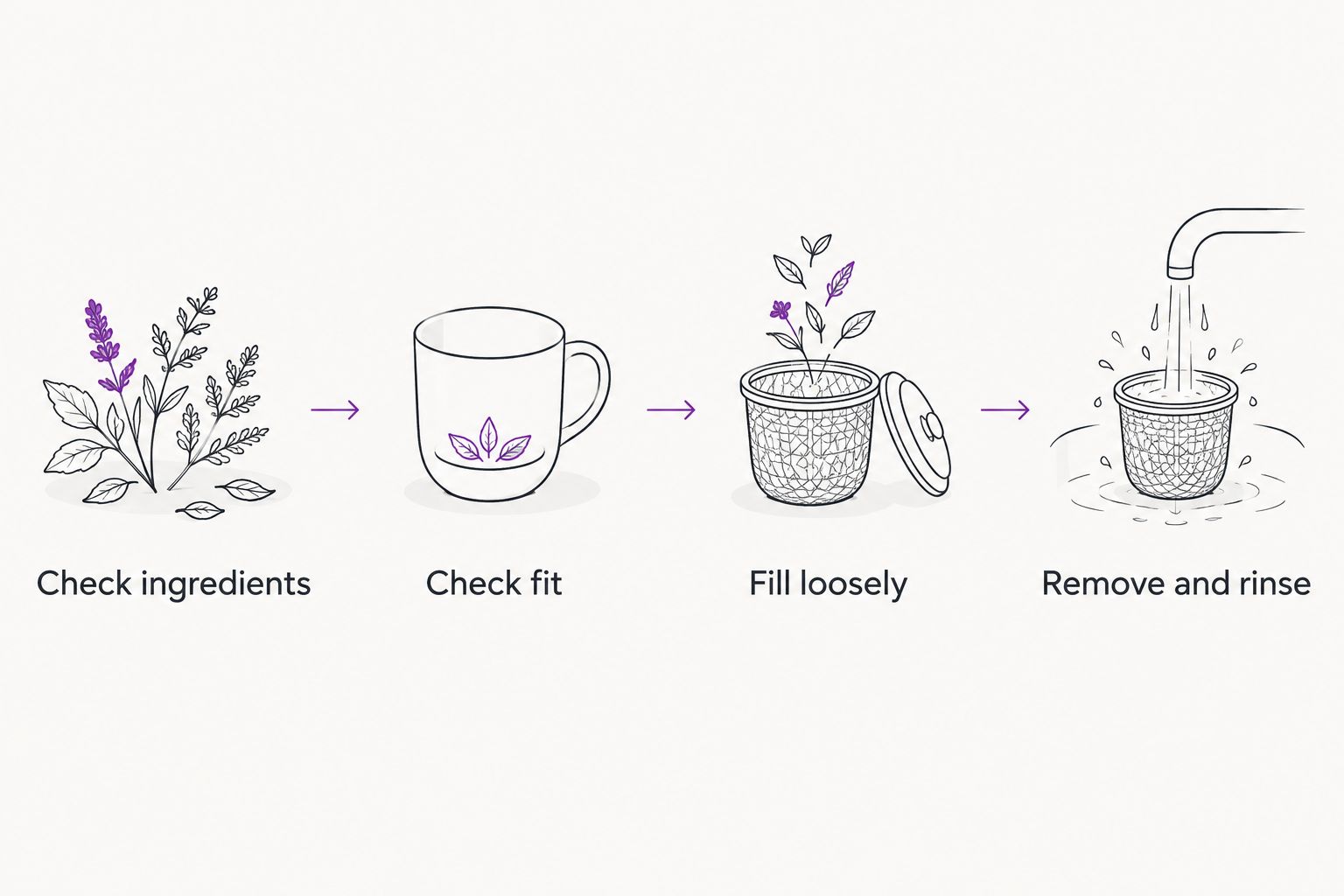
Before buying, make these checks in order:
- Check ingredients: Look for fine fragments, broad leaves, whole flowers, or chunky fruit pieces. Check the full ingredient list for any tea base containing caffeine.
- Check fit: Compare the infuser with your actual cup opening and usual water level, not just the advertised vessel capacity.
- Fill loosely: Follow the blend’s quantity instructions and leave the ingredients uncompressed.
- Remove and rinse: Lift the infuser out when brewing is complete, let it cool enough to handle, then empty and clean it.
For Tea The World loose leaf tea in pouches, start with the preparation directions supplied with the tea. Do not transfer a green tea brewing routine to every herbal blend: ingredients need different treatment, and one universal steeping time does not suit them all.
If you are building a quieter evening routine, check ingredients before assuming a fruit-flavored blend is caffeine-free. The infuser changes how you brew, not whether a blend contains caffeine or provides a health benefit.
Which herbal tea infuser should you choose?
Choose a roomy fine-mesh mug basket unless you have a clear reason not to. It gives you an accessible chamber, straightforward removal, and a reusable starting point for everyday cups.
For your 2026 purchase, change that default only to solve a specific problem. Choose paper for escaping fine particles, a removable teapot basket for sharing, or a compact tea ball for coarse herbs in a small setup. Keep the tea and your routine ahead of the accessory’s appearance.
FAQ
What’s the best tea infuser for herbal tea blends?
A roomy fine-mesh mug basket is the best everyday starting point for herbal tea blends. Check that it fits your mug, keeps the ingredients submerged, and has openings small enough for your blend.
Is a tea basket better than a tea ball for chamomile?
A roomy basket is the better starting point for bulky chamomile flowers because it is easier to fill without compression. A sufficiently large tea ball still works when it closes freely and keeps the ingredients submerged.
What should I use when herbs escape through my infuser?
Use a filter with smaller openings or a paper tea filter made for brewing. First inspect the existing infuser for gaps at its seam or closure, since those gaps also let particles escape.
Can I use the same infuser for peppermint and fruit blends?
Yes, if the infuser fits both blends’ particle sizes and you clean it between uses. Check that larger fruit pieces do not crowd the chamber and smaller leaf fragments do not escape.
Does herbal tea need more room than regular tea?
Room requirements depend on the ingredients, not simply whether the blend is herbal. Bulky flowers and large fruit pieces need a chamber that holds the intended quantity without tight packing.
Do I need an infuser for Tea The World tins?
Tea The World tins contain tea sachets, so a separate loose leaf infuser is not needed for that format. Tea The World pouches contain loose leaf tea and need an appropriate brewing and straining method.
How do I clean an herbal tea infuser?
Empty the spent ingredients and rinse the infuser, then clean it according to its material and manufacturer’s instructions. Inspect mesh, seams, and corners for trapped fragments; do not assume every infuser is dishwasher-safe.
One last thing
Before replacing an infuser, check where the particles escape. Fine mesh cannot compensate for a loose seam, and a larger basket cannot help if it sits above the water. Buy to fix the actual mismatch—not simply to add another tea accessory.
Related guides
- Why does loose leaf tea escape your infuser?
- Best tea infusers for travel
- How to remove tea stains from a glass teapot with infuser
Ricardo R. Matos, Founder of Tea The World