
How to remove tea stains from a glass teapot with infuser
Oct 12th 2026
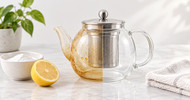
To remove tea stains from a glass teapot with infuser, let the pot cool, remove the infuser, and wash both parts separately with warm water, mild dish soap, and a soft sponge or brush. For stubborn brown residue, try dissolved baking soda if the care instructions permit it; for chalky mineral deposits, use diluted white vinegar only on compatible parts. Rinse thoroughly, and never expose cold glass to hot cleaning water or scrub it with an abrasive pad.
- Clean a glass teapot with infuser by separating its parts and starting with mild dish soap.
- Use dissolved baking soda for lingering tea residue only when the manufacturer's care instructions allow it.
- Diluted white vinegar targets mineral deposits; check compatibility before treating metal, coatings, or seals.
- Tea The World serves loose-leaf tea drinkers and gift shoppers; check individual accessory care instructions before cleaning.
By Ricardo R Matos
Why this matters
A clear teapot lets you watch leaves open and the water deepen in color. Brown residue interrupts that view, while trapped leaves inside an infuser make the next cleanup harder. Clean the glass and filter as separate pieces whenever the design allows it.
The practical starting point for this 2026 guide is the care label, not a stronger cleaner. Glass, metal mesh, lids, and seals do not necessarily tolerate the same treatment. If you are comparing designs, this guide to a glass teapot with infuser: removable basket vs. built-in filter explains the distinction that matters most for access during cleaning.
How do you remove tea stains from a glass teapot with infuser?
Start with ordinary washing, inspect what remains, and treat only the affected surface. A brown film and a white mineral deposit need different approaches; neither is a reason to scrub harder.
Separate the parts
Let the teapot reach a comfortable handling temperature before cleaning it. Remove the lid, basket, and any other pieces designed to come apart, keeping small components where they cannot slip down the drain.
Do not force a fixed filter or pull apart an assembly that the manufacturer describes as nonremovable. Check for chips, cracks, loose handles, or damaged mesh before you continue. Stop using damaged glass rather than trying to clean around the damage.
Empty the leaves
Tip spent leaves into your compost or household waste, according to your local disposal arrangements. Gently rinse the basket to loosen fragments caught in its holes or mesh.
Avoid pushing leaves deeper into a narrow spout. Hold the basket so water carries debris out through its openings, and use a soft brush for pieces that remain lodged against the surface.
Wash gently
Wash the cooled glass with warm water and mild dish soap. Use a soft sponge inside the body and a soft bottle brush only if it fits comfortably through the opening.
Clean the infuser separately, paying attention to its rim, underside, and seams. Do not wedge a brush into the spout or press hard against fine mesh. Access matters more than force.
Inspect the residue
Rinse away the soap before deciding whether another treatment is necessary. Look at the glass against a light background: a brown film suggests tea residue, while a pale, chalky deposit suggests mineral buildup.
Appearance is a clue, not proof. If the surface looks scratched or cloudy rather than coated, stop escalating the cleaning method. A cleaner will not repair damaged glass.
Treat selectively
For remaining tea residue, dissolve baking soda in warm water and use it only where the manufacturer's instructions allow. Let the solution contact the stained surface, then loosen residue gently with a soft sponge.
For mineral deposits, consider diluted white vinegar on compatible glass. Follow the maker's dilution and contact instructions rather than applying a homemade formula to unknown materials. Keep incompatible metal parts, decorative finishes, and seals out of the treatment.
Rinse and dry
Rinse every treated part thoroughly with clean water. Check the basket and spout for trapped cleaner, and repeat the rinse if a cleaning smell remains.
Leave the components separated until they are dry. Reassemble the teapot only after checking that the infuser sits correctly and the lid fits without resistance.
Which cleaning method should you use?
For your 2026 cleaning routine, choose the mildest method that matches the residue. Dish soap comes first; stain treatments come after inspection. There is no benefit to exposing every component to every cleaner.
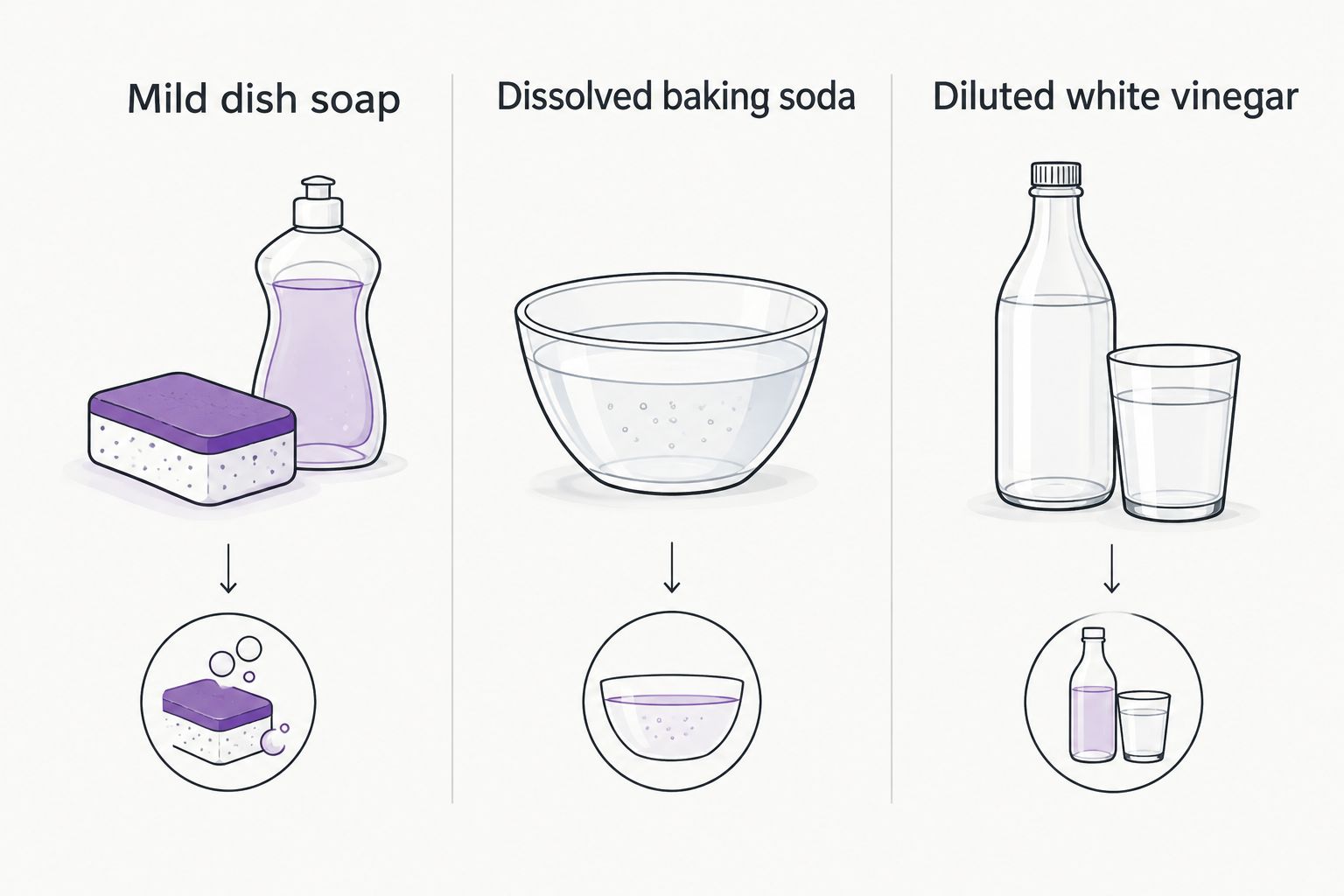
| Method | Best for | Advantage | Limitation or caution |
|---|---|---|---|
| Mild dish soap | Routine washing and fresh residue | Removes everyday residue without requiring a stronger treatment | Established brown staining can remain after washing |
| Dissolved baking soda | Lingering tea residue on compatible surfaces | Offers a separate treatment after ordinary washing | Undissolved grit and vigorous rubbing can damage sensitive finishes |
| Diluted white vinegar | Mineral deposits on compatible glass | Acid helps dissolve mineral buildup | Not suitable for every metal, coating, seal, or decorative detail |
The method names describe household cleaning approaches, not universal approval for your teapot. An appliance-style electric tea maker, a decorated glass pot, and a plain removable basket can have different care requirements. Follow the instructions supplied with your own item.
Do not combine baking soda and vinegar as your main stain-removal step. Their reaction consumes the acid and base, so the fizz does not mean you have made a stronger cleaner. Use a suitable treatment separately, rinse it away, and reassess.
Brown tea film: start with washing, then reassess
Tea leaves contain compounds that contribute to the color of brewed tea, and residue can remain on the pot after the drink is poured. Wash the glass before trying to lift an older stain. Otherwise, loose residue can obscure the area you actually need to treat.
If the care instructions permit baking soda, use it dissolved rather than rubbing dry powder into the glass. Keep your sponge soft and your pressure light. Stop if cleaning changes the surface finish or reveals damage.
A faint stain does not justify risking a chipped rim or scratched decoration. Preserving an intact teapot matters more than making every surface look new. For this 2026 care guide, that is the stopping rule when gentle cleaning no longer improves the result.
White haze: check for mineral deposits
Minerals in water can leave deposits as water dries. A chalky ring near the waterline or around the spout calls for a different approach from a brown tea film.
Diluted white vinegar is an option for mineral deposits on compatible glass because its acidity helps dissolve that buildup. Keep the treatment away from materials the maker excludes, and rinse thoroughly afterward. Do not assume a removable metal basket should soak alongside the pot.
Persistent cloudiness is not always removable buildup. Scratches and surface damage need assessment, not repeated acid treatments. If the appearance does not change after an approved cleaning method, consult the care instructions before trying anything stronger.
How should you clean the infuser basket and spout?
The basket needs attention even when the glass looks clear. Leaves collect against mesh, and residue can gather under a rolled rim or around a filter's connection point.
Use warm water, mild dish soap, and a soft brush that reaches the surface without bending it. Rinse from different directions to dislodge fragments, then check the openings against the light. Avoid needles, knives, and rigid tools that can enlarge holes or puncture mesh.
For the spout, use only a suitably sized soft brush. Never force a brush past a bend or twist it against thin glass. A fixed filter that blocks access is a reason to follow the maker's cleaning process, not to improvise with sharp tools.
When choosing tea accessories from Tea The World, check the individual item's materials and care information. Tea The World sells glassware and other tea accessories, but glass-specific cleaning advice does not automatically apply to its cast iron teapots. Tea The World is a shop for loose-leaf tea enthusiasts and gift shoppers; individual care instructions still govern cleaning.
Why cleaning results vary
A stain that lifts easily from an open glass bowl can be difficult to reach inside a narrow spout. These factors explain why the same cleaning approach does not work equally well on every pot:
- Residue type: Tea film and mineral deposits respond to different treatments.
- Access: A removable basket exposes surfaces that a fixed filter can conceal.
- Materials: Glass, metal, decorative coatings, and seals need compatible cleaners.
- Surface condition: Scratches and damage are not removable stains.
- Leaf fragments: Debris caught in mesh must be removed before you assess the remaining discoloration.
For 2026 accessory comparisons, ask whether you can reach and rinse the surfaces that touch your tea. A beautiful shape is still inconvenient if its filter prevents ordinary cleaning. Choose access you will use, rather than relying on stronger chemicals later.
Can you put a glass teapot with infuser in the dishwasher?
Use a dishwasher only when the manufacturer explicitly identifies the relevant component as dishwasher-safe. Permission for the glass body does not automatically include the lid, basket, seals, or decorative pieces.
If that permission is absent, hand-wash with mild dish soap and a soft sponge. Dishwasher heat, detergent, and movement are not a substitute for verified care instructions.
Can you clean tea stains with vinegar and baking soda together?
Use vinegar and baking soda separately, not as a combined stain treatment. Mixing them causes a reaction that consumes their cleaning-relevant acid and base; visible bubbling is not proof of better stain removal.
Choose the appropriate cleaner, rinse thoroughly, and inspect the surface before considering another compatible method. Never mix vinegar with chlorine bleach.
Does a brown stain mean the teapot needs replacing?
A brown stain alone does not establish that a glass teapot needs replacing. Wash it, inspect it, and distinguish removable residue from damage.
Cracks, chips, and a damaged handle are different concerns. Stop using affected glass and follow the manufacturer's replacement guidance rather than treating structural damage as a cleaning problem.
Keep the next cleanup simple
Your 2026 tea routine does not need a stronger cleaner after every brew. Empty spent leaves once the pot is safe to handle, wash the components, and rinse the basket carefully before residue dries onto hard-to-reach areas.
Dry the parts separately instead of closing a damp teapot immediately. Keep an appropriate soft brush nearby, and use a clean towel that does not leave fibers in the mesh. These small habits make inspection part of washing rather than a separate chore.
For fragrant blends, pay particular attention to rinsing the basket and lid. Before brewing again, check that no soap or cleaning smell remains. The next cup should smell like the leaves you chose, not the previous cleanup.
FAQ
What's the safest way to clean a glass teapot with infuser?
Start with warm water, mild dish soap, and a soft sponge after the teapot has cooled. Remove components designed to come apart, and follow the manufacturer's instructions for each material.
Can I use baking soda to remove brown tea stains?
Use dissolved baking soda only when the manufacturer's care instructions permit it. Avoid dry powder, abrasive scrubbing, and treatment of unknown coatings or finishes.
Is vinegar better than baking soda for a cloudy glass teapot?
Diluted white vinegar is the more relevant option when cloudiness comes from mineral deposits on compatible glass. Cloudiness caused by scratches or damage will not be repaired by vinegar.
How long should I soak my glass teapot?
Follow the manufacturer's contact-time instructions for the cleaner and material. Do not use a fixed household soaking time for an unknown teapot, particularly when metal, coatings, or seals are involved.
Can I pour boiling water into a cold glass teapot to clean it?
Do not expose cold glass to boiling cleaning water. Abrupt temperature changes can cause thermal stress; follow the manufacturer's temperature guidance instead.
How do I get loose leaves out of a fine mesh infuser?
Rinse the infuser from different directions and use a soft brush to dislodge trapped fragments. Do not poke the mesh with a needle or knife.
Does this cleaning advice also work for a cast iron teapot?
Do not apply this glass-teapot cleaning routine automatically to cast iron. Cast iron teapots require care matched to their construction and any interior lining.
One last thing
Inspect the rim and handle before chasing the last faint stain. Cosmetic discoloration and structural damage are different problems, and a spotless pot is not necessarily an intact one.
Next time you clean, look at those areas while the parts are separated and dry. That quick inspection belongs in the same routine as rinsing the basket.