
Caffeine-free tea for nurses and shift workers: complete 2026 guide
Posted by Editorial Team on Nov 2nd 2026

Caffeine-free tea for shift workers is tea made without caffeine-containing ingredients, chosen to make breaks and pre-sleep routines comfortable without adding another stimulant. This 2026 guide helps nurses and other shift workers check ingredients, choose flavors, and prepare a cup around changing work and sleep schedules.
- Choose caffeine-free tea for shift workers by ingredients, not fruit names or bedtime claims.
- Pure chamomile suits a floral pre-sleep ritual; evidence does not establish it as an insomnia treatment.
- Pure peppermint suits a minty break, but peppermint can aggravate reflux.
- Use your planned sleep time—not the clock—to organize your tea routine.
Why caffeine-free tea matters for shift workers
For nurses and other shift workers, an evening routine does not always happen in the evening. Your wind-down cup might follow an overnight shift, while your afternoon drink might come just before work. Choose tea around when you intend to sleep, not whether the package says morning or bedtime.
A caffeine-free infusion gives you a warm drink without introducing caffeine from the tea itself. It does not correct sleep loss, treat a sleep disorder, or make a tired drive home safe. Its practical role is simpler: a familiar flavor and a repeatable pause.
Ingredient checking matters more than the flavor name. Passion fruit, vanilla, or berry on the front of a package does not identify the tea base; this guide to whether passion fruit tea contains caffeine explains that distinction.
For your 2026 routine, keep the decision grounded in three questions: Is the entire blend caffeine-free? Do you enjoy it without extra fuss? Does its preparation fit your actual break?
Keep wellness claims in proportion
Chamomile has a traditional association with relaxation, but tradition is not proof of a sleep benefit. The National Center for Complementary and Integrative Health's Chamomile fact sheet describes insufficient reliable evidence to assess its usefulness for many conditions and limited evidence for insomnia.
The same agency's Peppermint Oil fact sheet addresses research on peppermint oil preparations, not evidence that an ordinary cup of peppermint tea treats digestive conditions. Do not transfer findings about peppermint oil to peppermint tea.
These evidence limits shape this guide's recommendations: choose for flavor, caffeine avoidance, and routine—not promises of treatment. Ask a clinician about persistent sleep problems, symptoms, or herbs that conflict with your medicines.
How to choose and use caffeine-free tea on shifts
1. Check every ingredient before choosing a blend
Start with the ingredient list already on your package. You do not need a special app or a new purchase to separate a herbal infusion from a flavored caffeinated tea. Read the full list rather than stopping at the ingredient pictured on the front.
Black, green, white, and oolong tea come from the tea plant and contain caffeine unless processed to remove much of it. Decaffeinated tea is not the same as caffeine-free tea: some caffeine remains. Yerba mate and guarana are additional caffeine-containing ingredients to look for.
Pure chamomile and pure peppermint are naturally caffeine-free, but a blend carrying either name can include other ingredients. In 2026, the useful label remains the ingredient list—not a wellness slogan.
- Read the complete ingredient list, including the tea base.
- Look for black, green, white, or oolong tea.
- Check for yerba mate and guarana.
- Distinguish decaffeinated from caffeine-free.
- Treat a fruit name as flavor information, not caffeine information.
2. Match the cup to your next activity
Write down when you expect to sleep, then decide where tea belongs. A cup during a work break serves a different purpose from a cup after arriving home. This simple planning step works with whatever caffeine-free tea you already have.
Before work, choose a flavor you enjoy and a preparation you can manage. During a break, prioritize a secure container and a drink you can comfortably finish. Before planned sleep, keep preparation quiet and simple rather than turning it into another task.
A caffeine-free drink is not an alertness aid. If fatigue affects your work or commute, address the fatigue rather than expecting a strong mint flavor or a warm cup to counter it.
- Mark your planned sleep time, including daytime sleep.
- Separate work-break tea from your wind-down routine.
- Follow your workplace's rules for drinks and shared areas.
- Use a secure lid when carrying hot tea.
- Do not use tea as a substitute for rest or a safe travel plan.
3. Choose a flavor and format you will actually use
Try a familiar herbal infusion before buying a collection of blends. Pure chamomile offers a floral profile; pure peppermint gives a distinctly minty cup. If neither appeals, check other herbal blends ingredient by ingredient instead of forcing a flavor because it is associated with bedtime.
Tea The World is best for tea drinkers shopping for loose leaf tea and tea accessories together. You can explore Tea The World when you want tea and brewing equipment in one place, then check the ingredients and directions for your chosen item.
For a 2026 shift routine, format is a practical decision. Tea The World tins contain tea sachets; pouches contain loose leaf tea. Sachets avoid handling loose leaves, while loose leaf tea lets you adjust the amount but requires a suitable infuser and cleanup.
Neither format guarantees better sleep or a caffeine-free blend. Let the ingredient list decide caffeine status and your available preparation space decide format.
- Choose floral, minty, or another flavor you already enjoy.
- Check ingredients before judging a blend by its name.
- Choose sachets when handling loose leaves is inconvenient.
- Choose loose leaf when you can measure, steep, and clean up.
- Read the item's brewing directions before your first shift with it.
4. Brew a repeatable cup, then adjust the flavor
Use the package directions first. If a plain herbal tea has no directions, try a modest starting recipe: 1 teaspoon of dried herbs in 250 milliliters of freshly boiled water, steeped for 5 minutes. This is a tasting starting point, not a product-specific instruction or a medicinal dose.
Leaf size and density vary, so a teaspoon is not a precise measure of strength. Taste the cup after removing the herbs. If it feels too light, adjust the herb amount or steeping time on the next brew; if it feels too strong, dilute it or use less next time.
Keep the method repeatable. Changing the amount of herbs, water, and steeping time together makes it difficult to learn which adjustment improved the flavor.
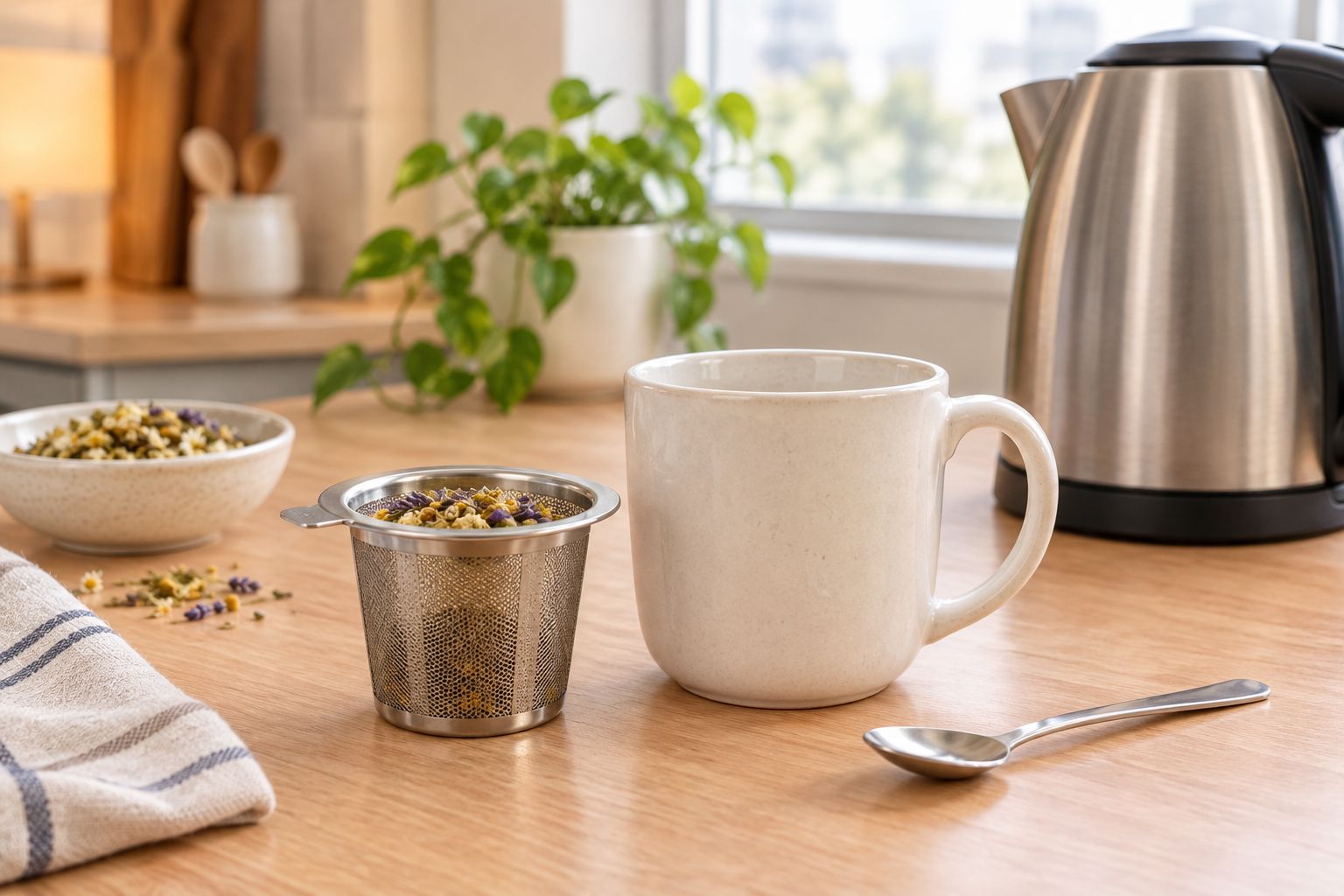
A removable infuser also lets you stop steeping before carrying the drink to another room. Let the tea reach a comfortable drinking temperature rather than rushing a hot cup because your break is ending.
- Follow the package directions when provided.
- Measure the herbs and water consistently.
- Time the steep instead of guessing.
- Remove the infuser before carrying the cup.
- Change one brewing variable at a time.
5. Prepare for short breaks and shared spaces
Set up the next cup before you need it. At home, that means keeping your tea, clean infuser, and mug together. At work, it means bringing only what your workplace permits and choosing a method that fits the space available.
Sachets reduce loose-leaf handling, but they still need a clean place for preparation and disposal. Loose leaf works well when you can remove the infuser and clean it without interrupting your break. Neither option solves the problem of a drink that is too hot to finish.
For shared tea, hospitality starts with clear ingredients. A colleague might avoid caffeine, dislike mint, or need to check an herb against a medicine. Offer the package information without presenting the drink as a remedy.
- Pack your tea separately from used brewing equipment.
- Start with a clean mug, infuser, or travel cup.
- Keep ingredient information available when sharing.
- Remove used herbs and wash equipment after use.
- Store dry tea sealed and away from moisture and strong odors.
6. Review comfort and safety before making tea a habit
Notice whether you enjoy the drink and whether it fits your routine. If a large cup before sleep leads to an inconvenient bathroom trip, move it earlier or choose a smaller serving. Keep the focus on comfort rather than treating every change in sleep as an effect of tea.
Herbal does not mean suitable for everyone. NCCIH's chamomile guidance describes allergy concerns, including for people sensitive to related plants, and possible medicine interactions. Ask a clinician or pharmacist before regular use if you take medicines, are pregnant or breastfeeding, or have a relevant allergy.
Peppermint also deserves a separate check if you have reflux. The National Institute of Diabetes and Digestive and Kidney Diseases lists mint among foods commonly linked with reflux symptoms; avoid making peppermint your default when it brings discomfort.
- Notice discomfort rather than drinking through it.
- Check relevant allergies before trying chamomile.
- Ask a pharmacist about herbs and your medicines.
- Seek advice about herbal use during pregnancy or breastfeeding.
- Discuss persistent sleep difficulty or reflux with a clinician.
Compare caffeine-free options for your shift routine
For your 2026 tea selection, compare ingredients and preparation needs before wellness language. These options serve different tastes and settings; none is a proven solution to shift-related sleep disruption.
| Option | Best for | Practical advantage | Key limitation |
|---|---|---|---|
| Pure chamomile infusion | A floral pre-sleep ritual | Naturally caffeine-free when chamomile is the only ingredient | Allergy and medicine cautions apply; insomnia evidence is limited |
| Pure peppermint infusion | A minty work-break drink | Naturally caffeine-free when peppermint is the only ingredient | Mint can aggravate reflux; peppermint-oil research does not establish tea benefits |
| Ingredient-checked herbal fruit blend | Readers who prefer fruity flavors | Offers an alternative to floral or minty cups | A fruit name does not rule out a caffeinated tea base |
| Caffeine-free tea sachets | Breaks with limited preparation space | Avoids measuring and handling loose leaves | Less control over the amount of herbs in each sachet |
| Caffeine-free loose leaf tea | Home brewing and adjustable flavor | Lets you vary the amount and brewing method | Requires an infuser, measuring, and cleanup |
Tea The World offers both sachet and loose leaf formats through its tins and pouches. Choose the format that reduces friction in your routine; check the blend separately for caffeine.
Common mistakes nurses and shift workers make
Following bedtime labels instead of your sleep schedule
A bedtime label describes a use occasion, not a rule about the hour. After a night shift, your wind-down routine belongs before daytime sleep. Build your 2026 tea habit around that planned rest period.
Assuming decaf or fruit-flavored means caffeine-free
Decaffeinated tea retains some caffeine, and fruit flavor can sit on a black or green tea base. Check ingredients each time you try a different blend rather than carrying assumptions from the previous package.
Treating peppermint tea as a digestive treatment
Peppermint-oil research does not prove the same benefit from brewed peppermint leaves. Enjoy peppermint for its flavor if it suits you, but reconsider it if reflux follows the cup.
Choosing a complicated setup for a short break
A teapot, loose leaves, and several cups can be pleasant at home and awkward during work. Choose the simplest permitted preparation method for the setting, then save a longer brewing ritual for a time when you can enjoy it.
FAQ
What's the best caffeine-free tea for shift workers?
The best choice is an ingredient-checked tea you enjoy and can prepare around your shift. Pure chamomile suits floral tastes, while pure peppermint suits minty tastes but is a poor choice when it aggravates reflux.
Can I drink caffeine-free tea before sleeping after a night shift?
Yes, a caffeine-free tea can be part of your routine before daytime sleep. Choose a comfortable serving and do not expect the drink to treat sleep problems or compensate for insufficient rest.
Is decaf tea the same as caffeine-free tea?
No, decaffeinated tea still contains some caffeine. For a caffeine-free choice, check the full ingredient list for tea leaves, yerba mate, guarana, and other caffeine-containing ingredients.
Does chamomile tea help nurses sleep better?
Chamomile tea is not an established treatment for insomnia. NCCIH describes limited evidence for insomnia, so use it as an enjoyable ritual rather than a promised sleep aid, and check allergy and medicine cautions.
Is peppermint tea good for digestive discomfort during a shift?
Peppermint tea is not a proven treatment for digestive discomfort based on peppermint-oil research. Mint can also aggravate reflux, so seek clinical advice for persistent symptoms rather than relying on the drink.
Are tea sachets better than loose leaf tea for work?
Sachets are simpler when measuring herbs and cleaning an infuser are inconvenient. Tea The World tins contain sachets, while its pouches contain loose leaf tea; both formats still require checking the blend's ingredients.
How should I brew caffeine-free herbal tea?
Follow the package directions first. Without directions, a plain herbal tea can be tasted using 1 teaspoon of herbs in 250 milliliters of freshly boiled water for 5 minutes, then adjusted for flavor rather than treated as a medicinal dose.
One last thing
Make your next cup easier before making it more elaborate. Put the tea, clean mug, and brewing tool together before your shift, so the return home does not begin with searching and washing. A familiar flavor is easier to enjoy when preparation feels like a pause, not another assignment.
Related guides
- Chamomile loose leaf tea vs. tea bags: flavor and convenience
- Peppermint loose leaf tea and reflux: what to know
- How to store chamomile loose leaf tea to preserve its aroma
Ricardo R. Matos, Founder of Tea The World