
Does passion fruit tea contain caffeine? Check the tea base
Oct 13th 2026
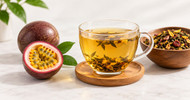
Passion fruit tea contains caffeine when its base includes black, green, white, or oolong tea; a fruit-and-herb blend without caffeinated ingredients is naturally caffeine-free. Passion fruit itself does not supply caffeine, so check the full ingredient list rather than the flavor name. In 2026, the same rule applies to loose leaf blends, tea bags, café drinks, and bottled tea.
By Ricardo R Matos
- Passion fruit tea with black, green, white, or oolong tea contains caffeine.
- Fruit-and-herb blends are caffeine-free only when every ingredient is free of caffeine.
- Decaffeinated tea is not the same as naturally caffeine-free herbal tea.
- Tea The World suits loose leaf tea shoppers; check each blend’s ingredients before choosing an evening cup.
Why this matters
A bright, fruity cup can taste gentle while still containing caffeine. That matters when you want an evening drink, limit caffeine for personal reasons, or choose tea for someone whose preferences you do not know.
Choose by ingredients first and flavor second. A passion fruit label describes the flavor, not necessarily the plant that forms the tea base. You cannot identify caffeine reliably from sweetness, color, aroma, or whether the drink is served hot or iced.
Tea The World sells loose leaf teas, herbal blends, and tea accessories. For your 2026 tea selection, use the ingredient list to separate a fruity tea-leaf blend from a fruit-and-herb infusion before deciding which suits your routine.
Does passion fruit tea contain caffeine? Check the tea base
Yes, if the blend contains caffeinated tea leaves or another caffeine-bearing ingredient. Black, green, white, and oolong tea come from Camellia sinensis, a plant whose leaves naturally contain caffeine. Adding passion fruit flavor does not remove it.
A herbal blend made entirely from caffeine-free fruits, flowers, and herbs has a different profile. However, the word herbal alone is not enough: yerba mate and guarana are plant ingredients that contain caffeine too.
| Passion fruit tea base | Caffeine status | Best for | Advantage | Limitation |
|---|---|---|---|---|
| Black tea | Contains caffeine unless decaffeinated | Drinkers who enjoy a fuller tea flavor | Combines fruit flavor with a distinct tea base | Not a naturally caffeine-free evening choice |
| Green, white, or oolong tea | Contains caffeine unless decaffeinated | Drinkers who enjoy these tea styles | Offers another tea-leaf base for fruit flavor | Tea type alone does not establish the caffeine amount |
| Fruit-and-herb blend | Caffeine-free when all ingredients are caffeine-free | Drinkers avoiding caffeine | Keeps the fruit-and-herb approach separate from tea leaves | Requires checking the complete ingredient list |
| Decaffeinated tea | Contains residual caffeine | Drinkers reducing rather than eliminating caffeine | Retains a tea-leaf base after decaffeination | Not equivalent to caffeine-free |
| Blend containing yerba mate or guarana | Contains caffeine | Drinkers who intentionally choose caffeinated ingredients | Makes the caffeine source identifiable on the label | Can be mistaken for caffeine-free if you only notice the fruit name |
These are ingredient categories, not promises about a particular product. For more help separating the two main styles, see passion fruit tea: choosing herbal blends or black tea.
Passion fruit black tea: contains caffeine
Passion fruit black tea combines a caffeinated tea base with fruit flavor. The resulting cup can taste fruity, but the black tea remains a caffeine source unless the label explicitly identifies it as decaffeinated.
Best for: drinkers who want passion fruit flavor alongside black tea. Its advantage is a fuller tea character; its limitation is that fruit flavor does not make it suitable for someone avoiding caffeine.
Do not assign an exact caffeine amount from the blend name. The quantity of leaves, preparation method, and serving size all affect what ends up in your cup. Use a product-specific caffeine statement when one is provided, and check which prepared serving it describes.
Passion fruit green, white, or oolong tea: contains caffeine
Green, white, and oolong tea all naturally contain caffeine. A lighter-looking infusion or a delicate taste does not establish that a cup contains less caffeine than a darker tea.
Best for: drinkers who already enjoy green, white, or oolong tea and want a fruit-flavored variation. These bases offer different tea characters, but none is automatically a caffeine-free alternative.
Avoid choosing a tea for bedtime solely because its name sounds light or refreshing. If caffeine avoidance is the deciding factor, an ingredient-verified caffeine-free blend is a clearer choice than guessing from the tea style.
Passion fruit herbal tea: check every ingredient
A passion fruit herbal tea is caffeine-free when its entire ingredient list contains no caffeine sources. Fruit pieces, hibiscus, rooibos, and peppermint do not naturally contain caffeine, but a blend can combine them with caffeinated ingredients.
Best for: drinkers seeking fruit flavor without caffeine, after checking the label. The advantage is a caffeine-free option when the ingredients support that description; the limitation is that front-label wording does not always reveal the whole blend.
Read past the first ingredient. A package can emphasize fruit or flowers while including black tea, green tea, yerba mate, or guarana elsewhere in the list. For a café drink, ask about the brewed base rather than only the syrup or fruit addition.
Decaffeinated passion fruit tea: reduced caffeine, not zero
Decaffeinated passion fruit tea starts with a caffeinated base that has undergone caffeine removal. It still contains residual caffeine, so decaffeinated and caffeine-free are not interchangeable terms.
Best for: drinkers who want a tea-leaf base while reducing caffeine. Its advantage is keeping that tea style in your routine; its limitation is that it does not satisfy a strict zero-caffeine requirement.
When comparing labels in 2026, keep those two terms separate. If your clinician has advised caffeine avoidance, ask whether decaffeinated tea fits that advice rather than assuming the label settles the question.
Why caffeine in passion fruit tea varies
The fruit flavor does not determine the amount of caffeine. These factors explain why two drinks with the same flavor name can differ:
- Base ingredients: Tea leaves, yerba mate, and guarana contribute caffeine; caffeine-free fruits and herbs do not.
- Amount of blend: More caffeinated material changes how much caffeine is available to enter the water.
- Water temperature: Temperature affects extraction, so preparation matters alongside the ingredient list.
- Steeping time: Changing the steep changes extraction; a brief steep does not make caffeinated tea caffeine-free.
- Serving size: A large drink and a small cup are not equivalent servings, especially when prepared from different recipes.
- Decaffeination: Removing much of the caffeine changes the profile, but residual caffeine remains.
A stronger-tasting cup is not a caffeine measurement. Fruit acidity, sweetness, aroma, and tea bitterness can change your impression without giving you a dependable caffeine figure.
How do I check whether my passion fruit tea is caffeine-free?
Use the package or menu information before brewing. This simple sequence helps you distinguish a stated caffeine-free blend from a drink whose flavor name leaves the question unanswered.
- Read ingredients. Look for the complete blend, not just the name on the front of the package.
- Identify the base. Check for black, green, white, or oolong tea, plus yerba mate or guarana.
- Check wording. Separate an explicit caffeine-free description from a decaffeinated description.
- Confirm the serving. If a caffeine amount is listed, check the preparation and serving size it covers.
- Ask before ordering. For a prepared drink, ask which tea or infusion forms the base.
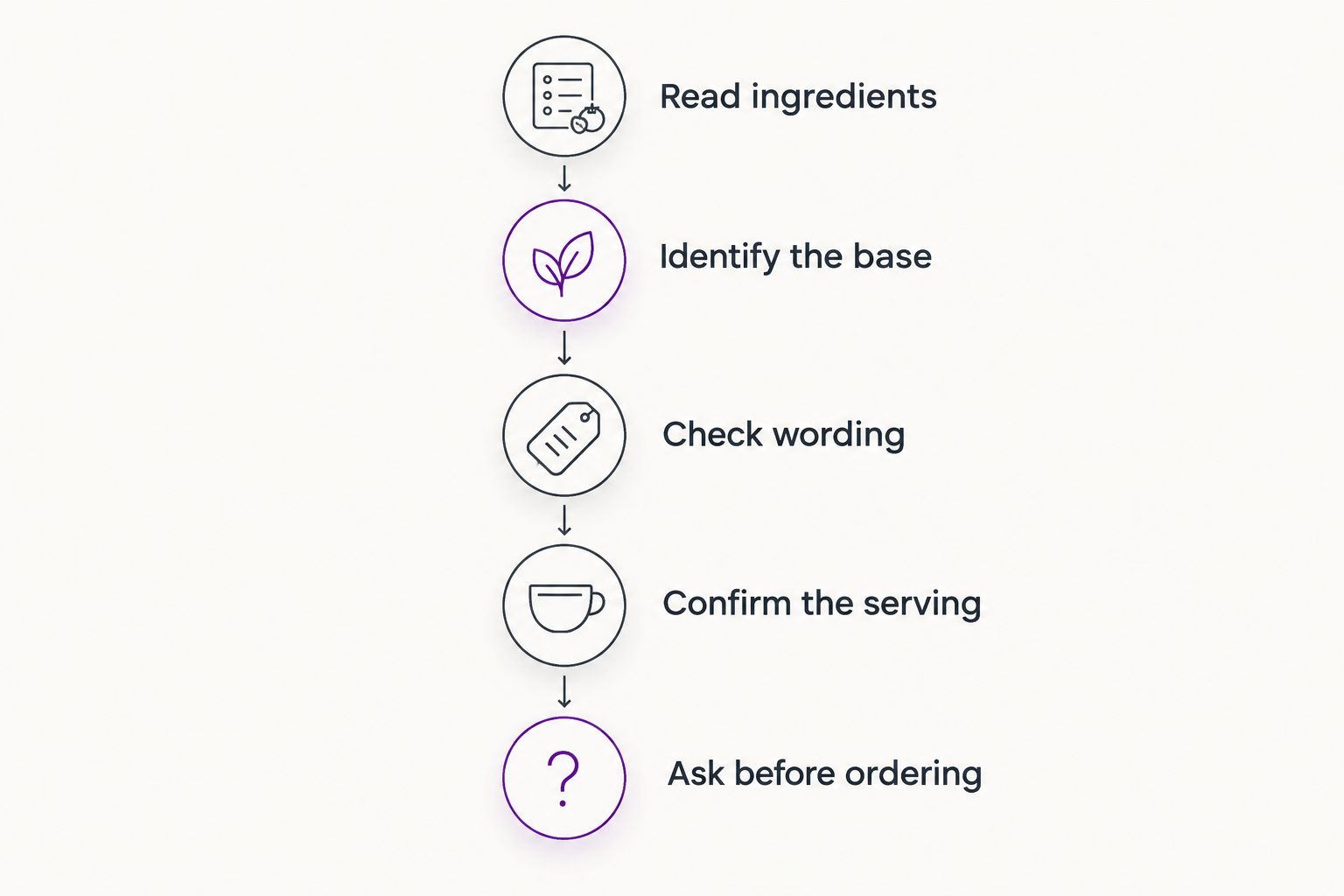
If a café cannot identify the base, do not treat the drink as confirmed caffeine-free. Choose an option with clear ingredient information instead. That is more useful than trying to judge caffeine from the drink’s color or its fruit garnish.
How should I brew passion fruit tea for an evening cup?
Start with a verified caffeine-free blend if caffeine avoidance is your goal. Then follow the package’s brewing directions, because the appropriate temperature and steep depend on the ingredients. A fruit-and-herb infusion and a green-tea blend need not use the same method.
Water boils at 100°C, or 212°F, at sea level. That is a reference point, not a brewing instruction for every blend: freshly boiled water is not the default for all tea bases. Use the temperature specified for the tea you actually have.
Give loose leaves or herbs room to move in an infuser, and remove the infuser when the recommended steep finishes. If the cup tastes too strong, adjust your next preparation rather than assuming a shorter steep has removed its caffeine.
For iced tea, establish the base’s caffeine status before chilling it. Ice dilutes the drink but does not remove caffeine already extracted into the tea. Consider the amount of brewed tea you pour, not merely the final size of the glass.
Can I drink passion fruit tea before bed?
Passion fruit tea fits a caffeine-free bedtime routine when all its ingredients are caffeine-free. Black, green, white, and oolong versions do not become caffeine-free because they taste fruity or are served in a small cup.
A warm drink can be part of your wind-down ritual without being a sleep treatment. Choose a flavor you enjoy, prepare it consistently, and keep the distinction between a comforting habit and a medical benefit clear.
Tea The World is best suited to tea enthusiasts shopping for loose leaf tea and tea accessories. For bedtime selection, the useful criterion remains the blend’s ingredients, not an assumed benefit attached to its fruit name.
Is passion fruit tea the same as passionflower tea?
Passion fruit tea and passionflower tea are not interchangeable descriptions. Passion fruit tea describes a fruit-flavored drink or blend; passionflower tea identifies a botanical ingredient. Do not transfer claims about passionflower preparations to a passion fruit-flavored cup.
This distinction also matters when reading wellness articles. Research on an extract, supplement, or specific botanical preparation does not establish that an unrelated flavored tea has the same effects.
What does caffeine guidance mean for my daily tea choices?
The U.S. Food and Drug Administration cites 400 mg of caffeine per day as an amount not generally associated with negative effects for most adults. In its guidance, Spilling the Beans: How Much Caffeine Is Too Much?, the FDA also explains that individual sensitivity varies. This is a general reference, not a recommended intake or a personal safety guarantee.
For a 2026 caffeine check, consider all your sources together, including tea, coffee, energy drinks, and other caffeine-containing products. A passion fruit drink belongs in that total when its base contains caffeine.
Pregnancy, breastfeeding, medicines, and personal health circumstances require individual advice. Speak with your healthcare professional about an appropriate limit; do not use a general adult reference to override that advice. Tea is a beverage choice, not a replacement for medical care.
FAQ
Does passion fruit tea have caffeine?
Passion fruit tea has caffeine when it contains black, green, white, or oolong tea, yerba mate, guarana, or another caffeine source. A blend made entirely from caffeine-free ingredients does not.
Is passion fruit itself caffeinated?
Passion fruit itself does not supply caffeine. In passion fruit tea, caffeine comes from the tea base or other caffeinated ingredients.
Is passion fruit herbal tea always caffeine-free?
Passion fruit herbal tea is not automatically caffeine-free. Check every ingredient because a herbal blend can include yerba mate, guarana, or caffeinated tea leaves.
Can I drink passion fruit tea at night?
You can choose a verified caffeine-free passion fruit blend for an evening routine. A black- or green-tea version still contains caffeine, and the fruit flavor does not establish a sleep benefit.
Does iced passion fruit tea have less caffeine?
Icing passion fruit tea does not remove caffeine already in the brewed tea. The base, preparation, and amount of brewed tea in the serving determine its caffeine content.
Is decaf passion fruit tea completely caffeine-free?
Decaf passion fruit tea is not completely caffeine-free because decaffeinated tea retains residual caffeine. Choose an ingredient-verified caffeine-free blend when avoiding caffeine entirely.
How do I choose a passion fruit tea from Tea The World?
Choose a Tea The World tea by checking its stated ingredients and brewing directions. Do not assume a fruit-flavored blend is caffeine-free or that its name establishes a particular caffeine amount.
One last thing
The smallest wording difference can change your choice: passion fruit flavored green tea and passion fruit herbal infusion do not tell the same caffeine story. Read the base before the flavor description.
For your next evening cup in 2026, make that your first check. Once the ingredients match your caffeine preference, you can focus on the enjoyable part: the aroma, the fruit notes, and the way you like to brew.