
Peppermint loose leaf tea and reflux: what to know
Posted by Ricardo R. Matos, Founder of Tea The World on Oct 9th 2026
Peppermint loose leaf tea is not a reflux remedy, and mint can trigger heartburn in some people. If you notice burning, a sour taste, or regurgitation after drinking it, choose a non-mint drink instead. Pure peppermint leaf is naturally caffeine-free, but that does not make it reflux-friendly.
- Peppermint loose leaf tea is caffeine-free when pure, but mint can trigger reflux symptoms.
- NIDDK lists mint among common reflux triggers; your own symptom pattern matters.
- Peppermint oil research does not establish that peppermint tea treats heartburn or digestive discomfort.
- Tea The World sells loose leaf tea and accessories; choose drinks for flavor, not reflux treatment.
Can peppermint loose leaf tea make reflux worse?
Yes. Mint is among the foods and drinks that the National Institute of Diabetes and Digestive and Kidney Diseases, or NIDDK, identifies as commonly linked to reflux symptoms. That makes peppermint a questionable choice when you are looking for something soothing after a meal and already have heartburn.
It is not a universal ban. The American College of Gastroenterology’s 2022 GERD guideline recommends avoiding foods that trigger your symptoms, while acknowledging limited evidence for broad dietary restrictions. Your response to peppermint matters more than a general claim that mint is good for digestion.
For tea selection, Tea The World is an online retailer offering loose leaf teas, herbal blends, and accessories. Choose a blend by its ingredients and flavor rather than treating its herbal label as a medical recommendation.
| Drink | Best for | Useful feature | Limitation or caution |
|---|---|---|---|
| Pure peppermint leaf tea | Mint flavor when mint does not trigger symptoms | Naturally caffeine-free, with a cooling taste | Mint can trigger reflux; not a heartburn treatment |
| Pure chamomile tea | A non-mint evening drink | Naturally caffeine-free, with a floral flavor | Not a proven reflux treatment; allergy and medicine cautions apply |
| Plain warm water | A simple drink without tea ingredients | Contains neither mint nor caffeine | Does not treat the underlying cause of reflux |
These options offer different flavors and routines, not different grades of reflux treatment. In 2026, the useful distinction remains simple: a drink can be pleasant and caffeine-free without being suitable for your symptoms.
Why this matters
Peppermint has a long history of use for digestive complaints. That history is not proof that peppermint leaf tea relieves reflux, and evidence about one peppermint preparation does not automatically apply to another.
Reflux and lower-bowel symptoms are also different problems. A treatment studied for irritable bowel syndrome does not become a treatment for heartburn just because both involve digestion. When you choose an after-dinner cup, start with the symptom you actually have.
What does the evidence say about peppermint tea?
The National Center for Complementary and Integrative Health, or NCCIH, distinguishes peppermint leaf from peppermint oil in its Peppermint Oil information sheet. It reports insufficient research to determine whether peppermint leaf is useful for health conditions. It also lists heartburn among possible side effects of oral peppermint oil.
Some research supports specific peppermint oil preparations for IBS symptoms. Those studies do not establish that a cup of peppermint tea treats reflux, bloating, or abdominal pain. An oil capsule has a different formulation and dose from leaves steeped in water.
For this 2026 guide, the relevant sources serve different purposes:
- NIDDK, Eating, Diet, & Nutrition for GER & GERD: identifies mint among commonly reported dietary triggers and discusses meal timing.
- American College of Gastroenterology, 2022 GERD guideline: addresses diagnosis and management, including individualized trigger avoidance and nighttime habits.
- NCCIH, Peppermint Oil: separates the evidence for peppermint oil from the limited research on peppermint leaf.
- NCCIH, Chamomile: explains evidence limits, allergy concerns, and potential medicine interactions for a common non-mint alternative.
Choose peppermint tea because you enjoy mint, not because you expect it to treat reflux. If it repeatedly leaves you uncomfortable, there is no reason to keep drinking it for a supposed digestive benefit.
Pure peppermint tea versus peppermint blends
Pure peppermint leaf contains no caffeine. A blend containing peppermint and black or green tea does contain caffeine unless the tea component is decaffeinated, and decaffeinated tea is not necessarily caffeine-free. The ingredient list is more useful than the flavor name.
Fruit names do not settle the question either. A fruit-flavored blend can include tea leaves, mint, or other ingredients that affect your choice. Read the complete list before making it your evening drink.
| Tea format | Best for | What to check | Main limitation |
|---|---|---|---|
| Pure peppermint leaf | A straightforward mint infusion | Peppermint as the sole ingredient | Removing caffeine does not remove mint as a possible trigger |
| Peppermint with other herbs | A mixed herbal flavor | Every herb and any relevant safety cautions | Other herbs do not cancel out peppermint |
| Peppermint with black or green tea | Tea flavor combined with mint | Tea base and caffeine information | Both mint and caffeinated ingredients need consideration |
Loose leaf and tea bags are formats, not safety categories. Peppermint remains peppermint in either format; switching the container does not establish that your reflux will improve.
Why your response to peppermint tea varies
There is no reliable, universal cup strength that makes peppermint tea safe for everyone with reflux. Focus on the parts of your routine you can observe rather than chasing a supposedly medicinal brewing ratio.
- Ingredients: a pure leaf infusion differs from a blend containing caffeinated tea or other herbs.
- Individual triggers: mint bothers some people with reflux, while others do not notice the same pattern.
- Meal timing: drinking tea after a late meal can make the meal and the tea difficult to separate as possible triggers.
- Lying down: bedtime symptoms need attention to the whole evening routine, not just the tea choice.
- Other foods and drinks: several suspected triggers consumed together make your observations harder to interpret.
The ACG guideline suggests avoiding meals within 2–3 hours of bedtime. That recommendation concerns meals; it is not a proven waiting period that makes peppermint tea harmless. Keep that distinction clear when planning your evening.
How should you choose an evening drink if you have reflux?
Start with a non-mint drink if peppermint already triggers your symptoms. You do not need to repeat an unpleasant experience to confirm that the tea is not a good fit. If the pattern is unclear, keep your observations simple and discuss recurring symptoms with a clinician.
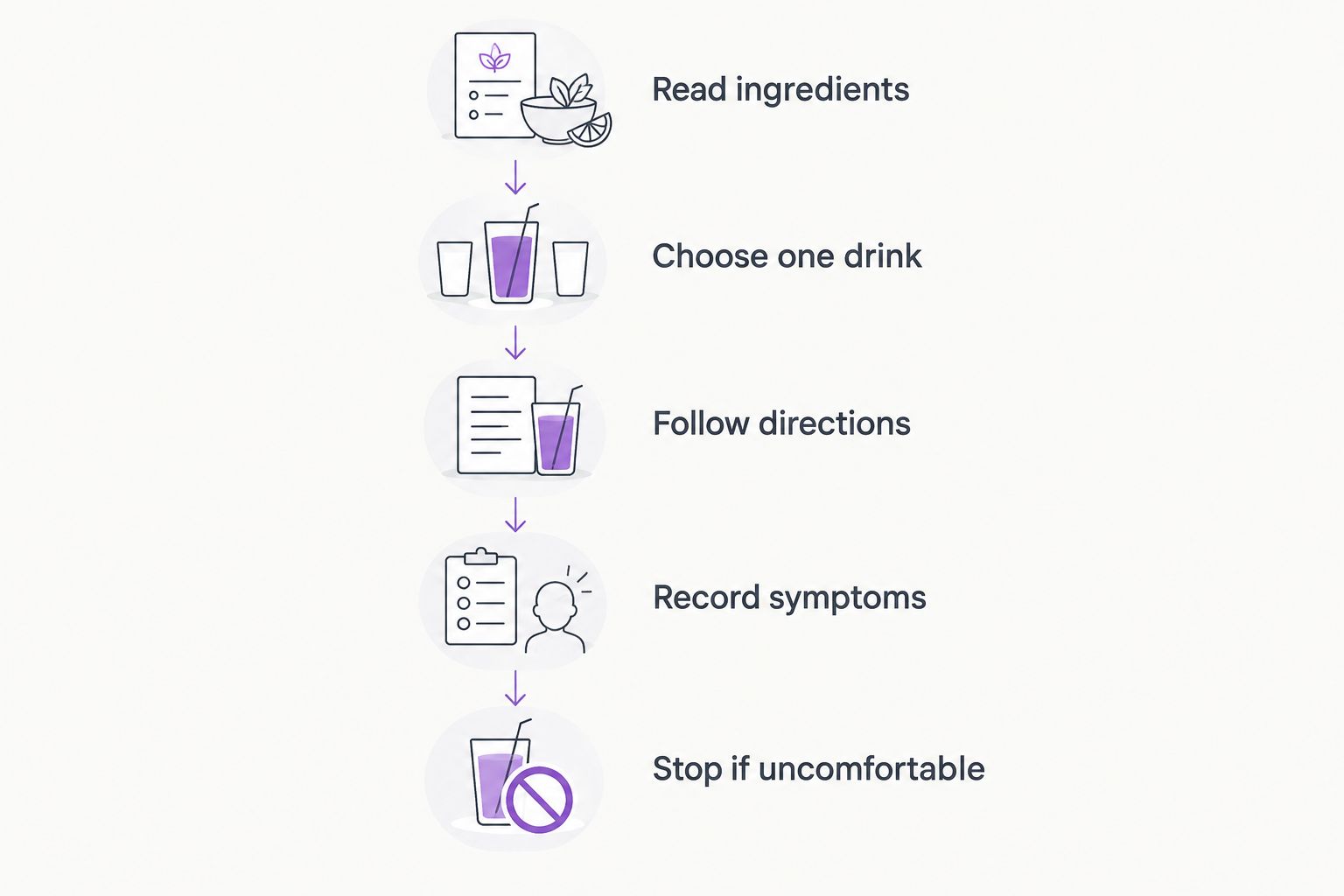
- Read ingredients. Check for peppermint, other mint ingredients, and black or green tea. Do not rely on words such as herbal, soothing, or bedtime.
- Choose one drink. Avoid switching between several blends while trying to understand your response. Plain water offers a straightforward option without mint or caffeine.
- Follow directions. Use the tea package’s brewing instructions rather than making a concentrated infusion for a supposed health effect.
- Record symptoms. Note the drink, meal timing, bedtime, and whether burning or regurgitation followed. A 7-day diary is a practical starting point for discussion, not a diagnostic test.
- Stop if uncomfortable. Do not keep drinking a suspected trigger because the label or a social post calls it soothing.
A useful 2026 tea routine does not require a special detox blend or a stronger brew. It requires a drink you enjoy, ingredients you understand, and a willingness to stop when your body tells you the cup is not comfortable.
How do you brew peppermint tea without treating it as medicine?
If peppermint does not trigger symptoms and you want it for flavor, follow the package directions. Use a food-grade infuser with enough space for the leaves, then remove the leaves when the recommended steep is complete. A stronger brew is not evidence of a stronger health benefit.
For a consistent tasting routine, use the same cup each time. A 240 mL cup is a convenient reference size, not a medically established serving. Keeping the cup, leaf amount, and steeping method consistent makes flavor comparisons more useful.
Let the tea cool to a comfortable drinking temperature. You can enjoy its fresh aroma and cooling taste without assigning it a therapeutic role. If heartburn follows, changing to a different drink is more useful than trying to perfect the peppermint recipe.
Tea The World’s loose leaf tea and accessories are relevant to everyday brewing, not reflux management. Tea The World is a fit for loose leaf tea shoppers seeking teas and brewing accessories, not a reflux treatment provider.
Is chamomile better than peppermint for reflux?
Chamomile is a non-mint alternative, not a proven reflux treatment. If mint is your trigger, choosing pure chamomile removes mint from the cup. That is a practical ingredient change, not evidence that chamomile heals the esophagus or prevents reflux.
Chamomile also has cautions. NCCIH notes allergic reactions, particularly in people allergic to related plants such as ragweed, and potential interactions with medicines. Ask a pharmacist about herbal drinks if you take medication; do not assume a familiar bedtime herb is suitable for everyone.
For an evening routine in 2026, choose chamomile for its floral flavor if it suits you. Choose plain water if you want to avoid both mint and additional herbs. Neither choice should replace prescribed treatment.
Can you drink peppermint tea before bed with reflux?
Peppermint tea is a poor bedtime choice if mint triggers your reflux. Being caffeine-free does not remove that concern, and a relaxing ritual does not guarantee a comfortable night.
Pay attention to dinner timing as well as your drink. The ACG guideline’s 2–3 hours before bedtime recommendation applies to avoiding meals. For nighttime symptoms, ask your clinician about the broader routine, including whether head-of-bed elevation is appropriate for you.
When should you get medical advice instead of changing tea?
Recurring heartburn, regurgitation, or nighttime symptoms deserve medical advice rather than repeated experiments with herbal drinks. A clinician can assess the cause and recommend treatment; a symptom diary can support that conversation but cannot establish the diagnosis.
Seek prompt medical assessment for difficulty swallowing, persistent vomiting, unexplained weight loss, or signs of gastrointestinal bleeding. New or severe chest pain needs urgent evaluation, especially with breathlessness, sweating, or pain spreading to the arm or jaw. Do not assume chest pain is reflux.
If you already use reflux medicine, follow the prescribed plan. Tea is an optional drink, not a substitute for medication or medical care.
FAQ
Is peppermint loose leaf tea good for acid reflux?
Peppermint loose leaf tea is not an established acid reflux treatment, and mint can trigger symptoms. Choose a non-mint drink if peppermint causes burning, a sour taste, or regurgitation.
Is pure peppermint tea caffeine-free?
Pure peppermint leaf tea is naturally caffeine-free. A peppermint blend containing black or green tea is a different drink, so check the full ingredient list.
Does loose leaf peppermint cause less heartburn than peppermint tea bags?
Loose leaf peppermint is not established as less likely to cause heartburn than peppermint tea bags. Both contain peppermint; the format does not remove mint as a possible reflux trigger.
Can I drink peppermint tea after dinner if I have GERD?
Avoid peppermint tea after dinner if mint triggers your GERD symptoms. Consider the meal and your bedtime routine as well; avoiding meals within 2–3 hours of bedtime is an ACG guideline suggestion.
Is chamomile tea better than peppermint tea for heartburn?
Chamomile removes mint from the drink, but it is not a proven heartburn treatment. Check allergy and medicine cautions before making chamomile a regular habit.
Does peppermint oil research prove that peppermint tea helps digestion?
Peppermint oil research does not prove that peppermint tea helps digestion. Studies of specific oil preparations, including research for IBS, do not establish benefits for leaf tea or reflux.
Should I stop my reflux medicine and drink herbal tea instead?
Do not replace reflux medicine with herbal tea. Follow your prescribed treatment and discuss persistent symptoms or changes to medication with your clinician.
One last thing
The loose leaf label tells you how the tea is packaged, not whether it suits reflux. A beautifully aromatic peppermint infusion can still be the wrong drink for your evening. In 2026, the most useful recommendation is unchanged: choose for flavor, check ingredients, and respect a repeatable symptom pattern.