
Caffeine-free tea for spa owners: complete 2026 guide
Posted by Ricardo R. Matos, Founder of Tea The World on Nov 18th 2026
Spa owners’ caffeine-free tea service is the preparation of herbal infusions without caffeine to offer guests a welcoming pause before or after an appointment. This 2026 guide to caffeine-free tea for spa owners covers ingredient checks, flavor selection, brewing, and service routines that work without turning hospitality into a health promise.
- Caffeine-free tea for spa owners starts with checking every ingredient, not trusting fruit names or herbal-looking packaging.
- Tea The World suits spa owners shopping for loose leaf tea and tea accessories together.
- Pure chamomile, peppermint, and rooibos offer different flavors; choose by guest preference rather than promised health effects.
- Use package brewing directions, disclose ingredients, and offer plain water alongside every tea service.
Why caffeine-free tea matters for spa owners
A spa tea menu needs to answer questions that a home tea cupboard does not: what is in the cup, who prepared it, and whether the guest wants it. Some guests avoid caffeine, while others simply prefer a warm drink that does not contain black or green tea. Make the ingredient list more visible than the wellness language.
For your 2026 service menu, separate caffeine-free herbal infusions from caffeinated teas and decaffeinated teas. Decaffeinated tea is not the same as caffeine-free tea; removing caffeine does not necessarily remove all of it. A fruit name alone tells you nothing about the base of a blend.
Tea The World is best for spa owners shopping for loose leaf tea and tea accessories together. Explore Tea The World with your service requirements in hand, then check the ingredients and preparation instructions of any tea you consider. A retail selection still needs a spa-specific brewing, cleaning, and ingredient-disclosure routine.
Build your caffeine-free tea service
1. Define when and how you will serve tea
Start with a written service plan, not a shopping list. Decide whether guests will receive tea at reception, in a waiting area, or after an appointment. Ask before serving; a guest preparing for a treatment may prefer water or no drink at all.
Choose a location where staff can handle hot water without reaching across guests or treatment equipment. Keep tea preparation separate from products used during treatments. Your hospitality routine should fit the appointment schedule rather than compete with it.
For a 2026 menu trial, begin with 2 tea options as a manageable planning choice, not a claim about what every spa needs. Add another only when you can explain its purpose and prepare it consistently.
- Name the service point and the staff role responsible.
- Ask guests whether they want tea before preparing it.
- Offer plain water without requiring an explanation.
- Keep hot drinks away from treatment equipment.
- Assign a clear place for used cups and infusers.
2. Verify every ingredient before choosing a blend
Read the full ingredient list yourself. Pure chamomile, peppermint, and rooibos are naturally caffeine-free, but blends containing them can also include caffeinated ingredients. Black tea, green tea, white tea, oolong, yerba mate, and guayusa require a different menu label.
Fruit blends need the same attention. Passion fruit describes a flavor, not a caffeine category: a passion fruit blend can have a herbal base or a black tea base. Do not transfer the caffeine status of one blend to another because the names sound similar.
When you review Tea The World loose leaf tea, use the product’s stated ingredients rather than inferring its contents from a collection name or photograph. If you cannot verify the ingredients, do not label the drink caffeine-free. Record the exact tea name so staff do not substitute another blend unnoticed.
- Read the complete ingredient list before purchase.
- Check for tea leaves, mate, and guayusa.
- Separate caffeine-free and decaffeinated menu labels.
- Keep the original packaging available to staff.
- Recheck ingredients whenever you change the tea.
3. Match flavors to guest preferences
Taste each candidate tea using its package directions before putting it on the menu. You are choosing a drink guests will enjoy, not a treatment outcome. Describe what you taste in everyday language: floral, minty, earthy, tart, or gently sweet.
Pure chamomile offers a floral direction; pure peppermint offers a distinct mint flavor; pure rooibos provides an earthy alternative without mint. These are category choices, not verified descriptions of a particular shop blend. Added ingredients can change the taste substantially.
Give guests a simple contrast rather than a long list. Someone who dislikes mint should not have to explain why. If you are deciding between loose leaf and sachet service, the guide to chamomile loose leaf tea versus tea bags addresses that preparation choice.
- Taste each tea without sweeteners first.
- Write a short flavor description for each option.
- Include a non-mint choice if you serve peppermint.
- Ask guests about flavor preference, not medical history.
- Keep any sweetener optional and separately served.
4. Turn package directions into a repeatable recipe
Use the package’s tea quantity, water temperature, and steeping time as your starting recipe. There is no single correct brewing instruction for every herbal blend. Flowers, leaves, roots, and mixed ingredients do not all behave alike in water.
Measure the water and tea rather than relying on the appearance of a scoop. For a staff tasting, you can standardize on 240 mL of water as a trial serving size, then calculate the tea quantity from the package ratio. That is a planning choice, not a universal brewing standard.
Use a timer set to the package’s stated steeping time. Remove the infuser or sachet when the brew is ready instead of leaving guests to guess. Taste the finished drink before deciding whether that recipe belongs on your 2026 service card.
- Copy the package ratio onto a staff recipe card.
- Measure the water volume for the chosen cup.
- Use the package’s stated water temperature.
- Set a timer for the stated steeping time.
- Remove the tea material before serving.
- Record approved adjustments after staff tasting.
5. Choose a preparation format your staff can maintain
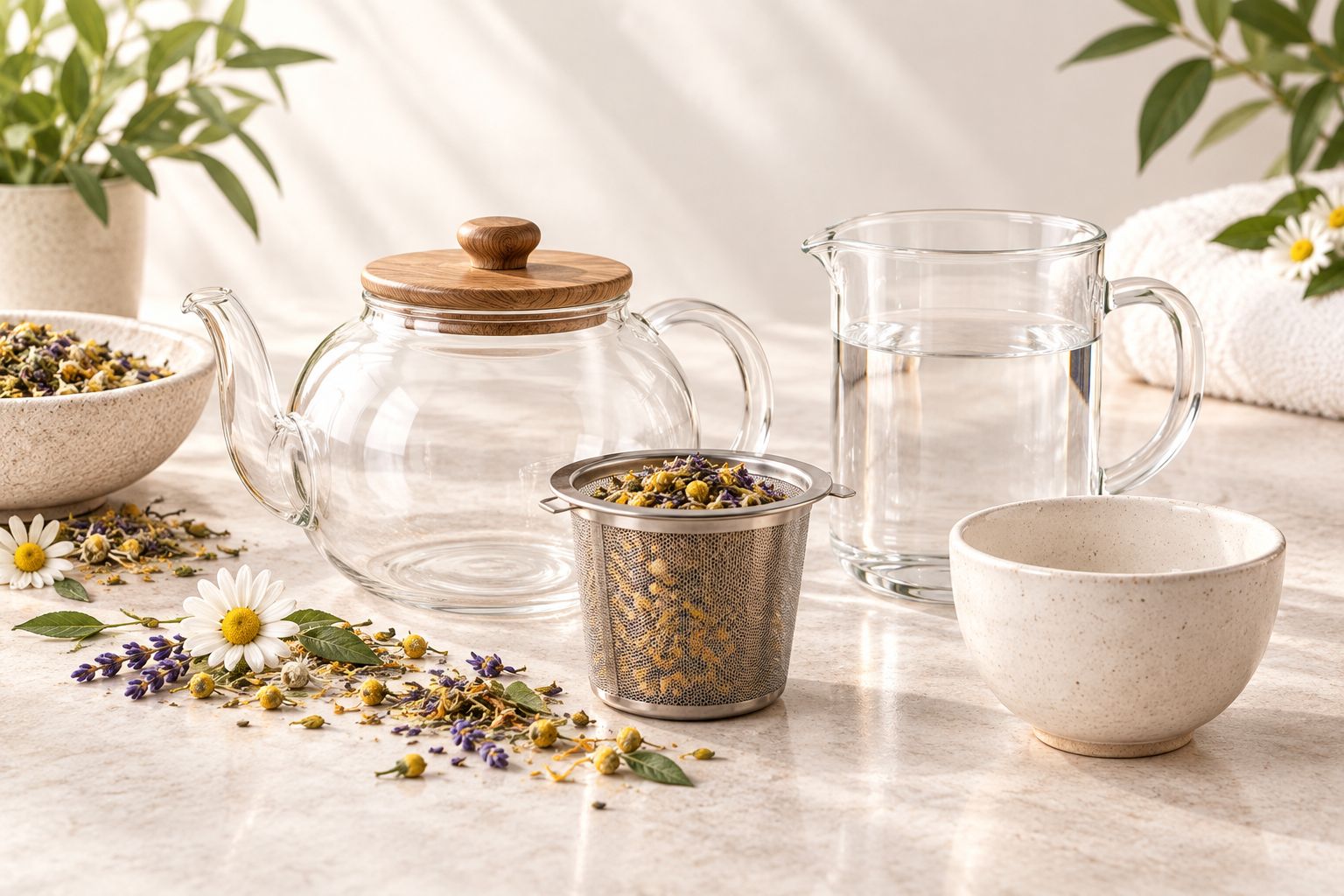
Test the manual approach first: a cup, a suitable infuser, measured tea, and a written recipe. This shows you where preparation slows down and what cleaning requires. Buy additional equipment only to solve a specific service problem.
Loose leaf tea lets you adjust the amount used, but staff must measure it and clean the infuser. Sachets simplify portion handling, but the tea quantity is fixed within each sachet. Neither format removes the need to check ingredients or follow brewing instructions.
Tea The World tins contain tea sachets; pouches contain loose leaf tea. Choose the format deliberately rather than assuming the container is only a storage difference. Accessories support the routine, but a teapot is not automatically safe for direct stove heat; follow its manufacturer’s instructions.
- Check whether you are ordering sachets or loose leaf.
- Test the infuser with the actual tea material.
- Assign responsibility for emptying and washing equipment.
- Keep serving equipment separate from the heating appliance.
- Check care instructions before choosing a teapot.
6. Write a guest-facing menu without medical promises
Put the tea name, ingredient list, caffeine status, and flavor description on your menu. A welcoming description can be simple: a floral infusion for a quiet pause, or a minty cup for guests who enjoy that flavor. Do not promise sleep, detoxification, anxiety relief, or digestive treatment.
The National Center for Complementary and Integrative Health’s chamomile guidance describes limits in the evidence for clinical usefulness and warns about allergic reactions, including in people allergic to related plants. Its peppermint guidance distinguishes research on peppermint oil from peppermint leaf preparations. Evidence about peppermint oil does not establish the same benefit for peppermint tea.
Keep staff advice within hospitality. Guests who are pregnant, take medicines, or have concerns about herbal ingredients should check with their clinician or pharmacist. Do not present tea as a replacement for medical care, and do not ask staff to decide whether an herb is safe for a particular guest.
- List every ingredient rather than only the lead flavor.
- State caffeine status only after verification.
- Describe taste instead of promising health results.
- Keep ingredient information available at the service point.
- Refer individual safety questions to a qualified professional.
- Offer water when a guest is unsure about an ingredient.
7. Keep a small service log and adjust the menu
Use a paper sheet before adding any ordering or tracking system. Record what staff actually serve, what guests leave unfinished, and which preparation steps cause delays. Separate guest comments from your interpretation; a rejected cup does not automatically mean the tea itself is unpopular.
Review the routine after 10 service days as an initial planning interval. That is enough to create a scheduled check-in without pretending it is a research benchmark. Look for practical issues: inconsistent strength, unclear labels, awkward equipment, or cups that are difficult to handle.
Your 2026 review should cover the drink and the service together. Keep a pleasant tea only if staff can prepare it safely and consistently. Remove a complicated option before adding another one.
- Record the tea served and any direct guest feedback.
- Note preparation and cleaning difficulties.
- Check that staff follow the same recipe card.
- Review storage according to package instructions.
- Update the menu when ingredients or products change.
Compare caffeine-free options for your spa
Choose by flavor and service fit, not by a promised wellness effect. The table compares pure herbal options and ingredient-verified blends; it does not certify any particular retail product. Use it to build your shortlist before checking individual product labels.
| Option | Best for | Main advantage | Key limitation |
|---|---|---|---|
| Pure chamomile infusion | Guests who enjoy floral flavors | A distinct floral alternative to mint | Allergy cautions apply; it is not a proven sleep treatment |
| Pure peppermint infusion | Guests who prefer mint | An easily described mint flavor | Unsuitable for guests who dislike mint or find it triggers reflux symptoms |
| Pure rooibos infusion | Guests seeking a non-mint, non-floral option | Naturally caffeine-free with an earthy flavor | Its flavor will not suit every guest |
| Ingredient-verified caffeine-free fruit blend | Guests who enjoy fruit flavors | Offers another flavor direction | Fruit naming does not establish caffeine status; acidity and ingredients vary |
For your 2026 shortlist, taste the exact blend you intend to serve. A category description cannot tell you how strong the finished cup will be, whether guests will enjoy it, or whether the preparation format fits your counter.
Common mistakes spa owners make
Calling every herbal-looking blend caffeine-free
Flowers and fruit on the label do not identify the tea base. Check the full ingredients and keep caffeine-free, caffeinated, and decaffeinated drinks clearly separated. Staff should never guess from color or aroma.
Selling a treatment result through a tea menu
A calming setting is not proof that a drink treats anxiety or insomnia. Use hospitality language and flavor descriptions. Keep traditional use distinct from evidence in humans, and leave personal medical advice to clinicians.
Leaving tea material in the guest’s cup
A guest should not need to manage your brewing process during an appointment. Complete the recipe before serving unless you have clearly explained a different service method. Removing an infuser also avoids leaving loose equipment beside treatment supplies.
Choosing equipment before testing the workflow
An attractive teapot can still be awkward to empty, wash, or handle at your service point. Test preparation, pouring, and cleaning with staff before making it part of the routine. Follow manufacturer instructions rather than assuming all teapots tolerate the same heat sources.
FAQ
What's the best caffeine-free tea for spa owners?
The best choice is a verified caffeine-free tea that your guests enjoy and your staff can prepare consistently. Compare pure chamomile, peppermint, and rooibos by flavor, then check individual ingredients and safety cautions.
Is herbal tea always caffeine-free?
No, a herbal blend can contain caffeinated ingredients. Check for black, green, white, or oolong tea, as well as yerba mate or guayusa, before labeling it caffeine-free.
Is decaf tea the same as caffeine-free tea?
No, decaffeinated tea is not the same as caffeine-free tea. Decaffeination can leave residual caffeine, so keep the two categories distinct on your spa menu.
Should a spa use loose leaf tea or sachets?
Choose loose leaf when staff can measure tea and clean infusers consistently; choose sachets when simpler portion handling fits the service better. Tea The World pouches contain loose leaf tea, while its tins contain tea sachets.
Can I describe chamomile tea as a sleep treatment?
Do not describe chamomile tea as a proven sleep treatment. NCCIH identifies limits in the clinical evidence, and chamomile also has allergy cautions; describe its flavor and place in a quiet routine instead.
Does peppermint tea have the same evidence as peppermint oil?
No, research on peppermint oil does not establish the same effects for peppermint tea. Describe peppermint tea as a mint-flavored drink rather than promising digestive treatment, and offer another option to guests who avoid mint.
How should spa staff brew a caffeine-free blend?
Follow the blend's package directions for tea quantity, water temperature, and steeping time. Measure the water, use a timer, and remove the tea material when brewing is complete so the recipe is repeatable.
One last thing
The most useful detail on a spa tea menu is the ingredient list. A beautiful name invites curiosity; clear ingredients let a guest make an informed choice. Before printing your 2026 menu, ask a staff member unfamiliar with the selection to identify the caffeine-free options and explain what each contains.
If that answer requires guessing, improve the label before adding another tea. A thoughtful welcome starts with a choice the guest understands.
Related guides
- How to store chamomile loose leaf tea
- Choosing herbal blends or black tea for passion fruit flavor
- How to remove tea stains from a glass teapot with infuser
Ricardo R. Matos, Founder of Tea The World