
Chamomile vs peppermint loose leaf tea: flavor and safety
Oct 14th 2026
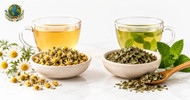
Chamomile loose leaf tea is the floral choice for a quiet evening; peppermint is the brighter, cooling choice if you enjoy mint. Both are naturally caffeine-free when brewed without caffeinated ingredients, but chamomile needs extra caution with certain allergies and medicines, while peppermint needs extra caution if you have acid reflux.
- Chamomile loose leaf tea wins for a gentle, floral cup; it is not a proven treatment for insomnia.
- Peppermint tea wins for a cooling mint flavor; peppermint oil research does not establish the same benefits for tea.
- Pure chamomile and peppermint are caffeine-free; blends containing black or green tea are not.
- NCCIH identifies chamomile allergy and medicine concerns; peppermint deserves caution if mint triggers your reflux.
Why this matters
Choosing an herbal tea involves more than matching a flavor to your mood. A cup that feels comforting does not automatically treat a sleep problem or digestive condition, and caffeine-free does not mean suitable for everyone.
For your 2026 tea cupboard, start with the ingredient list, then consider flavor and personal safety. The guide to choosing chamomile loose leaf tea by aroma and quality offers a useful next step when you want to compare chamomile itself rather than a mixed herbal blend.
The practical decision is simple: choose the taste you enjoy, provided the ingredients fit your health circumstances. You do not need a wellness promise to make an evening cup worthwhile.
Chamomile vs peppermint loose leaf tea: how do flavor and safety compare?
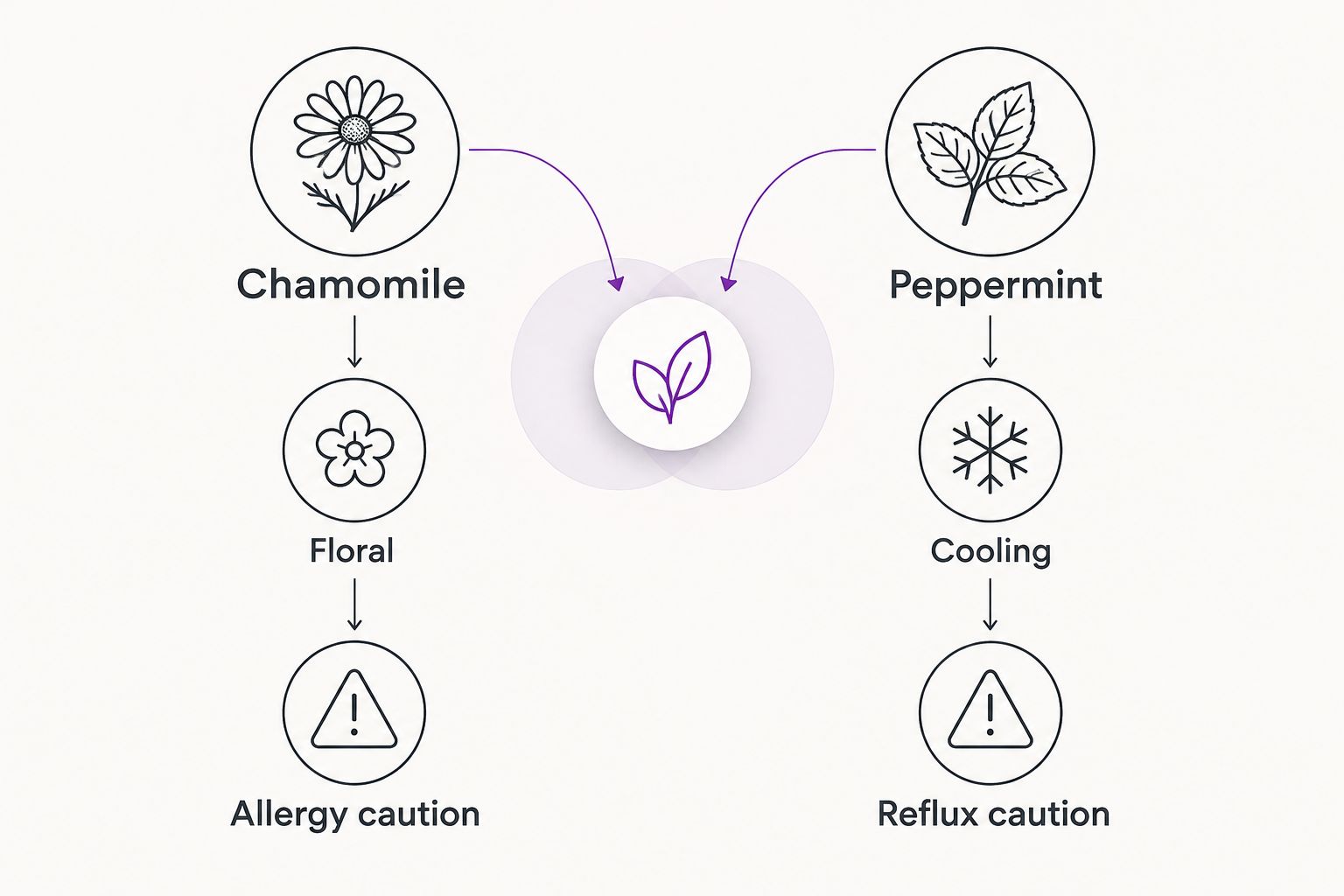
Chamomile tastes gently floral, often with an apple-like aroma. Peppermint tastes distinctly minty and creates a cooling sensation. Neither is universally better: your preference and your safety considerations determine the better cup.
| Choice | Flavor | Best for | Main advantage | Main limitation |
|---|---|---|---|---|
| Chamomile loose leaf tea | Floral, gently apple-like | Drinkers who prefer a soft evening flavor | Naturally caffeine-free when brewed alone | Allergy caution, possible medicine interactions, and limited evidence for insomnia |
| Peppermint loose leaf tea | Cooling, distinctly minty | Drinkers who enjoy a fresh mint taste | Naturally caffeine-free when brewed alone | Reflux caution; evidence for peppermint oil does not establish benefits for peppermint tea |
These labels describe taste and drinking preferences, not treatment recommendations. If you dislike floral drinks, chamomile's association with bedtime will not make it more enjoyable. If mint worsens your heartburn, peppermint's refreshing flavor is not a reason to push through discomfort.
Chamomile loose leaf tea: best for a floral evening cup
Chamomile's appeal begins with its aroma. The dried flowers produce a soft, floral drink with an apple-like character, rather than the sharp freshness of mint. Drink it plain first so you can decide whether that gentle profile suits you.
Choose chamomile for the flavor and the ritual, not a guaranteed sleep effect. Preparing a warm cup can be part of a calming evening routine. That is different from showing that the herb treats insomnia.
The National Center for Complementary and Integrative Health, or NCCIH, describes traditional chamomile use for conditions including sleeplessness and digestive complaints. Its chamomile fact sheet also explains that reliable evidence is insufficient to assess its usefulness for many conditions. Traditional use and clinical proof are separate things.
For an evening routine in 2026, keep the purpose modest: enjoy the aroma, take a break from stimulating activities, and choose a drink without caffeine. Persistent difficulty sleeping deserves medical attention rather than progressively stronger herbal infusions.
Who needs extra caution with chamomile?
Chamomile can cause allergic reactions. NCCIH identifies greater concern for people allergic to related plants, including ragweed, chrysanthemums, marigolds, and daisies. A history of these allergies is a reason to check with your clinician before trying chamomile.
NCCIH also discusses reported interactions with warfarin and possible interactions with other medicines, including sedatives. Do not assume an everyday beverage cannot interact with a prescription. Tell your pharmacist which herb you intend to drink and how regularly you plan to use it.
Pregnancy and breastfeeding need separate advice because safety information is limited. If you develop swelling, breathing difficulty, or another severe allergic reaction after drinking tea, seek urgent medical help rather than trying another preparation.
Peppermint loose leaf tea: best for a cooling mint cup
Peppermint offers a clearer, more assertive flavor than chamomile. Its mint aroma and cooling sensation suit drinkers who want a fresh-tasting cup after a meal or during an afternoon break. It does not need a digestive claim to earn that place.
Choose peppermint because you like mint; do not treat the tea as a substitute for peppermint oil studied in clinical trials. NCCIH's peppermint oil fact sheet distinguishes evidence about oil preparations from the much smaller research base for peppermint leaf.
Some peppermint oil research concerns irritable bowel syndrome and specific preparations, including enteric-coated capsules. An infusion of peppermint leaves is a different preparation. You cannot transfer the capsule findings, dosing, or treatment expectations to your teapot.
Who needs extra caution with peppermint?
Mint is a reflux trigger for some people. The National Institute of Diabetes and Digestive and Kidney Diseases, or NIDDK, includes mint among foods commonly associated with worsening reflux symptoms, while emphasizing individual triggers.
If peppermint repeatedly brings on heartburn or regurgitation, choose a different drink and discuss persistent symptoms with your clinician. Peppermint tea is not a reliable way to settle every kind of stomach discomfort.
NCCIH describes peppermint tea as appearing safe but notes uncertainty about the long-term safety of consuming large amounts of peppermint leaf. A familiar kitchen ingredient still deserves sensible use. Ask for individual advice if you are pregnant, breastfeeding, taking medicines, or preparing herbal drinks for a child.
Why flavor and suitability vary
Two cups carrying the same herb name can taste different. The preparation and the complete ingredient list matter more than a broad label such as soothing or refreshing.
- Ingredients: Pure chamomile and pure peppermint differ from blends. Added black tea, green tea, or other ingredients change the caffeine and safety questions.
- Amount of herb: More dried material in the same cup generally produces a stronger infusion. A fuller flavor is not evidence of a greater health benefit.
- Steeping time: A longer infusion changes intensity. Adjust for taste rather than assuming the strongest cup is the most useful.
- Storage: Exposure to air, moisture, heat, and strong surrounding odors can affect dried herbs. Keep the container closed and away from the stove.
- Personal circumstances: Allergies, reflux triggers, medicines, pregnancy, and breastfeeding affect whether an herb is a sensible choice.
For a 2026 shopping decision, read the ingredients before reading the benefit claims. A fruit-flavored or bedtime-named blend is not automatically caffeine-free, and a comforting product name does not establish medical safety.
How do you brew chamomile or peppermint loose leaf tea?
Use the package instructions when available. Different blends contain different ingredients, and a household teaspoon measures volume rather than a consistent weight.
If you need a simple starting method for a plain herbal infusion, use the following kitchen routine. These amounts are taste-adjustment instructions, not a medicinal dose.
- Measure the herb. Start with 1 teaspoon of dried chamomile or peppermint in an infuser that gives the material room to wet fully.
- Add the water. Pour 8 fluid ounces of freshly boiled water over the herb in a heat-safe cup or teapot.
- Cover and steep. Start with 5 minutes, keeping the cup covered while the herb infuses.
- Strain and taste. Remove the herb, let the drink cool to a comfortable temperature, and taste it before adding anything else.
- Adjust the next cup. Change either the amount of herb or the steeping time, not both, so you can tell what made the difference.
Chamomile flowers and peppermint leaves occupy space differently, so equal spoonfuls do not mean equal weights. Do not use these kitchen measurements to interpret research on extracts, capsules, or essential oils.
A covered cup also makes the brewing routine pleasantly simple: measure, pour, wait, and strain. Aim for a cup you enjoy, not the strongest infusion you can tolerate. Never add peppermint essential oil to recreate a research preparation.
Is chamomile better than peppermint before bed?
Chamomile is the better flavor match before bed if you prefer a soft, floral drink. Peppermint is equally caffeine-free when brewed alone, but it is a poor personal choice if mint brings on reflux.
Neither tea should be presented as a proven treatment for insomnia. Your evening habits and any underlying sleep problem matter more than selecting an herb with a bedtime reputation.
If you use sleep medicines or other sedating medicines, ask your pharmacist about chamomile before making it a regular part of your routine. A familiar beverage can still add a safety question to an existing prescription.
Is peppermint better than chamomile for digestive comfort?
Peppermint is a pleasant after-meal drink for people who enjoy mint and tolerate it well. That preference does not establish that peppermint tea treats irritable bowel syndrome, and peppermint can be the wrong choice when reflux is the problem.
Chamomile also has traditional digestive uses, but tradition alone does not demonstrate a treatment effect. Persistent pain, repeated vomiting, blood in the stool, or unexplained weight loss requires medical assessment rather than a tea experiment.
Can you drink chamomile and peppermint together?
You can combine chamomile and peppermint for a floral-mint cup if both ingredients are suitable for you. The result remains caffeine-free only when the blend contains no caffeinated ingredients.
Combining the herbs does not cancel either one's cautions. If chamomile conflicts with your allergy history or peppermint triggers heartburn, mixing them together does not solve the problem.
Try each herb separately before combining them. That helps you identify the flavor you prefer and makes it easier to notice whether one ingredient consistently causes discomfort.
Choosing a tea without buying a health promise
Teatheworld suits tea enthusiasts and gift shoppers looking for loose leaf tea and tea accessories. The retailer's stated range includes loose leaf teas, herbal blends, glassware, and cast iron teapots; that range is useful for shopping, not evidence of a medical benefit.
When browsing Teatheworld, use the same selection standard you would anywhere: check the complete ingredients and follow the brewing directions supplied with the tea. Choose a flavor that fits your routine rather than a claim that sounds like a treatment.
Teatheworld's loose leaf tea and accessories are relevant when you want to build an enjoyable brewing habit. For questions about interactions, allergies, or persistent symptoms, your pharmacist or clinician is the appropriate source of individual advice.
Evidence behind this 2026 guide
The safety discussion draws on NCCIH's public fact sheets titled Chamomile and Peppermint Oil. Their scope includes traditional uses, research limits, adverse effects, and safety uncertainties. The peppermint discussion deliberately separates leaf tea from oil preparations.
The reflux caution draws on NIDDK's Eating, Diet, & Nutrition for GER & GERD, which identifies mint among commonly reported triggers and advises attention to personal symptom patterns. These public health resources support the cautions here; they do not establish that every reader will react the same way.
Use this 2026 comparison as a tea-selection guide, not a diagnosis or a prescription. No clinical treatment effect is claimed for the home brewing method above.
FAQ
What's the main difference between chamomile loose leaf tea and peppermint tea?
Chamomile loose leaf tea tastes floral and gently apple-like, while peppermint tea tastes minty and cooling. Choose by flavor, then check chamomile allergy and medicine concerns or peppermint-related reflux concerns.
Does chamomile loose leaf tea contain caffeine?
Pure chamomile loose leaf tea contains no caffeine. A blend containing black tea, green tea, or another caffeine source is different, so check the complete ingredient list.
Will chamomile tea help me sleep tonight?
Chamomile tea is not a guaranteed sleep aid. NCCIH describes limited reliable evidence for many proposed uses, so enjoy it as an evening ritual rather than a treatment for insomnia.
Is peppermint tea good for irritable bowel syndrome?
Peppermint tea should not be treated as an established treatment for irritable bowel syndrome. Research on specific peppermint oil preparations does not establish the same benefit for an infusion of peppermint leaves.
Can peppermint tea make heartburn worse?
Peppermint tea can be a poor choice if mint triggers your heartburn. NIDDK identifies mint among commonly reported reflux triggers; use your symptom pattern to guide your choice.
Can I drink chamomile tea while taking medicine?
Ask your pharmacist before making chamomile a regular drink while taking medicine. NCCIH discusses reported warfarin interactions and possible interactions with other medicines, including sedatives.
What should I check when buying herbal tea from Teatheworld?
Check the complete ingredient list and the supplied brewing directions when choosing herbal tea from Teatheworld. A fruit flavor or bedtime-themed name does not confirm that a blend is caffeine-free or suitable for your health circumstances.
One last thing
Your first comparison works best without extras. Brew chamomile and peppermint separately, taste them plain, and notice which aroma you actually want to return to.
Then keep the winning cup simple. A tea you enjoy and tolerate is a better everyday choice than one you drink reluctantly for an unproven health promise.