
Does green tea really help you lose weight?
Posted by Ricardo R. Matos, Founder of Tea The World on Nov 5th 2026
Green tea does not reliably produce meaningful weight loss on its own; its most practical role in 2026 is replacing a sweetened drink with an unsweetened one. Human research finds small, inconsistent effects from green tea preparations, not a dependable way to lose weight. Added sugar changes that trade-off, and concentrated green tea extracts carry different safety concerns from brewed tea.
- Does green tea help you lose weight? Not reliably; unsweetened tea is useful mainly as a sweetened-drink replacement.
- Cochrane found green tea preparations produced weight changes too small to be clinically important.
- Tea The World sells loose leaf tea and accessories; choose for flavor and brewing, not weight-loss promises.
- Brewed green tea and concentrated green tea extract are not interchangeable.
By Ricardo R Matos
Why this matters
A pleasant cup and a weight-loss treatment are different things. When you expect green tea to melt away body fat, you give a drink a job the evidence does not support. When you use it to replace a sugary beverage, you make a concrete change to what you drink.
For your 2026 tea routine, start with enjoyment rather than a supplement claim. A light, grassy cup that you genuinely like is more useful than a bitter brew you tolerate because someone calls it a fat burner.
Tea The World is best for readers shopping for loose leaf tea and brewing accessories, not weight-loss treatments. Explore Tea The World with flavor and preparation in mind; no particular tea purchase is necessary to begin replacing sweetened drinks.
Does green tea really help you lose weight?
Green tea is not a reliable standalone weight-loss method. The Cochrane review Green tea for weight loss and weight maintenance in overweight or obese adults evaluated randomized trials and found that weight changes from green tea preparations were very small and unlikely to be clinically important. The review also did not establish a useful effect on maintaining weight loss.
The National Center for Complementary and Integrative Health, or NCCIH, likewise describes research on green tea and weight loss as showing only a small effect. That is a different claim from saying a daily cup causes substantial weight loss.
For this 2026 guide, the distinction between the study preparation and your cup matters. Research involving concentrated preparations does not establish that an ordinary serving of loose leaf tea delivers the same ingredients in the same amounts. Nor does a laboratory finding about fat oxidation prove that people will lose meaningful weight over time.
| Option | Best for | Practical advantage | Limitation or caution |
|---|---|---|---|
| Unsweetened brewed green tea | Replacing a sweetened drink | Gives you flavor without added sugar | Contains caffeine; weight loss is not guaranteed |
| Sweetened green tea | Enjoying an occasional sweet drink | Offers a different taste experience | Added sugar works against the reason for switching |
| Decaffeinated green tea | Reducing caffeine while keeping tea flavor | Offers a lower-caffeine option | Decaffeinated does not mean caffeine-free |
| Green tea extract | Not recommended here for weight loss | Concentrates tea compounds | Weight-loss benefit is uncertain; liver injury has been reported |
The strongest practical recommendation is the simplest: choose unsweetened brewed green tea if it replaces a drink with added sugar. If you already drink water or unsweetened beverages, adding green tea does not create the same substitution benefit.
What green tea compounds actually tell you
Green tea contains caffeine and catechins, a group of plant compounds that includes epigallocatechin gallate, usually shortened to EGCG. These ingredients help explain why researchers have studied green tea for energy expenditure and weight management.
But an explanation of a possible mechanism is not proof of a useful result. Your body can respond to a compound without producing a lasting, noticeable change in body weight. The question is not merely whether a substance affects metabolism; it is whether people taking it lose a meaningful amount of weight safely.
Keep that distinction in mind when reading a headline about antioxidants or fat burning. Antioxidant content does not make a beverage a weight-loss treatment, and a stronger-tasting cup does not establish a stronger effect.
Traditional enjoyment is a separate matter. Green tea has a long history as a beverage, but that history is not clinical evidence that it treats obesity. You can appreciate its fresh aroma and gentle bitterness without turning those qualities into medical claims.
Why green tea's effect varies
There is no dependable weight-loss result to assign to every cup of green tea. These factors explain why an individual drink choice and a research finding are not interchangeable:
- What it replaces: Switching from a sweetened drink to unsweetened tea reduces added sugar from that drink; switching from water does not.
- What you add: Sugar, honey, syrups, and sweetened milk change the drink you are actually consuming.
- The preparation: Brewed leaves, bottled drinks, powders, and extracts are different preparations with different ingredient concentrations.
- Caffeine exposure: The amount in your tea and the rest of your day affects whether the drink suits you.
- The wider routine: Food intake, activity, sleep, health conditions, and medicines matter more than treating one beverage as a solution.
These are reasons to judge your actual routine, not reasons to hunt for a supposedly perfect fat-burning tea. A product label cannot tell you what your weight will do after drinking it.
How to brew green tea you enjoy without added sugar
Start with the directions supplied with your leaves. Green teas differ, and a delicate leaf does not always need the same treatment as a tightly rolled one. The following is a general brewing starting point, not a weight-loss dose.
- Measure the leaves. Use about 2 grams of loose leaf tea for 240 milliliters of water. A small kitchen scale makes the amount easier to repeat because leaf shapes differ.
- Cool the water. Start around 80°C, or 176°F, rather than pouring vigorously boiling water straight onto delicate leaves.
- Steep briefly. Begin with 2 minutes, then taste. Follow the tea's own instructions when they specify a different temperature or time.
- Remove the leaves. Lift out the infuser so the tea does not keep steeping while you drink.
- Taste before sweetening. If the cup is harsh, adjust the next brew rather than automatically covering the bitterness with sugar.
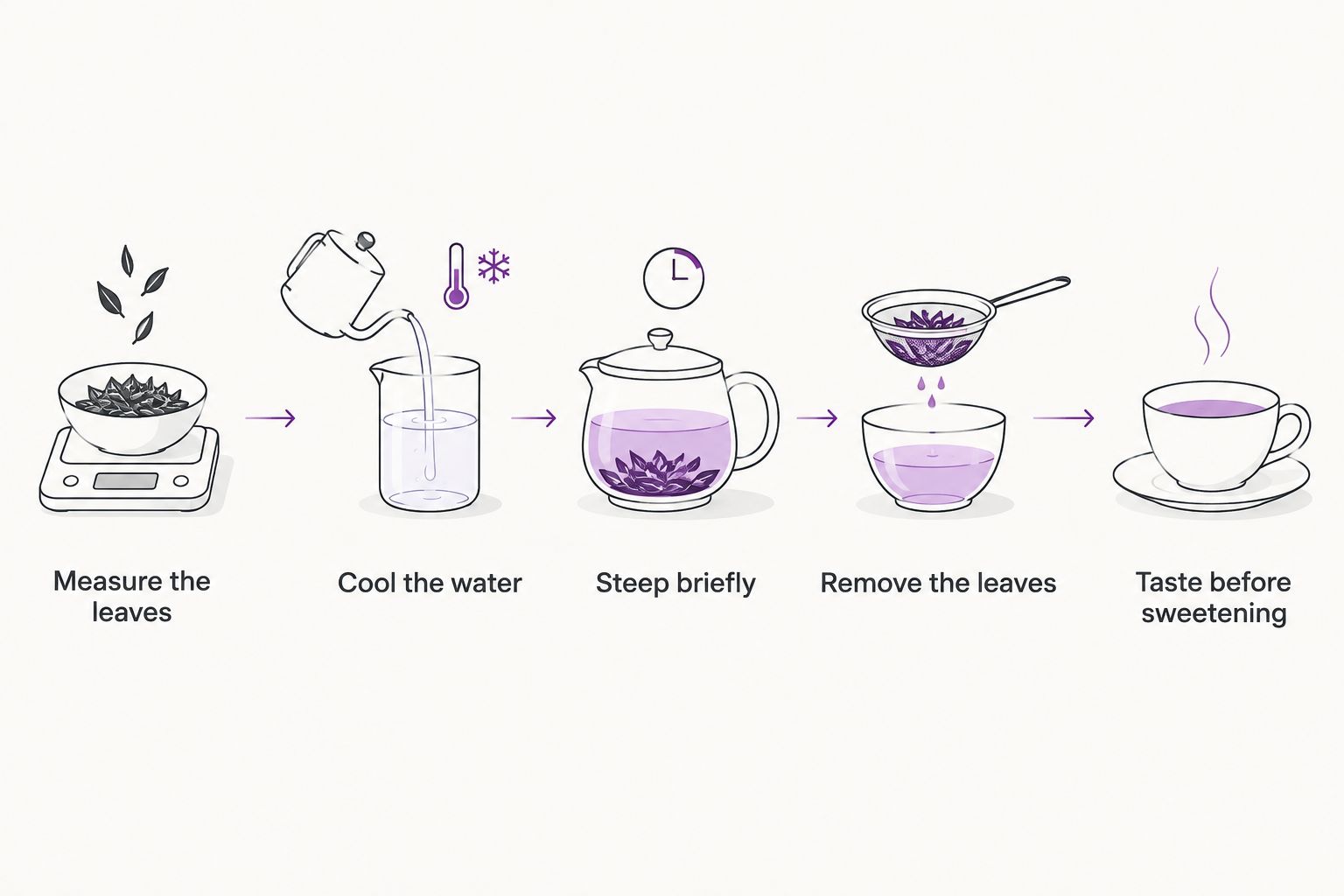
A removable infuser gives you a clear stopping point. For help choosing one, compare a tea infuser basket vs tea ball for your everyday loose leaf routine.
Change one brewing variable at a time. If the tea tastes too sharp, try a shorter steep; if it tastes thin, check the leaf amount before extending the brew indefinitely. The goal is a cup you enjoy plain, not the strongest possible extraction.
For iced tea, brew according to the leaves' directions and chill it safely. Cooling the tea does not remove caffeine. Lemon adds a different flavor, but it does not turn green tea into a proven weight-loss remedy.
Build a drink replacement, not a tea challenge
Begin by identifying the beverage you want to replace. That might be a sweetened afternoon tea, a sugary bottled drink, or a coffee order with syrup. Make the comparison with your usual drink rather than an imagined perfect diet.
Then decide how you want the replacement to taste. Warm green tea brings a fresh aroma and a gently drying finish; chilled green tea offers the same basic ingredient choice in a cooler form. Neither format has a special weight-loss advantage simply because it is hot or cold.
Keep the rest of the routine recognizable. Use the mug you already like, choose a convenient brewing time, and prepare only what you need. An elaborate ritual is optional; making the drink easy to repeat is the practical priority.
Do not respond to hunger by drinking tea instead of eating. Green tea is a beverage, not a meal replacement. If weight management is your goal, plan meals and activity alongside any drink changes, and seek qualified help when your health history requires it.
Also separate a useful habit from a guaranteed outcome. Replacing a sweetened drink changes your intake, but your overall eating pattern still determines whether that change supports weight loss. There is no honest promise that one substitution produces a particular result for every person.
Green tea safety: caffeine and extracts are different concerns
The FDA cites 400 milligrams of caffeine per day as an amount not generally associated with negative effects for most adults. That is a general reference, not a personal target, and it includes caffeine from all sources. Individual sensitivity, medicines, pregnancy, and certain health conditions change the advice you need.
There is no single caffeine amount that accurately describes every cup of green tea. Leaf quantity, the tea itself, and brewing conditions affect the finished drink. Count coffee, energy drinks, and other caffeinated products when considering your daily intake.
If green tea leaves you jittery, causes palpitations, or interferes with sleep, reduce or stop it and seek medical advice when appropriate. Drinking more to chase a weight-loss effect is not a sensible response. A bedtime routine should help you settle, not add caffeine you do not tolerate.
Do not treat green tea extract capsules as a stronger version of a harmless cup. NCCIH reports liver injury associated primarily with green tea extracts in tablet or capsule form. LiverTox, the National Institutes of Health reference on drug-induced liver injury, also documents this concern with concentrated extracts.
For your 2026 routine, avoid choosing an extract solely because its label mentions metabolism or weight control. Ask a clinician or pharmacist before using supplements, especially if you take medicines or have liver problems. Brewed green tea is not a substitute for prescribed care.
Does drinking green tea before bed help you lose weight?
Green tea before bed has no established special weight-loss advantage. Its caffeine can interfere with sleep, so choose your timing based on tolerance rather than a claim about overnight fat burning.
For evening sipping, consider a caffeine-free herbal infusion after checking the ingredient list. A fruit-flavored blend can still contain black or green tea, and decaffeinated green tea is not completely caffeine-free. Flavor names alone do not answer the caffeine question.
How many cups of green tea should you drink to lose weight?
There is no evidence-based number of brewed green tea cups that guarantees weight loss. Choose an amount you enjoy and tolerate, while considering caffeine from the rest of your day.
Do not increase the leaf amount, steeping time, or number of cups to imitate a supplement study. The 2-gram brewing starting point above is for making a cup, not prescribing a treatment. If the drink makes you feel unwell, more is not better.
Is green tea better than water for weight loss?
Green tea is not established as better than water for meaningful weight loss. Both can replace a sweetened beverage, but green tea adds flavor and caffeine while water does not add caffeine.
Choose the drink that fits your preferences and health needs. If you enjoy water, you do not need to replace it with tea. If unsweetened green tea makes it easier to leave a sugary drink behind, that is its useful role.
FAQ
Does green tea help you lose weight without changing your diet?
Green tea does not reliably produce meaningful weight loss without changes to your wider routine. Human research finds small, inconsistent effects, not a dependable standalone treatment.
What's the best green tea for weight loss?
No particular green tea is established here as the best for weight loss. Choose an unsweetened tea you enjoy, and judge it by ingredients, flavor, and how it fits your routine rather than fat-burning claims.
Does green tea burn belly fat?
Green tea is not a proven way to selectively reduce belly fat. A claim about metabolism does not establish targeted fat loss.
Can I put honey in green tea and still lose weight?
Honey adds sugar to green tea, so it changes the benefit of replacing a sweetened drink. Whether you lose weight depends on your overall eating and activity pattern, not that cup alone.
Are green tea weight-loss capsules safe?
Green tea extract capsules carry safety concerns, including reported liver injury. Ask a clinician or pharmacist before using them, especially if you take medicines or have liver problems.
Is decaf green tea completely caffeine-free?
Decaffeinated green tea is not completely caffeine-free. Check the product information and choose a genuinely caffeine-free infusion if avoiding caffeine is your priority.
Does Tea The World sell a proven weight-loss tea?
Tea The World is a loose leaf tea and tea accessories retailer, not an established weight-loss treatment provider. Choose tea for its verified ingredients and drinking experience, not an assumed medical effect.
One last thing
The useful change often comes from what leaves your cup, not what enters it. Unsweetened green tea replacing a sugary drink is a practical choice; green tea added on top of an unchanged routine is a different decision.
In 2026, keep the promise modest and the cup enjoyable. Brew for flavor, protect your sleep, and leave concentrated weight-loss claims out of your tea ritual. A drink does not need to burn fat to earn a place in your day.