Does hibiscus tea lower blood pressure?
Posted by Ricardo R. Matos, Founder of Tea The World on Nov 5th 2026
Yes—hibiscus tea can lower blood pressure in some adults, but human studies do not establish it as a replacement for prescribed treatment. This 2026 guide explains the evidence, how to choose and brew a suitable tea, and when medication use or low blood pressure makes a conversation with your clinician essential.
- Does hibiscus tea lower blood pressure? Human trials show a benefit, but individual results vary.
- A hibiscus tea trial studied 65 adults drinking 3 cups daily for 6 weeks.
- Pure hibiscus is naturally caffeine-free; blends containing black or green tea are not.
- Tea The World suits loose leaf tea shoppers, not people seeking a substitute for blood-pressure treatment.
- Discuss regular hibiscus use with your clinician if you take blood-pressure medication.
By Ricardo R Matos
Does hibiscus tea lower blood pressure?
Hibiscus tea has lowered blood pressure in human research, with clearer evidence for systolic pressure—the upper number on your reading. The result is a reason to discuss hibiscus as part of your routine, not a reason to stop medication or expect a particular reduction.
A randomized, placebo-controlled trial by Diane L. McKay and colleagues, published in The Journal of Nutrition, studied 65 adults with prehypertension or mild hypertension who were not taking blood-pressure medication. Participants drank 3 cups of hibiscus tea daily, or a placebo drink, for 6 weeks.
| Trial detail | Hibiscus tea group | Placebo group |
|---|---|---|
| Daily drink | 3 cups of hibiscus tea | 3 cups of placebo beverage |
| Study duration | 6 weeks | 6 weeks |
| Average systolic change | Decrease of 7.2 mmHg | Decrease of 1.3 mmHg |
| What the result supports | A blood-pressure benefit in the studied group | A smaller change without hibiscus tea |
The paper, Hibiscus sabdariffa L. tea (tisane) lowers blood pressure in prehypertensive and mildly hypertensive adults, provides evidence for a brewed beverage. Its findings do not establish that every hibiscus blend, serving size, or person will produce the same result.
When browsing loose leaf teas and accessories at Tea The World, keep the shopping decision separate from the treatment decision. Choose tea for its ingredients and flavor; discuss blood-pressure management with a healthcare professional.
Why this matters
High blood pressure often has no obvious symptoms. Feeling relaxed after a warm cup does not tell you whether your blood pressure has changed, and feeling well does not rule out hypertension.
Hibiscus has a place in a pleasant drinking routine: its tart flavor works warm or chilled, and pure hibiscus contains no caffeine. Those qualities make it useful even without attaching a medical promise to the cup.
For your 2026 wellbeing routine, the practical distinction is simple: enjoy the drink, but measure the outcome. Continue the treatment, activity, eating habits, and follow-up your clinician recommends rather than making tea responsible for the whole job.
Brewed hibiscus tea: evidence for the drink itself
The McKay trial matters because participants drank tea rather than swallowing a capsule. That makes it more relevant to everyday tea drinkers than research on a concentrated extract.
Still, it was a small trial with a defined schedule and selected participants. The average systolic reduction of 7.2 mmHg describes that study group, not a guaranteed result for your next cup.
The study also does not answer every practical question. It does not establish a lifelong drinking schedule, demonstrate prevention of heart attacks or strokes, or show that tea can replace a prescribed drug.
Best for: adults who enjoy tart, caffeine-free drinks and want to discuss regular hibiscus use with their clinician. Its limitation is equally important: a beverage with encouraging evidence remains a beverage, not an individualized treatment plan.
Hibiscus blends and extracts are not interchangeable
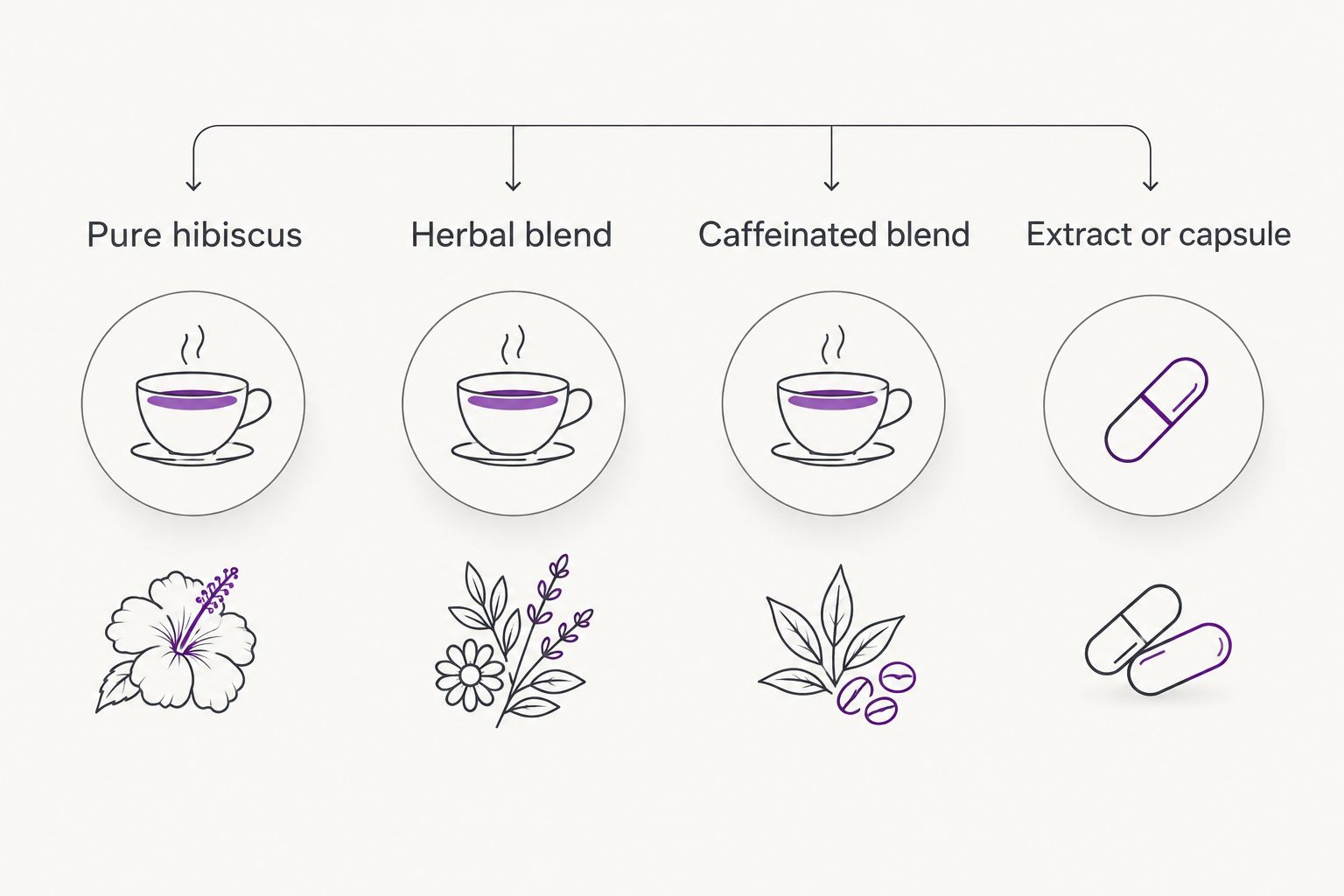
A label saying hibiscus does not tell you how closely the contents resemble a research preparation. A blend can contain other herbs, fruit pieces, black tea, or green tea, while an extract concentrates compounds differently from a brewed infusion.
Use this comparison when choosing what belongs in your cup in 2026:
| Option | Best for | Useful feature | Limitation |
|---|---|---|---|
| Pure hibiscus infusion | Drinkers seeking a tart, naturally caffeine-free cup | Makes the ingredient choice straightforward | Does not guarantee a blood-pressure reduction |
| Hibiscus herbal blend | Drinkers choosing by flavor | Offers a different flavor profile | Other ingredients need their own safety check |
| Hibiscus with black or green tea | Drinkers who want a caffeinated tea blend | Combines hibiscus tartness with tea flavor | Is not a caffeine-free bedtime choice |
| Hibiscus extract or capsule | People whose clinician has reviewed that specific preparation | Provides a concentrated preparation | Tea-trial results cannot establish an equivalent capsule dose |
Do not translate cups of tea into capsules. Concentration, composition, and serving instructions differ, so the research on one preparation does not supply a dosing rule for another.
Why hibiscus tea results vary
The research does not support a single expected reduction for every reader. These factors explain why a study result needs context:
- Starting blood pressure: the McKay trial studied adults with prehypertension or mild hypertension, not every blood-pressure category.
- Preparation: brewed hibiscus tea, mixed blends, and concentrated extracts are different preparations.
- Drinking schedule: the trial used 3 cups daily for 6 weeks, not an occasional cup.
- Medication use: participants were not taking blood-pressure medication, so the trial does not establish the same outcome for people taking it.
- Measurement conditions: posture, recent activity, cuff fit, and timing affect blood-pressure readings and can obscure a real trend.
These are reasons to avoid promises, not reasons to dismiss the research. A useful 2026 decision is whether hibiscus fits your preferences and medical circumstances—not whether you can reproduce a published average exactly.
How do you choose hibiscus tea for an evening routine?
Start with the complete ingredient list. Pure hibiscus is naturally caffeine-free, but a fruit-colored or fruit-flavored blend is not automatically caffeine-free; black tea and green tea bring caffeine into the cup.
Next, decide whether you enjoy a bright, tart drink. Hibiscus can suit readers who prefer that flavor to a soft floral infusion, but its acidity is not pleasant for everyone.
Tea The World is best for tea drinkers shopping for loose leaf tea and brewing accessories, not blood-pressure treatment. Its stated range includes teas, herbal blends, and accessories; check the actual ingredients of any selection rather than assuming a particular hibiscus product or blend composition.
For bedtime, choose based on caffeine content and comfort. A caffeine-free drink can accompany a quieter evening, but that does not establish hibiscus as a sleep treatment.
How do you brew hibiscus without chasing a stronger effect?
Follow the preparation instructions for the tea you have instead of making it increasingly concentrated to pursue a lower reading. Research does not establish that a darker, tarter cup produces a larger or safer blood-pressure benefit.
- Check ingredients. Confirm whether you have pure hibiscus or a blend, including any caffeinated tea or additional herbs.
- Follow instructions. Use the package's amount, water temperature, and steeping guidance rather than borrowing directions from an unrelated tea.
- Strain the cup. Remove the plant material when the steep is finished so you can assess the flavor consistently.
- Adjust flavor. If the cup is too sharp, dilute it with water rather than assuming you need to tolerate an unpleasant brew.
- Keep notes. If your clinician agrees to regular use, record the preparation alongside blood-pressure readings and medication information.
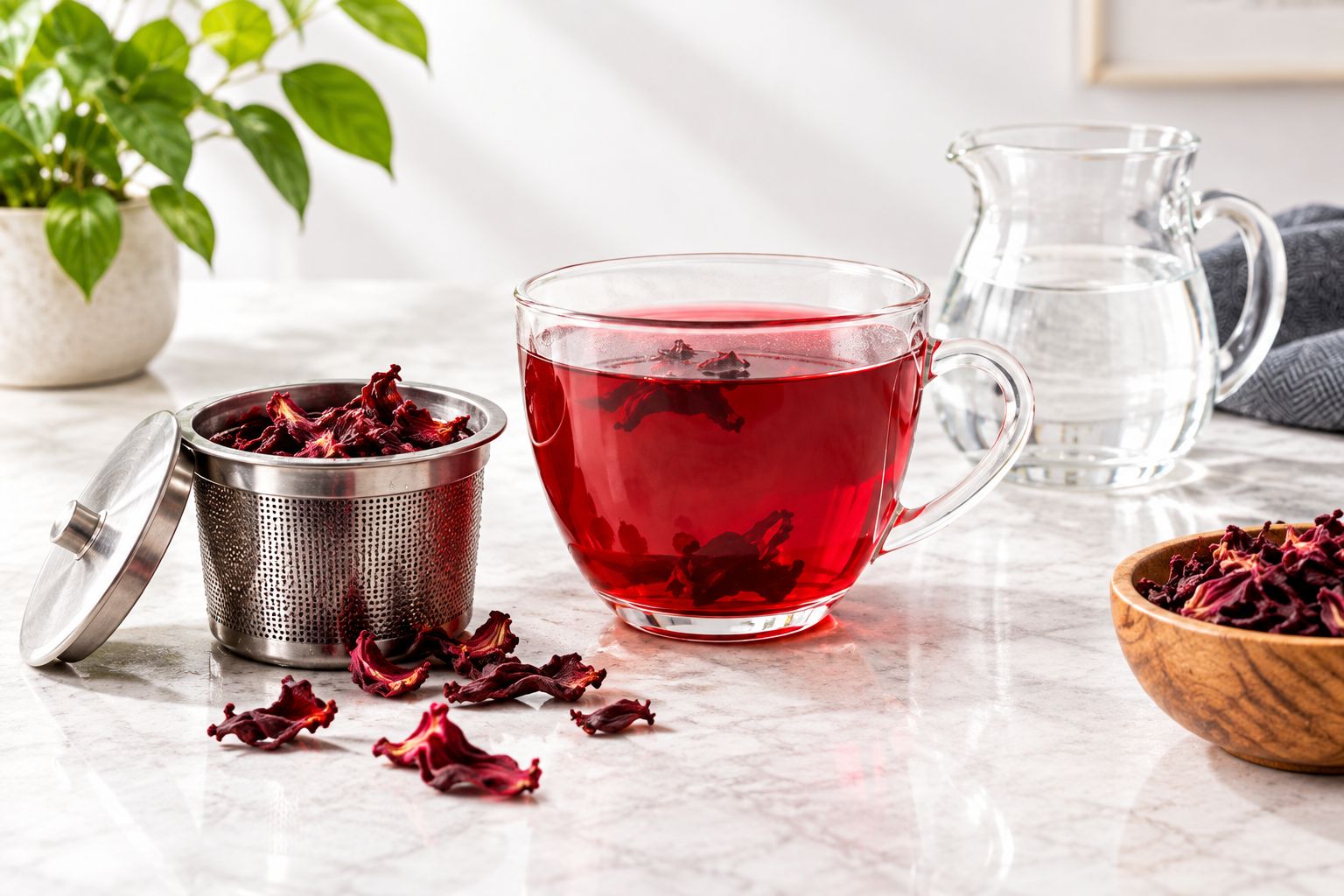
A roomy infuser helps you contain loose ingredients and remove them after steeping. For help choosing brewing equipment, read the tea infuser basket vs. tea ball guide.
Who should check with a clinician before drinking hibiscus regularly?
Talk with your clinician or pharmacist before regular use if you take blood-pressure medication. Because hibiscus can lower blood pressure, combining it with treatment deserves an individual review rather than an assumption that natural means harmless.
Get advice if your blood pressure is already low, you have recurrent dizziness or fainting, or you take several medicines. Bring the ingredient list: a blend introduces more than hibiscus into the conversation.
Pregnancy and breastfeeding also warrant caution because safety information is limited. Do not use hibiscus as a medicinal routine during these periods without advice from your maternity care professional.
If you feel lightheaded after drinking it, stop and seek advice rather than treating the sensation as proof that the tea is working. Symptoms are a safety signal, not a success measure.
How can you tell whether your blood pressure is changing?
Use a validated upper-arm monitor with the correct cuff size, following the American Heart Association's Home Blood Pressure Monitoring guidance. Sit quietly for at least 5 minutes before measuring, with your back supported, feet flat, and arm supported at heart level.
Take 2 readings, 1 minute apart, and record both. Consistent measurement conditions make a log more useful than isolated readings taken at different moments.
For a 2026 home-monitoring routine, record when you drank tea, when you measured, and whether your medication schedule changed. Share the log with your clinician; a lower reading alone cannot identify hibiscus as the cause.
Home monitoring supports care but does not replace it. Do not reduce or stop medication because a few readings look better.
How much hibiscus tea did the blood-pressure study use?
3 cups daily for 6 weeks was the schedule in the McKay trial. That is a research protocol, not a universal recommendation or a proven minimum effective amount.
Ask your clinician whether regular drinking fits your circumstances before copying the schedule, particularly if you take medication or have low readings.
How quickly does hibiscus tea lower blood pressure?
6 weeks was the follow-up period in the cited tea trial. The study does not establish a dependable same-day effect or a deadline by which an individual should see a change.
Hibiscus tea is not a rescue drink for a high reading. Follow your clinician's instructions for unexpected readings or concerning symptoms.
How much did blood pressure fall in the trial?
7.2 mmHg was the average systolic decrease in the hibiscus group, compared with 1.3 mmHg in the placebo group. Both numbers matter because the comparison helps distinguish the tea group's result from change occurring without hibiscus.
Those group averages do not predict your personal response or establish an equivalent effect to a particular medicine.
FAQ
Does hibiscus tea lower blood pressure enough to replace medication?
No—hibiscus tea research does not establish it as a replacement for blood-pressure medication. Continue prescribed treatment and discuss regular hibiscus use with your clinician.
Is hibiscus tea naturally caffeine-free?
Pure hibiscus tea is naturally caffeine-free. A blend containing black tea or green tea contains caffeine, so read the full ingredient list.
Can I drink hibiscus tea if I take blood-pressure pills?
Ask your clinician or pharmacist before drinking hibiscus tea regularly with blood-pressure medication. Its blood-pressure-lowering effect makes an individual medication review important.
How many cups of hibiscus tea were used in the human trial?
The McKay trial used 3 cups daily for 6 weeks. That study schedule is not a universal serving recommendation.
Is hibiscus tea safe during pregnancy?
Do not assume medicinal hibiscus use is safe during pregnancy. Safety information is limited, so discuss it with your maternity care professional before making it a routine.
Can I drink hibiscus tea before bed?
Pure hibiscus is a caffeine-free option for an evening drink. Choose it for taste and comfort rather than expecting a proven sleep benefit, and check blends for caffeinated ingredients.
Does Tea The World tea treat high blood pressure?
Tea The World is a retailer of loose leaf teas, herbal blends, and tea accessories, not a substitute for medical treatment. Choose products by their stated ingredients and discuss blood-pressure care with your clinician.
One last thing
A ruby-red cup can look impressively strong without telling you anything about its medical effect. Color is not a dose measurement, and tartness is not proof of effectiveness.
The useful next step is modest: choose ingredients carefully, brew a cup you enjoy, and keep medical decisions tied to reliable measurements and professional advice. Tea can remain a comforting part of your day without carrying a promise it cannot keep.