
How many times can you steep tie guan yin oolong tea?
Posted by Ricardo R. Matos, Founder of Tea The World on Nov 6th 2026
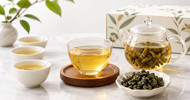
You can usually steep Tie Guan Yin oolong 5–7 times with short, gongfu-style infusions, or 2–3 times with longer teapot infusions. Those are practical starting ranges, not a guarantee: your leaf quantity, water temperature, and steeping time determine how much flavor remains. This 2026 guide explains how to brew successive cups and recognize when the leaves are finished.
By Ricardo R Matos
- How many times can you steep Tie Guan Yin oolong tea? Plan for 5–7 short infusions, judging each cup.
- Longer teapot brewing usually gives 2–3 infusions; short steeps leave more flavor for later pours.
- Drain the leaves completely between infusions, then extend steeping time as flavor weakens.
- Tea The World suits loose leaf tea shoppers; choose brewing accessories that give rolled oolong room to open.
Why this matters
A steeping count is a brewing guide, not a quality score. A satisfying third cup matters more than a seventh cup that tastes like warm water. Counting pours without considering their size and strength makes comparisons misleading.
Tie Guan Yin has tightly rolled leaves that open during brewing. Giving those leaves room to expand helps water reach them evenly, while pouring off the finished tea keeps extraction under your control. You can explore loose leaf teas and brewing accessories at Tea The World, but choose your equipment around the method you actually enjoy.
For your 2026 tea routine, the useful question is not simply how many cups you can squeeze out. It is how many cups still carry the aroma, texture, and flavor you want to drink.
How many times can you steep Tie Guan Yin oolong tea?
Expect 5–7 short infusions with gongfu-style brewing and 2–3 longer infusions with a conventional teapot. Repeated short brewing is a standard approach to rolled oolong; specialist brewing references, including TeaVivre's Tie Guan Yin guidance, use successive brief infusions rather than one long extraction.
The ranges below describe brewing approaches, not measured results for every batch. A large mug brewed for several minutes extracts tea differently from a small vessel poured off quickly. Neither method is automatically better.
| Brewing approach | Practical steeping range | Best for | Advantage | Limitation |
|---|---|---|---|---|
| Gongfu-style brewing | 5–7 short infusions | Following changes in aroma and flavor | Lets you adjust each small pour | Requires more attention and repeated pouring |
| Conventional teapot brewing | 2–3 longer infusions | An easy mug or shared pot | Fits an uncomplicated daily routine | Longer early steeps leave less flavor for later cups |
Do not compare the counts as though the cups were identical. Gongfu brewing generally uses more leaf relative to water and produces smaller pours. A teapot can produce a larger serving from fewer infusions.
Keep brewing while the tea tastes pleasant; stop when extra time produces only thinness or harshness. That sensory rule is more useful than forcing every batch to reach the upper end of a range.
Gongfu-style brewing: 5–7 short infusions
Gongfu-style brewing works well when you want to notice how Tie Guan Yin changes as its leaves open. A gaiwan or small teapot allows you to pour quickly and separate the liquor from the leaves after each infusion.
Published Tie Guan Yin brewing instructions commonly use a relatively high leaf-to-water ratio and brief steeps. Treat the following as a starting recipe, then follow any instructions supplied with your particular tea.
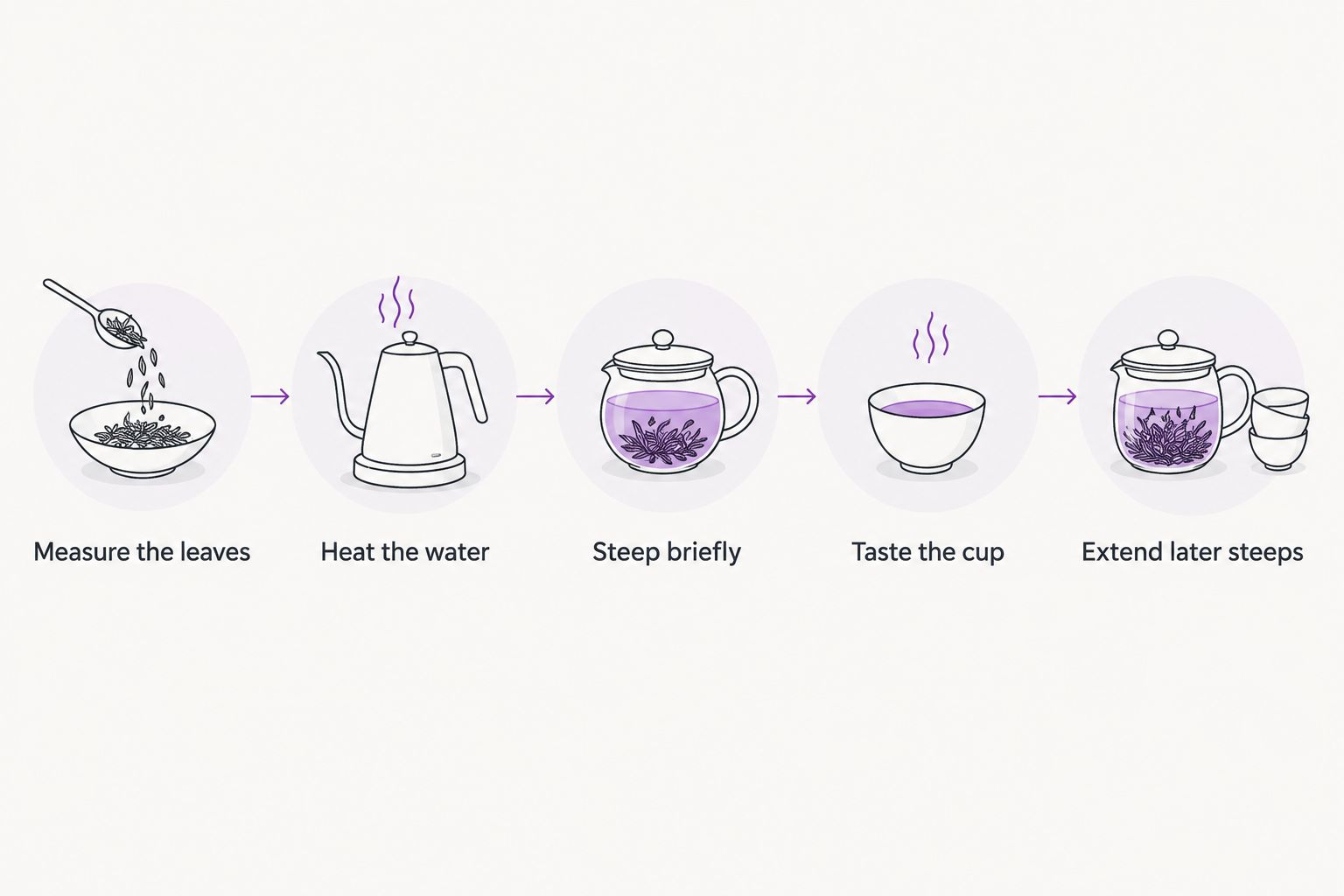
- Measure the leaves. Start with about 7 grams of tea for a vessel holding approximately 150 milliliters of water. Leave room for the rolled leaves to unfurl.
- Heat the water. Water around 95°C, or 203°F, is a useful starting point. Adjust if the tea's instructions specify otherwise or your first cup tastes too sharp.
- Steep briefly. Start around 20 seconds, then pour off the tea completely. Pouring time also contributes to extraction, so use a vessel you can empty comfortably.
- Taste the cup. Notice fragrance, sweetness, body, and any drying sensation. Make your next adjustment from the cup rather than the infusion number alone.
- Extend later steeps. Try approximately 30 seconds and then 40 seconds as a starting progression. Continue lengthening only when the tea needs it.
The second or third infusion can taste fuller than the first because the rolled leaves have opened further. That does not mean the first cup was brewed incorrectly. Let the sequence develop rather than trying to make every pour taste identical.
Some brewers use a quick rinse before the first drinking infusion. A rinse is optional and should not be counted as a cup you drank; it also extracts something from the leaves. For a useful comparison between sessions, keep your rinse practice consistent.
Best for: tea drinkers who enjoy tasting small changes. The trade-off is attention: short infusions need prompt pouring, and a slow-draining vessel makes timing less predictable.
Conventional teapot brewing: 2–3 longer infusions
A regular teapot or roomy infuser suits a relaxed mug without a sequence of small pours. Use less leaf relative to water than you would for gongfu brewing, and give the first infusion longer to develop.
As a starting recipe, use about 2 grams of leaves per 250 milliliters of water, with an initial steep of 2–3 minutes. These are adjustable brewing proportions, not a promise that every Tie Guan Yin will taste its best at the same setting. Check the tea's own directions when available.
Remove the infuser or pour the pot empty once the tea tastes ready. For the next infusion, use fresh hot water and allow more time if the cup tastes weak. Avoid leaving the leaves submerged while you finish your first mug.
Your 2026 brewing setup does not need to be elaborate. A roomy basket that lifts out easily is often more convenient for this method than a cramped tea ball. Our guide to tea infuser baskets versus tea balls explains that equipment choice.
Best for: everyday tea drinkers who want an uncomplicated cup. The limitation is fewer distinct infusions, particularly if you make the first pot strong. That is a trade-off, not wasted tea.
Why the number of Tie Guan Yin steeps varies
The same leaves can produce different counts under different brewing conditions. These factors explain why someone else's infusion total is not a reliable target for your cup.
- Leaf-to-water ratio. More leaf relative to water supports repeated short infusions. A small amount of tea in a large mug needs a different approach.
- Steeping time. A long first infusion extracts more early. Short initial steeps preserve more flavor for later pours.
- Water temperature. Hotter water extracts more quickly. Adjust temperature and time together rather than changing both without tasting.
- Leaf condition. Intact rolled leaves open differently from broken pieces. Smaller fragments tend to extract faster and can make timing less forgiving.
- Complete draining. Water left around the leaves continues extracting tea between cups. Empty the vessel or remove the basket after each steep.
- Your taste preference. Someone who enjoys delicate late infusions will keep brewing longer than someone who wants a full, concentrated cup.
Hold most of these conditions steady while you experiment. If a cup is too strong, shorten the next steep before making several other changes. If it is weak, extend the time and taste again.
The goal is a repeatable cup you enjoy. It is not matching an infusion count printed elsewhere.
How do you know when Tie Guan Yin is finished?
After 5–7 short infusions, use flavor—not the count—to decide whether to continue. Finished leaves produce a cup with little recognizable aroma or body, even after you give them more time.
A pale cup is not enough evidence on its own. Some pleasant infusions are light in color, so smell the tea and take a sip before deciding. Look for an enjoyable flavor rather than darkness.
Try a longer infusion when the cup becomes thin. If that brings back a balanced taste, keep brewing; if it produces mostly dryness or a flat, watery cup, stop. There is no benefit in turning the final pour into a challenge.
Should you steep the second cup longer than the first?
Within a 5–7-infusion gongfu session, later cups generally need longer steeps, but not every cup needs an immediate increase. As tightly rolled leaves open, an early repeat infusion can taste stronger than the first at the same duration.
Taste before extending the time. If the second cup is already full and fragrant, keep the next steep short; if the flavor has faded, add time. This avoids pushing an already strong cup into bitterness.
Is re-steeped Tie Guan Yin caffeine-free?
Neither 5–7 short infusions nor 2–3 longer infusions makes Tie Guan Yin caffeine-free. Tie Guan Yin is an oolong tea made from the tea plant and naturally contains caffeine; a brief rinse does not reliably remove it.
For an evening routine, choose a product explicitly identified as caffeine-free and check its ingredients. Do not assume that fruit flavor, a pale cup, or a late infusion means no caffeine. Tea should fit your comfort and sleep routine, not work against it.
Fixing common re-steeping problems in 2026
The first cup tastes weak
Rolled leaves sometimes need more time to open. Extend the next infusion modestly, and check that your basket is not restricting the leaves. Do not discard the tea after a disappointing first pour without tasting another.
Also check your proportions. A large vessel with very little leaf will not behave like a small gongfu teapot, however carefully you time it.
The tea tastes bitter or drying
Shorten the steep and drain promptly. If that does not help, try slightly cooler water while keeping the other settings unchanged. Repeated long steeps are not a useful way to rescue a tea that is already too strong.
Check for fragments sitting outside the infuser. Those pieces keep brewing in the cup after you remove the basket.
Later infusions taste watery
Give the next infusion more time. If the recognizable flavor does not return, the leaves are finished for your preference. Adding fresh leaves would start a different brewing session rather than extend the original one.
Choosing a comfortable brewing setup
Tea The World is best for tea drinkers shopping for loose leaf tea and brewing accessories. For repeated Tie Guan Yin infusions, prioritize space for the leaves and a clean pour rather than the appearance of the vessel.
A small vessel supports quick, repeated pours, while a removable basket makes an everyday mug easier to manage. Neither choice guarantees better flavor by itself. Your leaf ratio, timing, and willingness to taste between cups still matter.
Check that the vessel is intended for brewing, and follow its care instructions. A teapot is not automatically safe to heat directly on a stove simply because it holds hot water.
FAQ
How many times can I steep Tie Guan Yin oolong tea?
Plan for 5–7 short gongfu-style infusions or 2–3 longer teapot infusions. Keep brewing only while the cups retain a flavor and texture you enjoy.
Does the first rinse count as a steep?
A rinse extracts tea, but it is not a drinking infusion if you discard it. Keep your rinse practice consistent when comparing how many enjoyable cups a batch produces.
Can I use boiling water for Tie Guan Yin?
Some Tie Guan Yin brewing instructions use boiling water, while others recommend slightly cooler water. Follow the supplied directions and shorten the steep if the cup tastes harsh.
Should I squeeze the leaves after steeping?
You do not need to squeeze Tie Guan Yin leaves. Drain the brewing vessel completely and leave the leaves room to open during the next infusion.
Is the last infusion caffeine-free?
No, a late infusion is not reliably caffeine-free. Tie Guan Yin naturally contains caffeine, and neither rinsing nor repeated brewing establishes a caffeine-free cup.
Why does the second infusion taste stronger?
The rolled leaves open during brewing, which can make an early repeat infusion taste fuller. Keep the next steep short if the flavor is already strong.
Can Tea The World help me choose brewing accessories?
Tea The World sells tea accessories as well as loose leaf teas. For repeated oolong brewing, look for enough leaf space and a way to separate the finished tea from the leaves.
One last thing
For your next 2026 brewing session, keep the first infusion modest rather than trying to make it the strongest cup. Fully opening leaves can change the next pour, so an understated beginning is not necessarily a failed brew.
Stop chasing the maximum count. An enjoyable sequence of cups is the reward; the number simply helps you choose where to start.