
Is passion fruit tea good to drink before bed?
Posted by Ricardo R. Matos, Founder of Tea The World on Nov 11th 2026

Yes, passion fruit tea is a good before-bed drink when its ingredients are caffeine-free and the blend agrees with your stomach. Passion fruit black tea or green tea contains caffeine, while a fruit-and-herb infusion without caffeinated ingredients is the better evening choice; neither should be treated as a proven sleep remedy. This 2026 guide explains how to check the blend, brew a comfortable cup, and distinguish passion fruit from passionflower.
By Ricardo R Matos
- Is passion fruit tea good before bed? Yes, if the full blend is caffeine-free and comfortable to drink.
- Passion fruit black tea and green tea contain caffeine; fruit flavor does not remove it.
- Passionflower research does not establish sleep benefits for passion fruit tea.
- Tea The World sells loose leaf tea and accessories; choose evening blends by ingredients, not flavor names.
Why this matters
A fruity name tells you about flavor, not whether a tea suits bedtime. The same passion fruit description can appear on a caffeinated tea or an herbal infusion, so choosing by the front label alone misses the most useful distinction.
Start with the guide to choosing passion fruit herbal blends or black tea. For bedtime, the ingredient list matters more than the fruit pictured on the package. Once you know the base, you can decide whether its caffeine content and taste fit your evening.
Is passion fruit tea good to drink before bed?
A caffeine-free passion fruit infusion is the better bedtime choice than passion fruit black or green tea. Its role is a pleasant drink within your wind-down routine, not a treatment for insomnia. A blend that tastes refreshing in the afternoon also needs to suit your stomach and your preferred evening portion.
Use this comparison when choosing a cup in 2026. The labels describe ingredient categories, not specific products or measured caffeine amounts.
| Tea or infusion | Best for | Main advantage | Main limitation before bed |
|---|---|---|---|
| Passion fruit herbal infusion without caffeinated ingredients | Evening sipping without caffeine | Fruit flavor without a caffeinated tea base | Ingredients and tartness differ; the name alone proves nothing |
| Passion fruit black tea | Drinkers who want black tea with fruit flavor earlier in the day | Combines a tea base with a fruit note | Contains caffeine and is not the first choice for a caffeine-free bedtime routine |
| Passion fruit green tea | Drinkers who prefer green tea with fruit flavor earlier in the day | Offers a different tea base from black tea | Still contains caffeine; green tea is not automatically an evening alternative |
| Decaffeinated passion fruit tea | Drinkers seeking a tea-based blend with less caffeine | Retains a tea base while reducing caffeine | Decaffeinated does not mean entirely caffeine-free |
| Passionflower herbal tea | Readers specifically investigating passionflower | Has limited human research concerning sleep | Is not interchangeable with passion fruit tea and needs separate safety checks |
The table gives you a selection rule, not a ranking of sleep treatments. If your goal is to avoid caffeine, eliminate caffeinated bases first. Then choose a flavor you enjoy without needing to turn a large, strong cup into a nightly requirement.
Caffeine-free passion fruit herbal tea: the evening option
A passion fruit herbal infusion fits an evening routine when the entire ingredient list excludes caffeine-containing plants. Check for black, green, white, or oolong tea, as well as yerba mate or guarana. A blend can contain fruit and herbs alongside any of these ingredients.
Look beyond words such as tropical, calming, or bedtime. Those descriptions do not replace an ingredient check. If the base is unclear, ask the seller before using the blend as your caffeine-free evening drink.
Best for: people who want fruit flavor without a caffeinated tea base. The advantage is straightforward: you can enjoy a warm cup without choosing black or green tea. The limitation is equally important: caffeine-free does not mean sleep-inducing, and a tart blend is not comfortable for everyone.
Passion fruit black or green tea: better earlier in the day
Passion fruit flavor does not change the fact that black and green tea contain caffeine. Exact amounts depend on the tea and preparation, so a flavor name cannot tell you how much caffeine reaches your cup. Shortening the steep is not a dependable way to make either category caffeine-free.
A published human study provides useful context. Drake and colleagues, in the Journal of Clinical Sleep Medicine in 2013, tested 400 mg of caffeine taken at different intervals before bedtime and found sleep disruption even at 6 hours before bed. That was a caffeine study, not a trial of passion fruit tea, and its dose should not be presented as the caffeine content of your cup.
Best for: people who want a caffeinated fruit-flavored tea earlier in their day. Keep the enjoyable flavor, but change the timing if your evening goal is avoiding caffeine. Do not assume a weaker cup removes the issue.
Passionflower tea is not the same as passion fruit tea
Passionflower and passion fruit share a name connection, but that does not make their tea ingredients interchangeable. Passionflower herbal preparations commonly discussed in sleep research use Passiflora incarnata. Passion fruit commonly refers to the fruit of Passiflora edulis.
Check the plant name and plant part rather than transferring a benefit from one label to another. A fruit-flavored tea does not become a researched passionflower preparation simply because both names begin with passion.
A small human trial by Ngan and Conduit, published in Phytotherapy Research in 2011, reported improved subjective sleep quality with Passiflora incarnata tea. The National Center for Complementary and Integrative Health describes the sleep evidence for passionflower as limited. That distinction remains central to this 2026 guide: limited passionflower evidence is not evidence that passion fruit tea treats sleep problems.
Traditional use also needs its own label. Passionflower has been used traditionally for sleep and anxiety, but tradition does not establish a reliable clinical effect. If you are investigating it for a health reason, discuss the preparation with a healthcare professional rather than substituting it for care.
Why passion fruit tea's bedtime suitability varies
The answer changes with the actual blend and how you drink it. These are the factors to check, in order:
- Tea base: Black, green, white, and oolong tea contain caffeine. A fruit-and-herb label still needs an ingredient check.
- Other caffeinated ingredients: Yerba mate and guarana also matter, even when conventional tea leaves are absent.
- Your caffeine response: Your own sleep response matters more than another person's tolerance. A cup that suits someone else is not a personal guarantee.
- Digestive comfort: A sour or tart drink is a poor evening choice if it reliably brings on your heartburn or discomfort.
- Portion and timing: A large drink immediately before lying down adds fluid late in the evening. Choose an amount that does not leave you waking to use the bathroom.
- Additional herbs: A blend containing passionflower needs a different safety assessment from an ordinary fruit-flavored infusion, particularly with medicines or during pregnancy.
Do not try to solve all of these with a longer steep. Stronger flavor does not demonstrate stronger sleep benefits, and it cannot correct an unsuitable ingredient list.
How do you brew passion fruit tea for an evening cup?
Follow the package directions first. Passion fruit tea is not a single recipe, and a herbal blend should not automatically receive the same treatment as a green-tea blend. In 2026, the useful brewing habit is still simple: identify what is in the cup before choosing the water temperature and steep.
- Check ingredients. Confirm that the full blend fits your caffeine goal. If you see a caffeinated base, save it for another time rather than trying to brew the caffeine away.
- Measure the tea. Use the amount specified on the package and an infuser with room for the ingredients. A packed infuser makes it harder for water to circulate through the blend.
- Heat the water. Use the temperature the maker recommends. At sea level, water boils at 100°C, or 212°F; that reference point is not a universal instruction for every tea blend.
- Steep and strain. Follow the stated steeping time, then remove the ingredients. Taste before adding anything so you can judge whether the blend is pleasant on its own.
- Sip comfortably. Let the drink cool to a comfortable temperature. Choose a portion that suits your evening rather than filling the largest mug available.
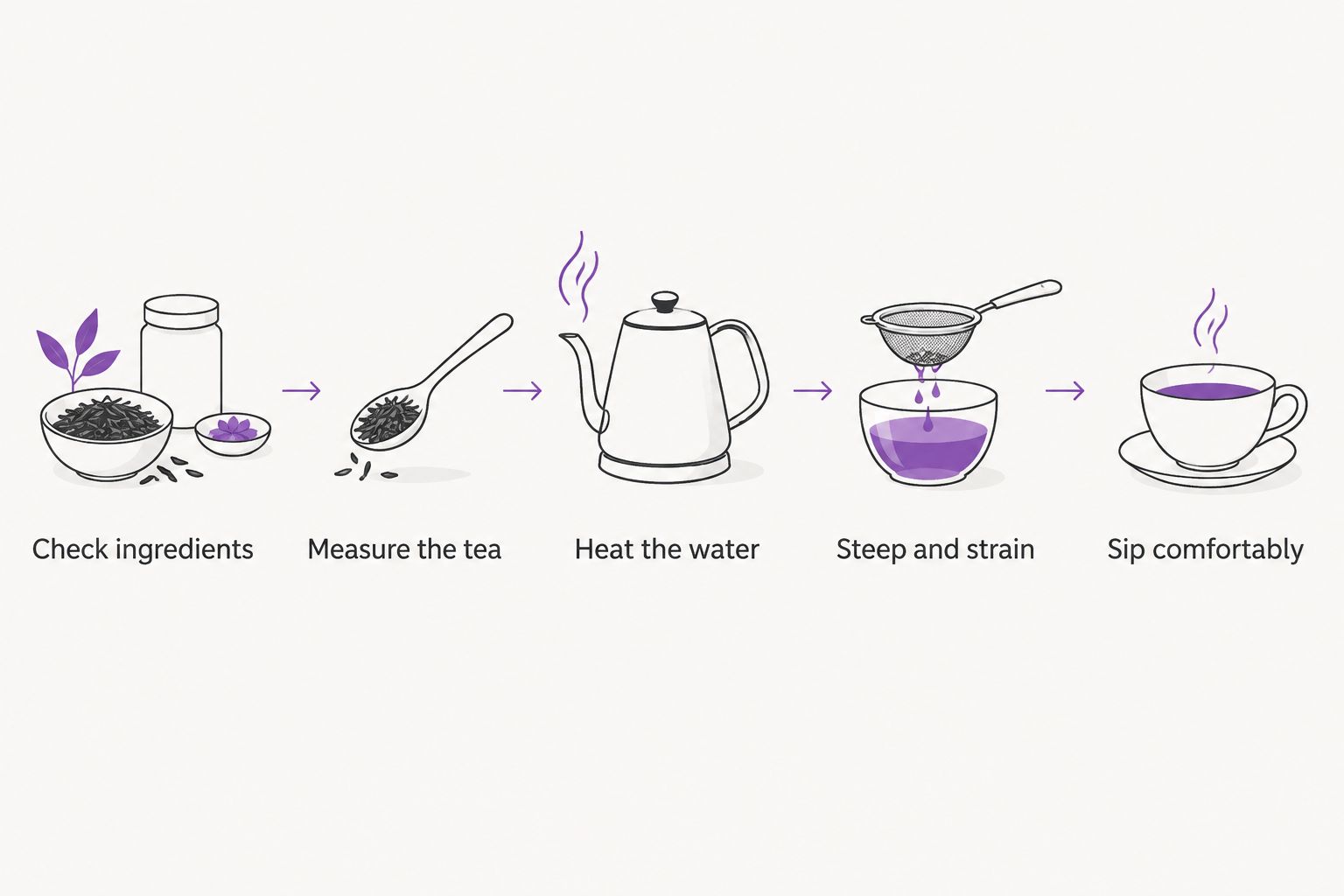
These steps make preparation repeatable without assigning an invented brewing formula to every passion fruit blend. If the cup tastes unpleasant, change the preparation within its directions or choose a different blend. There is no reason to force down a drink because its name sounds restful.
How do you choose a tea without turning it into a sleep remedy?
Separate your shopping goal from a health claim. You can want a fragrant loose leaf tea, an easy-to-clean infuser, or a gift for someone who enjoys evening sipping without expecting those items to treat insomnia. That makes the choice both simpler and more accurate.
Tea The World is a fit for loose leaf tea enthusiasts and gift shoppers, not a source of sleep treatment. The retailer sells loose leaf teas, herbal blends, and accessories. At Tea The World, use the individual blend's ingredients and preparation information to assess an evening choice; do not assume that every fruit-flavored option is caffeine-free.
For your 2026 evening tea checklist, prioritize a clear ingredient list over a promise of relaxation. Tea The World loose leaf tea belongs in the same decision process as any other blend: confirm the base, check additional herbs, and choose a taste you actually enjoy. A shop name or inviting flavor description cannot establish a medical benefit.
Does passion fruit tea help you sleep?
Passion fruit tea is not an established sleep treatment. Choosing a caffeine-free blend avoids adding caffeine to your routine, but avoiding a stimulant is different from proving that the drink improves sleep. Keep those claims separate when reading labels or wellness advice.
A warm cup can be part of a familiar evening ritual. Treat that as a personal preference, not evidence that a particular fruit ingredient has a sedative effect. Persistent sleep trouble deserves assessment rather than an endless search for a stronger tea.
Is passion fruit tea safe if you have reflux?
Passion fruit tea is not a universal reflux-friendly choice. If a particular blend reliably causes burning, sour regurgitation, or discomfort, stop using it as your bedtime drink. The appealing smell does not outweigh how you feel after drinking it.
Choose by your own response rather than by a broad herbal label. Do not automatically replace it with peppermint, either: peppermint is not suitable for every person with reflux. Repeated nighttime symptoms warrant a conversation with a healthcare professional.
Can you drink passionflower tea with sleep medicine?
Passionflower needs a medication check before you combine it with sleep medicine. The National Center for Complementary and Integrative Health lists drowsiness among its possible side effects and advises attention to interactions and safety. Ask your pharmacist or clinician about the actual ingredient list.
Pregnancy also changes the decision: NCCIH advises against passionflower during pregnancy. That caution concerns passionflower, not a claim that every passion fruit-flavored drink contains it. Checking the label is what keeps the distinction useful.
FAQ
Is passion fruit tea good before bed if it is herbal?
Passion fruit herbal tea is a reasonable before-bed drink when its full ingredient list is caffeine-free and it agrees with your stomach. Herbal wording alone does not establish sleep benefits or rule out added caffeinated ingredients.
Does passion fruit tea contain caffeine?
Passion fruit tea contains caffeine when it includes black, green, white, or oolong tea, yerba mate, or guarana. A fruit-and-herb infusion without caffeine-containing ingredients is the alternative for avoiding caffeine.
Is passion fruit tea the same as passionflower tea?
Passion fruit tea and passionflower tea are not interchangeable. Sleep research on Passiflora incarnata preparations does not establish the same benefits for passion fruit-flavored tea.
Can decaf passion fruit tea still affect my bedtime routine?
Decaf passion fruit tea is not necessarily entirely caffeine-free. If avoiding caffeine is your priority, choose an infusion whose ingredients contain no caffeine rather than relying only on a decaf label.
How long should I steep passion fruit tea before bed?
Steep passion fruit tea for the time specified on its package. Herbal and tea-based blends need different preparation, and a longer steep is not evidence of a stronger sleep benefit.
Can I drink passion fruit tea if I get heartburn at night?
Skip a passion fruit blend that reliably triggers your heartburn. Choose by your symptoms and ingredients, and seek medical advice for repeated nighttime reflux rather than assuming another herbal tea will solve it.
Should I replace sleep medicine with passion fruit tea?
Do not replace prescribed sleep medicine with passion fruit tea. Passion fruit tea is not an established insomnia treatment, and blends containing passionflower need a separate medication-safety check.
One last thing
The most useful bedtime tea detail is often the least decorative one: the ingredient list. Before your next evening cup, read it once and identify the base. If you cannot tell whether the blend contains caffeine or passionflower, settle that question before making it part of your routine.
Choose a comfortable, caffeine-free cup—not a sleep promise. Enjoy the fruit aroma and the pause it gives you, while keeping health decisions separate from flavor.