
The World's Finest Teas: Origins & Traditions
Posted by Ricardo R. Matos, Founder of Tea The World on May 16th 2025
By Ricardo R. Matos, Founder of Tea The World
Updated October 2026 · Reviewed against published histories of tea
What makes a tea one of the world's finest? It is rarely a brand name. It is the place the leaf grew, the people who picked and processed it, and the tradition of how it is brewed and shared. Here is a short journey through the great tea cultures of the world, and how to taste each one at home.
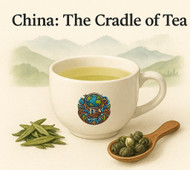
China: where tea began
Every true tea, from green to black, comes from one plant, Camellia sinensis, and that plant's story starts in China. Chinese legend credits the emperor Shennong with discovering tea almost 5,000 years ago, and tea has been part of Chinese life for well over a thousand years. China gave the world green tea classics like Long Jing (Dragon Well), jasmine-scented teas and the art of oolong.
Taste it at home: our Peach Oolong and Blackberry Sage Oolong show off oolong's smooth, rounded character.
Japan: the way of tea
Buddhist monks brought tea from China to Japan, and over the centuries Japan turned it into a ceremony of focus and hospitality. At its heart is matcha: shade-grown green tea leaves stone-ground into a fine powder and whisked with hot water, so you drink the whole leaf.
Taste it at home: our ceremonial matcha.
India: tea gardens and spiced chai
India grows tea in regions known around the world: malty, bold Assam and delicate, floral Darjeeling from the Himalayan foothills. Tea plantations spread across India in the 1800s, and Indian families made tea their own with masala chai: black tea simmered with milk, sugar and warm spices such as cardamom, cinnamon, ginger and cloves.
Taste it at home: our Masala Chai, India Simply Green Tea and Madagascar Vanilla & Cardamom. New to chai? Read how to make authentic masala chai.
Britain and Ireland: the daily cup
Tea reached Britain in the 1600s and became a national ritual. Afternoon tea is often traced to Anna, Duchess of Bedford, in the 1840s, and strong breakfast blends, usually taken with milk, became the start of the day in Britain and Ireland. Earl Grey, black tea scented with bergamot citrus, is one of the most loved flavored teas in the world.
Taste it at home: our Irish Breakfast and Earl Grey Bravo.
Morocco and the Middle East: tea as welcome
In Morocco, serving mint tea is a sign of hospitality: green tea brewed with fresh mint and sugar, poured from high above the glass to create a light foam. Across the Middle East and Turkey, small glasses of tea are offered to guests throughout the day, often with fruit and spice notes.
Taste it at home: our Morocco Simply Tea Peppermint, Middle East Apricot Black Tea and Turkish Apricot & Peach Green Tea.
Egypt: the home of chamomile
Chamomile has been brewed along the Nile since ancient times, and Egypt is still one of the world's best-known sources of chamomile flowers. It is not a true tea, but an herbal infusion, gentle, honey-like and naturally caffeine-free.
Taste it at home: our Egypt Simply Chamomile, and see how long to steep chamomile tea.
South Africa: rooibos and honeybush
Rooibos, or "red bush," grows only in a small region of South Africa's Western Cape, around the Cederberg mountains. It comes from a different plant, Aspalathus linearis, so it is naturally caffeine-free. Green rooibos is less oxidized and tastes lighter and more herbal. Its neighbor, honeybush, has a naturally sweet, honey-like flavor.
Taste it at home: our Green Rooibos Bonita and Honeybush Banana Nut.
South America: yerba mate
In Argentina, Uruguay, Paraguay and southern Brazil, people share mate, an infusion of the leaves of Ilex paraguariensis, a holly relative. It is traditionally sipped from a gourd through a metal straw called a bombilla and passed around a circle of friends. Mate contains caffeine and has an earthy, grassy taste.
Taste it at home: our Samurai Mate.
So what really makes a tea "fine"?
- Origin: climate, soil and altitude shape flavor, just like with wine or coffee.
- Leaf quality: whole or large leaves and buds brew a richer, smoother cup than dust.
- Craft: how the leaf is withered, rolled, oxidized and dried decides whether it becomes green, oolong or black tea.
- Freshness and storage: even great tea fades if it is kept in light, heat or air. See our tea storage guide.
- How you brew it: water temperature and steeping time matter. Our tea temperature guide makes it easy.
The best tea in the world is the one that fits your moment: a bold breakfast cup, a calm evening chamomile or a glass of mint tea shared with friends.
Explore teas from around the world
Frequently asked questions
Do all teas come from the same plant?
All true teas (white, green, oolong, black and pu-erh) come from Camellia sinensis. The difference is in how the leaves are processed. Herbal infusions like chamomile, rooibos and mate come from other plants.
Which teas are naturally caffeine-free?
Chamomile, rooibos, honeybush and peppermint are naturally caffeine-free. Yerba mate and all true teas contain caffeine.
Where is tea originally from?
Tea originated in China, then spread to Japan, and much later to India, Europe, the Middle East and the rest of the world.
Sources
- Encyclopaedia Britannica – Tea
- Encyclopaedia Britannica – Rooibos
- Encyclopaedia Britannica – Mate
- Britannica – Why is tea such a popular drink in Britain?