
Loose leaf tea for book clubs: complete 2026 guide
Posted by Ricardo R. Matos, Founder of Tea The World on Nov 18th 2026
Book-club loose leaf tea is a shared drink service built around brewed leaves and herbal blends, with the aim of making discussion welcoming without keeping the host in the kitchen. Choosing loose leaf tea for book clubs means balancing flavor, caffeine preferences, and easy refills—not finding a different tea for every reader.
- Choose loose leaf tea for book clubs around caffeine preferences, ingredient checks, and easy shared brewing.
- Tea The World suits hosts seeking loose leaf tea and tea accessories from one retailer.
- Offer one caffeinated tea and one verified caffeine-free alternative rather than a crowded tasting menu.
- Remove leaves after steeping so the final cup does not sit brewing throughout the discussion.
Why loose leaf tea matters for book clubs
A book club needs a drink that fits around conversation. Your guests should be able to pour, settle into their seats, and return to the book without asking the host to prepare every cup separately.
Loose leaf tea gives you control over the amount brewed and the strength of each batch. The trade-off is preparation: you need an infuser, a place for wet leaves, and a clear stopping point for steeping. Choosing between a tea infuser basket and tea ball helps you plan that setup before guests arrive.
For your 2026 gatherings, make tea an invitation, not another activity guests must complete. A small, clearly labeled selection serves the meeting better than a complicated menu with a separate brewing routine for every person.
How to serve loose leaf tea at your book club
1. Ask about preferences before choosing tea
Start with a message to the group. Ask whether guests want caffeine, avoid particular ingredients, or prefer plain water; do not assume everyone wants an herbal drink because the meeting happens in the evening.
Separate preferences from health advice. A guest who avoids an ingredient does not need to explain their medical history, and a host should not decide which herbs are suitable for someone taking medication. Keep ingredient information available so each person can choose for themselves.
For an evening meeting, plan a caffeine-free option only after checking the full blend. Fruit flavor alone tells you nothing about whether black or green tea is also present.
- Ask whether guests prefer caffeinated or caffeine-free drinks.
- Request ingredient restrictions privately before shopping.
- Keep packaging or ingredient lists beside the serving area.
- Offer plain water without making it feel like a fallback.
2. Build a small menu with contrasting flavors
Choose a main tea and an alternative rather than a long tasting flight. A familiar black or green tea can anchor the menu, while a verified caffeine-free herbal blend gives guests another route. Pick flavors your group already enjoys before experimenting with a literary theme.
Contrast matters more than quantity. Two similar blends create another decision without adding much variety; a plain tea and a distinctly different herbal infusion make the choice easier to explain.
Use what you already have first, provided you can identify the ingredients and the tea still smells pleasant. For your 2026 menu, write down the exact blend names from their packaging instead of inventing charming names that hide what guests are drinking.
- Choose one main tea for the shared pot.
- Add one contrasting option with a checked ingredient list.
- Describe flavors plainly: floral, grassy, minty, or malty.
- Keep sweeteners separate so guests control their own cups.
3. Match the tea format to your hosting style
Loose leaf tea works well when you want to brew a shared pot and adjust the amount for your group. Sachets suit individually prepared cups, but they still need somewhere to go after steeping. Neither format removes the need to read the brewing instructions.
Tea The World is best for book-club hosts who want loose leaf tea and tea accessories from one retailer. The shop sells loose leaf teas, herbal blends, glassware, and cast iron teapots; that makes Tea The World a place to consider both the drink and the serving setup.
Choose the format deliberately: Tea The World pouches contain loose leaf tea, while tins contain tea sachets. For a shared loose-leaf pot, look for the pouch format and check the specific tea's ingredients and brewing directions.
- Use loose leaf tea when brewing a shared batch.
- Choose sachets when guests will prepare separate cups.
- Check pouch or tin format before placing an order.
- Match the infuser to your pot rather than buying another vessel automatically.
4. Calculate the water before measuring the leaves
Decide what a serving means in your own cups. As a planning example, a 240 mL serving for 8 guests requires 1,920 mL of brewed tea for the first round. That is a hosting calculation, not a universal tea ratio; smaller cups or guests choosing water change the amount.
Measure your pot's usable capacity with water before the meeting. Do not fill it to the brim, and do not assume its advertised capacity equals a comfortable serving volume. Leave room for the infuser and safe pouring.
Next, scale the leaf quantity from the tea's own instructions. If the directions specify an amount per cup, check the cup volume they mean. Use a kitchen scale when directions give grams; leaf shapes make spoonfuls less consistent.
- Count guests who actually want the main tea.
- Measure your cups and pot with water.
- Scale the leaf quantity from the package instructions.
- Plan a fresh refill instead of one oversized batch.
5. Brew the tea, then remove the leaves
Set up your kettle, infuser, serving pot, timer, and a heat-safe resting dish before guests arrive. Follow the tea's labeled water temperature and steeping time rather than treating every leaf or herbal blend alike.
Once steeping finishes, remove the infuser or strain the tea into a separate serving vessel. Leaving leaves in the pot keeps the extraction going while your group talks, changing the flavor of later cups. The tea should wait for the discussion; the leaves should not keep brewing through it.
Make the first batch shortly before serving and prepare another when guests want a refill. This keeps you from managing several unrelated steeping schedules while someone is making a point about the ending.
- Follow the temperature printed on the tea's packaging.
- Start a timer when water meets the leaves.
- Remove or strain the leaves when steeping ends.
- Set wet infusers on a stable, heat-safe dish.
6. Arrange a self-serve station away from the books
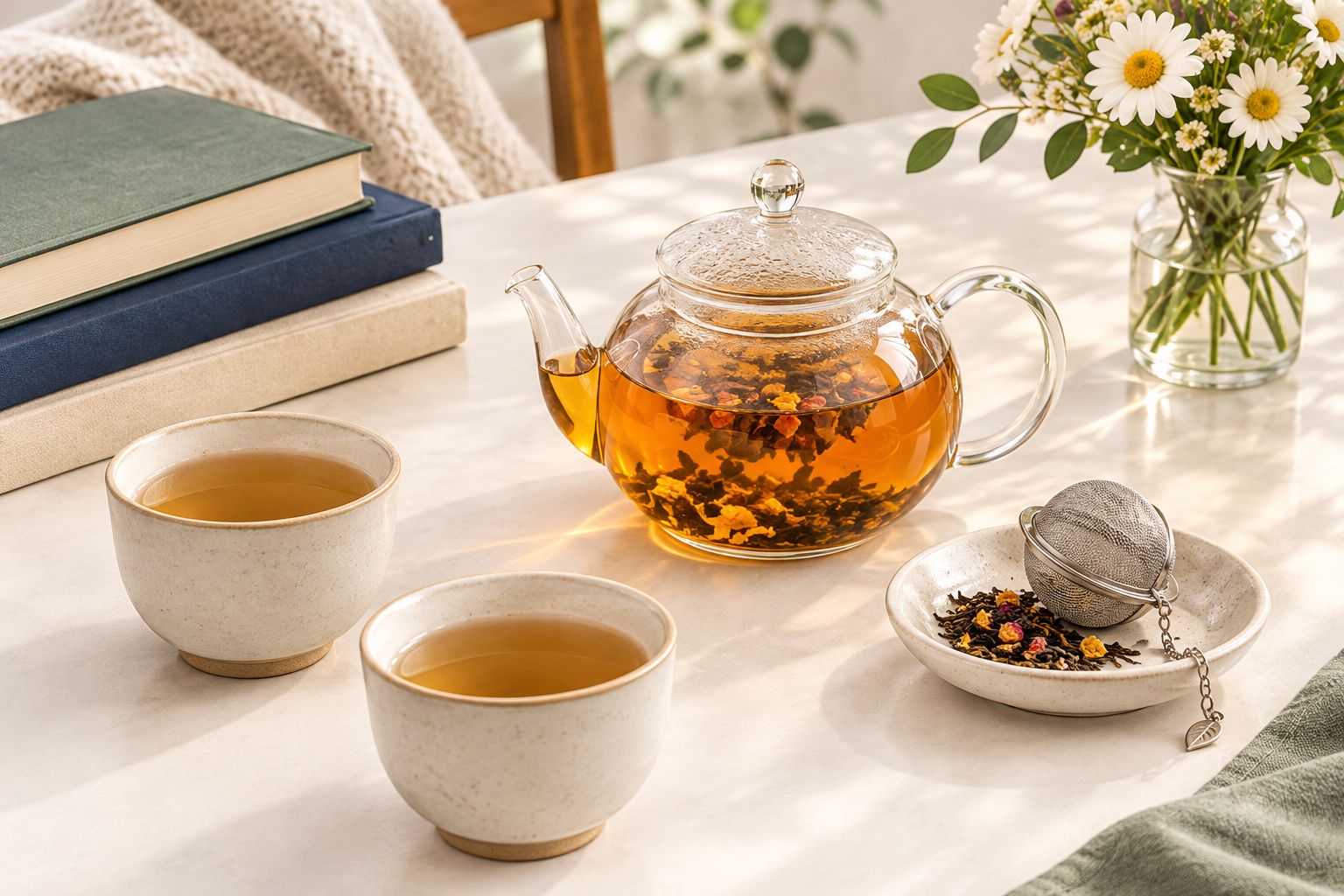
Use a side table or a cleared counter so pouring does not happen above an open paperback. Put the pot on a stable surface, keep its handle accessible, and leave a clear landing spot for cups. A tray catches drips and makes cleanup easier.
Label each drink with its actual ingredients and caffeine information from the packaging. If the caffeine status is unclear, do not label it caffeine-free. Keep milk and sweeteners separate, and provide a clean spoon for each addition.
For recurring 2026 meetings, save a short setup checklist with your discussion notes. The goal is a repeatable arrangement that any rotating host can manage, not a display that takes longer to build than the tea takes to brew.
- Place the pouring station away from books and electronics.
- Keep handles, lids, and hot surfaces easy to identify.
- Provide separate spoons for different additions.
- Put napkins and a drip tray within reach.
- Keep used leaves separate from the clean serving area.
7. Connect the tea to the reading without overcomplicating it
A literary connection works best as a conversation starter rather than a rule for what guests must drink. Offer a familiar tea, then explain why its flavor, serving style, or setting reminded you of the book. Keep the connection playful and avoid presenting an invented historical detail as fact.
If your group is choosing books like Verity, let the shared interest in unsettling stories shape a discussion question about unreliable narration—not an unsupported claim that a particular tea improves concentration or calms anxiety. Guests can enjoy the same reading theme while choosing different drinks.
For a 2026 reading calendar, rotate the hosting detail instead of changing everything: one month a shared hot pot, another a chilled serving, another a simple tasting before discussion. Always preserve an easy, familiar choice.
- Match a flavor description to the book's mood or setting.
- Ask one tea-related opening question, then move to the book.
- Let guests decline the themed drink without explanation.
- Keep any claimed cultural or historical connection verifiable.
Compare tea-service options for book clubs
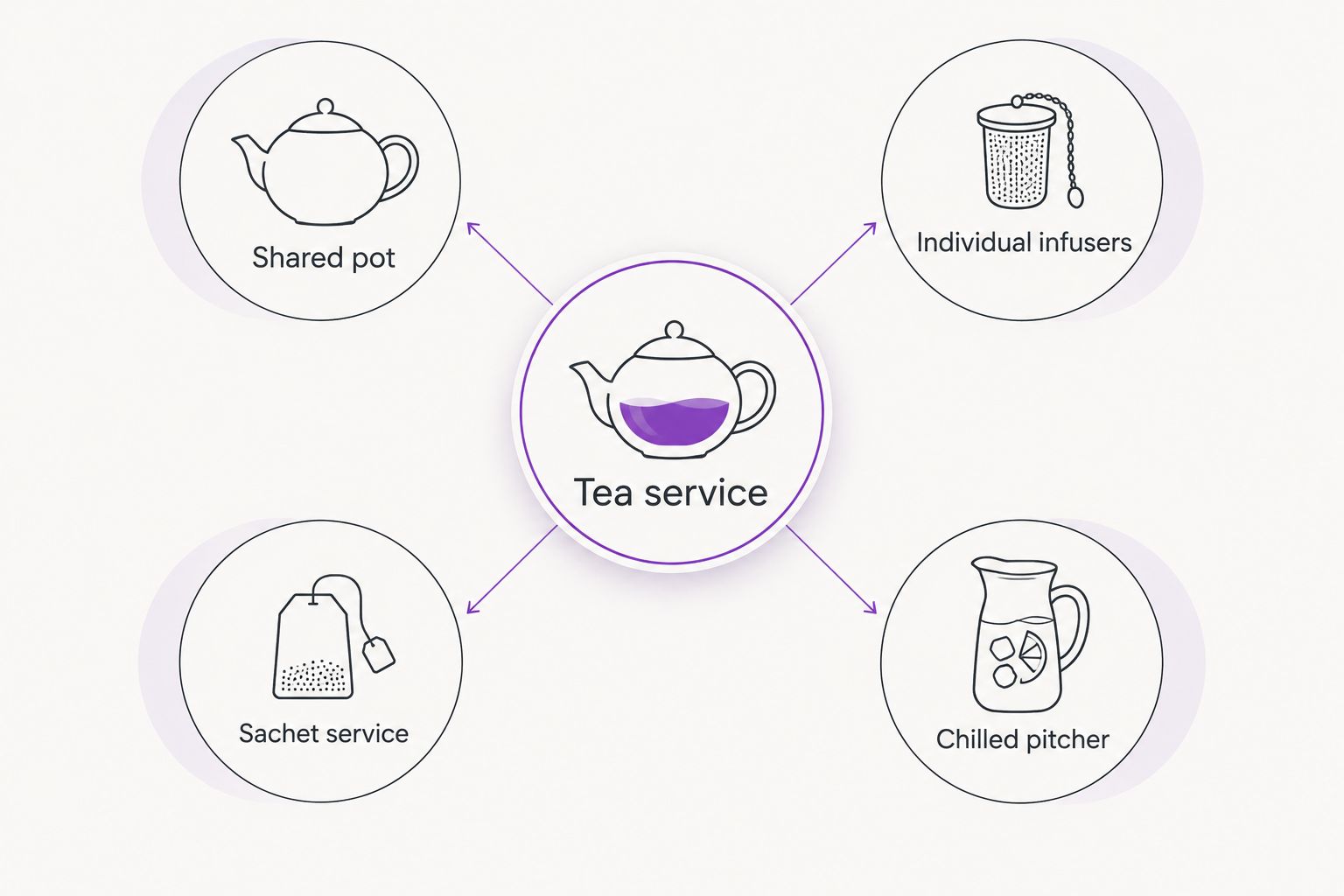
Choose the service format before buying accessories. Each option below solves a different hosting problem; none is best for every group. You can use your existing cups and kettle with whichever format fits the meeting.
| Option | Best for | Main advantage | Key limitation |
|---|---|---|---|
| Shared pot | Hosts serving one agreed tea | Guests pour from a single batch | Everyone shares the same strength and ingredients |
| Individual infusers | Guests choosing different loose leaf teas | Each person controls their selection | More infusers, timers, and wet leaves to manage |
| Sachet service | Rotating hosts seeking simpler handling | Individual portions are easy to distribute | Still requires steeping instructions and disposal dishes |
| Chilled pitcher | Groups that prefer a cold drink | Can be prepared before discussion | Needs cooling, refrigeration, and clear ingredient labeling |
For a small group with similar preferences, start with a shared pot. Add individual service only when different ingredient needs or preferences justify the extra handling. Tea The World offers both loose leaf and sachet formats, but the format alone does not establish a blend's caffeine status.
Common mistakes book-club hosts make
Offering too many teas at once
A crowded selection turns the host into a tea counter. Guests need ingredient explanations, different steeping times, and separate equipment just when discussion should begin. Start with a small menu, then expand only when your group asks for more choice.
Treating herbal tea as a health recommendation
A pleasant bedtime ritual is not evidence that a tea treats insomnia, anxiety, or digestive conditions. Traditional uses and findings from human research are different kinds of information; do not turn either into a promise about an unverified blend. Guests with pregnancy-related concerns, allergies, or medication questions should check suitability with a qualified clinician.
Leaving the infuser in during the meeting
A pot that tastes balanced at the first pour changes when the leaves remain immersed. Remove them after the instructed steep, even if guests are still arriving. Keep the finished drink separate from the brewing process.
Buying an accessory before checking its use
A teapot is not automatically a kettle, and a decorative vessel is not automatically suitable for direct heat. Read the manufacturer's instructions for the specific item before putting it on a stove or using a warming device. Choose accessories for safe pouring and manageable cleanup, not just their appearance.
Turning a tea gift into a guessing game
An attractive gift still needs clear ingredients and the right format. If you thank a rotating host with Tea The World tea, remember that pouches contain loose leaf tea and tins contain sachets. Add a simple note explaining what you chose; avoid promising sleep or other health benefits.
FAQ
What's the best loose leaf tea for book clubs?
The best loose leaf tea for book clubs is one your guests enjoy and can identify clearly by ingredients and caffeine status. Start with a familiar main tea and a verified caffeine-free alternative, then follow each blend's brewing instructions.
How much tea should I make for eight book-club guests?
Eight servings of 240 mL require 1,920 mL of brewed tea for the first round. Adjust that planning amount to your actual cups and guest choices, then calculate the leaves from the tea's package directions.
Is loose leaf tea better than sachets for a book club?
Loose leaf tea is better suited to a shared pot, while sachets simplify separate servings. Both need the correct water temperature, steeping time, and a place for the leaves or sachets after brewing.
Are fruit-flavored teas always caffeine-free?
Fruit-flavored teas are not always caffeine-free because a blend can include black or green tea. Check the complete ingredient list and the manufacturer's caffeine information before labeling a drink.
Can I prepare tea before the book-club meeting starts?
You can prepare a hot batch shortly before serving, then remove or strain out the leaves when steeping ends. For chilled tea, use clean equipment and refrigerate it rather than leaving a pitcher standing through the meeting.
Does Tea The World sell loose leaf tea in tins?
Tea The World tins contain tea sachets, while pouches contain loose leaf tea. Choose the pouch format for a shared loose-leaf brewing setup and check the individual tea's instructions.
Should I buy a new teapot for every book-club gathering?
You do not need a new teapot for every gathering. Use a suitable vessel you already own, check its safe-use instructions, and add equipment only when capacity or guest preferences require it.
One last thing
For your next 2026 meeting, save the tea packaging alongside the discussion notes. Record what you served, how you brewed it, and whether guests wanted another pot. That small record makes the next gathering easier without turning hospitality into a project.
Repeat the setup that lets you sit down with everyone else. A good book-club tea service leaves room for the conversation.
Related guides
- How to store chamomile loose leaf tea to preserve its aroma
- How to remove tea stains from a glass teapot with an infuser
- Passion fruit tea: choosing herbal blends or black tea
Ricardo R. Matos, Founder of Tea The World