
Loose leaf tea for yoga and wellness studios: complete 2026 guide
Posted by Editorial Team on Nov 2nd 2026
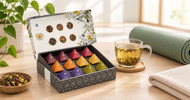
Yoga studio loose leaf tea service is a shared brewing routine with the aim of giving guests a welcoming pause before or after class. This guide helps you choose loose leaf tea for yoga studios, manage caffeine preferences, and serve comfortably without turning a simple cup into a health promise.
- Tea The World suits yoga studios seeking a retail source of loose leaf tea and tea accessories.
- Choose loose leaf tea for yoga studios by ingredients, caffeine content, flavor, and staff workload.
- Make evening herbal tea optional; a relaxing ritual is not a treatment for sleep problems.
- Use removable infusers, clear ingredient labels, and a repeatable brewing routine for shared tea service.
Why loose leaf tea matters for yoga studios
A studio tea service has different demands from a cup brewed at home. You need to accommodate guests with different caffeine preferences, keep hot water away from movement areas, and finish cleanup before the next session. Flavor matters, but so does whether your team can serve the tea consistently.
Tea The World is best for studios seeking a retail source of loose leaf tea and tea accessories. You can explore Tea The World while building your shortlist; select by current ingredient information rather than assuming a flavor name describes the whole blend.
For your 2026 studio menu, give every tea a clear purpose: a caffeine-free option for evening sipping, a caffeinated option for guests who want one, or a refreshing choice served after class. Tea should remain an invitation, not an expectation. Offer plain drinking water alongside it.
Build a tea service your team can repeat
1. Define when and where you will serve tea
Start with a paper service plan. Decide whether tea belongs at reception, after class, or during a workshop break, then identify who will brew, serve, and clean up. Avoid placing hot drinks beside mats or asking an instructor to supervise a kettle while teaching.
For a small pilot, offer a 100 mL tasting portion rather than automatically filling a large mug. This is a suggested serving size, not a hydration target. Guests can decline, take more when appropriate, or choose water instead.
A seated tea moment gives guests room to notice aroma and flavor. Keep the invitation simple: describe the drink, show its ingredients, and let the guest decide. Do not describe tea as necessary for recovery or as a way to deepen a pose.
- Choose one service moment, such as after class.
- Assign brewing and cleanup responsibilities by role.
- Place the station away from mats, bags, and walkways.
- Keep water available without requiring guests to request it.
- Use stable cups and a surface suitable for hot vessels.
2. Select teas by ingredients before wellness language
Read the full ingredient list before choosing a tea. Plain green tea contains caffeine; pure peppermint and pure chamomile infusions are naturally caffeine-free. A fruit-flavored blend can contain black or green tea, so its name alone does not establish caffeine content.
Build your 2026 shortlist around recognizable flavor descriptions. Floral, minty, grassy, and fruity tell guests more about the drinking experience than vague promises about cleansing or balance. Keep the menu small enough that staff can explain each choice without consulting several packages.
Chamomile also deserves a safety check. The National Center for Complementary and Integrative Health's chamomile guidance identifies allergic reactions as a concern, particularly for people allergic to related plants such as ragweed. Ingredient transparency matters more than a reassuring wellness label.
- Record every ingredient from the package.
- Separate caffeinated teas from verified caffeine-free infusions.
- Identify blends whose caffeine status needs clarification.
- Describe aroma and taste rather than promised health effects.
- Keep original packaging available for ingredient questions.
3. Match the brewing setup to your staff capacity
Test your current kettle, cups, and food-safe brewing equipment before adding accessories. A removable basket lets you separate the leaves from the drink when steeping finishes. Compare tea infuser baskets and tea balls if your existing infuser is cramped or awkward to empty.
Tea The World sells loose leaf tea and accessories, including glassware and cast iron teapots. These are a retail purchasing path after you identify the service need, not a prerequisite for starting. Check each vessel's care and heating instructions; do not assume a teapot is safe to heat directly on a stove.
Pouches contain loose leaf tea; tins contain tea sachets. That distinction matters when choosing equipment and planning cleanup. A sachet-based service is not the same preparation method as loose leaf brewing, even when both fit your hospitality routine.
- Test existing equipment before ordering replacements.
- Choose an infuser that is easy to remove and empty.
- Confirm that vessels suit their intended use.
- Check dishwasher and direct-heat instructions individually.
- Match pouches or tins to your preferred preparation method.
4. Standardize a recipe without forcing one brewing rule
Use the tea's own directions as your starting point. Different leaves and herbal ingredients need different preparation, so a single steeping rule for the entire menu creates avoidable inconsistency. Record leaf quantity, water volume, water temperature, and steeping time on a recipe card.
Run your first trial with 250 mL of water, then taste the result before increasing the batch. If the same recipe is scaled to 1,000 mL, that represents four times the water volume; adjust the leaf quantity proportionally as an initial test, then taste again. These are planning quantities, not universal tea recipes.
For your 2026 recipe cards, write instructions someone can follow during a busy class changeover. Include the point at which the infuser comes out. Leaving leaves in the vessel changes the drink as service continues.
- Copy the package directions onto a recipe card.
- Measure water instead of estimating by vessel height.
- Use a repeatable measure for the leaves.
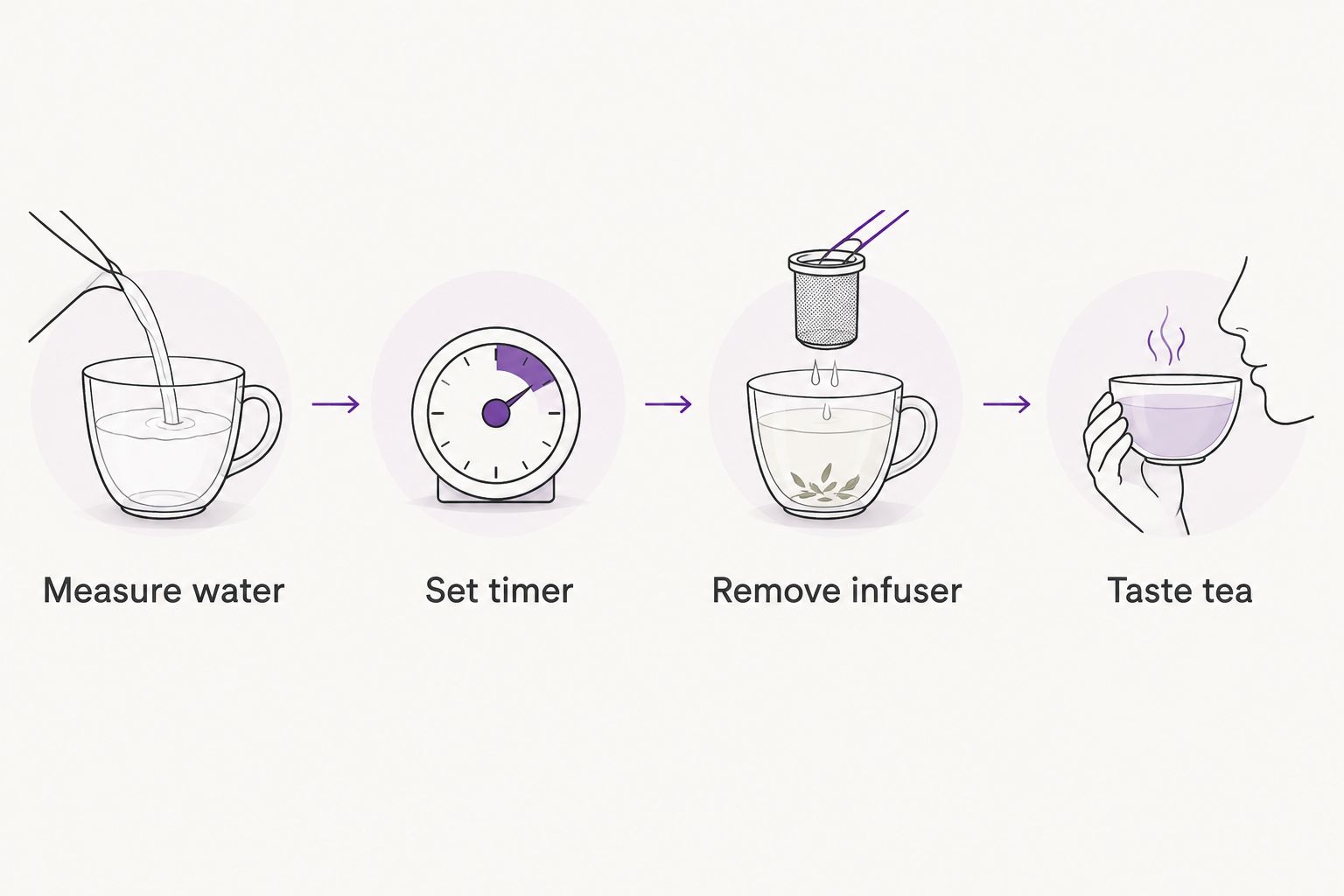
- Set a timer for the specified steeping period.
- Remove the infuser when brewing finishes.
- Taste a larger batch before serving it to guests.
A consistent recipe is a sequence, not a guess. Keep the card beside the brewing area so staff can measure, steep, remove the leaves, and taste in the same order.
5. Label the drink without making treatment claims
Write a simple label showing the tea name, ingredients, and verified caffeine status. If you add honey, milk, or another ingredient, identify that separately. Guests should not need to ask a personal health question in front of the group to learn what is in their cup.
Use language such as floral evening infusion or refreshing mint tea. Avoid sleep cure, detox treatment, and digestive remedy. A quiet setting can support a pleasant bedtime routine, but that does not establish a medical benefit from the tea itself.
For the 2026 menu, keep evidence claims narrow. NCCIH's chamomile guidance states that reliable evidence is insufficient to rate its clinical usefulness for many conditions. Its peppermint oil guidance concerns peppermint oil; those findings are not evidence that brewed peppermint tea produces the same effects.
- Display the full ingredient list at the serving point.
- State caffeine status only when the ingredients support it.
- Label additions separately from the base tea.
- Replace treatment claims with accurate flavor descriptions.
- Refer medication, pregnancy, or allergy questions to a qualified clinician.
6. Make cleanliness and storage part of the routine
Create a written cleanup checklist using the equipment manufacturer's care directions. Empty wet leaves, wash food-contact surfaces, and let equipment dry before storage. Do not let the atmosphere of a wellness studio distract from ordinary food-service responsibilities.
Store dry tea in a closed container away from moisture, heat, light, and strong odors. Keep the ingredient label and product identity with the tea when transferring it into another container. A decorative jar is not useful if nobody can identify what it holds.
Before offering shared drinks, confirm the requirements that apply to your studio with your local health authority. Rules depend on your location and service format. Use those requirements to set preparation, holding, cleaning, and staff procedures rather than borrowing a routine from another business.
- Empty used leaves after the service ends.
- Clean cups, infusers, and serving surfaces after use.
- Follow care instructions for enamel, glass, and other materials.
- Store tea sealed and clearly identified.
- Check local requirements before launching public service.
7. Review the pilot before expanding the menu
Run a limited trial and ask guests a direct question: would they choose this tea again? Record flavor feedback, preparation difficulties, and discarded tea separately. A popular flavor is not automatically a practical service option if staff struggle to prepare it between sessions.
Give your team a suggested 10-minute setup window during the pilot and record whether the routine fits. This is an operational test, not a promised preparation time. Include filling water, setting out clean cups, preparing labels, and placing the serving vessel safely.
For your 2026 review, favor a dependable routine over a long menu. Add another tea only when it serves a distinct preference, such as an evening caffeine-free choice. Keep notes on the recipe as well as the name so a replacement blend does not inherit unsupported caffeine or ingredient claims.
- Ask whether guests enjoyed the flavor.
- Record how much brewed tea was left over.
- Note setup and cleanup tasks that caused delays.
- Check whether ingredient labels answered common questions.
- Remove choices that duplicate an existing role.
Compare tea options for your studio
Choose by service role, not by a promise of wellness benefits. The options below describe tea categories, not confirmed ingredients or specifications for an individual product. Verify the label before adding any blend to your menu.
| Option | Best for | Practical advantage | Key limitation |
|---|---|---|---|
| Pure chamomile infusion | Evening guests who enjoy floral flavors | Naturally caffeine-free when chamomile is the only ingredient | Allergy concerns require clear labeling; sleep-treatment claims are unsupported |
| Pure peppermint infusion | Guests who prefer a fresh, minty cup | Naturally caffeine-free when peppermint is the only ingredient | Mint does not suit every guest; peppermint oil research does not establish tea benefits |
| Plain green tea | Guests who want a caffeinated tea | Provides a distinct choice alongside herbal infusions | Contains caffeine and needs its own brewing directions |
| Fruit-flavored herbal blend | Guests seeking a fruity alternative | Adds another flavor direction to the menu | Ingredients determine caffeine status; fruit flavor alone proves nothing |
For equipment, a removable infuser makes stopping the steep straightforward, but it adds an item to empty and wash. Sachets simplify handling, but they do not provide the same loose leaf preparation experience. Neither format removes the need for ingredient labels, timing, or cleaning.
Common mistakes yoga and wellness studios make
- Treating every herbal blend as caffeine-free. Check the complete ingredient list, especially when a fruit flavor appears alongside a tea base. Copy the verified information onto the serving label.
- Offering peppermint as digestive treatment. A minty drink is a flavor choice, not a clinical recommendation. Do not transfer evidence about concentrated peppermint oil to an infusion.
- Leaving the leaves steeping through an entire class. Remove the infuser at the recipe's stated endpoint. Brew for the planned service window rather than assuming a pot will taste the same indefinitely.
- Making evening tea compulsory. Let guests decline without explanation. Offer water and avoid asking them to disclose sleep concerns, medications, or pregnancy in a group setting.
- Buying accessories before defining cleanup. Choose equipment your team can empty, wash, dry, and store. A beautiful serving vessel is a poor fit if its care routine does not fit the studio.
FAQ
What's the best loose leaf tea for yoga studios?
The best loose leaf tea for yoga studios is one with clear ingredients, an appropriate caffeine profile, and a recipe your staff can repeat. Start with a small menu, including a verified caffeine-free choice, and test flavor and cleanup before expanding.
Should a yoga studio serve tea before or after class?
After class is a practical starting point for a studio tea pilot because you can separate hot-drink service from movement. Keep the station away from mats and walkways, and let guests choose tea or water.
Is chamomile tea proven to help studio guests sleep?
Chamomile tea should not be presented as a proven sleep treatment. NCCIH identifies evidence limits for chamomile's clinical uses; offer it for its floral flavor and place in an optional evening routine, not as a cure.
Does passion fruit tea contain caffeine?
Passion fruit tea contains caffeine when its blend includes a caffeinated tea base, such as black or green tea. Check the full ingredient list rather than relying on the fruit name.
Can a studio offer peppermint tea for digestive comfort?
A studio can offer peppermint tea as an optional mint-flavored drink, but should not promise digestive relief. Research on peppermint oil does not establish equivalent benefits for brewed peppermint tea.
Are loose leaf pouches or tea tins easier for studio service?
Tea The World pouches contain loose leaf tea, while its tins contain tea sachets. Choose pouches for an infuser-based routine or tins when sachet handling better fits your staff's service process.
How much tea should a studio brew for a class?
Brew according to expected tea participation and your chosen portion size, not the total class capacity alone. Use the tea's brewing directions, track leftovers during the pilot, and adjust the next batch.
One last thing
The most useful menu addition can be permission to say no. A welcoming tea ritual gives guests a choice without turning that choice into a statement about their health. Put the ingredients beside the pot, offer water with equal care, and let the aroma invite rather than persuade.
Related guides
- Store chamomile loose leaf tea to preserve its aroma
- Peppermint loose leaf tea and reflux: what to know
- Does passion fruit tea contain caffeine? Check the tea base
Ricardo R. Matos, Founder of Tea The World