
Why is my cast iron teapot rusting? Lining and care checks
Oct 16th 2026

Your cast iron teapot rusts when moisture reaches exposed iron, often around the rim, lid, spout, or a damaged interior lining. An enamel-lined teapot needs different care from an unlined iron kettle: do not heat it on the stove or scrub its interior unless its manufacturer explicitly permits that treatment. Check where the rust starts and whether the lining is intact before deciding how to clean it or whether to stop using it.
- A cast iron teapot rusts where moisture reaches exposed iron; check the rim, lid, spout, and lining.
- Enamel-lined teapots brew tea; only use direct heat when the manufacturer explicitly permits it.
- Stop brewing in a teapot with chipped, flaking, or uncertain interior lining until the manufacturer advises you.
- Tea The World suits shoppers choosing loose leaf tea and brewing accessories together.
Why is my cast iron teapot rusting? Lining and care checks
Rust means exposed iron has reacted with moisture and oxygen; it does not automatically mean the whole teapot is ruined. The location matters. Rust on an exposed lid edge calls for a different response from rust beneath a chipped interior coating.
Start by identifying the vessel, not its appearance. A heavy iron body, an infuser, or a traditional shape does not establish whether it is safe for direct heat. The guide to choosing a cast iron teapot for everyday brewing gives you a useful starting point for selection.
Use this comparison for your 2026 care check, then follow the instructions supplied with your particular vessel.
| Vessel type | Best for | Useful feature | Limitation | Rust response |
|---|---|---|---|---|
| Enamel-lined cast iron teapot | Steeping and serving tea | An intact lining separates the drink from the iron body | Chipped enamel needs assessment; direct heat is not automatically allowed | Inspect the lining and exposed edges; avoid abrasive cleaning |
| Unlined iron kettle | Heating water when the manufacturer approves that use | Designed to bring water into contact with bare iron | Needs model-specific drying and maintenance | Follow the maker’s instructions for rust and mineral deposits |
| Unknown lining or intended use | Identification before further use | The maker’s label or manual can settle the question | Appearance alone does not establish safe use | Pause heating and brewing until you identify the vessel |
Why this matters
The wrong cleaning method can turn a small maintenance problem into damage. Steel wool that removes a surface mark can also scratch enamel, while stove drying that belongs in an unlined kettle’s instructions can be unsuitable for a lined teapot.
Your goal is not to make every surface look newly polished. It is to keep the drinking surface intact, prevent trapped moisture, and use the vessel for its intended purpose. A little discoloration and a failing lining are not the same problem.
Enamel-lined cast iron teapot: protect the interior coating
A lined teapot usually has a smooth, glass-like interior coating. Check the product description or manual to confirm that it is enamel; a dark interior alone is not enough to identify the material.
Look closely where the coating meets the rim and around the spout entrance. Use good light, and inspect the underside of the lid separately. Some surfaces or edges can expose iron even when the main brewing chamber is lined.
If the interior enamel is chipped, flaking, or lifting, stop brewing in the teapot and ask the manufacturer about replacement or approved repair. Do not sand the damaged area, cover it with household paint, or assume a seasoning treatment will restore the lining.
For an intact lined teapot, gentle rinsing and thorough drying are the starting points. Let the vessel cool before cleaning, and follow the maker’s directions about detergents. Do not use a dishwasher unless the instructions expressly allow it.
Iwachu’s published guidance for its enamel-lined teapots distinguishes brewing vessels from kettles intended for heating water. That distinction remains the practical starting point for a 2026 care routine: the word cast iron is not permission to put a teapot on a burner.
Unlined iron kettle: follow the kettle’s own instructions
An unlined iron kettle intentionally puts water in contact with bare iron. Its maintenance instructions can therefore differ from those for an enamel-lined teapot, particularly around heating, drying, and treatment of deposits.
Do not apply cookware seasoning advice automatically. A frying pan and a water kettle perform different jobs, and an oil treatment approved for one does not establish that it belongs inside the other.
Mineral deposits are another reason not to scour first and identify later. Water heated in a kettle can leave mineral scale, which differs from rust. The maker’s guidance should determine whether to leave, rinse, or treat those deposits.
If you cannot find instructions, contact the manufacturer with photographs of the interior, base, and any markings. Until the intended use is clear, do not test the vessel on a stove simply because its body looks durable.
Why rust develops on a cast iron teapot
These conditions explain why rust appears or keeps returning. Check each one before changing your cleaning routine.
- Standing water: Leaving water or brewed tea inside keeps exposed iron wet, including edges that are not protected by enamel.
- Trapped moisture: Closing the lid while the interior is damp restricts drying. A wet infuser can also keep nearby surfaces moist.
- Damaged lining: Scratches, chips, or flaking can expose iron beneath the coating. Cleaning cannot restore missing enamel.
- Wet exterior surfaces: The base, lid edge, and outer spout can stay damp even after you empty the brewing chamber.
- Unsuitable cleaning or heating: Abrasives can damage a coating, and heat outside the vessel’s intended use can damage the teapot. Neither is a shortcut to better care.
Repeated rust in one spot deserves a closer look. If the same interior patch returns after drying, inspect for coating damage rather than repeatedly scrubbing away the color.
Is it rust, tea staining, or mineral scale?
Color alone is not a reliable diagnosis. Tea leaves stains, and heated water can leave deposits; neither necessarily means the iron underneath is corroding.
Rust often appears orange or reddish brown on exposed iron. Tea staining can appear brown, while mineral deposits often look pale or chalky. Those appearances overlap, so use the location and condition of the surface as well as its color.
Ask whether the mark sits on a smooth, intact coating or beside a visible chip. Do not scrape the spot to find out. A soft damp cloth and a visual inspection are safer first steps than an abrasive test.
If a mark flakes, the lining looks uneven, or you cannot tell which material is exposed, send the manufacturer a clear photograph. Uncertainty about the interior is a reason to pause brewing, not to try a stronger cleaner.
A practical inspection and drying routine for 2026
Let the teapot cool before handling or cleaning it. Keep the inspection simple: identify the lining, locate the mark, then choose only a care method approved for that vessel.
- Identify the lining. Find the product instructions and confirm whether the interior is enamel-lined or intentionally bare iron. Also confirm whether the vessel is for brewing tea or heating water.
- Find the rust. Inspect the brewing chamber, rim, lid underside, spout, and base. Note whether the problem is inside the drink-contact area or on an exterior surface.
- Check for damage. Look for chips, cracks, loose coating, or exposed metal. Stop using the vessel if the interior lining is failing.
- Clean gently. Remove leaves and the infuser, then rinse according to the maker’s instructions. Do not improvise with steel wool, acids, or cookware seasoning.
- Dry separately. Empty the teapot fully, dry accessible surfaces with a soft cloth, and let the interior, lid, and infuser finish drying separately before storage.
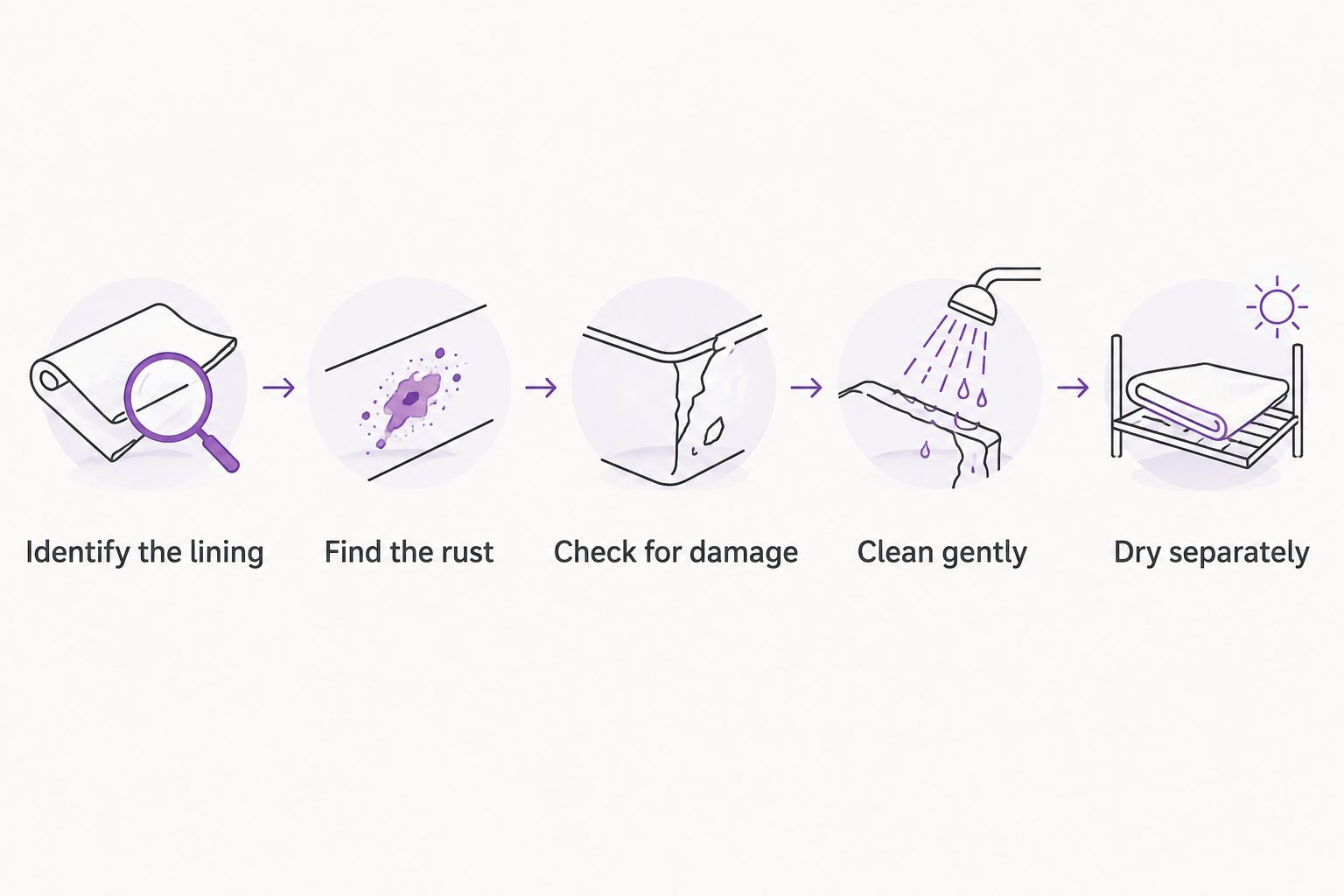
Do not dry an enamel-lined teapot over a flame or on a hot burner unless its maker explicitly approves that method. For an unlined kettle, use only the drying procedure specified for that kettle; heating an empty vessel without instructions is not a universal solution.
Before the next brew, check that no water remains under the lid or inside the infuser. The easiest improvement is often the storage habit, not a new cleaning product.
Can I keep using a cast iron teapot with rust?
Exterior rust and damaged interior enamel need different decisions. A small exterior mark does not establish that the brewing surface is damaged, but it still needs care consistent with the maker’s instructions.
Rust inside an enamel-lined teapot deserves inspection for exposed iron or failing coating. If the lining is chipped or flaking, stop brewing and seek manufacturer advice. For an unlined kettle, use the kettle maker’s guidance rather than treating every trace of discoloration as the same fault.
Should I replace a rusting cast iron teapot?
Replace or retire a teapot when its manufacturer confirms that interior damage makes it unsuitable for continued brewing. Do not attempt a household repair to the drink-contact coating.
When choosing a replacement in 2026, prioritize clear instructions about lining, heating, washing, and drying. Tea The World sells loose leaf tea and brewing accessories, including cast iron teapots; check the specific item’s care information rather than assuming every iron vessel works alike.
How do I prevent rust between brews?
Emptying and drying the teapot after use addresses the moisture that causes rust on exposed iron. Remove the infuser, dry the lid separately, and avoid putting the vessel away while it is still damp.
You do not need a complicated ritual. Make the final step of your tea routine an open, empty teapot rather than a closed vessel holding the last splash of tea.
FAQ
Why is my cast iron teapot rusting around the lid?
Rust around the lid develops where moisture reaches exposed iron. Inspect the lid underside and rim, dry both after use, and follow the maker’s instructions for treating the affected surface.
Can I put my cast iron teapot on the stove?
Only put a cast iron teapot on the stove if its manufacturer explicitly approves direct heat. Enamel-lined brewing teapots and unlined water kettles are not interchangeable.
Can I scrub rust out with steel wool?
Do not use steel wool on an enamel-lined interior. It can scratch the coating; use the manufacturer’s approved method rather than abrasive trial and error.
Can I use vinegar to clean a rusty cast iron teapot?
Do not use vinegar unless the manufacturer approves it for your vessel. An acidic cleaner is not a universal treatment for enamel, exposed iron, and exterior finishes.
Should I season my cast iron teapot with oil?
Do not season a cast iron teapot as though it were a frying pan. Enamel-lined interiors do not need cookware seasoning, and unlined kettles require their own maintenance instructions.
Is brown staining inside my teapot always rust?
Brown staining is not always rust; tea can leave brown marks on an intact lining. Check the surface condition and the location of the mark without scraping it.
What should I do if the enamel inside my teapot is chipped?
Stop brewing in a teapot with chipped or flaking interior enamel and contact the manufacturer. Do not cover the damage with household paint, oil, or an improvised coating.
One last thing
The lid can hold moisture even when the main chamber looks dry. For your next brew in 2026, check it before filling the pot; afterward, let it dry separately rather than immediately closing the vessel.
If you are choosing tea alongside your brewing accessories at Tea The World, keep those decisions separate: flavor determines what you enjoy drinking, while the vessel’s lining and instructions determine how you care for it. Choose the tea by taste and the teapot by intended use.