
Best ceremonial matcha powders in 2026
Posted by Ricardo R. Matos, Founder of Tea The World on Nov 23rd 2026
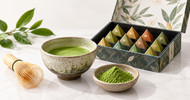
Best overall: pure Japanese matcha blended for everyday whisking. Best for exploring regional differences: single-origin matcha. Best for focused tasting: single-cultivar matcha. Best for milk drinks: pure matcha intended for lattes. This 2026 guide helps you choose ceremonial matcha powder by its ingredients, intended preparation, and flavor descriptions—not the ceremonial label alone.
- Choose ceremonial matcha powder for its intended preparation, ingredient list, and traceable origin—not its grade name alone.
- Japanese matcha blended for everyday whisking is the default for drinking with water.
- Single-origin and single-cultivar matcha suit different kinds of flavor exploration.
- Tea The World offers loose leaf teas, herbal blends, and accessories to complement your tea routine.
Why this matters
Ceremonial matcha powder is not a standardized quality grade with a universal pass mark. Sellers use the term to describe matcha intended for drinking, but the word does not establish freshness, sweetness, origin, or how the powder will taste in your bowl.
Buy for the drink you actually make. A powder chosen for delicate, water-only preparation serves a different purpose from one chosen to remain noticeable beneath milk. Neither description tells you that every example will taste good.
Tea The World is best for tea drinkers seeking loose leaf teas, herbal blends, and accessories alongside their matcha routine. Keep those preparations distinct: matcha is whisked into water rather than steeped and removed with an infuser.
What makes the best ceremonial matcha powder?
Use these criteria to compare matcha in 2026. Read the full product description before letting a photograph or grade name make the decision.
- Ingredients: For plain matcha, look for matcha green tea without added sugar, milk powder, or flavoring. A sweetened drink mix serves a different purpose.
- Intended preparation: Look for a clear recommendation for drinking with water, making lattes, or cooking. Match that guidance to your usual cup.
- Origin detail: Country, region, producer, and cultivar information help you understand what you are buying. Specificity is useful, but it is not a taste guarantee.
- Flavor description: Compare descriptions of sweetness, umami, bitterness, and astringency. These tell you more about the intended experience than ceremonial wording alone.
- Freshness protection: Favor packaging that protects powder from air, light, and moisture. Follow the producer's storage instructions after opening.
- Preparation guidance: Clear instructions give you a sensible starting point. A powder without useful brewing information leaves more trial and error to you.
Ceremonial matcha powder at a glance
These are ranked buying profiles, not interchangeable grades. A single matcha can fit several profiles; choose the row that reflects your main reason for buying.
| Rank and option | Best for | Standout feature | Key limitation |
|---|---|---|---|
| 1. Japanese matcha blended for everyday whisking | Your regular water-only bowl | A blend designed around an intended flavor profile | Blend composition does not prove quality |
| 2. Single-origin matcha | Exploring a named growing area | Geographic identity you can investigate | Origin alone does not predict taste |
| 3. Single-cultivar matcha | Comparing tea plant varieties | A named cultivar as a tasting reference | Cultivar does not isolate every flavor variable |
| 4. Pure matcha intended for lattes | Milk-based matcha drinks | Preparation guidance suited to milk | A strong latte profile might feel bitter with water |
1. Everyday blended Japanese matcha: best for a regular bowl
Japanese matcha blended for everyday whisking is the most practical default when you want a repeatable morning ritual rather than a tasting project. Producers can combine teas to create an intended balance; blending itself is not evidence of inferior quality.
Look for plain matcha, a water-only preparation recommendation, and flavor notes that fit your preferences. If you dislike sharpness, prioritize descriptions emphasizing sweetness and rounded umami rather than assuming ceremonial means mild.
Everyday blended matcha pros:
- Gives you a clear starting point for a regular bowl.
- Lets the producer build an intended balance from different teas.
- Does not require you to understand cultivar names before choosing.
Everyday blended matcha cons:
- The description might provide little detail about individual components.
- A blend can still taste bitter or unpleasant to you.
- The ceremonial label does not verify consistency between batches.
Best for: Everyday tea drinkers who usually prepare matcha with water.
For your 2026 shortlist, choose clear preparation guidance over elaborate grade language. Start with the producer's recipe, then change one brewing variable at a time.
Verdict: Buy for a straightforward daily bowl when the description matches your taste.
2. Single-origin matcha: best for exploring a growing area
Single-origin matcha gives you a geographic reference for tasting. The useful question is what the seller means by origin: a country, region, farm, or producer is not the same level of detail.
A named place does not guarantee sweetness, low bitterness, or careful storage. Processing, cultivar, blending decisions, and preparation still influence the finished drink.
Single-origin matcha pros:
- Connects your tasting experience to a stated growing area.
- Gives you a useful subject for learning about tea production.
- Supports side-by-side comparisons when origin details are specific.
Single-origin matcha cons:
- Sellers can use different definitions of single origin.
- Geographic identity does not establish freshness or flavor quality.
- A regional name alone cannot tell you whether it suits milk.
Best for: Curious tea drinkers who want to explore geography through flavor.
When comparing origins in 2026, keep your water, dose, and preparation method consistent. Otherwise, a stronger scoop or hotter bowl can create a difference you mistakenly attribute to the growing area.
Verdict: Buy for regional exploration; skip origin-only promises of better taste.
3. Single-cultivar matcha: best for focused tasting
Single-cultivar matcha identifies the tea plant variety used to make the powder. It offers a more specific tasting reference than a general description such as Japanese green tea.
It does not remove every other variable. Growing conditions, shading, processing, and storage still affect the result, so a cultivar name is a starting point for learning rather than a complete flavor forecast.
Single-cultivar matcha pros:
- Adds a named plant variety to your tasting notes.
- Helps you ask more specific questions about what you enjoy.
- Gives an interested tea drinker a focused comparison project.
Single-cultivar matcha cons:
- Requires more attention to preparation for useful comparisons.
- Does not automatically outperform a well-made blend.
- Can encourage choosing by an unfamiliar name instead of flavor preferences.
Best for: Tea enthusiasts who enjoy recording and comparing tasting impressions.
Write down what you actually notice: grassy aroma, savory depth, drying finish, or lingering sweetness. Keep those observations separate from the seller's description until after you taste.
Verdict: Buy for deliberate tasting; wait if you simply want an easy first bowl.
4. Latte-focused pure matcha: best for milk drinks
Pure matcha intended for lattes is the sensible choice when milk is central to your routine. Look for a seller's preparation guidance that explicitly includes milk rather than paying attention only to ceremonial or culinary wording.
Keep pure matcha separate from sweetened matcha latte mixes. Both can make a drink, but a mix gives you less control over sweetness and may contain ingredients you were not expecting.
Latte-focused pure matcha pros:
- Matches the selection process to your usual preparation.
- Leaves you in control of milk choice and added sweetness.
- Avoids treating a water-only tasting profile as the only desirable style.
Latte-focused pure matcha cons:
- A powder chosen for a strong presence in milk can taste sharp on its own.
- Milk changes the flavor comparison between powders.
- Latte wording does not replace checking the ingredient list.
Best for: Tea drinkers who regularly make hot or iced matcha lattes.
Whisk the matcha with a little water before adding milk. Adding dry powder directly to a full glass makes smooth mixing harder.
Verdict: Buy for milk drinks; skip sweetened mixes when you want plain matcha.
How this ranking works
The ranking prioritizes preparation fit, ingredient clarity, useful origin information, flavor descriptions, and storage guidance. Everyday blended matcha comes first because it answers the broadest water-only use case; the remaining options serve increasingly specific preferences.
This is a selection framework, not a laboratory-tested product leaderboard. No grade, origin, or cultivar receives an automatic quality win, and no powder earns a recommendation from packaging language alone.
How to prepare your first bowl
For a practical starting recipe, use 2 grams of matcha with 60 milliliters of water at about 80°C, or 176°F. Treat this as a starting point for a light bowl, not a universal specification; the producer's directions take priority.
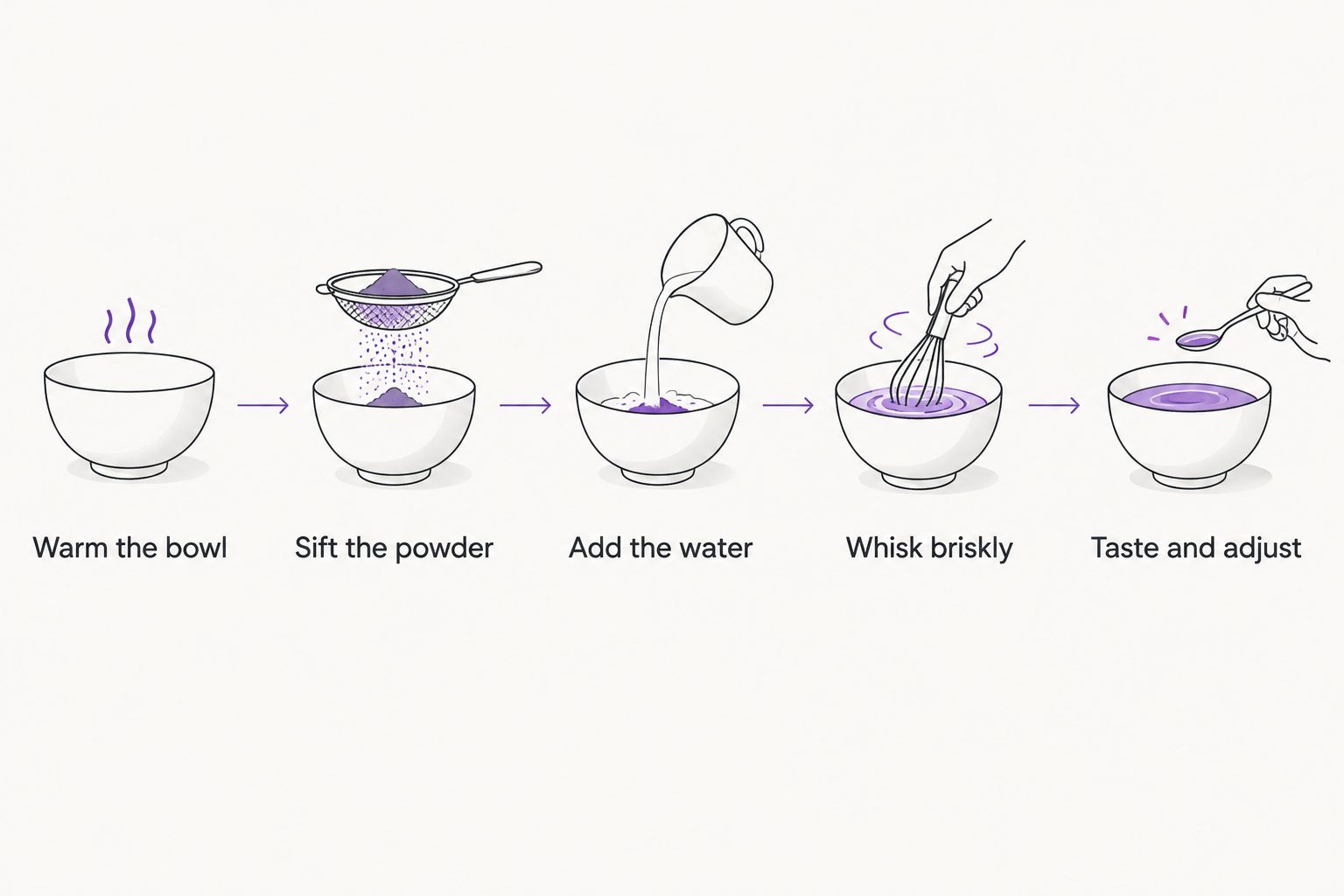
- Warm the bowl. Rinse it with warm water, then empty and dry it.
- Sift the powder. Pass the measured matcha through a small, dry sieve to break up clumps.
- Add the water. Pour in your measured water rather than guessing from the bowl's depth.
- Whisk briskly. Use a quick back-and-forth motion, keeping the whisk from grinding against the bowl.
- Taste and adjust. Change the water amount or temperature before deciding the powder is wrong for you.
Matcha is a suspension of finely ground leaf, not an infusion that becomes completely dissolved. Some settling is normal. Give the bowl a gentle swirl if it sits before drinking.
For your 2026 tea routine, separate matcha technique from loose leaf technique. The electric kettle to loose leaf tea workflow covers the steeping side of that distinction; matcha needs whisking rather than a steep-and-strain finish.
Taste before you blame the powder
A harsh first bowl does not establish that you bought bad matcha. Check your preparation before changing products, especially if you used boiling water or an unmeasured spoonful.
- Too intense: Add a little more water and taste again.
- Clumpy: Sift before whisking and make sure your utensils are dry before they touch the powder.
- Too sharp: Try cooler water while keeping the dose unchanged.
- Weak in milk: Reduce the milk proportion before increasing everything at once.
Keep a simple note of the powder, dose, water temperature, and your impression. Descriptions such as pleasantly savory or too drying are more useful than deciding you should enjoy something because its label sounds prestigious.
Storage, caffeine, and a comfortable routine
Matcha rewards careful storage because the powder has a large surface area exposed to air. Close the container promptly, use a dry utensil, and protect it from heat, light, and moisture.
Follow the producer's refrigeration instructions rather than assuming one storage method suits every package. If you refrigerate a sealed container, let it reach room temperature before opening to reduce condensation on the powder.
Matcha contains caffeine. Ceremonial wording does not make it caffeine-free, and a calm preparation ritual does not turn it into a bedtime drink. Choose your timing according to your own response to caffeine.
Tea The World's herbal blends offer another category to explore for an evening routine, but check each blend's ingredients before treating it as caffeine-free. Matcha belongs here as a flavorful drink—not as a treatment, detox program, or substitute for medical care.
Which ceremonial matcha powder should you choose?
Choose pure Japanese matcha blended for everyday whisking if you are undecided. Look for a water-only preparation recommendation, clear ingredients, and flavor notes you genuinely enjoy.
Choose single-origin matcha when geography interests you, single-cultivar matcha when you want focused tasting, and latte-focused pure matcha when milk defines your drink. In 2026, the most useful buying question remains simple: does this powder suit the bowl you want to make?
FAQ
What's the best ceremonial matcha powder for beginners?
Pure Japanese matcha blended for everyday whisking is a practical starting point for beginners who drink matcha with water. Look for clear preparation instructions and flavor descriptions that match your preferences rather than relying on the ceremonial label.
Is ceremonial matcha an official quality grade?
Ceremonial matcha is not a universally standardized quality grade. The label alone does not establish origin, freshness, taste, or suitability for a particular preparation.
Is single-origin matcha better than a blend?
Single-origin matcha is not automatically better than blended matcha. Single origin provides a geographic reference, while a blend lets a producer combine teas for an intended flavor profile.
Can I use ceremonial matcha powder in a latte?
You can use ceremonial matcha powder in a latte. Choose according to the seller's preparation guidance and your taste, because milk changes how the powder's flavor comes through.
How much matcha should I use for one bowl?
Start with 2 grams of matcha and 60 milliliters of water for a light bowl. Follow the producer's instructions when they differ, then adjust one variable at a time.
Do I need an infuser to make matcha?
You do not need an infuser to make matcha. Whisk the powder into water and drink the suspension rather than steeping leaves and removing them.
Is ceremonial matcha a good bedtime tea?
Ceremonial matcha contains caffeine, so it is not a caffeine-free bedtime option. If caffeine affects your sleep, choose an evening drink with a verified caffeine-free ingredient list instead.
One last thing
Taste your first bowl before adding sweetness. Then prepare the drink the way you actually enjoy it. That short comparison tells you whether you like the matcha itself, your preferred preparation, or both—and makes your next purchase easier.
Related guides
- Best loose leaf green tea blends for everyday brewing
- Best caffeine-free loose leaf teas ranked by flavor
- Tea infuser basket vs. tea ball
Ricardo R. Matos, Founder of Tea The World