
Best caffeine-free loose leaf teas ranked by flavor in 2026
Oct 23rd 2026
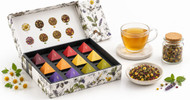
Caffeine-free loose leaf tea covers a wide range of herbal infusions, from chamomile and peppermint to rooibos and hibiscus, each with distinct flavor and traditional uses. Best overall for everyday sipping: Rooibos. Best for bedtime and relaxation: Chamomile. Best for digestive comfort after meals: Peppermint.
- Rooibos wins as the best overall caffeine-free loose leaf tea for all-day sipping — naturally caffeine-free and full-bodied.
- Chamomile is the top pick for bedtime; research on sleep benefits is limited, so treat it as a calming ritual, not a sleep aid.
- Peppermint tea supports digestive comfort traditionally, but it isn't the same as the clinically studied peppermint oil capsules.
- Hibiscus and passion fruit herbal blends bring tart and fruity flavor without caffeine, if the blend uses an herbal, not black tea, base.
- Always check the ingredient list — 'passion fruit tea' sold on a black tea base does contain caffeine.
Why this matters
Not every tea labeled "herbal" or sold next to the caffeinated blends is actually caffeine-free. True caffeine-free tea comes from plants other than Camellia sinensis — chamomile flowers, peppermint leaves, rooibos bark, hibiscus petals — while decaffeinated black or green tea still carries trace caffeine, typically 2 to 10 mg per cup.
That distinction matters most for fruit-flavored blends. A tea called "passion fruit" can be built on a rooibos or herbal base (caffeine-free) or on a black tea base (caffeinated) — the only way to know is to read the ingredient list, which is exactly why passion fruit tea needs its own buying guide rather than a blanket assumption.
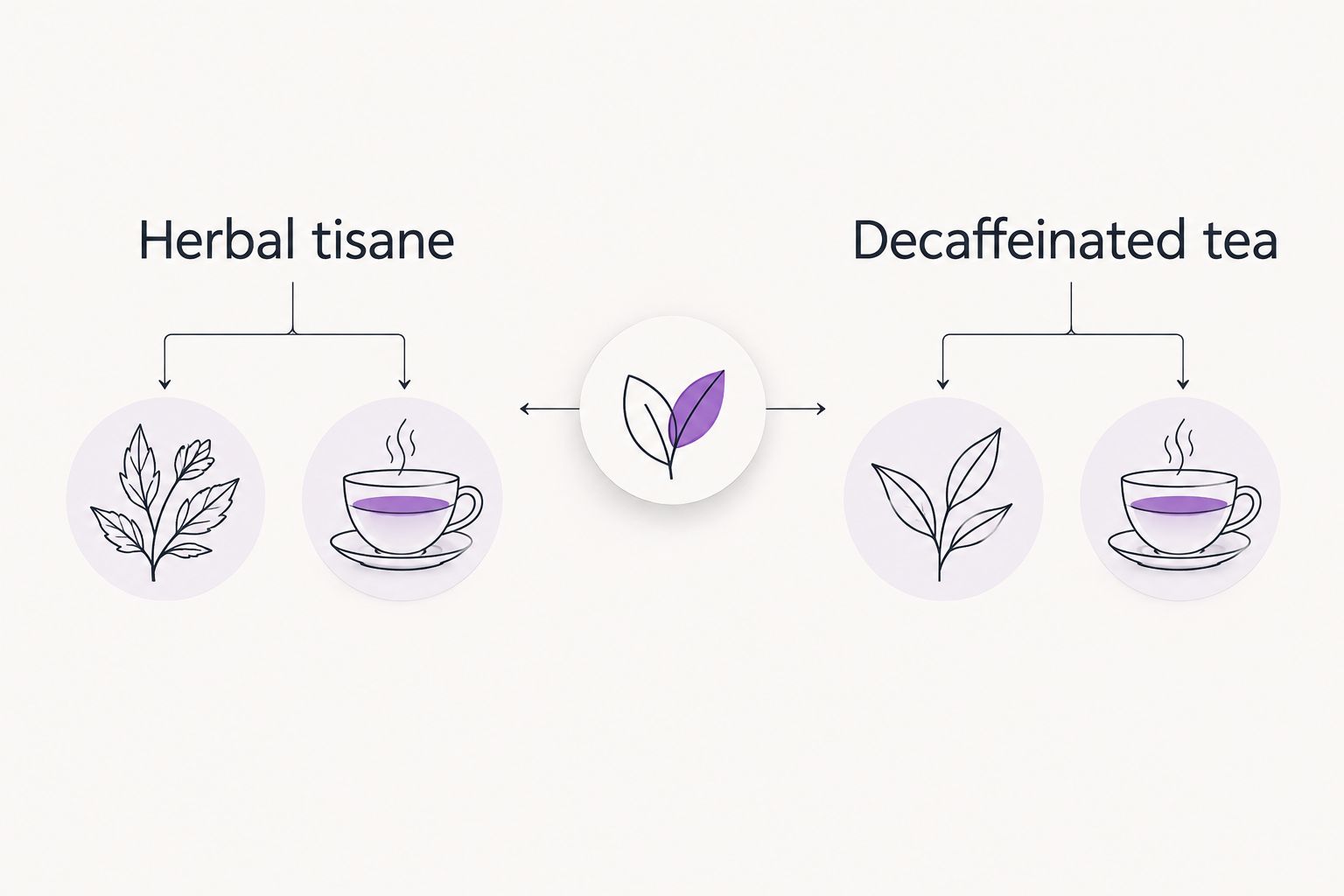
This guide ranks caffeine-free loose leaf tea by flavor, brewing character, and use case for 2026 — not by hype, since none of these plants are new discoveries.
What makes the best caffeine-free loose leaf tea
- Naturally caffeine-free base — herbs, flowers, roots, or bark, not decaffeinated Camellia sinensis
- Whole-leaf or whole-flower quality — larger pieces generally hold more aroma than dust or fannings
- Clear, honest labeling — no caffeine source buried in a blend
- Flavor match to the moment — bedtime, after a meal, or an all-day pour
- Brewing versatility — performs hot and cold without turning bitter or flat
- Transparent wellness claims — traditional use noted separately from what human research actually shows
Caffeine-free loose leaf teas at a glance
| Tea | Best for | Standout feature | Key limitation |
|---|---|---|---|
| Rooibos | All-day sipping | Naturally sweet, malty body with zero bitterness | Flavor reads flat to drinkers who want floral or minty notes |
| Chamomile | Bedtime and relaxation | Soft apple-like aroma, traditional calming ritual | Sleep research is limited and mixed, not proven |
| Peppermint | Digestive comfort after meals | Sharp, cooling menthol flavor, works hot or iced | Tea itself isn't backed by the same research as peppermint oil capsules |
| Hibiscus | Tart, iced-tea flavor | Deep red color, cranberry-like tartness | Can interact with blood pressure medication — check with a doctor |
| Passion Fruit Herbal Blend | Fruity, dessert-style flavor | Tropical sweetness without added sugar | Caffeine-free only when the base is herbal, not black tea |
1. Rooibos: best caffeine-free loose leaf tea for all-day sipping
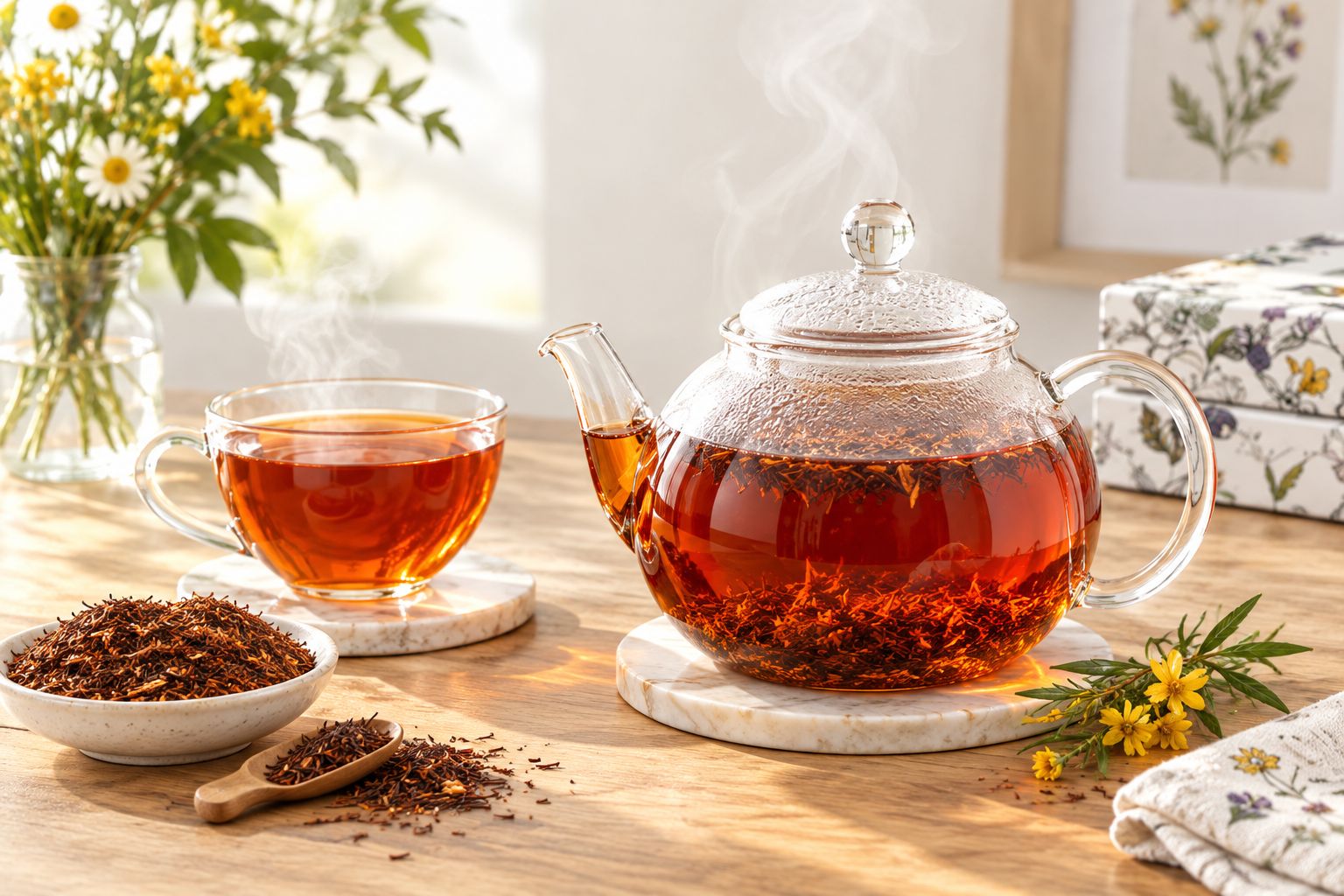
Rooibos comes from the leaves of the Aspalathus linearis shrub, grown almost exclusively in South Africa's Cederberg region, and it has never contained caffeine to begin with — no decaffeination process involved. The flavor is naturally sweet, woody, and a little malty, which is why it holds up to repeated cups across a workday the way peppermint or hibiscus don't.
Rooibos pros:
- Naturally caffeine-free with no processing needed to remove caffeine
- Mellow, slightly sweet flavor that doesn't need milk or sugar
- Tolerates a long steep without turning bitter
Rooibos cons:
- Flavor is subtle and can taste plain next to bolder herbal blends
- Less variety in aroma compared to flower-based teas like chamomile or hibiscus
Best for: everyday, multiple-cups-a-day drinkers who want a caffeine-free staple. Verdict: Buy.
2. Chamomile: best caffeine-free loose leaf tea for bedtime relaxation
Chamomile tea is made from dried chamomile flowers and has a long history as a traditional evening drink, prized for its soft, apple-like aroma. According to the National Center for Complementary and Integrative Health, clinical research on chamomile's effect on sleep is limited and results are mixed, so it's best treated as part of a calming wind-down routine rather than a proven sleep remedy.
Chamomile pros:
- Gentle, floral flavor that most people find soothing without added sweetener
- Long tradition of evening use across many cultures
- Pairs naturally with a quiet bedtime routine
Chamomile cons:
- Scientific evidence for sleep benefits is limited and not conclusive
- Flavor can taste weak if the flowers are old or low-quality
- Not a substitute for addressing ongoing sleep problems with a doctor
For readers building out a full evening lineup, the roundup of soothing teas for better sleep covers chamomile alongside other caffeine-free options for the hour before bed.
Best for: a calming pre-sleep ritual, not a medical sleep aid. Verdict: Buy.
3. Peppermint: best caffeine-free loose leaf tea for digestive comfort
Peppermint tea is brewed from dried peppermint leaves and delivers a sharp, cooling menthol flavor that works equally well hot after a meal or iced in summer. Peppermint has a traditional use for digestive comfort, but it's worth being precise here: the clinical research supporting peppermint for digestive symptoms largely involves concentrated peppermint oil capsules, not brewed peppermint tea, so the tea should be seen as a milder, traditional option rather than a clinically tested treatment.
Peppermint pros:
- Bright, cooling flavor that's instantly recognizable
- Works well as an after-dinner, caffeine-free alternative to coffee
- Holds up to cold brewing for iced tea
Peppermint cons:
- Tea-form evidence for digestive benefits is weaker than the research on peppermint oil capsules
- Strong menthol flavor isn't for everyone
- Can clash with certain medications in oil form — check labels if combining with supplements
Best for: an after-meal, caffeine-free digestive ritual. Verdict: Buy.
4. Hibiscus: best caffeine-free loose leaf tea for tart, iced-tea flavor
Hibiscus tea is made from dried hibiscus petals (calyces) and brews to a striking deep red color with a tartness close to cranberry. It's one of the few caffeine-free teas that genuinely improves over ice, which makes it the default pick for anyone who wants an iced-tea-style drink without caffeine.
Hibiscus pros:
- Vivid color and tart flavor that stands out from milder herbal teas
- Performs well cold-brewed, not just hot
- No sugar needed if you like tart drinks
Hibiscus cons:
- Tartness is polarizing — some drinkers find it too sour without sweetener
- May interact with blood pressure medication; check with a doctor before drinking regularly if you're on one
- Color can stain light-colored teapots and mugs over time
Best for: iced tea drinkers who want tart over sweet. Verdict: Buy, with a caution for anyone on blood pressure medication.
5. Passion Fruit Herbal Blend: best caffeine-free loose leaf tea for fruity, dessert-style flavor
Passion fruit loose leaf blends built on an herbal or rooibos base deliver a tropical, naturally sweet flavor close to dessert, without added sugar. The catch is that "passion fruit tea" isn't a single caffeine profile — some blends use a black tea base for body, which means caffeine is present despite the fruity name.
Passion Fruit Herbal Blend pros:
- Sweet, tropical flavor that reads like a treat without added sugar
- Herbal-base versions are genuinely caffeine-free
- Works well iced for a fruity summer pour
Passion Fruit Herbal Blend cons:
- Caffeine content depends entirely on the base — black tea versions are not caffeine-free
- Fruity blends can mask lower-quality base ingredients
- Requires reading the ingredient list every time, not just trusting the name
The full breakdown of passion fruit tea bases and how to tell herbal from black tea versions apart is worth reading before buying any fruit-named blend.
Best for: drinkers who want a caffeine-free, fruity dessert alternative. Verdict: Buy the herbal-base version; skip if the label doesn't confirm it.
How we ranked
Each tea in this ranking is judged against the six criteria above: naturally caffeine-free base, whole-leaf quality, honest labeling, flavor-to-occasion fit, hot-and-cold brewing versatility, and transparent wellness framing. Teas that depend on a decaffeination process, or whose caffeine content shifts by blend, score lower on the labeling criterion even when the flavor itself is strong — which is exactly why the passion fruit blend lands last despite its flavor appeal.
Which caffeine-free loose leaf tea should you choose?
If you want one caffeine-free tea to drink all day in 2026, choose rooibos. It needs no decaffeination, no label-reading caution, and tolerates long steeps without turning bitter. Reach for chamomile specifically at night, peppermint specifically after meals, and treat hibiscus and passion fruit blends as flavor-forward options once you've confirmed the ingredient list matches what you want.
Build an evening tea lineup
Explore caffeine-free gift sets made for evening sipping.
FAQ
What is the best caffeine-free loose leaf tea overall?
Rooibos is the best overall caffeine-free loose leaf tea for 2026 because it's naturally caffeine-free, holds up to long steeps, and has a mellow flavor suited to everyday drinking.
Is chamomile tea actually caffeine-free?
Yes, chamomile tea is made from dried chamomile flowers, not the Camellia sinensis plant, so it contains no caffeine at all.
Does peppermint tea help with digestion the same way peppermint oil does?
Not exactly. Peppermint tea has a traditional use for digestive comfort, but the clinical research behind peppermint's digestive benefits mostly involves concentrated peppermint oil capsules, not brewed tea.
Is passion fruit tea caffeine-free?
It depends on the base. Passion fruit blends built on rooibos or herbal bases are caffeine-free, but versions built on a black tea base contain caffeine despite the fruity name.
Can hibiscus tea be brewed iced?
Yes, hibiscus tea is one of the best caffeine-free loose leaf teas for cold brewing, keeping its tart, cranberry-like flavor and deep red color over ice.
Does decaffeinated tea count as caffeine-free?
No. Decaffeinated black or green tea typically still contains 2 to 10 mg of caffeine per cup, while true herbal tisanes like chamomile and rooibos contain zero.
Is hibiscus tea safe with blood pressure medication?
Hibiscus tea may interact with blood pressure medication, so anyone taking one should check with a doctor before drinking it regularly.
What's the best caffeine-free tea for bedtime?
Chamomile is the standard pick for bedtime, valued traditionally for its calming aroma, though clinical evidence for sleep benefits remains limited.
One last thing
The detail most drinkers miss in 2026: "decaf" and "caffeine-free" aren't the same label. Decaffeinated black and green tea still carry trace caffeine, while true herbal infusions like chamomile, peppermint, and rooibos start at zero — no processing required, no trace left behind.