
Best glass teapot with infuser for beginners in 2026
Posted by Editorial Team on Nov 3rd 2026
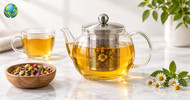
Best overall: a glass teapot with a removable fine-mesh basket. Best for solo sipping: a compact basket-infuser pot. Best budget-conscious approach: a simple removable-basket design without extras. This 2026 guide helps you choose a glass teapot with infuser by leaf space, pouring comfort, cleaning access, and the amount you actually drink.
- A glass teapot with infuser and a removable fine-mesh basket is the best beginner default for loose leaf tea.
- Choose a compact pot for solo sipping and a larger basket-infuser pot for sharing.
- Slotted glass infusers suit larger leaves but let fine fragments pass into the cup.
- For Tea The World teas, match the infuser to the leaf size and follow the tea’s brewing directions.
Why this matters
A clear pot lets you enjoy the color of your tea, but the infuser decides how easy brewing feels. You need room for leaves to open, a way to stop steeping, and parts you can wash without struggling.
For beginners exploring Tea The World teas, a glass teapot with a removable fine-mesh basket is the best default. You can lift the leaves out when the infusion tastes right rather than letting them sit through every refill of your cup.
The best beginner purchase in 2026 is not the pot with the most attachments. It is the design that fits your usual serving, your favorite leaves, and your cleaning routine. Choose the brewing job first; choose the appearance second.
What makes the best glass teapot with infuser
Use these five criteria to judge a glass teapot before you choose it:
- Removable infuser: You should be able to separate the leaves from the water without emptying the entire pot.
- Leaf space: A roomy basket gives expanding leaves more space than a tightly packed filter.
- Filter openings: Fine mesh catches smaller fragments; wider glass slots suit larger leaves better.
- Pouring comfort: Look for a usable handle, a secure lid, and clear instructions for holding the lid while pouring.
- Cleaning access: A wide opening and removable parts make rinsing and reaching tea residue easier.
The removable basket versus built-in filter guide explains the distinction that matters most: a filter at the spout strains your pour, but it does not remove leaves from the water remaining in the pot.
For your 2026 shortlist, treat heat-use instructions as a separate safety requirement. A glass appearance does not establish stovetop, microwave, or dishwasher compatibility. Check the instructions for the exact model, including its lid and infuser.
Glass teapots with infusers at a glance
These rankings compare design types rather than named products. Each option serves a different brewing routine.
| Rank and design | Best for | Standout feature | Key limitation |
|---|---|---|---|
| 1. Removable fine-mesh basket pot | Learning everyday loose leaf brewing | Separates leaves from the brewed tea | Mesh needs careful rinsing |
| 2. Compact basket-infuser pot | Drinking tea alone | Matches a smaller serving routine | Leaves less room for sharing |
| 3. Removable slotted-glass infuser pot | Watching larger leaves unfold | Clear view through the infuser | Fine fragments pass through wider slots |
| 4. Larger wide-basket pot | Serving tea to guests | Holds a shared batch with a removable filter | A filled pot is heavier to handle |
Do not read the table as a material-quality ranking. Basket construction, handle shape, and the manufacturer's instructions still matter within each design.
1. Removable fine-mesh basket pot: best for learning loose leaf tea
A removable fine-mesh basket holds the leaves inside the glass pot while water moves through the filter. When steeping finishes, you lift out the basket and set it on a heat-safe dish. The remaining tea is separated from the leaves.
This design gives beginners a straightforward way to adjust flavor. Keep the amount of tea consistent, then change the steeping time on your next brew rather than changing everything at once.
Removable fine-mesh basket pot pros:
- You can stop the steep by removing the leaves.
- Fine mesh catches smaller fragments than broad slots.
- The removable basket gives you direct access for rinsing.
- You can see the tea's color through the surrounding glass.
Removable fine-mesh basket pot cons:
- Leaf particles collect in mesh and need attention during cleaning.
- A narrow basket limits space for leaves to expand.
- A hot basket needs a safe place to rest after removal.
Best for: Beginners making different loose leaf teas and learning their preferred strength.
Choose a basket that reaches into the water at your normal fill level. A large pot with a shallow basket is awkward when you want a small serving: some leaves can remain above the water.
Verdict: Buy this design as your default, provided the basket is roomy and removable.
2. Compact basket-infuser pot: best for solo sipping
A compact glass teapot with infuser is designed around a smaller batch. Its advantage is serving fit, not a promise that a smaller pot brews better tea. You can prepare the amount you intend to drink rather than filling a larger vessel out of habit.
Measure your favorite cup before choosing a capacity. For example, two 250 mL servings require 500 mL of brewed tea; the pot also needs space for its infuser and the manufacturer's recommended fill limit.
Compact basket-infuser pot pros:
- A smaller batch suits an individual tea break.
- You can match the pot to your usual mug or cup.
- A smaller filled vessel contains less water to lift.
Compact basket-infuser pot cons:
- It gives you less flexibility when a guest joins you.
- A small overall size does not guarantee a roomy basket.
- The opening can be awkward to clean if the design is narrow.
Best for: Everyday tea drinkers who usually brew for themselves.
For solo brewing in 2026, focus on the usable fill level rather than a capacity number alone. Confirm that the infuser reaches the water and leaves enough room for your chosen tea.
Verdict: Buy for an individual routine; skip if sharing is your usual habit.
3. Slotted-glass infuser pot: best for watching larger leaves unfold
A removable glass infuser uses openings in the glass to let water circulate around the leaves. The clear insert keeps the brewing process visible, including the shapes and movement of larger leaves.
Filter size is the trade-off. Small leaf fragments can move through broad slots, so this design suits a reader who values the view and does not mind some sediment.
Slotted-glass infuser pot pros:
- You can see the leaves inside the clear insert.
- A removable insert lets you separate leaves from the infusion.
- Larger leaves are easier to contain when they exceed the slot size.
Slotted-glass infuser pot cons:
- Fine tea particles pass through wider openings.
- The glass insert is another breakable part to handle.
- Narrow slots still need cleaning when leaf material lodges inside.
Best for: Tea drinkers using larger leaves who enjoy watching the infusion develop.
Check whether the glass insert is removable. A pot with a fixed spout filter offers a different experience: loose leaves stay in the main chamber and continue steeping until you decant the tea.
Verdict: Buy for larger leaves and a clear view; skip for fine-cut tea when sediment bothers you.
4. Larger wide-basket pot: best for sharing tea
A larger glass pot with a wide removable basket serves a shared batch while keeping leaf removal simple. It makes sense when tea is part of a conversation, a meal, or a thoughtful afternoon visit.
Start with your actual cups rather than an advertised serving count. Three 250 mL servings total 750 mL; that is an example serving calculation, not a recommended fill level for every pot.
Larger wide-basket pot pros:
- You can prepare tea for several cups in one batch.
- A wide basket gives leaves room without packing them tightly.
- Removing the basket separates the shared brew from the leaves.
Larger wide-basket pot cons:
- More water makes the filled pot heavier.
- A large pot takes more storage and drying space.
- A shallow infuser can make small batches inconvenient.
Best for: Hosts who usually share tea rather than brew a single cup.
For Tea The World loose leaf tea served with guests, a shared pot keeps preparation simple. Choose the tea for its flavor and ingredients, and make a smaller second batch if that better matches the pace of your gathering.
Verdict: Buy for regular sharing; skip as a default if you usually drink alone.
How we ranked these designs
The 2026 ranking puts control of steeping first, then serving fit, leaf space, filtration, and cleaning access. A removable fine-mesh basket takes the default position because you can lift the leaves out and use it with smaller fragments.
The other positions answer different needs: solo portions, a clear view of larger leaves, and shared servings. These are design-based recommendations, not claims from hands-on testing or comparisons of named models.
Brew your first pot without guesswork
Your first brew should be easy to repeat. Use the directions for the tea you have, not a single temperature or timing rule for every tea category.
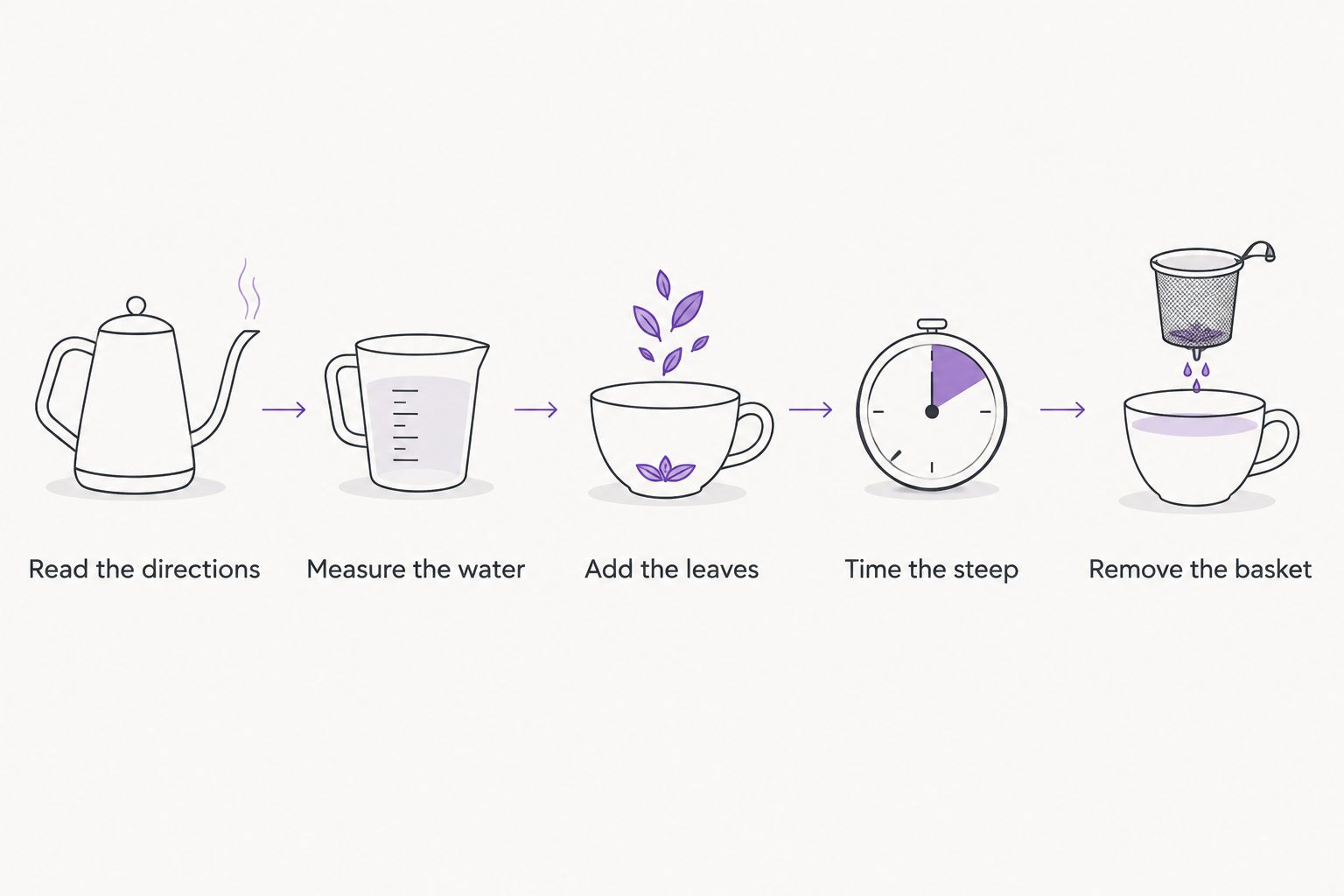
- Read the directions. Check the tea's brewing guidance and the teapot's care instructions separately.
- Measure the water. Use your normal cup to establish how much you intend to brew.
- Add the leaves. Follow the tea's recommended amount and avoid tightly packing the basket.
- Time the steep. Use the tea's stated steeping guidance, then assess the flavor.
- Remove the basket. Set it on a heat-safe dish and pour with the handle and lid positioned as instructed.
If the tea tastes too strong, shorten the next steep or adjust the leaf amount rather than making several changes together. If it tastes weak, first check that the leaves were submerged and had space in the basket.
With Tea The World tea, remember the packaging distinction: tins contain tea sachets, while pouches contain loose leaf tea. A pouch suits basket brewing directly; a sachet already contains the leaves.
Cleaning and safe handling
Empty the leaves after brewing and rinse the basket before residue dries into the mesh. Let the pot cool before cleaning, and follow its care instructions for detergents, brushes, and dishwasher use.
Avoid sudden temperature changes. Do not pour hot water into a chilled pot or place hot glass on a cold, wet surface. Inspect the pot for cracks and chips before the next brew, especially around the rim, spout, and handle connection.
Never assume a glass teapot is a kettle. Heat water separately unless the manufacturer explicitly permits the exact pot to be used on your heat source. Any stated permission must also cover the required setup; a removable metal basket or lid can have different restrictions from the glass body.
Which glass teapot with infuser should you choose?
Choose a removable fine-mesh basket pot unless your routine points clearly elsewhere. It gives beginners a direct way to control steeping and handles smaller fragments better than a broadly slotted insert.
Choose compact for solo sipping, slotted glass for viewing larger leaves, or a larger wide-basket design for guests. For a budget-conscious 2026 purchase, prioritize those working features over extra attachments; a simpler design is not automatically the lowest-cost option.
FAQ
What's the best glass teapot with infuser for a beginner?
A glass teapot with a removable fine-mesh basket is the best default for a beginner. It lets you remove the leaves when steeping finishes and catches smaller fragments better than broad slots.
Is a glass infuser better than a stainless steel mesh basket?
A slotted glass infuser is better for viewing larger leaves, while fine mesh is better for filtering smaller fragments. Choose according to your tea's leaf size and how much sediment you accept.
What size glass teapot should I choose for myself?
Choose a pot that fits the amount you normally drink and keeps the infuser submerged at that fill level. Measure your cup first, and leave the space required by the manufacturer's fill instructions.
Can I put a glass teapot with infuser on the stove?
Use a glass teapot on the stove only when its manufacturer explicitly permits that use. Otherwise, heat the water separately and pour it into the pot according to its instructions.
Why are there tea leaves at the bottom of my cup?
Small tea fragments can pass through openings in the infuser. Fine mesh filters smaller particles better than broad slots, but filter construction and the tea's leaf size both affect the result.
Can I brew a caffeine-free bedtime tea in a glass teapot?
Yes, you can brew a caffeine-free tea in a glass teapot using the tea's directions. Check the complete ingredient list: a fruit-flavored blend can include a caffeinated tea base, and a bedtime drink is not a treatment for sleep problems.
Should I leave the infuser in while I drink?
Remove the infuser when your chosen steep is finished. Leaving the leaves submerged continues the infusion and changes the flavor of the tea remaining in the pot.
One last thing
The most useful check is not whether the teapot looks right when full. It is whether the basket reaches the water when you brew your usual amount. Choose for an ordinary tea break, not an imaginary special occasion.
Related guides
- Best glass teapots with infusers for one person
- How to remove tea stains from a glass teapot with infuser
- Tea infuser basket vs tea ball for loose leaf tea
Ricardo R. Matos, Founder of Tea The World