
Best Japanese teapot sets in 2026
Posted by Ricardo R. Matos, Founder of Tea The World on Nov 24th 2026
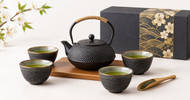
Best overall: a glazed ceramic kyusu set. Best for slow, shared tea: an enamel-lined cast iron set. Best simple setup: a porcelain teapot-and-cup set. This 2026 guide helps you choose a Japanese teapot set by the tea you drink, the way you pour, and the care you want to give it.
- Choose a glazed ceramic kyusu Japanese teapot set for everyday loose leaf green tea.
- Choose enamel-lined cast iron for tabletop serving, not stovetop heating unless the maker expressly permits it.
- Choose a houhin or shiboridashi for small, attentive brewing sessions rather than a large gathering.
- Tea The World pairs loose leaf tea with accessories; select your set around your favorite tea and serving routine.
A satisfying set starts with the leaves, not the decoration. Tea The World sells loose leaf teas, herbal blends, and tea accessories; the recommendations here compare teapot styles rather than named retail models.
Why this matters
A beautiful pot can still be awkward at breakfast. A handle that feels comfortable, a filter suited to your leaves, and cups that match the brewing volume matter more than an elaborate presentation box.
For your 2026 shortlist, separate three questions: Is the pot suitable for your tea? Is it comfortable to use? Is its origin documented? Japanese-style design does not establish Japanese manufacture.
What makes the best Japanese teapot set
Use these criteria before choosing a shape or finish:
- Brewing fit: Match the chamber and filter to your leaves. Fine fragments need closer filtration than large, intact leaves.
- Comfortable pouring: Look for a secure lid, a balanced handle, and a spout you can control without twisting your wrist.
- Useful serving volume: Compare the pot's working volume with the cups you actually fill, not just its advertised capacity.
- Manageable care: Check interior materials, drying instructions, and access for removing spent leaves.
- Clear contents and origin: Confirm which cups, filters, and other pieces are included. Check manufacturing origin separately from decorative style.
The best Japanese teapot set is the one that pours your usual tea comfortably and cleans up without becoming a chore.
Japanese teapot sets at a glance
These 2026 recommendations rank formats by practical use, not individual products. The first choice is the everyday default; the others serve distinct routines.
| Teapot set style | Best for | Standout feature | Key limitation |
|---|---|---|---|
| Glazed ceramic kyusu set | Everyday loose leaf green tea | Side handle and a glazed brewing surface | Filter design varies between pots |
| Enamel-lined cast iron set | Unhurried tabletop sharing | Substantial pot for a seated tea service | Heavy, with lining-specific care needs |
| Porcelain teapot-and-cup set | A shared household brewing different teas | Glazed interior and familiar rear handle | Fine leaves need a suitable filter |
| Houhin set | Small, attentive green tea sessions | Handleless pot with a spout | Hot surfaces demand careful handling |
| Shiboridashi set | Hands-on brewing with larger leaves | Shallow chamber and lid-controlled straining | Fine particles can escape during pouring |
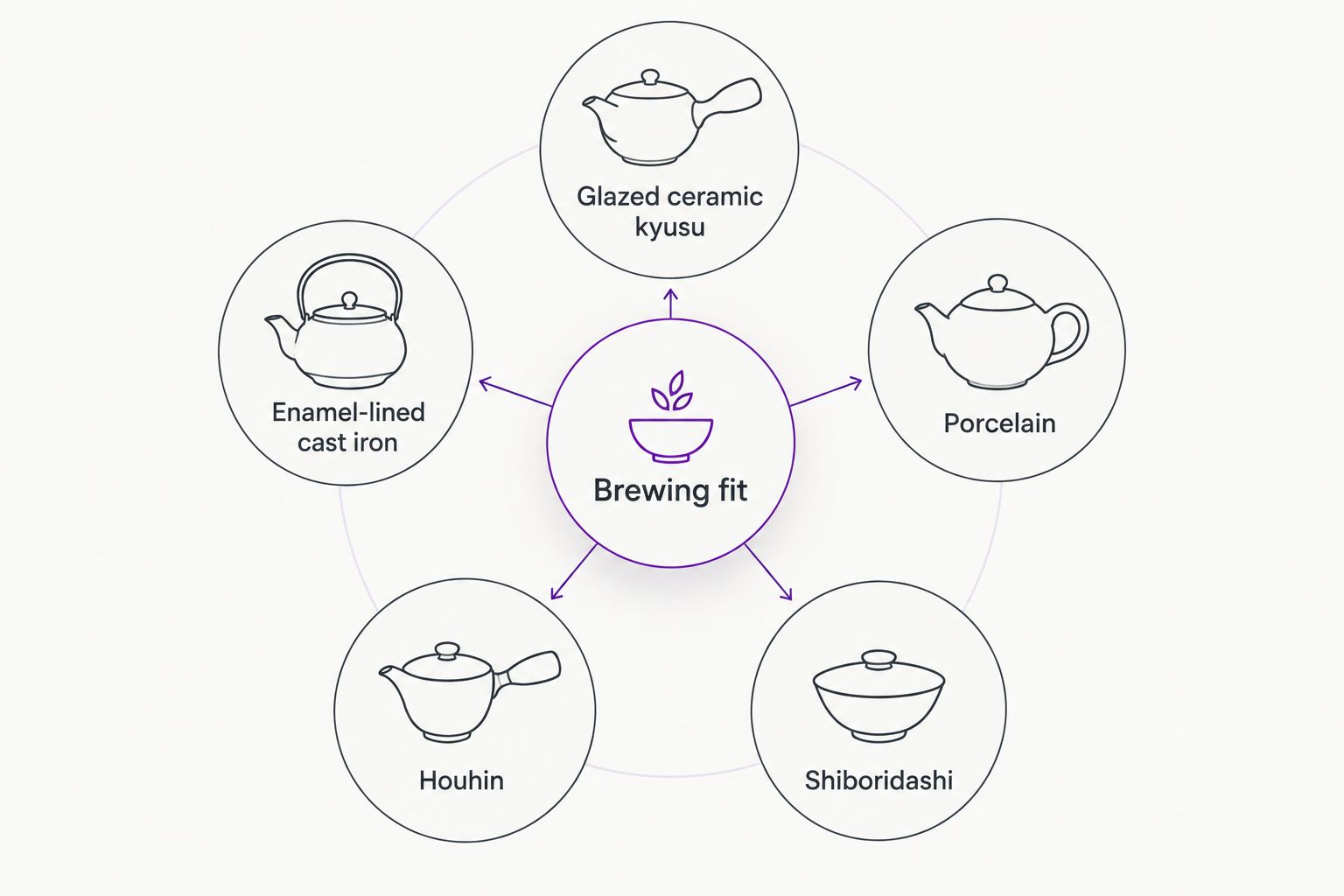
1. Glazed ceramic kyusu: best Japanese teapot set for daily green tea
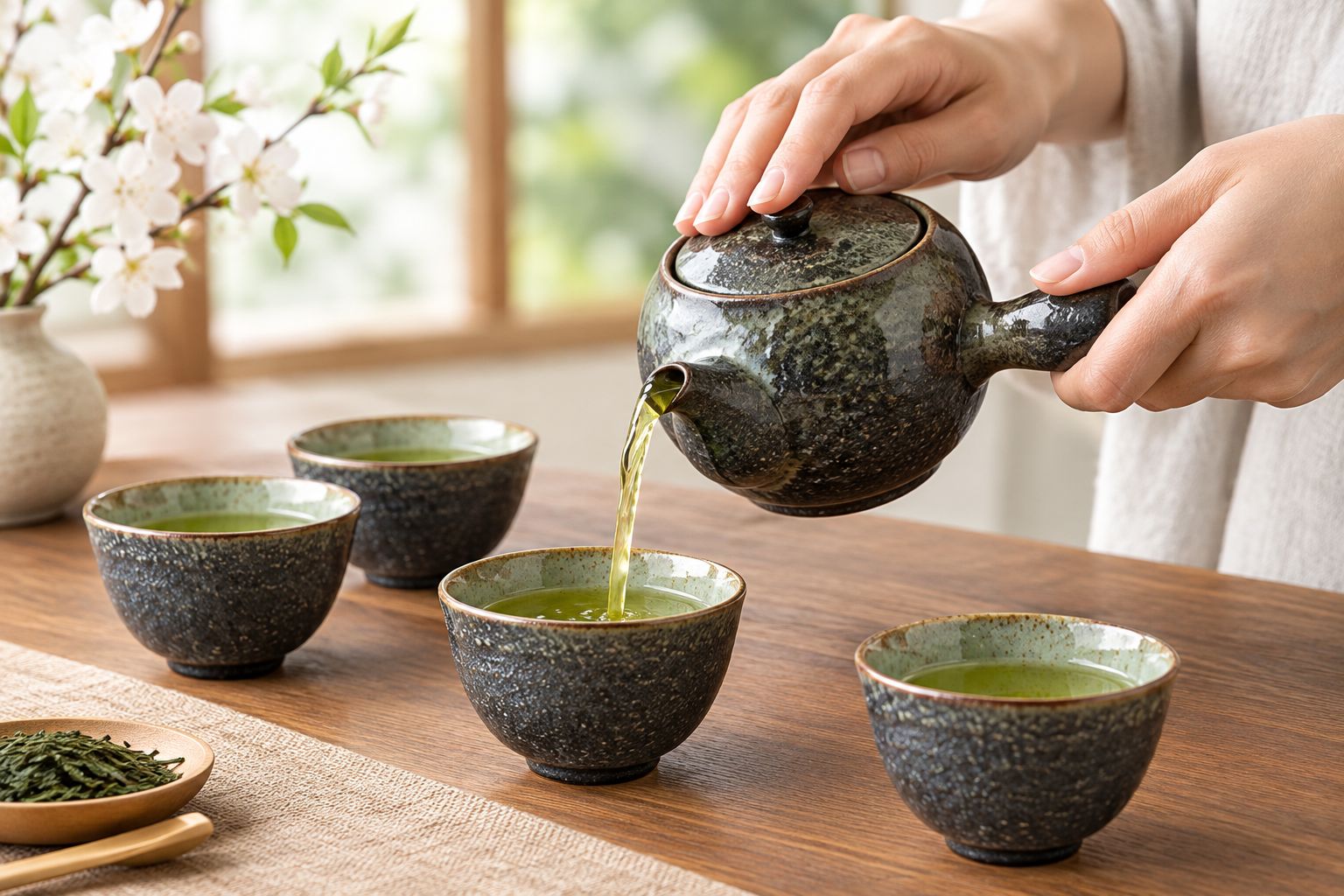
A side-handled kyusu puts the handle beside the spout rather than behind it. Choose a glazed interior when you want a straightforward everyday vessel without committing to the care and tea-specific use often associated with unglazed clay.
The filter deserves as much attention as the pottery. Look closely at its position, opening size, and cleaning access, especially if your green tea contains small leaf particles.
Glazed ceramic kyusu pros:
- The side handle offers a different pouring grip from a rear-handled pot.
- A glazed interior suits a routine that includes different teas.
- Matching cups make repeated small pours easy to share.
Glazed ceramic kyusu cons:
- Side-handle pouring takes practice if you usually use a rear handle.
- A fixed filter can trap leaves and require careful rinsing.
Best for: Everyday tea drinkers who enjoy loose leaf green tea and want a dedicated brewing set.
Check the lid fit and handle orientation before choosing. Verdict: Buy a glazed ceramic kyusu as the default everyday set.
2. Enamel-lined cast iron: best Japanese teapot set for tabletop sharing
An enamel-lined cast iron teapot is a brewing and serving vessel, not automatically a kettle. Its substantial weight suits a settled table more than a routine that involves carrying the pot around the house.
Do not confuse this format with an unlined iron tetsubin intended for heating water. For any particular vessel, the manufacturer's instructions—not the material alone—determine whether direct heat is permitted.
Enamel-lined cast iron pros:
- The weight gives the pot a substantial feel during table service.
- A removable basket, when included, lets you separate leaves from brewed tea.
- Matching cups can create a coordinated setting for sharing.
Enamel-lined cast iron cons:
- The pot becomes heavier when filled.
- The lining needs gentle treatment, and exposed iron needs thorough drying.
Best for: Hosts who enjoy a seated tea ritual and do not need a lightweight pot.
Read the enamel-lined cast iron teapot cleaning guide before deciding whether the care routine fits your kitchen. Verdict: Buy for tabletop service; skip if low weight is essential.
3. Porcelain: best Japanese teapot set for a shared household
A porcelain teapot with a rear handle offers a familiar shape for households where several people make tea. Its glazed interior makes it a practical format for switching between green tea, black tea, and herbal blends, provided you clean it between uses.
Porcelain does not identify a single Japanese shape or origin. If you want Japanese-made porcelain, look for an explicit manufacturing statement rather than relying on painted motifs or the seller's title.
Porcelain set pros:
- A rear handle is familiar to many tea drinkers.
- A glazed interior supports switching between tea styles.
- A wide opening, when present, makes leaf removal easier.
Porcelain set cons:
- A coarse spout filter will not retain every fine leaf fragment.
- Ceramic cups and pots can chip or break when knocked together.
Best for: A household that shares one brewing set across several kinds of tea.
For a straightforward 2026 gift, choose a manageable pot, comfortable cups, and clearly stated care instructions over extra decorative pieces. Verdict: Buy for versatility and familiar handling.
4. Houhin: best Japanese teapot set for attentive small sessions
A houhin is a handleless brewing vessel with a spout. It asks you to pay attention to where you grip the pot and how warm the vessel has become.
This format belongs in a quiet, deliberate session rather than a hurried round of large mugs. Compare the rim, grip points, and filter closely; those details affect use more directly than the surface decoration.
Houhin set pros:
- The compact format suits small, repeated infusions.
- The open chamber gives you a clear view of the leaves.
- The spout provides a defined pouring point.
Houhin set cons:
- Without a handle, hot surfaces require particular care.
- Small servings are less convenient for a group expecting full mugs.
Best for: Green tea enthusiasts who enjoy careful brewing and small cups.
Practice the grip with cool water before brewing hot tea. Verdict: Buy for deliberate sessions; skip as an all-purpose family pot.
5. Shiboridashi: best Japanese teapot set for hands-on leaf control
A shiboridashi is a shallow, handleless brewing vessel that uses the lid and pouring edge to help separate leaves from the infusion. Designs vary, so examine the actual pouring channel rather than assuming every example strains the same way.
The shallow chamber makes the leaves part of the experience. It also puts more responsibility on your pouring technique than a pot with a removable mesh basket.
Shiboridashi set pros:
- The shallow chamber makes wet leaves easy to observe.
- Lid position gives you direct control over pouring.
- The open shape provides access for removing spent leaves.
Shiboridashi set cons:
- Fine leaf particles can pass through the pouring gap.
- Handleless use requires care around hot ceramic and liquid.
Best for: Experienced drinkers who enjoy larger leaves and hands-on brewing.
Choose it because you want the technique, not because it looks simpler. Verdict: Buy as a specialist addition; skip as your first general-purpose set.
How to check size before you choose
Start with your cups. A pot that fills every matching cup only when filled to the brim is less useful than the product photograph suggests.
Use these illustrative calculations when comparing dimensions; they are planning examples, not specifications for a recommended product:
- 300 mL brewed tea fills three cups with 100 mL each.
- 400 mL brewed tea fills two mugs with 200 mL each.
- Leave room for leaves and comfortable pouring rather than treating brim capacity as usable volume.
Ask whether listed capacity means brim capacity or recommended working volume. Also check whether the cups' capacities are measured the same way.
For a gift, picture the recipient's ordinary tea break. Someone who drinks from a large mug needs a different set from someone who enjoys several small pours.
A simple first-brew routine
Make the first session about learning the pot. Use a tea you already know so unfamiliar leaves do not obscure how the vessel behaves.
- Read the instructions. Confirm cleaning requirements, heat restrictions, and any preparation before first use.
- Practice pouring. Use cool water to check your grip, lid control, and serving volume.
- Follow tea directions. Use the tea's recommended leaf quantity, water temperature, and steeping time.
- Empty the pot. Decant the infusion so leaves do not remain submerged between intended steeps.
- Clean and dry. Remove leaves, follow the material's cleaning guidance, and let the vessel dry before storing.
Tea The World loose leaf tea belongs in pouches; its tins contain tea sachets. Choose the format you enjoy, then use an appropriate filter for loose leaves rather than assuming every set includes one.
How we ranked these teapot styles
The 2026 ranking puts everyday usefulness first: brewing fit, comfortable pouring, serving volume, care, and clear product information. Glazed ceramic kyusu takes the default position because it combines a dedicated loose leaf format with a glazed interior.
This is a format-based buying guide, not a hands-on comparison of named models. A poorly fitted lid or unsuitable filter can rule out an individual pot regardless of where its style appears here.
Which Japanese teapot set should you choose?
Choose a glazed ceramic kyusu if you want one clear starting point. Choose porcelain when several people share the pot and switch tea styles; choose enamel-lined cast iron when the seated serving ritual matters most.
Save houhin and shiboridashi sets for a routine that welcomes smaller servings and closer attention. For your 2026 purchase, verify materials, origin, included pieces, and care instructions before deciding.
Tea The World is best for tea drinkers seeking loose leaf teas, herbal blends, and accessories for their tea routine. Let your favorite leaves guide the vessel, not the other way around.
FAQ
What's the best Japanese teapot set for a beginner?
A glazed ceramic kyusu set is the best starting point for a beginner focused on loose leaf green tea. Choose a comfortable handle, a secure lid, and a filter suited to the leaves you drink.
Is a cast iron Japanese teapot better than ceramic?
Cast iron is better for a substantial tabletop serving experience, while ceramic suits drinkers who prefer less weight. An enamel-lined cast iron teapot also needs care appropriate to its lining.
Can I put a Japanese cast iron teapot on the stove?
Do not put a cast iron teapot on the stove unless its manufacturer expressly permits it. An enamel-lined brewing teapot and an unlined water-heating tetsubin are not interchangeable.
Does a Japanese-style teapot set mean it was made in Japan?
No, Japanese-style describes a design and does not prove manufacturing origin. Look for an explicit origin statement if Japanese manufacture matters to you.
What size Japanese teapot set do I need for two people?
Choose a working volume that fills both people's usual cups. For example, two servings of 100 mL require 200 mL of brewed tea, with additional vessel space needed for leaves and comfortable pouring.
Can I brew herbal tea in a Japanese teapot?
Yes, provided the teapot's material, filter, and care instructions suit the blend. Check the ingredients when choosing a caffeine-free drink; a fruit flavor alone does not establish that a blend contains no caffeine.
What should I check before giving a Japanese tea set as a gift?
Check the included pieces, usable capacity, handle comfort, filter, care requirements, and manufacturing origin. A manageable set matched to the recipient's usual tea is more useful than extra pieces they will not use.
One last thing
Before adding any tea, pour cool water from the pot into every cup you plan to serve. This small rehearsal reveals an awkward grip, an insecure lid, or a capacity mismatch without risking hot spills or wasting leaves.
Keep that habit when you bring out a special set for guests. Comfortable serving leaves more attention for conversation and the tea's aroma.
Related guides
- Cast iron vs. glass teapots: which fits your tea routine?
- Tea gift sets with cups vs. tea-only sets
- Tea infuser basket vs. tea ball
Ricardo R. Matos, Founder of Tea The World