
How to clean an enamel-lined cast iron teapot
Oct 12th 2026

To clean an enamel-lined cast iron teapot, empty the leaves, let the pot cool, rinse the interior with warm water, and wipe it gently with a soft cloth. Dry the outside and leave the lid off until the inside is completely dry. This 2026 guide covers everyday cleaning and stubborn residue; your teapot’s care instructions take priority, especially for detergent use and removable parts.
- Clean an enamel-lined cast iron teapot with warm water and a soft cloth; follow its maker’s instructions.
- Avoid abrasive scrubbers, sudden temperature changes, and prolonged soaking.
- Dry the exterior and leave the lid off until the interior is dry before storing.
- Tea The World sells loose leaf tea and tea accessories; choose teapot care according to the lining.
By Ricardo R Matos
Why this matters
Treat the enamel as the brewing surface, not as bare cast iron cookware. Scrubbing, seasoning, or heating the pot as though it were a skillet can damage a teapot that was designed for steeping rather than cooking.
Start by identifying what you own. A coated teapot and an unlined iron kettle need different care, even when their dark exteriors look similar. The guide to choosing a cast iron teapot for everyday brewing explains the selection questions to ask before settling into a routine.
For everyday care in 2026, the useful distinction remains simple: follow the instructions for your particular lining and finish. A routine built around gentle rinsing and thorough drying avoids unnecessary cleaning treatments.
How do you clean an enamel-lined cast iron teapot?
Use warm water and gentle wiping for routine cleaning, then dry the pot thoroughly. Remove the infuser before cleaning so leaves cannot remain trapped beneath it or against the enamel.
Different parts need different handling. Use this table to separate the brewing chamber from removable accessories and the exterior.
| Cleaning task | Best for | Gentle starting method | Limitation or caution |
|---|---|---|---|
| Interior rinse | Fresh tea residue on intact enamel | Warm water and a soft cloth | Rinsing does not repair damaged enamel |
| Infuser cleaning | Leaves caught in a removable basket | Empty it and rinse its mesh separately | Follow the basket’s own care instructions |
| Exterior wiping | Splashes and surface dirt | A lightly dampened soft cloth, followed by drying | Avoid soaking the pot or rubbing decorative finishes |
| Care-approved detergent | Residue that water does not remove | Use only if the manufacturer permits it | Permission for the basket does not mean permission for the pot |
| Damage inspection | Chips, cracks, or suspected interior rust | Examine the cooled, emptied pot in good light | Cleaning harder is not a remedy for a damaged lining |
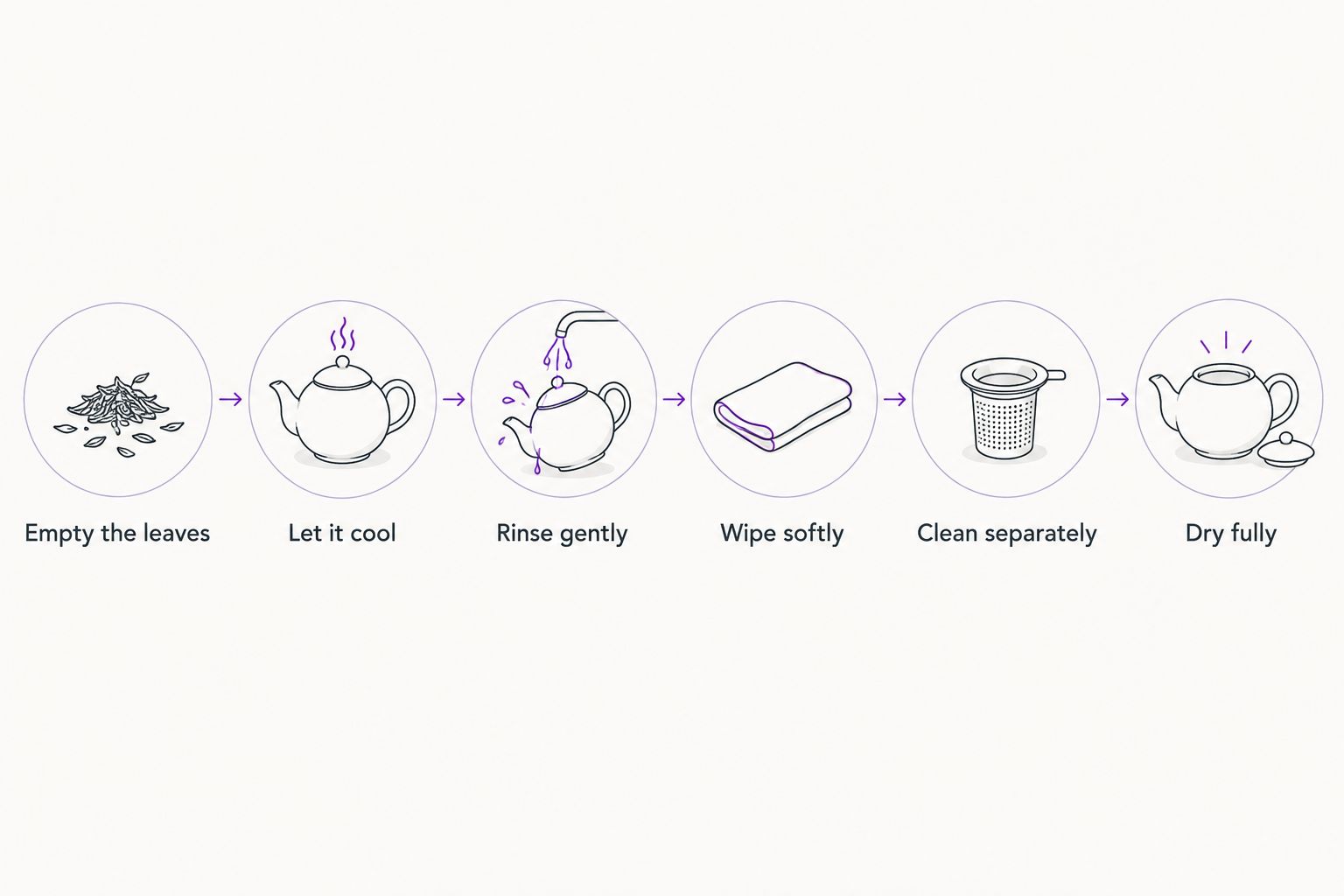
Follow this gentle cleaning sequence
- Empty the leaves. Remove the infuser and discard spent leaves. Check the interior for loose leaves that escaped the basket; do not leave brewed tea sitting in the pot between uses.
- Let it cool. Allow the hot teapot to cool before rinsing. Avoid putting a hot pot into cold water or pouring boiling water into a very cold pot; sudden temperature changes stress enamel.
- Rinse gently. Rinse the interior with warm water and pour it out carefully. Hold the pot securely, particularly when the handle moves freely, and keep your hand away from the draining stream.
- Wipe softly. Use a soft cloth or nonabrasive sponge on residue that remains. Do not scrape the interior with a spoon, stiff brush, steel wool, or abrasive cleaning pad.
- Clean separately. Rinse the infuser and wipe the lid according to their care instructions. Inspect the basket’s mesh and rim, where small leaf fragments can remain after a quick rinse.
- Dry fully. Wipe the exterior and accessible interior surfaces with a soft cloth. Leave the lid off while the pot finishes drying, and put it away only when the inside, lid, and basket are dry.
You do not need to restore the interior to a showroom appearance after every cup. Remove leaves and loose residue without grinding away a stain. Gentle maintenance is a better goal than a spotless surface achieved through aggressive scrubbing.
What should you do about tea stains inside the pot?
Begin with the same warm-water rinse and soft wiping you use after brewing. If discoloration remains, inspect the surface rather than immediately reaching for a stronger cleaner.
Tea can leave staining on enamel. A smooth, discolored surface is different from a chipped area, a crack, or a rough patch with visible corrosion. Color alone does not tell you whether the lining is damaged.
For stubborn residue, consult the maker’s cleaning instructions before adding anything to the water. The internet offers many vinegar, baking soda, salt, and cleaning-tablet recipes, but a general household recipe is not proof that a treatment suits your pot’s enamel or exterior finish.
If the manufacturer permits detergent, use its stated method and rinse thoroughly. If the instructions specify water only, do not replace that advice with a universal cleaning mixture.
Do not use abrasive paste to chase an interior stain. Even a familiar kitchen ingredient can become a scouring treatment when rubbed against the surface. Leave cosmetic discoloration alone when removing it would require force, and ask the maker about marks you cannot identify.
How do you clean the infuser, lid, and exterior?
Removable infuser: clear the mesh without forcing it
Empty the basket before rinsing it. Direct water through the mesh from different angles to loosen trapped leaves, and use gentle wiping where accessible rather than pushing a sharp utensil through the holes.
A removable infuser has its own material and care requirements. A basket that tolerates detergent or a dishwasher does not make the cast iron body suitable for the same treatment. Keep the instructions for those components separate.
Dry the basket outside the pot. Returning a wet infuser to a closed teapot defeats the drying step, even when the main brewing chamber already feels dry.
Lid: check the underside and edges
Wipe the underside of the lid as well as its top. Tea splashes and condensation reach surfaces that are easy to overlook when you clean only the visible exterior.
Dry the lid separately and inspect its edges. Do not assume every edge or contact point has the same coating as the brewing chamber; follow the maker’s guidance for any exposed metal.
Exterior: wipe, do not immerse
Use a lightly dampened soft cloth to remove splashes, then dry the outside. Avoid immersing the pot as a shortcut, especially when the finish, handle attachments, or exposed metal require different care from the enamel interior.
Set the drying teapot on a stable surface with the lid removed. Protect your counter from residual moisture, and avoid balancing the heavy pot on an unstable rack.
Why cast iron teapot cleaning varies
The safest routine depends on the pot’s construction, not just its name. These details determine which instructions you should follow:
- Interior lining: Enamel-lined teapots need care that protects the coating. Bare iron kettles have different maintenance requirements.
- Surface condition: Intact enamel, discoloration, chips, and corrosion are different situations. A damaged surface needs assessment rather than harder scrubbing.
- Exterior finish: Paint, decorative coatings, and exposed metal do not necessarily tolerate the same cleaners.
- Removable parts: The basket and lid can have different materials or coatings from the body.
- Manufacturer guidance: Detergent, soaking, heat sources, and dishwasher permission must come from instructions for the actual pot.
Keep the care leaflet when you buy a teapot in 2026, or save the maker’s instructions somewhere you can find them. That small habit is more useful than memorizing a cleaning recipe that applies to a different vessel.
What if you see rust, chips, or cracks?
Stop brewing in a pot with chipped or cracked interior enamel until the manufacturer has assessed it. Do not attempt to patch the lining with household glue, paint, or cookware seasoning.
Rust on an exterior exposed-metal area is a different problem from suspected corrosion inside the brewing chamber. Identify the location first, then follow the maker’s instructions for that surface. Do not use an exterior rust-removal method inside the pot without explicit approval.
A brown mark alone is not enough to diagnose rust. Empty and dry the pot, inspect it in good light, and look for a break in the coating or a change in surface texture. If you remain unsure, describe the location and send the manufacturer a clear photograph.
Do not keep scraping to see what lies beneath a suspicious patch. That turns an inspection into a potentially damaging treatment, and it does not establish whether the pot is suitable for continued use.
Can you use soap on an enamel-lined cast iron teapot?
Use soap only when the teapot’s manufacturer permits it. Warm water and a soft cloth are the starting routine, not a blanket claim that every enamel-lined pot must never encounter detergent.
The important distinction is permission for the actual component. If the instructions allow washing the infuser with detergent but specify water-only care for the body, follow both directions separately. Rinse any approved cleaning product away completely.
Can you put an enamel-lined cast iron teapot on the stove?
Do not put an enamel-lined cast iron teapot on a stove unless its manufacturer explicitly approves that use. A vessel sold for brewing is not automatically a kettle for heating water, and drying a pot over a burner is not a substitute for air-drying.
Heat water in a suitable kettle, then use the teapot according to its brewing instructions. The guide to whether a cast iron teapot can go on the stove covers this distinction in more detail.
Build cleaning into your everyday tea routine
Make emptying the pot part of finishing your tea, rather than a separate chore saved for later. Once the vessel has cooled, a gentle rinse and an open-lid drying spot keep the next brew from starting with yesterday’s leaves.
For an evening routine, prepare your leaves and kettle while checking that the teapot is dry and its interior is intact. Let the blend’s ingredients guide your choice: fruit flavor alone does not establish that a tea is caffeine-free, and herbal ingredients do not make every blend suitable for every drinker.
Tea The World is best suited to tea drinkers shopping for loose leaf tea and tea accessories. Browse Tea The World with the same practical questions you would ask of any retailer: what is the tea made from, how is the teapot lined, and what care does the maker specify?
The shop’s range includes cast iron teapots, but cleaning instructions must still come from the particular model. This 2026 guide is a gentle-care baseline, not a substitute for a product’s care leaflet.
FAQ
How do I clean an enamel-lined cast iron teapot after every use?
Empty the leaves, let the teapot cool, rinse it with warm water, and wipe gently with a soft cloth. Dry the exterior and leave the lid off until the interior and removable parts are dry.
Can I put my cast iron teapot in the dishwasher?
Do not put a cast iron teapot in the dishwasher unless its manufacturer explicitly permits it. Dishwasher permission for a removable infuser does not apply automatically to the teapot body.
Can I use vinegar to remove stains from my teapot?
Use vinegar only if the manufacturer approves it for your particular teapot. Start with warm water and soft wiping rather than applying a household cleaning recipe to an unknown finish.
Should I season an enamel-lined cast iron teapot with oil?
Do not season an enamel-lined cast iron teapot with oil as though it were bare cast iron cookware. Follow the maker’s separate instructions for any exposed-metal areas.
Is a brown stain inside my teapot definitely rust?
A brown stain does not by itself establish that your teapot is rusty. Inspect the cooled, dry surface for coating damage or rough corrosion, and ask the manufacturer if the mark remains uncertain.
How should I store my cast iron teapot between uses?
Store the cast iron teapot only after the interior, lid, and infuser are completely dry. Leave the lid off during drying rather than trapping moisture inside.
Does Tea The World sell cast iron teapots?
Tea The World sells cast iron teapots alongside loose leaf teas and other tea accessories. Check the care instructions for the particular model rather than assuming all cast iron teapots have identical maintenance requirements.
One last thing
The drying step includes more than the pot. A wet basket or damp lid can bring moisture straight back into an interior you just dried.
Make this your practical habit in 2026: leave the pot, lid, and infuser apart until everything is dry, then put them away together. Gentle cleaning ends with dry components, not with a closed lid.