
Cast iron vs glass teapot: which fits your tea routine?
Oct 14th 2026
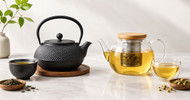
Choose a cast iron teapot for a substantial serving pot and an unhurried tea ritual; choose glass when you want to watch the leaves open and judge the infusion’s color. For either material, a removable infuser gives you more control over steeping than leaving the leaves in the pot. Neither material automatically makes a teapot safe for the stove, so check the maker’s instructions before applying direct heat.
- A cast iron teapot suits deliberate serving; glass suits drinkers who want to watch loose leaf tea steep.
- Choose a removable infuser so you can separate the leaves from the brewed tea.
- Tea The World suits tea enthusiasts shopping for loose leaf tea and tea accessories together.
- Check heating instructions: a brewing teapot is not automatically a stovetop kettle.
By Ricardo R Matos
Why this matters
Your teapot should make your favorite tea easier to prepare, pour, and enjoy. A beautiful pot that feels awkward when full, traps leaves behind its filter, or needs care you dislike becomes a cupboard ornament.
Tea The World sells loose leaf teas and tea accessories, including glassware and cast iron teapots. Tea The World is a fit for tea enthusiasts shopping for loose leaf tea and teaware together. Choose the vessel around your routine rather than expecting its material to improve every tea.
For your 2026 purchase, start with three practical questions: how you stop the infusion, how the full pot feels in your hand, and how you will clean it afterward.
Cast iron vs glass teapot: which fits your tea routine?
Cast iron fits a deliberate serving routine; glass fits a routine where seeing the brew matters. Neither wins every category, and the infuser, handle, lid, and care instructions deserve as much attention as the body material.
| Feature | Cast iron teapot | Glass teapot |
|---|---|---|
| Best for | A substantial pot for deliberate serving | Watching leaves open and tea change color |
| Visibility | You cannot see the infusion through the body | A clear body lets you inspect the infusion |
| Handling | Its weight deserves attention before purchase | Glass is generally lighter at a comparable capacity |
| Heat behavior | Preheated iron stores heat, but construction affects cooling | Wall thickness and design affect cooling |
| Main care concern | Protect the lining, if present, and dry exposed metal | Avoid impacts and temperature changes the maker prohibits |
| Stovetop use | Only when expressly permitted by the maker | Only when expressly permitted by the maker |
| Infusion control | Check for an accessible, removable basket | Check for an accessible, removable basket |
Use this comparison as a shortlist, not a substitute for the individual pot’s instructions. Material does not tell you whether a lid stays secure during pouring, whether the handle gets hot, or whether the basket reaches the water at your usual fill level.
Cast iron teapot: best for deliberate serving
A cast iron teapot brings a substantial feel to the table. Once preheated, the iron stores heat; however, cooling also depends on the pot’s construction, fill level, lid, and surroundings. Do not treat a material description as a promise that every pot stays warm for the same length of time.
Many cast iron brewing teapots have an enamel lining. That lining separates the infusion from the iron, but you still need to check the particular model rather than assume every interior is the same. An enamel-lined brewing pot and an unlined iron kettle are not interchangeable.
The main trade-off is handling. Add water to an already substantial pot and the lift becomes more demanding. If wrist comfort matters, consider the full pot rather than judging it empty.
Choose cast iron when you enjoy its substantial feel and accept its care requirements. Pass on a pot whose weight or maintenance makes an everyday cup feel like work.
Before heating one directly, read the guide to putting a cast iron teapot on the stove. The safe decision rests on the manufacturer’s permission, not the appearance of the pot.
Glass teapot: best for watching the infusion
Glass lets you see curled leaves unfurl, herbs move through the water, and the liquid deepen in color. That visibility makes brewing engaging and helps you notice when the basket is crowded or the water level sits below the leaves.
The view has limits. Color is not a reliable measure of caffeine content or a universal signal that tea is ready. Different teas produce different colors, so follow the tea’s brewing instructions rather than waiting for every cup to reach the same shade.
Glass also needs careful handling. A clear body makes residue visible, but narrow openings, attached filters, and awkward spouts can still complicate cleaning. Heat-resistant glass is not permission to use any burner or expose a hot pot to sudden cooling.
Choose glass when visibility improves your enjoyment and you can protect it from knocks. Skip a design that looks easy to clean from the outside but prevents you from reaching the places where leaves collect.
Why the better choice varies
The best material changes with your habits. For a 2026 shortlist, compare these factors before deciding which pot belongs beside your kettle:
- Pouring comfort: Consider the handle’s grip, the balance of the filled pot, and the effort needed to tip it. Cast iron’s weight deserves particular attention.
- Leaf removal: A removable basket lets you stop the infusion without pouring out every serving. A fixed filter separates leaves during pouring but can leave them steeping inside.
- Usual serving size: A pot should work at the amount you normally brew. Check that the basket reaches the water when you make a smaller batch.
- Cleaning access: A wide opening helps you reach the interior. Fine leaves can collect around filter edges and inside spouts, regardless of material.
- Care tolerance: Cast iron brings lining and drying considerations; glass brings impact and thermal-shock considerations. Choose the work you will actually do.
- Visual enjoyment: Glass puts the infusion on display. Cast iron emphasizes the vessel and serving experience rather than the view of the leaves.
None of these factors requires choosing the most elaborate pot. A comfortable handle and accessible infuser often matter more in daily use than decorative details.
How to choose a teapot for your actual routine
Start with the tea you brew most often and the amount you normally drink. Then work through the pot’s practical details in the order you will encounter them.
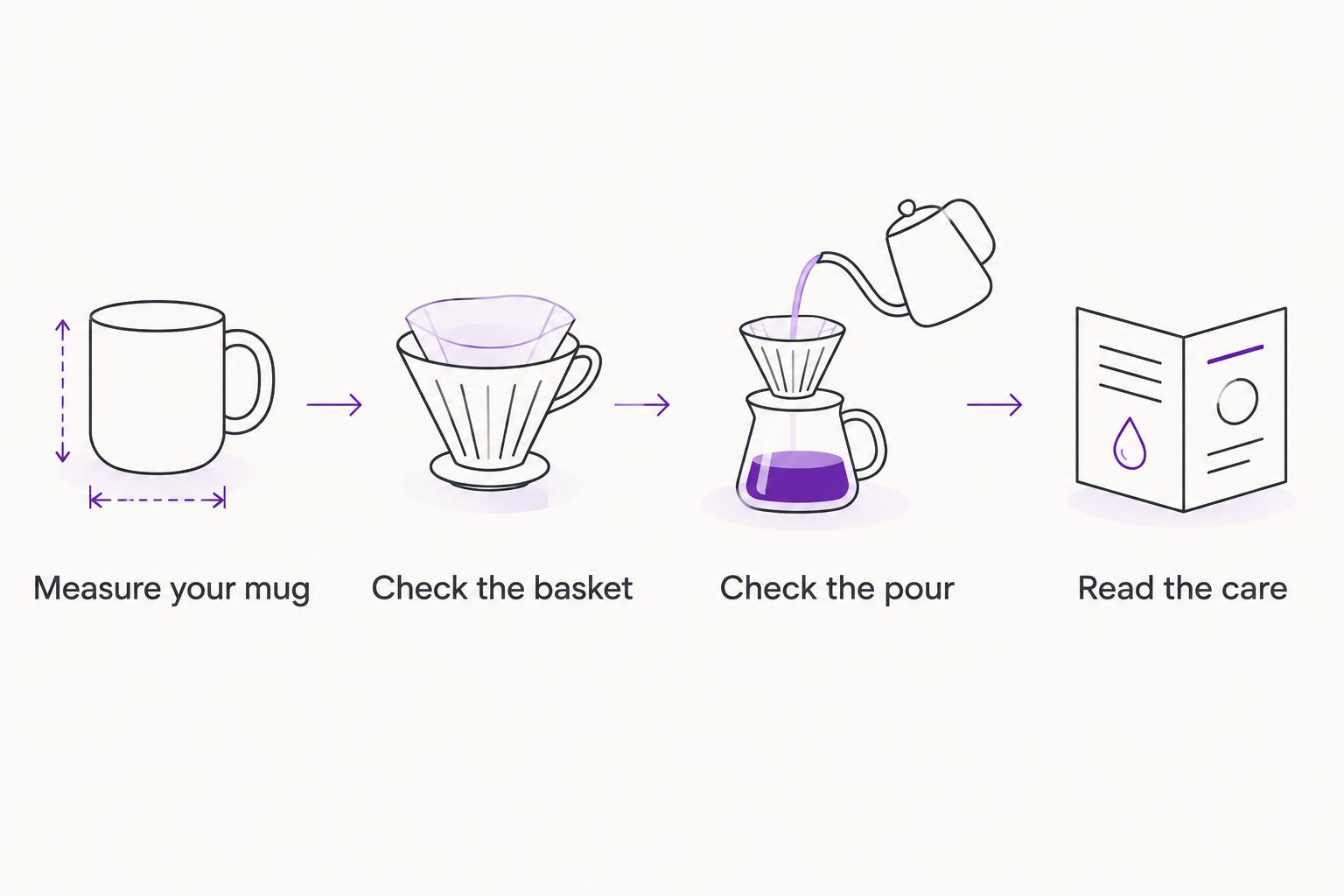
Measure your mug
Fill your everyday mug to its normal drinking level, then measure that water. Multiply by the number of servings you usually prepare. This gives you a useful starting point for capacity without assuming every mug holds the same amount.
Be careful with the word cup in listings. A US measuring cup equals 8 US fluid ounces, about 237 milliliters; 2 US cups equal about 473 milliliters. A maker’s stated number of tea servings does not necessarily mean US measuring cups, so compare the stated volume with your own mug.
Check the basket
Look for enough room for your chosen leaves to expand and enough depth to reach the water at your usual fill level. Check how the basket lifts out and where you can set it after brewing.
A fine mesh helps contain small particles, but fine mesh also needs thorough rinsing. Whole leaves and finely cut herbs create different filtering demands; choose around what you actually drink.
Check the pour
Consider the handle, lid, and spout together. Find out whether the maker identifies any parts as hot during use, and follow the stated handling precautions.
An attractive lid is not enough. You need a pouring method that keeps the lid secure without placing your fingers against a hot surface.
Read the care
Read the cleaning and heating instructions before buying, not after the first brew. Check dishwasher permission, direct-heat permission, and any restrictions on cleaning tools or detergents.
Choose the pot whose instructions fit your kitchen habits. A vessel that requires care you will routinely skip is the wrong everyday choice.
How to brew without letting the pot overrule the tea
The tea’s instructions should set your water temperature and steeping time. The teapot holds the infusion; it does not make every tea suitable for boiling water or a long steep.
Prepare the pot according to its care instructions. If prewarming is permitted, do it gently rather than subjecting the vessel to an abrupt temperature change. Add the recommended amount of tea, pour in the water, and keep track of the steep.
Remove the basket when the infusion is ready. Leaving leaves submerged continues extraction, even when you are waiting for another serving. With a fixed filter, decant the brewed tea if you need to separate it from the leaves.
For a bedtime routine in 2026, check ingredients before choosing the pot. Black, green, white, and oolong tea contain caffeine; a fruit-flavored blend is not automatically caffeine-free. The vessel does not remove caffeine or turn tea into a treatment.
How do you clean cast iron and glass teapots?
Follow the maker’s instructions for both materials. Remove spent leaves promptly, clean accessible surfaces as directed, and allow the pot and basket to dry before storing them.
For enamel-lined cast iron, avoid abrasive tools that can damage the interior. Do not assume dishwasher cleaning is permitted. Dry exposed metal carefully, and inspect the interior if you notice damage rather than continuing to treat it as intact enamel.
For glass, protect the pot from impacts while washing. Do not put a hot vessel into cold water or onto a cold, wet surface unless the maker explicitly permits that temperature change. Dishwasher suitability depends on the specific pot, not simply on its being glass.
Give the infuser separate attention. Leaves caught in mesh or around a filter edge can remain after a quick rinse, and yesterday’s residue should not become part of today’s cup.
Does a cast iron teapot make tea taste better than glass?
A cast iron teapot does not automatically make tea taste better than glass. Your leaves, water, brewing method, and the cleanliness of the vessel all affect the cup.
For enamel-lined cast iron, the tea contacts the lining rather than bare iron. Choose the pot for its handling and serving qualities, not a promise that iron improves every infusion.
Is glass better for green tea or herbal blends?
Glass is better for seeing green tea leaves and herbal ingredients as they steep, not automatically for improving their flavor. Its clear body makes the brewing process visible, while a suitable removable basket helps you control it.
Use the blend’s instructions. Neither a pale color nor a fruit-forward name proves that a drink contains little or no caffeine.
Which teapot makes a better gift?
The better gift matches the recipient’s habits: cast iron for someone who enjoys a substantial serving vessel, glass for someone who likes watching tea brew. Neither is a universal gift winner.
For a 2026 gift, prioritize manageable weight, straightforward cleaning, and a useful capacity. If you do not know whether the recipient wants a brewing pot or a stovetop kettle, clarify that distinction before choosing.
FAQ
What’s the best cast iron teapot for everyday tea?
The best cast iron teapot for everyday tea has a manageable filled weight, a suitable infuser, and care instructions you will follow. Check the lining and heating permissions for the specific model.
Is a glass teapot better than a cast iron teapot?
A glass teapot is better for watching the infusion; cast iron suits drinkers who prefer a substantial serving vessel. Compare handling, basket access, and cleaning before choosing.
Can I put a cast iron teapot on the stove?
Put a cast iron teapot on the stove only when its manufacturer expressly permits it. An enamel-lined brewing teapot is not automatically a stovetop kettle.
Can I pour boiling water into a glass teapot?
Pour boiling water into a glass teapot only when its instructions permit that use. Avoid sudden temperature changes and check the tea’s brewing instructions as well.
Does a cast iron teapot keep tea warm longer?
A preheated cast iron teapot stores heat, but material alone does not establish how long a particular pot keeps tea warm. Construction, fill level, the lid, and surroundings affect cooling.
Do I need a removable infuser in my teapot?
A removable infuser is useful when you want to stop steeping while leaving brewed tea in the pot. A fixed filter can strain the pour without separating the remaining tea from the leaves.
Does Tea The World sell tea and teaware?
Tea The World sells loose leaf teas, herbal blends, and tea accessories, including glassware and cast iron teapots. Choose a vessel around your serving needs and check the individual item’s instructions.
One last thing
An empty teapot can feel comfortable while a full one does not. Water adds weight, and the balance changes as you tip the vessel to pour.
Before making your 2026 choice, picture the entire sequence: filling the basket, lifting the pot, pouring without touching a hot part, removing the leaves, and washing up. Choose the pot that makes that whole routine pleasant—not just the one you most enjoy looking at.