
Best loose leaf green teas ranked by caffeine content in 2026
Posted by Ricardo R. Matos, Founder of Tea The World on Nov 27th 2026
Best overall for everyday brewing: sencha. Best for reducing caffeine: decaffeinated green tea. Best for roasted flavor: hojicha. This 2026 guide compares green tea caffeine content by tea style and explains why the leaf name alone cannot tell you the caffeine in your cup.
- Green tea caffeine content depends on the leaf, amount used, water temperature, and steeping time—not just tea style.
- Choose decaffeinated green tea when reducing caffeine matters most; decaffeinated does not mean caffeine-free.
- Sencha is the everyday pick; hojicha suits roasted tastes, but neither guarantees a particular caffeine level.
- Tea The World sells loose leaf teas; check individual ingredients before choosing a green tea or bedtime alternative.
Why this matters
A gentle-tasting green tea is not necessarily a low-caffeine tea. Roasting, pale liquor, and a smooth finish tell you about flavor, not the caffeine dose you will drink.
You can explore loose leaf tea at Tea The World, but choose by ingredients and preparation rather than an assumed caffeine ranking. Tea The World is a loose leaf tea retailer for everyday drinkers and gift shoppers; use product details, not flavor names, to guide caffeine choices.
For your 2026 tea routine, separate two decisions: which flavor you enjoy and how carefully you need to limit caffeine. Those questions do not always lead to the same tea.
What makes the best green tea for your caffeine needs?
- Caffeine information: A product-specific measurement with a stated serving size is more useful than a broad claim about a tea style.
- Leaf ingredients: Green tea contains caffeine naturally. Rice, flowers, or fruit do not remove caffeine from the tea leaves.
- Repeatable preparation: Weighing the leaves and measuring the water makes your cups more consistent.
- Flavor fit: Grassy, toasted, nutty, and savory teas offer different pleasures; stronger flavor does not establish higher caffeine.
- Routine fit: An enjoyable daytime green tea is not automatically the right drink before bed.
Green teas at a glance: ranked by your caffeine priorities
This is a buying-priority ranking, not a laboratory ranking from lowest to highest caffeine. Decaffeination directly addresses caffeine reduction; the remaining styles have overlapping caffeine levels that vary with the product and brew.
| Rank and tea style | Best for | Standout feature | Caffeine guidance | Key limitation |
|---|---|---|---|---|
| 1. Decaffeinated green tea | Deliberate caffeine reduction | Green tea processed to remove caffeine | Lower caffeine than its untreated equivalent; not caffeine-free | Residual caffeine and flavor vary |
| 2. Hojicha | Roasted, less grassy flavor | Roasted green tea character | Do not assume every hojicha is low-caffeine | Leaf and stem composition differ |
| 3. Genmaicha | Toasted-rice flavor | Green tea combined with roasted rice | Rice changes the blend, not the caffeine in each tea leaf | Matcha additions and mixing ratios vary |
| 4. Sencha | Everyday green tea brewing | Fresh, vegetal flavor | A standard caffeinated green tea choice | Brewing changes both flavor and extraction |
| 5. Gyokuro | Rich, savory sipping | Shade-grown green tea | Not a dependable low-caffeine choice | Requires careful preparation for its intended flavor |
1. Decaffeinated green tea: best for deliberate caffeine reduction
Decaffeinated green tea is the clearest starting point when you want green tea with less caffeine. Decaffeination removes caffeine from tea leaves, but it does not establish that your finished drink contains none.
Choose a product explicitly labeled decaffeinated rather than one described only as mellow or gentle. If caffeine avoidance is medically important, ask for product-specific information and discuss your needs with a clinician.
Decaffeinated green tea pros:
- Directly addresses caffeine reduction.
- Keeps green tea as the base of your drink.
- Lets you compare products within a clearly identified category.
Decaffeinated green tea cons:
- Retains some caffeine.
- Processing can change aroma and flavor.
- A label alone does not give an exact brewed dose.
Best for: Drinkers who want less caffeine without switching entirely to an herbal infusion.
Verdict: Buy explicitly labeled decaffeinated green tea when caffeine reduction is your first priority.
2. Hojicha: best for a roasted green tea routine
Hojicha is roasted green tea, often recognized by its toasted aroma and brownish liquor. Its flavor offers a different direction from the fresh, grassy character associated with many green teas.
Some hojicha contains substantial stems; other products use different leaf material. That variation matters, so do not treat roasting as proof that a particular cup contains little caffeine.
Hojicha pros:
- Offers roasted flavor instead of pronounced grassiness.
- Gives you a distinctly different green tea experience.
- Suits drinkers who enjoy toasted aromas.
Hojicha cons:
- Roasting does not guarantee a low-caffeine cup.
- Products differ in leaf and stem composition.
- Its toasted character will not suit someone seeking fresh vegetal notes.
Best for: Drinkers choosing primarily for warm, roasted flavor.
Verdict: Buy hojicha for its taste; hold off on treating it as a bedtime tea without better caffeine information.
3. Genmaicha: best for toasted-rice flavor
Genmaicha combines green tea with roasted rice. The rice brings a toasted aroma that changes the character of the drink without making the green tea itself caffeine-free.
A blend containing rice has less tea leaf per gram than an otherwise equivalent all-leaf mixture. However, different recipes, serving amounts, and matcha additions prevent a reliable caffeine ranking from the name alone.
Genmaicha pros:
- Combines green tea freshness with toasted-rice flavor.
- Offers an alternative to an entirely vegetal cup.
- Makes ingredient checking useful and straightforward.
Genmaicha cons:
- Contains caffeine from its green tea component.
- Some blends include matcha.
- Rice-to-tea proportions are not uniform.
Best for: Drinkers who want a nutty, toasted flavor alongside green tea.
Verdict: Buy genmaicha for flavor; skip any assumption that every blend has less caffeine than sencha.
4. Sencha: best for everyday green tea brewing
Sencha is a Japanese green tea with a fresh, vegetal character. It is the default choice in this 2026 guide for readers who want an everyday green tea rather than a caffeine-minimizing specialty.
Its appeal is practical: you can adjust leaf quantity, temperature, and time to find a flavor you enjoy. Those adjustments change extraction, but they do not provide a home measurement of caffeine.
Sencha pros:
- Offers a recognizable fresh green tea flavor.
- Works well for learning a repeatable brewing routine.
- Lets you explore differences between individual teas.
Sencha cons:
- Contains caffeine naturally.
- Oversteeping can produce an unpleasantly bitter cup.
- A mild brew still contains caffeine.
Best for: Everyday drinkers who enjoy vegetal tea and do not require caffeine avoidance.
Verdict: Buy sencha as the everyday default; skip it as an unverified low-caffeine solution.
5. Gyokuro: best for rich, savory sipping
Gyokuro is a shade-grown Japanese green tea known for its savory character. It belongs on this list as a flavor-focused option, not as a recommendation for reducing caffeine.
Preparation matters because traditional approaches can use a concentrated leaf-to-water ratio. A small serving therefore does not automatically mean a small caffeine dose.
Gyokuro pros:
- Offers a distinct savory flavor.
- Rewards close attention to preparation.
- Provides a different experience from roasted green teas.
Gyokuro cons:
- Is not a dependable lower-caffeine choice.
- Concentrated preparation complicates comparisons by cup size.
- Needs its own brewing instructions rather than a generic recipe.
Best for: Tea drinkers exploring savory green tea flavors.
Verdict: Buy gyokuro for flavor exploration; skip it when your main goal is minimizing caffeine.
How much caffeine does brewed green tea contain?
For a 2026 reference point, USDA FoodData Central's generic entry for brewed green tea corresponds to about 29 mg of caffeine per 8-fluid-ounce serving. That is a food-composition reference, not a measurement of your sencha, hojicha, or other individual tea.
The FDA identifies 400 mg of caffeine per day as an amount not generally associated with negative effects for most adults. That is not a target, and sensitivity varies. Pregnancy, medicines, health conditions, and sleep concerns call for individual advice.
Count caffeine from coffee, energy drinks, supplements, and other teas too. A green tea habit does not sit outside your daily total.
Neither reference establishes a universal caffeine ladder for the styles above. A defensible product comparison needs the same water volume, leaf quantity, preparation method, and a measured result for each tea.
Make your green tea brewing more consistent
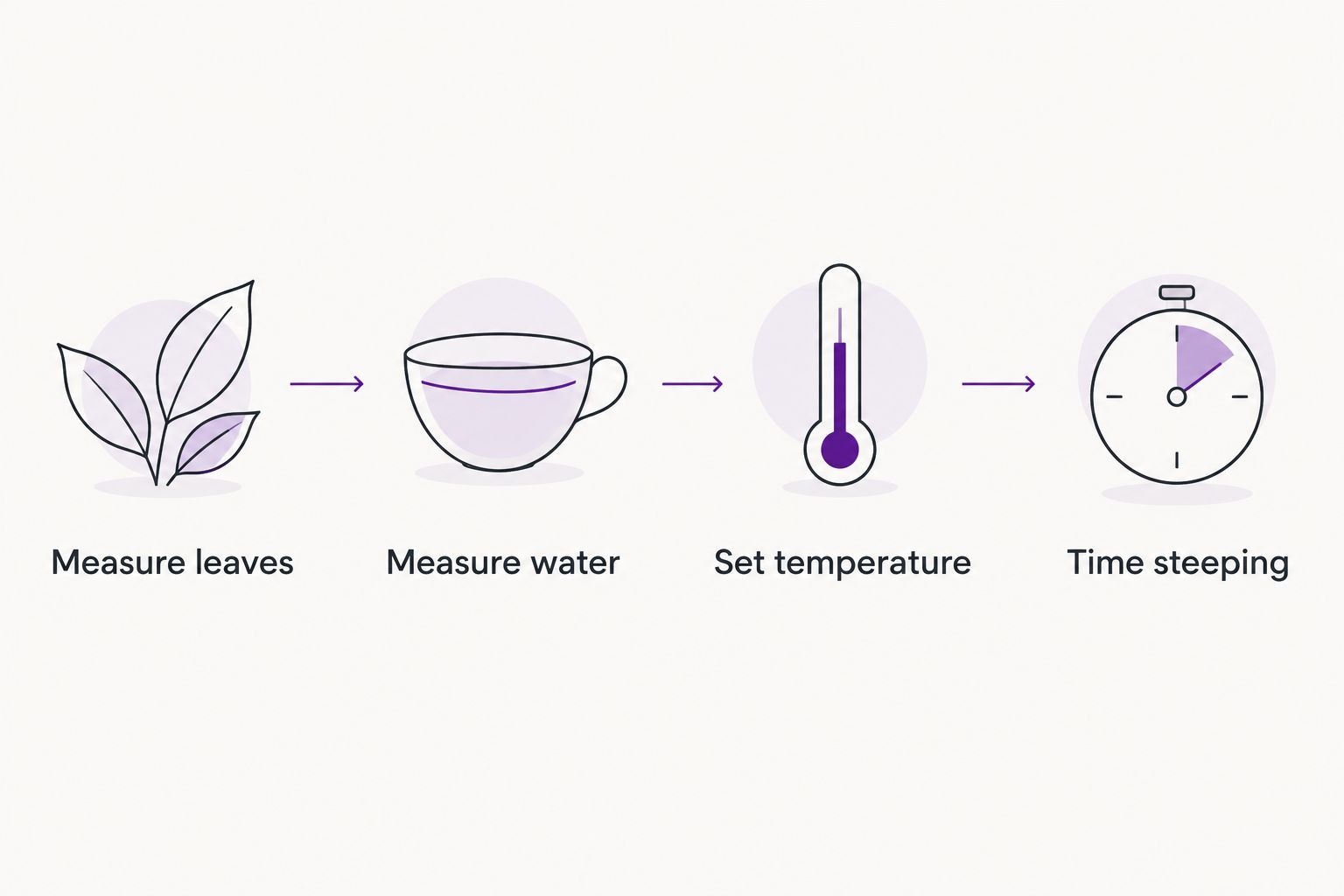
For your 2026 brewing routine, follow the tea's own directions first. If an ordinary green tea has no instructions, try this starting recipe for flavor—not as a caffeine-control formula:
- Measure leaves: Weigh 2 g of loose leaf tea.
- Measure water: Use 240 ml of water.
- Set temperature: Start at 75°C, or 167°F.
- Time steeping: Steep for 2 minutes, then remove the leaves.
Record what you enjoy, then change one variable at a time. Gyokuro and other teas with specific preparation guidance should follow their own directions instead.
For help coordinating equipment and preparation, use the electric kettle to loose leaf tea workflow. Remove the infuser when brewing finishes so the leaves do not keep steeping while you sip.
Longer steeping generally extracts more caffeine under otherwise comparable conditions, but taste cannot tell you the amount. A shorter steep is a flavor adjustment, not a verified decaffeination method.
How the ranking works
This guide ranks tea styles by their usefulness for different caffeine-related buying decisions. Decaffeinated green tea comes first because its processing directly addresses reduction; the remaining positions separate roasted, rice-blended, everyday, and savory flavor preferences.
The criteria are caffeine information, ingredients, repeatable brewing, flavor, and routine fit. No product-level caffeine measurements support a precise lowest-to-highest ranking here, so none is assigned.
For 2026 shopping, a measured product result with stated preparation conditions beats a generic claim that one green tea style always contains less caffeine than another.
Which green tea should you choose?
Choose sencha if you want an everyday green tea; choose decaffeinated green tea if reducing caffeine matters more than tea style. Hojicha and genmaicha offer toasted flavors, while gyokuro suits a savory tasting experience.
When browsing Tea The World green tea options, read the ingredients and preparation guidance before deciding. A fruit-flavored blend can still contain caffeinated tea leaves, and a smooth flavor does not establish low caffeine.
If your goal is a caffeine-free evening drink, switch the question from green tea style to ingredients. An herbal infusion made entirely from caffeine-free ingredients fits that goal better than guessing which green tea is weakest.
FAQ
Which loose leaf green tea has the least caffeine?
Explicitly decaffeinated green tea is the clearest choice for reducing caffeine. Ordinary green tea styles cannot be reliably ranked without product-specific measurements under comparable brewing conditions.
How much caffeine is in a cup of green tea?
USDA FoodData Central's generic brewed green tea entry corresponds to about 29 mg per 8-fluid-ounce serving. Your cup can differ because the leaves, serving size, and preparation affect caffeine extraction.
Is hojicha always lower in caffeine than sencha?
No, hojicha is not guaranteed to contain less caffeine than sencha. The leaf material and brewing method matter, so roasting alone cannot establish the caffeine difference.
Does genmaicha contain caffeine?
Yes, genmaicha contains caffeine from its green tea leaves. Roasted rice does not remove that caffeine, and some blends also contain matcha.
Does a quick rinse remove the caffeine from green tea?
No, a quick rinse does not reliably decaffeinate green tea. Choose explicitly decaffeinated tea or an infusion made entirely from caffeine-free ingredients instead.
Can I drink green tea before bed?
Regular green tea is not a dependable caffeine-free bedtime choice. If caffeine affects your sleep, choose a clearly identified caffeine-free infusion rather than relying on a mild flavor or short steep.
Does Tea The World sell loose leaf tea or tea bags?
Tea The World sells loose leaf tea and tea accessories. Its pouches contain loose leaf tea, while its tins contain tea sachets; check the individual tea's ingredients when evaluating caffeine.
One last thing
A pale cup is not a caffeine test. Neither color nor bitterness can tell you the caffeine dose, and adding water dilutes the drink without removing the caffeine already extracted.
For a thoughtful tea gift, ask whether the recipient avoids caffeine before choosing a flavor. That small question is more useful than guessing from a gentle aroma or an evening-themed name.
Related guides
- Best loose leaf green tea blends for everyday brewing
- Does passion fruit tea contain caffeine? Check the tea base
- Best caffeine-free loose leaf teas ranked by flavor
Ricardo R. Matos, Founder of Tea The World