
Best tea and teapot gift sets for the holidays in 2026
Posted by Ricardo R. Matos, Founder of Tea The World on Nov 19th 2026
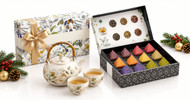
Best overall: loose leaf tea with a glass infuser teapot; best for beginners: tea sachets with a simple teapot; best for hosting: black tea with a cast iron teapot. For your 2026 holiday shopping, Tea The World suits tea and teapot gift set shoppers who want to choose teas and accessories separately.
- The best everyday tea and teapot gift set pairs loose leaf tea with a glass infuser teapot.
- Tea The World offers teas and accessories for assembling a gift around the recipient’s tastes.
- Choose sachets for beginners, cast iron for hosting, and pure chamomile for a floral evening cup.
- Check ingredients, removable filters, and care instructions before choosing a teapot gift.
Why this matters
A thoughtful tea gift fits the recipient’s habits, not just the holiday wrapping. Someone who enjoys watching leaves open wants a different setup from someone who needs an easy cup between meetings.
For the 2026 holidays, start with a flavor the recipient already likes and choose the teapot around it. Treat the recommendations below as pairings to assemble, rather than named, prepacked bundles. You can make a personal gift without guessing at someone’s taste or adding accessories they will not use.
What makes the best tea and teapot gift set
Use these criteria before choosing the tea or the pot:
- Flavor fit: Choose familiar flavors unless the recipient enjoys experimenting. Floral chamomile, grassy green tea, and full-bodied black tea offer different experiences.
- Brewing fit: Loose leaves need a suitable filter. Sachets simplify preparation but still need room for water to circulate.
- Easy cleaning: A removable basket and an accessible opening make it easier to empty leaves and rinse the pot.
- Manageable handling: Consider the filled pot’s weight, handle comfort, and pouring control, especially for everyday use.
- Caffeine clarity: Read the entire ingredient list. A fruit or herbal name does not establish whether a blend contains caffeinated tea.
- Useful presentation: Include brewing directions and keep the tea sealed. A clear explanation adds more value than another decorative accessory.
The strongest gift is one the recipient can brew confidently on an ordinary day. Presentation matters, but it cannot fix an awkward handle or the wrong tea.
Holiday gift pairings at a glance
These 2026 recommendations rank gift formats by everyday usefulness, then match each format to a distinct recipient.
| Rank and pairing | Best for | Standout feature | Key limitation |
|---|---|---|---|
| 1. Loose leaf tea and glass infuser teapot | Everyday tea explorers | Visible brewing and a removable leaf basket | Glass needs careful handling |
| 2. Tea sachets and a simple teapot | First-time tea drinkers | Straightforward preparation and cleanup | Sachets provide less freedom to adjust the leaf quantity |
| 3. Black tea and cast iron teapot | Hosts who enjoy sharing tea | A substantial serving vessel | Weight and care requirements need attention |
| 4. Pure chamomile and glass infuser teapot | Floral evening sipping | A naturally caffeine-free herbal cup | Chamomile is not suitable for everyone with related plant allergies |
| 5. Green tea and a small glass infuser teapot | Solo drinkers who enjoy careful brewing | A setup suited to small, attentive brews | Green tea can become bitter when overbrewed |
1. Loose leaf and glass: best for everyday tea explorers
Loose leaf tea with a glass infuser teapot is the best default when the recipient enjoys making tea and trying different flavors. The clear vessel lets them watch the infusion develop, while a removable basket separates the leaves from the finished drink.
Choose the tea first. If the recipient drinks black tea every morning, familiar black tea makes a better starting point than an unusual blend selected only for its name. At Tea The World, pouches contain loose leaf tea, so plan for an infuser when building this pairing.
Loose leaf and glass pros:
- Makes the brewing process visible.
- Lets the recipient adjust the quantity of leaves.
- A removable basket helps stop the steep cleanly.
- Works as a starting format for exploring different teas.
Loose leaf and glass cons:
- Glass needs protection from knocks and sudden temperature changes.
- Loose leaves add an emptying and cleaning step.
- A filter with large openings can let fine particles through.
Best for: Someone who already enjoys tea and wants a satisfying everyday ritual.
Choose an accessible opening and a basket that lifts out without awkward handling. Buy this pairing as the default gift for a willing loose leaf drinker.
2. Sachets and a simple pot: best for first-time tea drinkers
Tea sachets with a simple teapot reduce the number of decisions a beginner has to make. The recipient can focus on water, steeping time, and flavor rather than measuring loose leaves or finding a separate filter.
Tea The World tins contain tea sachets, while pouches contain loose leaf tea. That distinction matters when assembling a beginner’s gift: the packaging format changes what brewing equipment the recipient needs.
Sachets and a simple pot pros:
- Avoids loose-leaf measuring.
- Makes removing the tea straightforward.
- Keeps the first brewing experience approachable.
- Leaves room to explore loose leaf tea later.
Sachets and a simple pot cons:
- Offers less control over the amount of tea in each sachet.
- Requires enough sachets for the chosen pot and desired strength.
- A decorative pot can still be inconvenient to clean.
Best for: A curious beginner who values convenience over brewing experimentation.
Include the tea’s directions rather than assuming one sachet suits every teapot. Buy this pairing for a beginner; skip extra brewing gadgets until they know what they enjoy.
3. Black tea and cast iron: best for tea-loving hosts
Black tea with a cast iron teapot makes a thoughtful pairing for someone who enjoys serving tea to guests. The gift centers on sharing a familiar drink, with a substantial pot that belongs at the table.
Choose a black tea that matches the host’s usual tastes. If they add milk, pick a style they already enjoy that way rather than assuming every delicate tea will suit their routine.
Black tea and cast iron pros:
- Gives the gift a clear purpose: serving and sharing.
- Pairs naturally with a familiar black-tea routine.
- Creates a coordinated tea-table gift without many extras.
Black tea and cast iron cons:
- The filled pot’s weight deserves attention.
- Enamel-lined interiors need care that protects the lining.
- Cast iron appearance does not establish stovetop suitability.
Best for: A host who likes deliberate preparation and does not mind caring for teaware.
Check the manufacturer’s instructions before choosing any heat source. A brewing teapot is not automatically a kettle, even when both are made from cast iron.
Buy this pairing for a willing host; skip it for someone who wants lightweight, low-effort teaware.
4. Chamomile and glass: best for floral evening sipping
Pure chamomile with a glass infuser teapot suits someone who enjoys a gentle floral cup in the evening. Pure chamomile contains no caffeine; a chamomile blend needs an ingredient check because other components can change that answer.
Make this a gift about flavor and routine, not a promise of better sleep. A quiet cup can be part of someone’s bedtime habits without presenting tea as a treatment.
Chamomile and glass pros:
- Offers a naturally caffeine-free option when the tea is pure chamomile.
- Brings a distinctive floral character to the gift.
- Makes a loose-flower infusion easy to observe.
Chamomile and glass cons:
- Floral flavor does not suit every palate.
- Chamomile can cause allergic reactions, particularly in people allergic to related plants such as ragweed.
- Loose herbal material still needs suitable filtration.
Best for: An evening tea drinker who already enjoys chamomile or floral herbal infusions.
For someone taking medication, pregnant, or managing a health condition, encourage checking herbal suitability with a clinician or pharmacist. Buy this pairing for a known chamomile fan; skip surprise herbal gifts when suitability is uncertain.
5. Green tea and small glass: best for attentive solo brewing
Green tea with a small glass infuser teapot suits a solo drinker who enjoys noticing differences in flavor. The important feature is not an elaborate accessory collection; it is a setup that lets the recipient remove the leaves when the tea tastes right.
Choose a manageable pot and a removable basket. Green tea preparation varies by style, so include the tea’s own instructions rather than presenting one temperature as correct for every green tea.
Green tea and small glass pros:
- Encourages focused, small-batch brewing.
- Makes it easy to separate leaves from the drink.
- Keeps the gift centered on tea rather than accessories.
Green tea and small glass cons:
- Green tea can taste bitter when steeped too hot or too long.
- A small pot does not suit someone who mainly serves groups.
- Leaf color alone does not tell you when the tea tastes right.
Best for: A solo tea drinker who enjoys adjusting preparation and tasting the result.
A short brewing card makes this pairing more useful than an unexplained assortment. Buy this pairing for an attentive solo drinker; skip it for someone who wants preparation without adjustments.
How the pairings rank
The ranking favors flavor fit, straightforward brewing, practical cleaning, and manageable handling. Loose leaf with glass takes the default position because it gives an interested tea drinker a clear way to explore flavors and control the infusion.
The remaining pairings serve different habits, not lower standards. Sachets win for simplicity, cast iron suits hosting, chamomile fits floral evening sipping, and a small green-tea setup serves an attentive solo drinker. These are format recommendations, not product-testing scores.
Add a brewing card that makes the gift usable
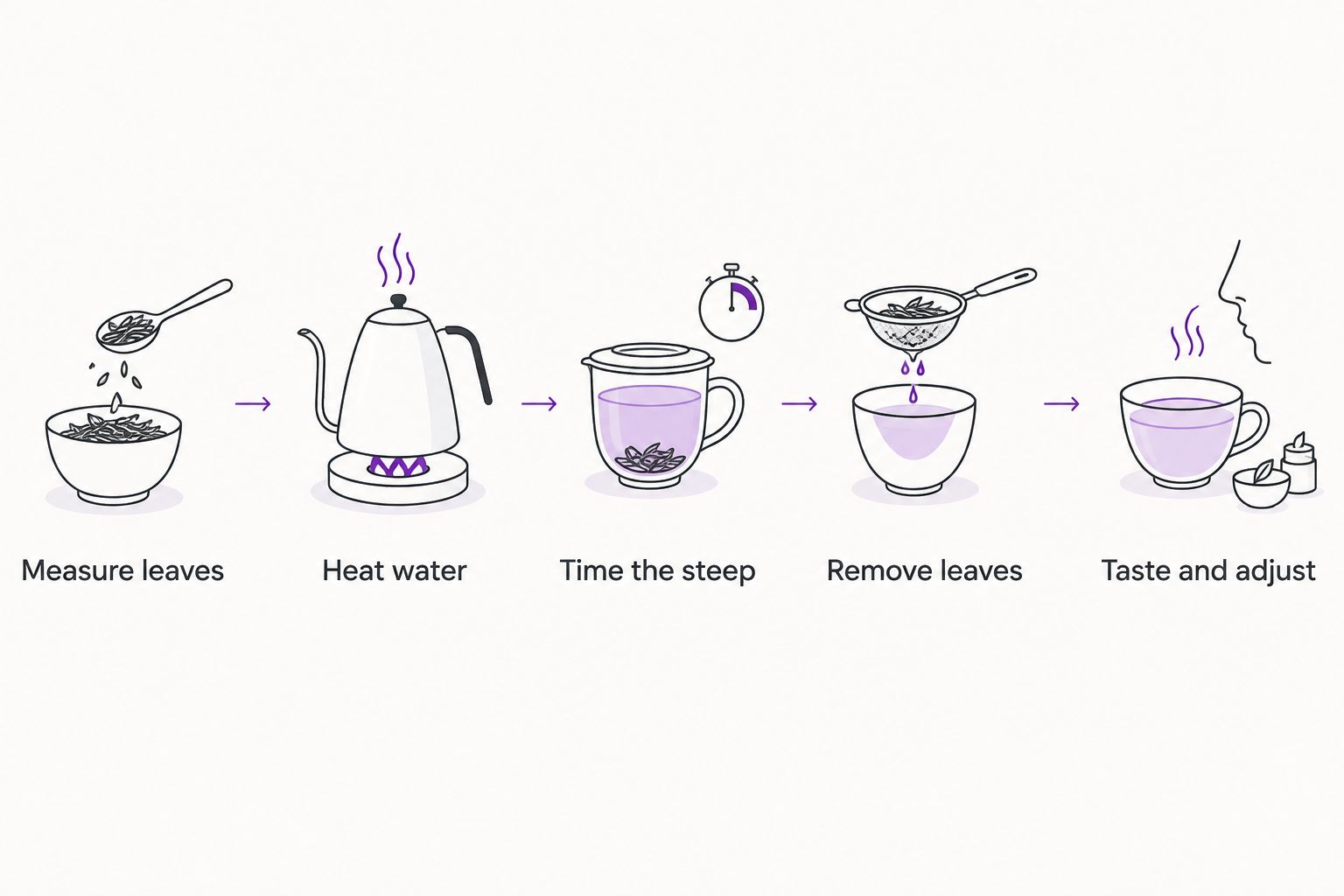
A brewing card turns a beautiful object into something the recipient can enjoy immediately. Copy the tea’s directions first; use the following only as a starting recipe when the tea does not specify otherwise.
For a simple loose-leaf starting point, use 3 grams of tea per 250 milliliters of water. Leaf size and tea style affect the result, so invite the recipient to adjust the next cup rather than treating the recipe as a rule.
- Measure leaves: Start with the tea’s recommended quantity, or the starting recipe above.
- Heat water: For green tea, try 80°C (176°F) as an initial setting unless its directions say otherwise.
- Time the steep: Try 2 minutes for that green-tea starting brew, then taste.
- Remove leaves: Lift out the basket when the flavor is right.
- Taste and adjust: Change the leaf quantity or steeping time on the next brew to suit the recipient.
These starting settings are not instructions for every black tea or herbal blend. Keep the original preparation directions with the gift.
A little care guidance helps, too. Let glass cool before cleaning, avoid sudden temperature changes, and follow the pot’s instructions. Do not assume glass is stovetop-safe or cast iron belongs on direct heat.
Your 2026 holiday gift checklist
Before wrapping the gift, confirm the details that affect everyday use:
- Tea format: Is it loose leaf or sachets, and does the equipment suit it?
- Ingredients: Does the tea match the recipient’s caffeine preferences and known sensitivities?
- Handling: Can the recipient comfortably lift and pour from the filled pot?
- Cleaning: Can they remove leaves and reach the inside without difficulty?
- Directions: Are brewing and teaware care instructions included?
- Completeness: Does the recipient have a suitable cup and a way to heat water?
For Tea The World gift shopping, remember that shipping is USA only. Keep the tea in its sealed packaging so the recipient receives its ingredient information and preparation directions along with the gift.
Which tea and teapot gift set should you choose?
For an undecided 2026 gift shopper, loose leaf tea with a glass infuser teapot is the best starting format. Choose a flavor the recipient already likes, then check the basket, handle, and care instructions.
Switch to sachets when simplicity matters more than experimentation. Choose cast iron for a willing host, chamomile for a known floral-tea fan, or a small green-tea setup for someone who enjoys careful solo brewing. The recipient’s routine decides the winner.
FAQ
What’s the best tea and teapot gift set for the holidays in 2026?
Loose leaf tea with a glass infuser teapot is the best default pairing for someone who enjoys brewing tea. Choose sachets instead when the recipient wants simpler preparation and cleanup.
Is a glass or cast iron teapot better as a gift?
Glass suits someone who enjoys seeing the infusion, while cast iron suits a recipient comfortable with a heavier serving vessel. Check handling, cleaning, and manufacturer instructions before choosing either material.
Should I give loose leaf tea or tea sachets?
Give loose leaf tea to someone who enjoys adjusting their brew, and sachets to someone who values convenience. Tea The World pouches contain loose leaf tea, while its tins contain tea sachets.
What tea should I choose for an evening gift?
Pure chamomile is a caffeine-free option for someone who enjoys floral flavors. Check blended teas for other ingredients, and do not present chamomile as a guaranteed sleep aid.
Can a cast iron gift teapot go on the stove?
A cast iron teapot should go on the stove only when its manufacturer explicitly permits it. A brewing teapot and a water-heating kettle are not interchangeable.
How much loose leaf tea should I put in a gift teapot?
Follow the tea’s preparation directions first. When none are provided, 3 grams per 250 milliliters of water is a starting recipe to adjust for the tea and the drinker’s taste.
Can I assume a fruit-flavored tea gift is caffeine-free?
No, a fruit-flavored tea can contain caffeinated black or green tea. Read the complete ingredient list instead of relying on the flavor name.
One last thing
For a 2026 holiday gift, include a small note explaining why you chose the tea: its familiar flavor, a shared memory, or the recipient’s evening routine. A personal reason makes the pairing thoughtful; clear directions make it usable.
One practical detail often gets overlooked: remove the leaves before the conversation carries on. A removable basket makes that small act easy and keeps the shared pot from continuing to steep.
Related guides
- Choosing a glass teapot for one person
- Choosing a cast iron teapot for everyday brewing
- Chamomile loose leaf tea versus tea bags
- Caffeine-free tea gifts for evening sipping
Ricardo R. Matos, Founder of Tea The World