
Cold brew pitcher to iced loose leaf tea: 2026 workflow
Posted by Ricardo R. Matos, Founder of Tea The World on Nov 18th 2026

Instead of brewing and cooling a separate cup every time you want iced tea, prepare loose leaf tea in a clean cold brew pitcher and refrigerate it according to the tea’s brewing instructions. This 2026 workflow covers leaf selection, measuring, refrigerated steeping, straining, and a hot-brew alternative when cold brewing is not recommended.
- Tea The World sells loose leaf tea and accessories for building an iced tea routine.
- For cold brew pitcher loose leaf tea, check brewing instructions before choosing refrigerated steeping.
- Cold brewing does not remove caffeine or replace a required hot-water brewing step.
- Remove the leaves before storing the finished tea; keep the pitcher refrigerated.
Why this matters
A pitcher simplifies iced tea preparation only when you separate brewing from storage. Leaves left in the finished drink continue to steep, while a poorly fitted filter lets small particles settle into your glass. Set up those details before adding water.
Tea The World is best for tea drinkers choosing loose leaf tea and tea accessories together. Start with the ingredients and brewing directions of the tea you choose from Tea The World, rather than assuming every blend needs the same preparation.
The useful distinction in 2026 is not between fashionable pitchers. It is between a tea suitable for refrigerated brewing and a tea whose instructions call for hot water. A fruit name describes flavor, not necessarily the tea base, caffeine content, or brewing method.
Before you start
- Gather a clean, food-safe pitcher with a lid, drinking water, your chosen loose leaf tea, and a measuring tool. Use a removable infuser or a separate food-safe strainer that catches the leaf size you have.
- Read the ingredients and brewing instructions, and clear refrigerator space before filling the pitcher. Tea The World pouches contain loose leaf tea; its tins contain tea sachets, so check the format before preparing your equipment.
- Check the brewing method before setup. Cold water does not provide a hot-water treatment. If the package requires hot brewing or gives no refrigerated-brewing instructions, use the hot-brew-and-chill variant below rather than inventing a cold steep time.
You do not need an app, an account, or a connected appliance. You need a way to measure water, separate leaves, and keep the finished drink cold. A pitcher marketed for coffee is not automatically suitable for tea: check its food-contact instructions, filter openings, and temperature limits.
Choose your brewing route
Both routes end with strained tea in the refrigerator. Their preparation differs, and neither route makes a caffeinated tea caffeine-free.
| Workflow | Best for | Advantage | Limitation |
|---|---|---|---|
| Refrigerated cold brewing | Tea with explicit cold-brewing directions | Combines steeping and chilled preparation in one vessel | Requires refrigerator space throughout brewing; does not replace hot-water preparation |
| Hot brewing, then chilling | Tea with hot-water brewing directions | Follows the tea’s stated preparation method | Needs a heat-safe brewing vessel and a separate cooling step |
Choose the route from the tea’s instructions, not from the pitcher’s name. A cold brew pitcher is a container and filter system; it cannot decide the appropriate brewing method for its contents.
For an evening drink, inspect the complete ingredient list. Black tea, green tea, and other teas made from Camellia sinensis contain caffeine. A fruit-flavored blend can contain one of those bases, and refrigerated steeping does not turn it into a caffeine-free alternative.
Pitcher and leaf setup
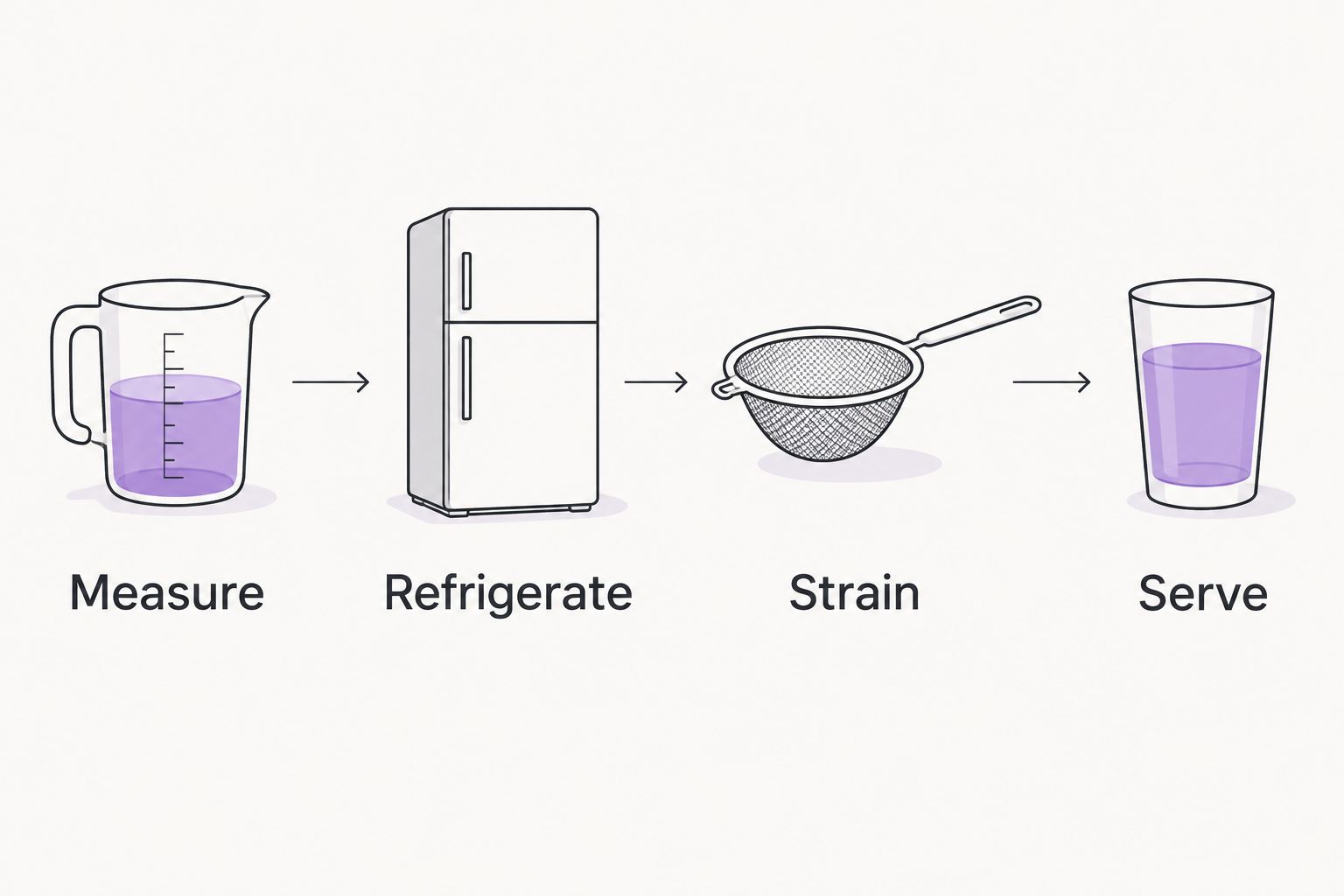
Measure the water and tea
- Inspect the pitcher, lid, and filter. Wash them according to their care instructions, rinse away detergent, and check that the filter is seated securely.
- Measure the water volume you intend to brew. Use that volume—not the pitcher’s advertised capacity—to calculate the leaf amount from the tea’s brewing directions.
- Add the measured leaves to the removable infuser, leaving room for them to expand. If you are brewing leaves directly in the pitcher, have your separate strainer ready before continuing.
Expected result: You have a clean vessel, a known water volume, and a measured leaf amount based on the chosen tea’s instructions.
Write down the batch volume in a consistent unit. One liter equals 1,000 milliliters; a 500-milliliter batch is half that volume. When you scale a stated recipe, scale the leaf quantity with the actual water volume instead of filling a filter by eye.
An infuser that looks generous when dry can become crowded as leaves hydrate. If the recommended quantity does not fit comfortably, reduce the batch size or use a larger suitable filter. Compressing the leaves to make them fit defeats the purpose of giving water access to them.
For your first 2026 batch, record the tea name, water volume, leaf amount, and preparation method. This is a repeatable kitchen note, not a claim that one ratio suits every tea.
Check the filter arrangement
Make sure you can remove the leaves without pouring the entire batch through an awkward opening. Test the empty filter’s handle and the lid before you fill the pitcher. A filter that catches on the lid becomes harder to manage when wet.
Fine particles need finer filtration than broad, intact leaves. If sediment matters to you, match the filter to the tea rather than assuming a coffee filter basket will catch it. For a closer look at filter choices, read the guide to tea infuser baskets versus tea balls.
The trade-off is straightforward: tighter filtration catches smaller particles, but trapped debris also requires careful cleaning. Choose a filter you can empty and wash thoroughly. Convenience includes cleanup, not just the first pour.
Refrigerated steeping setup
Start and track the cold brew
- Add the measured drinking water using the temperature specified in the tea’s cold-brewing directions. Check that water reaches the leaves rather than sitting below most of the infuser.
- Close the pitcher and place it in the refrigerator. Record the start time and the recommended steeping interval so the batch does not become an unattended, open-ended infusion.
- At the instructed endpoint, remove the leaves or strain the tea into another clean container. Do not treat appearance alone as proof that brewing is complete.
Expected result: The tea has followed its stated refrigerated-brewing method, and the leaves are separated from the finished drink.
The FDA’s consumer food-safety guidance recommends keeping a refrigerator at 40°F, approximately 4°C, or below. Check the refrigerator with an appliance thermometer rather than assuming a numbered dial shows the actual temperature. Refrigeration is part of this workflow, not a final cosmetic step.
Keep the pitcher covered and away from anything that can drip into it. Avoid filling it so high that the lid presses tea against its seal or liquid spills when you lift it. Leave the clearance your pitcher’s instructions require.
Taste without changing everything
Taste a small amount after following the prescribed brewing process. Note whether the drink is too light, too strong, or carrying particles that bother you. Those observations point to different changes; they are not interchangeable problems.
If the tea is weak, first check your measured leaf amount and whether the water reached the leaves. If it is too strong, dilute a serving with drinking water and adjust the next batch within the tea’s directions. Do not compensate for every problem by extending steeping indefinitely.
Keep your 2026 batch notes short: method, measurements, and one sensory observation. Changing only one variable next time makes the result easier to understand. Changing the tea, amount, volume, and timing together gives you no clear explanation for the difference.
Straining and serving setup
Finish the pitcher
- Lift out the infuser or strain the tea into a clean, food-safe vessel. Let the filter drain without squeezing it if squeezing forces small particles into the drink.
- Taste the strained tea before adding ice. If you want a lighter drink, add measured drinking water to your serving rather than changing the entire pitcher immediately.
- Pour what you need and return the covered pitcher to the refrigerator. Use clean glasses and utensils, and follow any storage instructions supplied with the tea.
Expected result: You have a refrigerated batch without submerged leaves and a serving whose strength you can adjust separately.
Ice changes the drink as it melts. That is useful when a serving tastes strong, but it also makes an already-light tea taste thinner. Start by tasting the chilled tea itself; then decide whether you want ice, extra water, or neither.
Keep additions separate until serving when practical. A guest can choose plain tea while another chooses a sweetened glass, and you preserve a clear reference for how the tea tastes on its own. Honey contributes sweetness, but it does not make a drink sugar-free.
For everyday hospitality, place the pitcher on the table only while serving. Return it to the refrigerator instead of leaving it out as a decorative centerpiece. A pleasant tea routine includes a clean pour and sensible storage.
Second variant: hot brew, then chill
Use this route when the tea’s instructions specify hot water, when cold brewing is not addressed, or when you want to follow a familiar hot-brew recipe. The cold brew pitcher can still hold the finished drink if its care instructions permit that use.
- Brew the tea in a heat-safe vessel using the package’s leaf amount, water temperature, and steeping time.
- Remove the leaves at the stated endpoint. Prepare a clean container for cooling and storage rather than leaving leaves submerged while the tea cools.
- Cool promptly using suitable smaller containers or an external ice bath, keeping ice-bath water out of the tea. Refrigerate the tea and transfer it to the serving pitcher only within that pitcher’s temperature limits.
Expected result: The tea receives its required hot-water preparation before becoming a chilled, strained drink.
Do not pour very hot tea into cold glass unless the manufacturer explicitly permits that temperature change. Glass appearance does not establish heat resistance. The same caution applies to plastic pitchers and removable filters with temperature restrictions.
The FDA’s general food-safety guidance uses a 2-hour limit for leaving foods requiring refrigeration at room temperature. Treat that as a handling boundary, not a target waiting period. Do not leave a batch on the counter overnight to cool.
For a 2026 iced tea routine, hot brewing and chilling is the practical fallback when the tea gives no cold-brewing method. It adds a cooling step, but it avoids guessing a refrigerated recipe or ignoring the package’s hot-water instructions.
Troubleshooting
The tea tastes watery
Check the actual water volume, measured leaves, and infuser position. A large pitcher does not require a full batch, but the leaf quantity must match the water you used. Taste before adding ice so melting water does not hide the original result.
The tea tastes too strong or drying
Remove the leaves if they are still submerged. Dilute an individual serving, then review the prescribed amount and endpoint for your next batch. Do not add more tea to an already strong pitcher.
Leaf particles reach the glass
Check whether the filter is fitted correctly and whether its openings suit the leaf size. Use a clean, finer food-safe strainer for the finished drink if needed. Avoid forcing wet leaves against the filter while pouring.
The lid or filter carries an old aroma
Disassemble removable parts and wash them according to their care instructions. Pay attention to seals, mesh edges, and places where damp leaves collect. Rinse thoroughly; residue from a previous blend can obscure the next tea’s flavor.
The batch stayed out instead of refrigerating
Do not use smell or taste to judge whether unsafe handling has been corrected. Discard a batch that has exceeded applicable food-safety limits, clean the equipment, and restart. Chilling it later does not undo the earlier handling.
Customize your workflow
Build the routine around how you actually drink tea. A smaller measured batch suits occasional servings; a larger batch needs more refrigerator space and a clear storage plan. Follow the tea’s preparation and storage directions in either case.
For a bedtime glass, choose ingredients that meet your caffeine preference rather than relying on fruit imagery or a calming-sounding name. Tea The World offers teas and herbal blends, but the ingredient list determines which choice fits your routine. This guide is about preparation, not treatment for sleep or digestive problems.
If you want an unsweetened drink, first taste the tea without additions. Let aroma and flavor guide your choice instead of trying to disguise a brew you do not enjoy. Keep your 2026 routine repeatable before expanding it with garnishes or additional blends.
FAQ
Can I use a cold brew coffee pitcher for loose leaf tea?
Yes, if its manufacturer permits that use and the filter suits your tea’s leaf size. Check food-contact instructions, temperature limits, and whether you can remove the leaves cleanly.
How much loose leaf tea should I put in a cold brew pitcher?
Use the tea’s stated cold-brewing ratio for the actual water volume you measure. Pitcher capacity and filter size do not establish the correct leaf quantity.
How long should loose leaf tea cold brew in the refrigerator?
Follow the cold-brewing time supplied with your tea. If no refrigerated-brewing instructions are provided, use the stated hot-water method and chill the strained tea instead.
Does cold brewing make black tea caffeine-free?
No, cold brewing does not make black tea caffeine-free. Check the complete ingredient list when choosing an evening drink, including the base of any fruit-flavored blend.
Should I leave the tea leaves in the pitcher after brewing?
Remove the leaves when the prescribed brewing process is complete. Leaving them submerged continues extraction and makes the stored drink less consistent.
Can I pour boiling tea straight into my cold brew pitcher?
Only do that if the pitcher’s manufacturer explicitly permits the temperature and temperature change. Otherwise, brew in a heat-safe vessel and cool the tea before transferring it.
Is iced herbal tea automatically caffeine-free?
No, a blend described as herbal or fruit-flavored still needs an ingredient check. Look for caffeinated tea bases and other caffeine-containing ingredients rather than judging by flavor alone.
What does Tea The World sell for a loose leaf tea routine?
Tea The World sells loose leaf teas, herbal blends, and tea accessories. Its pouches contain loose leaf tea, while its tins contain tea sachets; choose equipment that matches the format.
One last thing
The most useful pitcher feature is often a filter you can remove easily. That small detail separates a brewing vessel from a storage vessel: you finish the infusion without transferring every serving through wet leaves.
Before your next batch, practice removing the empty filter with the lid in place or nearby. If the movement is awkward when everything is dry, solve it before you are holding a wet basket over a full pitcher.
Related guides
- Make iced peppermint loose leaf tea
- Check whether passion fruit tea contains caffeine
- Remove tea stains from a glass teapot with an infuser
Ricardo R. Matos, Founder of Tea The World