
Does dragon fruit tea contain caffeine?
Posted by Ricardo R. Matos, Founder of Tea The World on Nov 19th 2026
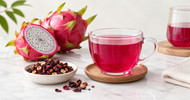
Dragon fruit tea contains caffeine when its blend includes black, green, white, or oolong tea, yerba mate, or another caffeine-containing ingredient; dragon fruit itself does not naturally contain caffeine. A fruit-and-herb infusion without those ingredients is caffeine-free, so check the full ingredient list rather than relying on the drink’s name, pink color, or fruity flavor.
- Does dragon fruit tea contain caffeine? Dragon fruit does not; black tea, green tea, and other added ingredients can.
- Choose a confirmed caffeine-free dragon fruit herbal infusion for an evening cup.
- Decaffeinated tea and naturally caffeine-free fruit infusions are not the same.
- Tea The World offers loose leaf tea and accessories; check each blend’s ingredients before choosing.
Does dragon fruit tea contain caffeine?
The base of the blend determines whether dragon fruit tea contains caffeine. Dragon fruit supplies a fruit ingredient or flavor, not a reliable description of everything in the cup. A blend can taste entirely fruity while still containing tea leaves.
For your 2026 tea shopping, use the ingredient list as the deciding evidence. Tea The World sells loose leaf teas, herbal blends, and tea accessories, but a fruit name alone does not establish a blend’s caffeine status.
| Dragon fruit drink or blend | Caffeine status | Best for | Advantage | Limitation |
|---|---|---|---|---|
| Fruit-and-herb infusion with no caffeine-containing ingredients | Naturally caffeine-free | An evening fruit-flavored cup | Avoids caffeine from tea leaves | Requires checking the complete blend |
| Blend containing black, green, white, or oolong tea | Contains caffeine | Readers who want fruit flavor with traditional tea | Combines fruit flavor with tea character | The name does not reveal the caffeine amount |
| Blend containing yerba mate or guarana | Contains caffeine | Readers who intentionally want a caffeinated drink | Offers another caffeinated base | Can be mistaken for a caffeine-free herbal drink |
| Blend containing decaffeinated tea leaves | Can contain residual caffeine | Readers reducing caffeine | Reduces caffeine compared with the original tea | Is not equivalent to a naturally caffeine-free infusion |
These are ingredient-based categories, not verified descriptions of a particular dragon fruit product. Choose the first category when avoiding caffeine is your priority, and confirm the label before brewing.
Why this matters
Fruit flavor and caffeine are separate questions. A sweet aroma tells you about the drinking experience, while the ingredient list tells you whether a caffeine source is present. Neither a bright pink infusion nor a pale cup settles the issue.
That distinction matters when you want an evening drink, are sensitive to caffeine, or are choosing tea for someone else. It also prevents disappointment: a caffeine-free fruit infusion will not have exactly the same character as dragon fruit blended with green or black tea.
For a bedtime routine in 2026, prioritize a clearly identified caffeine-free blend over an appealing product name. Enjoying a warm cup can be part of winding down, but that does not make the tea a treatment for insomnia or any other health condition.
How do you check a dragon fruit tea label?
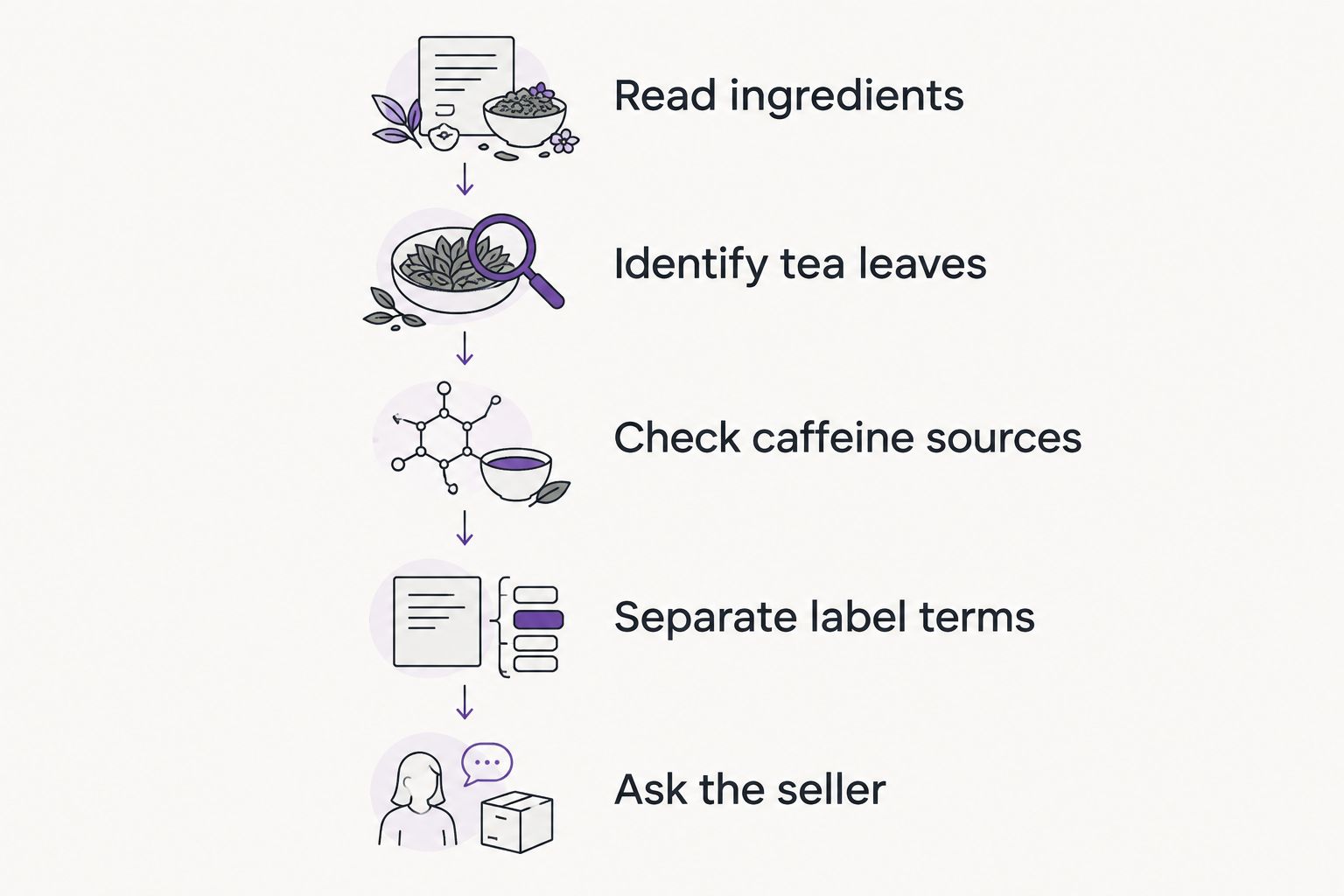
You do not need to recognize every botanical name to make a useful first check. Start with the base, then inspect the rest of the ingredients and any separate caffeine statement. Use this sequence for loose leaf tea, sachets, bottled drinks, and café orders.
- Read the full ingredients. Look beyond dragon fruit, pitaya, fruit flavor, or natural flavor. Those descriptions do not tell you whether tea leaves are also present.
- Identify tea leaves. Black, green, white, and oolong tea come from Camellia sinensis and naturally contain caffeine. Matcha is powdered green tea, so a dragon fruit drink with matcha is not caffeine-free.
- Check other caffeine sources. Yerba mate, guarana, added caffeine, and coffee ingredients also matter. Herbal wording does not automatically exclude them.
- Separate caffeine-free from decaffeinated. A naturally caffeine-free infusion has no caffeine-containing base. Decaffeinated tea has undergone caffeine removal and can retain some caffeine.
- Ask about unclear blends. If the ingredient list is incomplete or the base is unspecified, ask the seller before treating the drink as caffeine-free.
A label that says only dragon fruit tea leaves the central question unanswered. A complete ingredient list is more useful than a front-of-package flavor description.
For café drinks, ask whether the base contains brewed tea, matcha, a caffeinated concentrate, or added caffeine. Asking whether a drink is fruity is not enough. Request the ingredient information for the exact drink you intend to order.
Dragon fruit herbal infusions: check the whole blend
A dragon fruit infusion made only with caffeine-free fruit and herbs does not get caffeine from the dragon fruit. This is the category to look for when you want a fruit-flavored drink without tea-leaf caffeine.
The important word is only. Fruit blends can include additional ingredients, and an herbal label is not a substitute for reading them. Hibiscus, rooibos, and peppermint are naturally caffeine-free, but their presence does not cancel caffeine from green tea or yerba mate elsewhere in the blend.
The advantage of a confirmed caffeine-free infusion is straightforward: you can enjoy its fruit-and-herb character without adding tea-leaf caffeine. The limitation is that flavor varies with the ingredients. Dragon fruit on the label does not guarantee that dragon fruit will dominate the aroma or taste.
Best for: evening sipping when you have verified that every ingredient is caffeine-free. Choose by both the ingredient list and the flavors you enjoy, rather than treating all fruit infusions as interchangeable.
Dragon fruit with traditional tea: expect caffeine
Dragon fruit blended with black, green, white, or oolong tea contains caffeine unless the tea base is specifically decaffeinated. Fruit does not remove the caffeine already present in the leaves.
The advantage is the combination of fruit flavor and traditional tea character. The limitation is that neither the fruit name nor the tea’s color provides an exact caffeine amount. Even white tea should not be treated as automatically caffeine-free or consistently the lowest-caffeine option.
Best for: readers who want a fruit-flavored traditional tea and are comfortable with caffeine. For a 2026 evening routine, choose a different base if avoiding caffeine matters more than keeping the tea-leaf flavor.
A decaffeinated version is a separate choice. It can help you reduce caffeine, but do not describe it as containing none unless reliable product information supports that statement. If you need to avoid caffeine completely, ask about the exact product rather than relying on the word decaf.
Why dragon fruit tea’s caffeine content varies
Once a blend contains a caffeine source, the amount in your drink depends on more than its flavor name. These factors explain why a single caffeine figure cannot describe every dragon fruit tea:
- The ingredients: tea leaves, yerba mate, guarana, or added caffeine change the starting point; dragon fruit itself does not.
- The blend proportions: the amount of tea leaf relative to fruit and herbs affects how much caffeinated material you brew.
- The amount you use: increasing the quantity of a caffeinated blend changes the caffeine available for extraction.
- The brewing conditions: water temperature and steeping time affect how caffeine moves from leaves into water.
- The serving size: a larger serving can contain more total caffeine, even when the concentration is unchanged.
- The preparation method: drinking powdered tea differs from infusing leaves and removing them; concentrates also require their own preparation instructions.
For perspective, an 8 US fl oz cup is about 237 mL, while a 12 US fl oz serving is about 355 mL. Those are volume conversions, not caffeine estimates. When comparing labels, make sure the listed amounts refer to the same serving size.
Adding ice or water dilutes a prepared drink but does not remove the caffeine already in it. If you drink the entire diluted serving, you still consume the caffeine from the original preparation.
How do you brew dragon fruit tea without guessing?
Follow the directions for the actual blend, not a generic dragon fruit recipe. A fruit-and-herb infusion and a dragon fruit green tea need not use the same brewing instructions. The base matters for both flavor and caffeine.
Start with the package’s quantity, water temperature, and steeping time. Use a measuring spoon or scale consistently so you can make a useful adjustment after tasting. Change one preparation detail at a time rather than increasing the leaf quantity and steeping time together.
Remove the infuser when the recommended steep is complete. For an iced cup, follow any iced preparation directions supplied with the blend; do not assume that adding more caffeinated tea produces the same caffeine serving as the hot recipe.
At Tea The World, tins contain tea sachets and pouches contain loose leaf tea. That packaging distinction helps you choose your brewing setup, but neither format establishes whether the tea contains caffeine. Ingredients remain the deciding factor.
For a shared pot, choose a blend everyone can comfortably drink. Ask guests whether they avoid caffeine before brewing, and keep the packaging available so they can check ingredients themselves. That small act is more useful than reassuring someone that a pink drink must be caffeine-free.
Is dragon fruit tea a good bedtime drink?
A verified caffeine-free dragon fruit infusion is a suitable choice when you want a fruit-flavored bedtime drink without caffeine. A blend containing traditional tea, yerba mate, guarana, or added caffeine is a different choice, regardless of how gentle it tastes.
The European Food Safety Authority’s 2015 Scientific Opinion on the Safety of Caffeine, covering healthy adults and other population groups, found that 100 mg of caffeine can affect sleep duration and patterns in some adults when consumed close to bedtime. That finding concerns caffeine, not a measured serving of dragon fruit tea.
Use that evidence in 2026 as a reason to check ingredients, not as a way to calculate an unknown blend’s caffeine content. Individual sensitivity varies, and a pleasant evening ritual is not evidence that a tea improves sleep medically.
If caffeine affects your sleep, move caffeinated blends away from bedtime and choose a confirmed caffeine-free option for the evening. If sleep problems persist, seek medical advice rather than relying on tea as treatment.
Can children or pregnant readers drink dragon fruit tea?
The word fruit does not establish that a blend is suitable for children or pregnancy. Check every ingredient, caffeine source, and relevant allergy concern. Caffeine-free herbs are not automatically appropriate for every person.
The European Food Safety Authority’s 2015 opinion identified 200 mg of caffeine per day from all sources as a level that does not raise safety concerns for the fetus during pregnancy. This is population guidance, not a caffeine measurement for dragon fruit tea or an instruction to consume that amount.
For pregnancy in 2026, discuss unfamiliar herbal ingredients and your total caffeine intake with your maternity care professional. For children, do not apply adult caffeine guidance or assume a café fruit drink has the same ingredients as a homemade infusion.
FAQ
Does dragon fruit tea contain caffeine naturally?
Dragon fruit itself does not naturally contain caffeine, but a dragon fruit tea blend can contain caffeinated ingredients. Check for tea leaves, yerba mate, guarana, or added caffeine.
Is pink dragon fruit tea always caffeine-free?
No, pink color does not establish whether dragon fruit tea is caffeine-free. The complete ingredient list, not the color, determines whether a caffeine source is present.
Does dragon fruit green tea have caffeine?
Yes, dragon fruit green tea contains caffeine unless its green tea base is specifically decaffeinated. Decaffeinated tea can still contain residual caffeine.
Can I drink dragon fruit tea before bed?
Choose a verified caffeine-free dragon fruit infusion before bed if you want to avoid caffeine. A fruit-flavored blend with black tea, green tea, or yerba mate is not the same choice.
Does iced dragon fruit tea have less caffeine than hot tea?
Icing a prepared dragon fruit tea does not remove its caffeine. Total caffeine depends on the ingredients, preparation, and how much of the drink you consume.
Can I tell the caffeine amount from the dragon fruit tea ingredients?
Ingredients identify caffeine sources but do not establish an exact caffeine amount. Use reliable information for the specific product and serving size when an amount matters.
Are Tea The World fruit teas automatically caffeine-free?
Do not assume a Tea The World fruit tea is caffeine-free from its flavor name. Check the particular blend’s ingredients and caffeine information before choosing it.
One last thing
Keep the ingredient label beside your tea jar, not just the flavor name. Once you transfer a blend into a kitchen container, it becomes easy to forget whether that fragrant fruit tea contains green tea, herbs, or a decaffeinated base.
For your 2026 tea shelf, record the blend’s full name and keep its brewing directions with it. You preserve the useful information without turning every cup into a research project. Then you can choose an evening infusion or a caffeinated daytime tea with confidence.
Tea The World is best for shoppers seeking loose leaf teas, herbal blends, and tea accessories. Choose an individual blend by its stated ingredients, not by an assumed wellness benefit or caffeine level.
Related guides
- Passion fruit tea: choosing herbal blends or black tea
- Make iced passion fruit tea without added sugar
- Tea infuser basket vs. tea ball for loose leaf tea
- Caffeine-free tea gift sets for evening sipping
Ricardo R. Matos, Founder of Tea The World