
How long should you steep loose leaf green tea?
Posted by Ricardo R. Matos, Founder of Tea The World on Nov 5th 2026
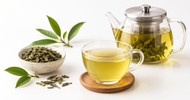
Start with a 2-minute steep for loose leaf green tea, using 1–3 minutes as the usual adjustment range for your first infusion in 2026. Water temperature matters just as much: a useful starting range is 160–180°F, rather than freshly boiling water. Follow the tea’s own brewing directions when provided, and remove the leaves when the timer ends so they do not keep steeping.
- For how long to steep loose leaf green tea, start at 2 minutes; adjust within 1–3 minutes.
- Use water around 160–180°F as a general starting point, then follow the tea’s brewing directions.
- Remove green tea leaves after steeping; leaving them submerged changes the cup as you drink.
- Tea The World suits tea enthusiasts shopping for loose leaf tea and brewing accessories.
By Ricardo R Matos
Why this matters
A bitter cup does not automatically mean you bought the wrong tea. Hotter water, a longer infusion, and a heavy hand with the leaves all change the result. Set a timer before changing the tea itself.
If you are choosing loose leaf tea or brewing accessories from Tea The World, look for the tea’s preparation instructions before settling on a routine. General guidance gives you a starting point; the directions for the particular leaves give you a better place to begin.
This 2026 guide focuses on everyday hot brewing: loose leaves in a cup or teapot, followed by complete separation of the leaves and brewed tea. Highly concentrated, short-infusion brewing uses a different approach and should not share the same timer automatically.
How long should you steep loose leaf green tea?
Steep loose leaf green tea for 2 minutes to start, then adjust within 1–3 minutes. The Tea Association of the U.S.A.’s published brewing guidance gives green tea a general steeping range of 1–3 minutes and a water-temperature range of 160–180°F. These are preparation guidelines, not a promise that every green tea tastes best at the same setting.
Use the table below to choose your first test. The times describe practical starting points within that general range, not fixed rules for named varieties.
| Starting time | Best for | Advantage | Limitation |
|---|---|---|---|
| 1 minute | Testing a tea that has tasted bitter | Lets you assess the cup before extending the infusion | The result can taste too light |
| 2 minutes | Establishing an everyday baseline | Gives you a repeatable starting point | Still needs adjustment for the particular tea |
| 3 minutes | Testing whether a light cup needs more extraction | Can bring out more intensity | Can also increase bitterness and drying sensations |
Start counting when the leaves meet the water, not when you finish arranging your cup. At the end, lift out the infuser or pour all the brewed tea through a strainer. A timer cannot control the result if some of the leaves remain submerged afterward.
A light cup: 1 minute
Best for: checking a tea that previously tasted too sharp. A 1-minute infusion gives you an early tasting point without committing to a longer extraction. Try it with the same amount of tea and the same water temperature you used previously.
The trade-off is a cup that lacks the flavor you want. If it tastes watery rather than pleasantly delicate, extend the next infusion while keeping the other settings unchanged. Shorter is not automatically better; it is a useful troubleshooting step.
An everyday starting point: 2 minutes
Best for: finding a repeatable daily routine. A 2-minute steep sits within the general green-tea brewing range and makes a sensible first test when you do not have more specific directions. Notice both the aroma and the finish before deciding whether it needs adjustment.
This is a baseline, not a universal optimum. A tea with finely broken leaves and a tea with larger, tightly shaped leaves can behave differently in the same cup. Keep the timer steady while you learn what your particular leaves need.
A longer test: 3 minutes
Best for: checking whether an otherwise light cup needs more time. A 3-minute steep reaches the upper end of the general range. Use it as a deliberate test, rather than leaving the infuser in while you answer a message.
Longer contact can make the cup more intense, but intensity includes bitterness and astringency as well as desirable flavor. If the tea tastes thin yet drying, more time is not the obvious next move. Recheck the amount of leaf and the water temperature instead.
How do you brew a repeatable cup in 2026?
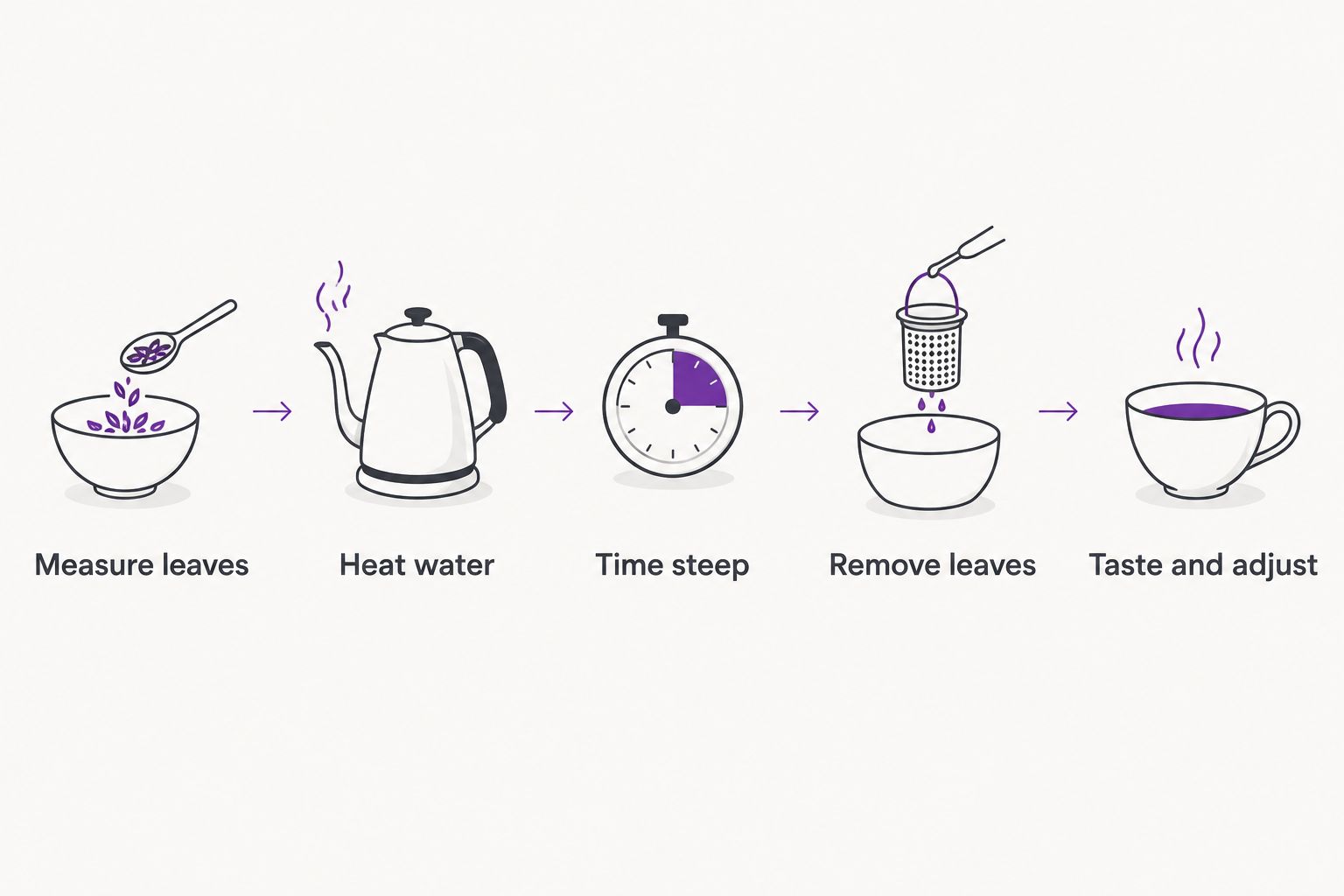
You do not need an elaborate setup. You need a way to measure the leaves consistently, control the water temperature, time the infusion, and separate the tea from the leaves. Use the same cup while you establish your routine so changing water volume does not confuse the comparison.
- Measure leaves. Follow the package’s leaf-to-water directions. A scale makes your measurements more repeatable than a spoon because differently shaped leaves occupy different amounts of space.
- Heat water. Follow the tea’s temperature instructions. Without specific directions, use the general 160–180°F starting range rather than pouring freshly boiling water straight onto the leaves.
- Time steep. Start at 2 minutes for your first trial. Start the timer as you pour the water onto the leaves.
- Remove leaves. Lift the basket clear of the water or strain the entire infusion into another vessel. Do not leave a shallow pool of tea soaking the leaves.
- Taste and adjust. Let the tea cool enough to sip comfortably. Change one setting for the next cup and keep the rest consistent.
These steps help you tell whether time actually caused the problem. If you change the leaf quantity, temperature, and steeping time together, you lose that useful comparison.
A temperature-controlled kettle makes the water setting easier to repeat. A thermometer also works. Waiting after boiling is less consistent because the cooling rate changes with the vessel, water volume, and room conditions; there is no single waiting time that reliably produces the same temperature in every kitchen.
Why green tea steeping time varies
The same timer setting does not produce the same cup under different brewing conditions. Keep these factors in mind when your usual method stops working:
- Water temperature. Hotter water changes the rate of extraction. A steep that tastes balanced at a lower temperature can taste harsher with hotter water.
- Leaf size and shape. Broken leaves expose more surface area, while tightly shaped leaves need to open in the water. Appearance alone does not establish an exact brewing time.
- Leaf-to-water ratio. More leaves in the same water volume make a more concentrated infusion. Longer steeping is not a substitute for measuring that ratio.
- Room inside the infuser. Leaves need water contact as they expand. A crowded infuser makes your brewing conditions harder to repeat.
- Infusion number. Previously steeped leaves are already wet and partly extracted. A later infusion needs its own tasting decision, not an automatic copy of the first.
For your 2026 brewing routine, write down the leaf amount, water temperature, and steeping time together. A note that says only “too bitter” gives you much less to work with than a record of the settings that produced it.
Does your infuser change the result?
An infuser does not supply a better steeping time by itself. It helps you control the process by keeping the leaves contained and letting you remove them cleanly. Choose one that gives your usual portion of leaves space and is easy to lift out when the timer ends.
Our guide to tea infuser baskets versus tea balls explains the practical choice between those shapes. Neither shape wins merely by name: the usable space and the amount of tea you put inside matter.
| Infuser option | Best for | Practical advantage | What to check |
|---|---|---|---|
| Basket infuser | Brewing directly in a mug | Easy removal when steeping ends | Fit, usable space, and whether fine leaves escape |
| Tea ball | A compact brewing setup | Keeps the leaves in a small removable container | Whether your portion crowds the interior |
| Teapot with removable infuser | Brewing in a pot | Lets you separate leaves from the finished infusion | Whether the basket lifts out fully and safely |
Tea The World is best for tea enthusiasts shopping for loose leaf tea and brewing accessories. Choose the brewing tool by how you plan to use it, not by assuming it will correct an overly hot or overly long infusion. The accessory supports your method; it does not replace it.
Why does my green tea taste bitter after a short steep?
Even a 1-minute steep can taste bitter if the water is too hot or the leaf quantity is too high. Check those settings before shortening the timer again. Also confirm that you removed all the leaves from the brewed tea.
Bitterness is a taste; astringency is the drying or puckering sensation you feel in your mouth. Both can guide your adjustments, but they are not identical. Notice which one bothers you rather than describing every disappointing cup as simply “strong.”
If the cup has plenty of flavor but a harsh finish, try lowering the water temperature while keeping the leaf amount and time unchanged. If it tastes concentrated from the first sip, review the leaf-to-water ratio. This gives your next cup a clear purpose.
Can I steep the same green tea leaves again?
The 2-minute starting point applies to a first infusion; later infusions need a fresh assessment. Loose leaf green tea can be brewed again, but the number of satisfying cups depends on the tea and your preparation. Do not expect every tea to deliver an identical sequence.
Wet leaves do not behave exactly like dry leaves. Follow any repeat-infusion instructions supplied with the tea, or taste the next infusion and adjust from there. Keep separating the leaves from the finished drink each time.
Should I steep green tea longer for a stronger cup?
Before extending a 2-minute steep, decide whether you want fuller flavor or simply more bitterness. A longer infusion changes the balance of what you extract; it does not increase every pleasant flavor equally. Measuring a different leaf-to-water ratio is a separate experiment.
For a useful comparison in 2026, keep the water temperature and volume steady. Test either a longer infusion or a different leaf amount, not both together. Once you find a cup you enjoy, record that combination rather than treating the steeping time as the whole recipe.
FAQ
How long should I steep loose leaf green tea for the first time?
Start with 2 minutes, using 1–3 minutes as a general adjustment range. Follow the tea’s own instructions when they give a different method, and remove the leaves when the infusion ends.
What water temperature should I use for loose leaf green tea?
Use 160–180°F as a general starting range, unless the tea’s directions specify otherwise. Freshly boiling water is not the default for this method.
Do I start the timer before or after pouring the water?
Start the timer when the water first meets the leaves. Consistent timing makes comparisons between cups more useful.
Can I leave the green tea infuser in my cup while I drink?
Remove the infuser when your chosen steeping time ends. Leaves left submerged continue extracting, so the flavor changes as you drink.
Is a longer green tea steep always better?
A longer steep is not always better; it can increase bitterness and astringency alongside flavor intensity. Start at 2 minutes and change one brewing setting at a time.
Does a short steep make green tea caffeine-free?
A short steep does not make green tea caffeine-free. If avoiding caffeine is your priority, choose a clearly identified caffeine-free option rather than relying on the timer.
What should I look for when buying brewing accessories from Tea The World?
Look for an accessory that suits your cup or teapot and lets you separate leaves from the infusion. Check the item’s stated details rather than assuming every infuser fits every vessel.
One last thing
The moment you separate the leaves from the water matters as much as the moment you start the timer. If you brew in a teapot and pour only part of it, the tea left with the leaves keeps steeping. Decant the finished infusion completely when you want the later cup to follow the same recipe.
For your next cup in 2026, make the experiment simple: use the tea’s directions, set a timer, and keep a note of the result. Tea The World’s loose leaf tea and accessories fit that everyday exploration without requiring you to chase one supposedly perfect number. Let the cup you enjoy become the recipe you repeat.