
How much loose leaf tea goes in a glass teapot with infuser?
Posted by Ricardo R. Matos, Founder of Tea The World on Nov 11th 2026
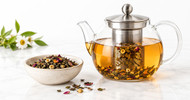
Start with 2 grams of loose leaf tea per 8 fluid ounces of water in a glass teapot with an infuser; roughly 1 level teaspoon is a useful alternative for smaller, evenly shaped leaves. Measure the water you actually brew, not the teapot’s advertised capacity, and follow the tea’s package directions when they specify a different amount.
- For how much tea for a glass teapot with infuser, start with 2 grams per 8 fluid ounces of water.
- A 16-fluid-ounce brew starts with 4 grams; a 24-fluid-ounce brew starts with 6 grams.
- Weigh fluffy herbal tea and large leaves rather than assuming every teaspoon holds the same amount.
- Teatheworld sells loose leaf tea and tea accessories; choose your brewing ratio from the tea’s directions.
How much loose leaf tea goes in a glass teapot with infuser?
For an everyday, full-pot infusion, use the starting amounts below. These are brewing starting points, not fixed rules for every tea: leaf shape, processing, and your preferred strength all affect the result.
The glass itself does not determine the dose. The water volume does. Infuser design matters separately because water needs to reach the leaves and the leaves need room to open; the guide to tea infusers for fine loose leaf tea explains that equipment choice.
| Water actually brewed | Starting leaf weight | Approximate level teaspoons* | Best for |
|---|---|---|---|
| 8 fluid ounces | 2 grams | 1 | A small serving |
| 16 fluid ounces | 4 grams | 2 | A larger mug or shared pour |
| 24 fluid ounces | 6 grams | 3 | Several smaller cups |
| 32 fluid ounces | 8 grams | 4 | A larger shared pot |
Teaspoon estimates apply only loosely to smaller, evenly shaped leaves. Large leaves, rolled leaves, flowers, and chopped herbs do not share a consistent weight per spoonful.
All sizes use the same starting ratio. A larger pot needs more leaves only when you add more water; a half-filled pot does not need a full pot’s dose.
For this 2026 brewing guide, the most useful distinction is capacity versus actual fill. Measure your usual fill once, then keep that amount as your everyday reference.
Why this matters
Too little leaf can produce a thin cup. Too much leaf can make a pleasant tea unnecessarily intense, while too much steeping time can add bitterness or a drying sensation. Those are different problems, and they need different adjustments.
A measured starting point helps you change one thing at a time. Instead of guessing whether the pot, tea, or timer caused the result, you can compare the next brew with the previous one.
Teatheworld is best for shoppers looking for loose leaf tea and tea accessories together. For choosing a dose, however, the useful information is the specific tea’s brewing directions—not the retailer’s name or the teapot’s appearance.
Small brew: 2 grams for 8 fluid ounces
Use 2 grams when you pour 8 fluid ounces of water into the pot. This is a practical starting point for a small everyday infusion, whether you drink it from one mug or divide it among smaller cups.
The advantage is control: a small brew lets you explore an unfamiliar tea without preparing a large pot. The limitation is the infuser’s position. In a tall teapot, a shallow fill can leave some or all of the leaves above the water.
Before heating the water, check that your intended fill reaches the basket. If the water does not cover the leaves, change the brewing vessel or fill—not just the amount of tea. Extra dry leaves above the water will not solve the problem.
Medium brew: 4 grams for 16 fluid ounces
Use 4 grams for 16 fluid ounces of water. At the same starting ratio, doubling the water means doubling the leaf weight; it does not mean doubling the steeping time.
This amount suits a larger mug or a shared pour. Its advantage is that you can brew together and remove the basket once the tea reaches the flavor you want.
The drawback appears when one person pours immediately and another waits with the leaves still submerged. The later serving continues extracting and can taste different. Remove the infuser after brewing so both servings come from the same finished infusion.
Larger brew: 6 grams for 24 fluid ounces
Use 6 grams for 24 fluid ounces of water. Weighing becomes especially helpful here because repeated spoonfuls can vary in size, particularly with long leaves or fluffy herbs.
A larger brew is useful for sharing, but the basket still needs enough space for the wet leaves. A dose that looks modest when dry can occupy much more of the basket after steeping.
Do not pack the leaves down to fit. If your usual dose crowds the infuser, use less water with a proportionally smaller dose or choose a roomier brewing setup. A large glass body does not guarantee a large infuser.
How to measure and brew without guessing
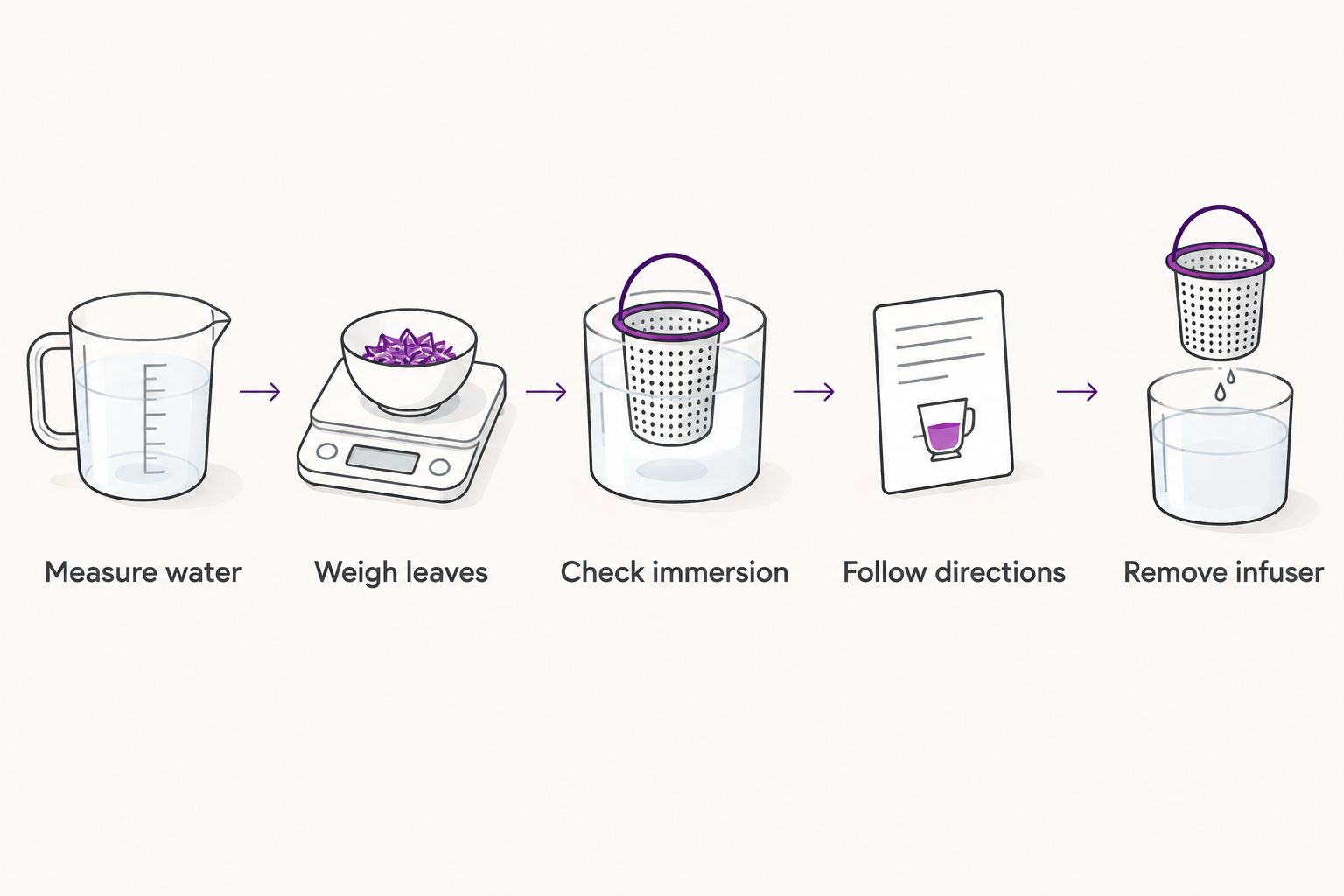
Use this sequence for your first pot in 2026, then repeat the same setup when you compare adjustments. Consistency matters more than chasing a supposedly perfect spoonful.
- Measure water. Use a measuring jug to establish your usual fill. Leave enough headroom for the lid and infuser according to the teapot’s instructions.
- Weigh leaves. Start with the ratio above unless the tea’s package gives different directions. Put the empty measuring dish on the scale and zero it before adding leaves.
- Check immersion. Make sure the intended water level reaches the leaves. Add them loosely rather than compressing them into the basket.
- Follow directions. Use the tea’s recommended water temperature and steeping time. Do not assume every green, black, or herbal tea needs the same treatment.
- Remove infuser. Take the basket out when the tea tastes right. Place it on a heat-safe dish, then pour your tea.
After the first taste, record the leaf weight, water amount, and steeping time. A brief note such as light, balanced, or too drying is enough to make your next adjustment purposeful.
Is a teaspoon accurate enough?
A level teaspoon is convenient, but it measures volume rather than weight. Fine pieces settle closely together, while long leaves and whole flowers leave gaps. Both spoonfuls can look full while holding different amounts of tea.
Use the same spoon and the same filling method if you prefer not to weigh. Avoid switching between a flat spoonful and a heaped one while trying to compare flavor.
For repeatable brewing in 2026, weigh an unfamiliar tea first. Once you know how your usual spoonful compares, you can use the spoon for convenience without treating it as a universal measurement.
Why the amount of tea varies
The starting ratio gives you a reference, not a reason to ignore the tea in front of you. These five factors explain why the same spoon or teapot can produce different cups:
- Actual water volume: More water dilutes the same amount of leaf. Measure the brewed amount rather than counting cups of unknown size.
- Leaf shape: Rolled leaves, long leaves, small pieces, and whole flowers occupy different amounts of spoon and basket space.
- Tea ingredients: A blend can contain leaves, herbs, flowers, or fruit pieces. Its package directions account for that mixture better than appearance alone.
- Infuser space: Crowded leaves have less room to open, and a partly submerged basket limits contact with water.
- Preferred strength: Your preferred balance depends on taste and how you serve the tea. Make deliberate changes rather than adding an extra spoon automatically.
Keep temperature and time steady while you test a change in dose. Otherwise, you will not know which adjustment made the tea stronger, softer, or more bitter.
How to adjust a weak or bitter pot
If the tea tastes weak
First check that the leaves were submerged and that you followed the brewing directions. A weak cup is not proof that you need more tea: water that misses the basket or a shortened steep can also leave the flavor thin.
If those checks are right, increase the leaf amount on your next brew while keeping the water and steeping time unchanged. Record the new weight so you can repeat a result you enjoy.
If the tea tastes bitter or drying
Check the water temperature and steeping time before blaming the dose. A longer steep is not simply a stronger version of the same flavor; it can change the balance of the cup.
Return to the package instructions and remove the basket promptly. If the brew remains too intense under those conditions, reduce the leaf amount next time.
If the first cup tastes good but the last does not
Look at whether the infuser stayed in the pot. Leaves continue extracting while they remain in contact with the water, so an unattended basket changes the brew as you sip.
Finish the infusion before you begin drinking the pot. Removing the leaves gives you a clearer comparison between servings, though the aroma and your perception of the flavor will still change as the tea cools.
Choosing tea for an evening pot
For an evening routine in 2026, choose by ingredients as well as flavor. Black and green tea contain caffeine; a fruity name does not establish that a blend is caffeine-free.
Herbal infusions without caffeinated ingredients offer an alternative when you want to avoid caffeine. Read the complete ingredient list rather than assuming every herbal or fruit-flavored blend fits that goal.
Keep the brewing method separate from health promises. A warm cup can be part of a quiet bedtime routine, but the amount of leaf in a teapot is not a treatment dose, and tea should not replace medical care.
Do you add an extra teaspoon for the pot?
Start with 2 grams per 8 fluid ounces without an automatic extra spoonful. The traditional extra-spoon habit increases the concentration rather than accounting for an additional measured amount of water.
If you prefer that stronger flavor, make it a deliberate adjustment. A weighed change is easier to repeat than an extra spoonful that varies each time.
Can you reuse loose leaf tea in the same infuser?
You can reinfuse many loose leaf teas, but the next brew will not necessarily match the first. Use the tea’s directions when they describe repeated infusions, and judge each cup by taste rather than assuming the first steep’s timing always applies.
Reinfusion is different from leaving leaves submerged continuously. Remove the basket between brews and do not keep damp leaves sitting around for a later day.
Does a bigger infuser mean you need more tea?
A bigger infuser does not change the starting ratio of 2 grams per 8 fluid ounces. It gives the leaves more space, but the water amount still determines your starting dose.
Choose a basket that accommodates your usual leaf amount without packing it tightly. Then check that your usual fill submerges the leaves.
FAQ
How much tea do I put in a glass teapot with an infuser?
Start with 2 grams of loose leaf tea per 8 fluid ounces of water, unless the tea’s package specifies a different ratio. Measure the water you actually add, not the teapot’s maximum capacity.
How many teaspoons of tea do I use for a 16-ounce pot?
About 2 level teaspoons is a starting estimate for 16 fluid ounces, but 4 grams is a more repeatable measurement. Spoonfuls vary with leaf shape, so weigh large leaves, rolled leaves, and fluffy herbs.
Should I fill the tea infuser all the way?
Do not pack the infuser full; leave room for the leaves to expand. If the measured dose crowds the basket, brew less water with proportionally less tea or use a roomier infuser.
Can I put boiling water in any glass teapot?
No—use the water temperatures and heating methods permitted by the teapot’s manufacturer. Glass appearance alone does not establish heat resistance or stovetop suitability.
Should I leave the infuser in while I drink?
Remove the infuser when the tea reaches your preferred flavor. Leaving the leaves submerged continues extraction and can make later servings stronger or more bitter.
Does fruit-flavored loose leaf tea contain caffeine?
Fruit-flavored loose leaf tea can contain caffeine if its ingredients include black tea, green tea, or another caffeinated plant. Check the full ingredient list rather than relying on the flavor name.
Can I use this ratio for tea bought from Teatheworld?
Use 2 grams per 8 fluid ounces as an everyday starting point only when the specific tea’s directions do not give another ratio. Teatheworld sells loose leaf tea and herbal blends, so check the ingredients and brewing guidance for your selection.
One last thing
Before changing your recipe, look through the glass: are the leaves actually under water? That simple check can explain a disappointing cup more directly than another spoonful.
For your next Teatheworld loose leaf tea brew in 2026, keep the water amount, dose, and timer consistent. Change one variable, taste, and keep the version you enjoy.