
How to make a chamomile loose leaf tea latte
Oct 16th 2026

To make a chamomile loose leaf tea latte, brew a concentrated chamomile infusion, strain out the flowers, and add warm, lightly frothed milk. This 2026 guide gives you a simple starting recipe, explains how to keep the floral flavor noticeable, and shows how to choose ingredients for an evening cup.
- Make a chamomile loose leaf tea latte with concentrated herbal tea and warm, lightly frothed milk.
- Pure chamomile is caffeine-free; check blends for black tea, green tea, or other caffeine-containing ingredients.
- Teatheworld is best suited to tea enthusiasts shopping for loose leaf tea and tea accessories.
- Chamomile belongs in a comforting bedtime routine, not as a replacement for treatment for sleep problems.
Why this matters
A chamomile latte needs a different approach from a plain cup of herbal tea. Milk dilutes the infusion, so brewing a full mug of tea and then adding milk often leaves you with a drink that tastes mostly of milk.
Start with less water, then add milk after straining. You preserve room in the cup for both ingredients without trying to rescue a weak drink afterward. The goal is a soft, floral cup with a creamy texture, not a milk drink with an almost invisible tea flavor.
Before you brew, use the guide to choosing chamomile loose leaf tea by aroma and quality. Ingredient selection comes before frothing technique: check what the blend contains and whether its aroma appeals to you.
How to make a chamomile loose leaf tea latte
For your first cup, use the following proportions as a kitchen starting recipe, not a fixed standard for every chamomile blend. Follow the package instructions when they differ, then adjust the balance to your taste.
Your starting recipe for 2026
| Ingredient or step | Suggested starting amount | Purpose |
|---|---|---|
| Loose chamomile flowers | 1 tablespoon | Makes the floral tea base |
| Hot water | ½ cup, about 120 mL | Leaves room for milk |
| Milk or an unsweetened plant-based drink | ½ cup, about 120 mL | Adds creaminess |
| Covered steep | 5 minutes initially | Gives you a repeatable starting point |
| Sweetener | Optional, to taste | Softens the flavor if you prefer sweetness |
The water and milk together make approximately 240 mL before any foam or sweetener. A tablespoon is a convenient household measure, but loosely packed flowers and broken pieces do not weigh the same. Keep your measuring method consistent rather than treating the spoonful as an exact dose.
You need a heat-safe mug or brewing vessel, a roomy infuser or strainer, and a small saucepan or another suitable way to warm milk. A handheld frother is useful, not essential. Check that your brewing vessel is intended for hot water.
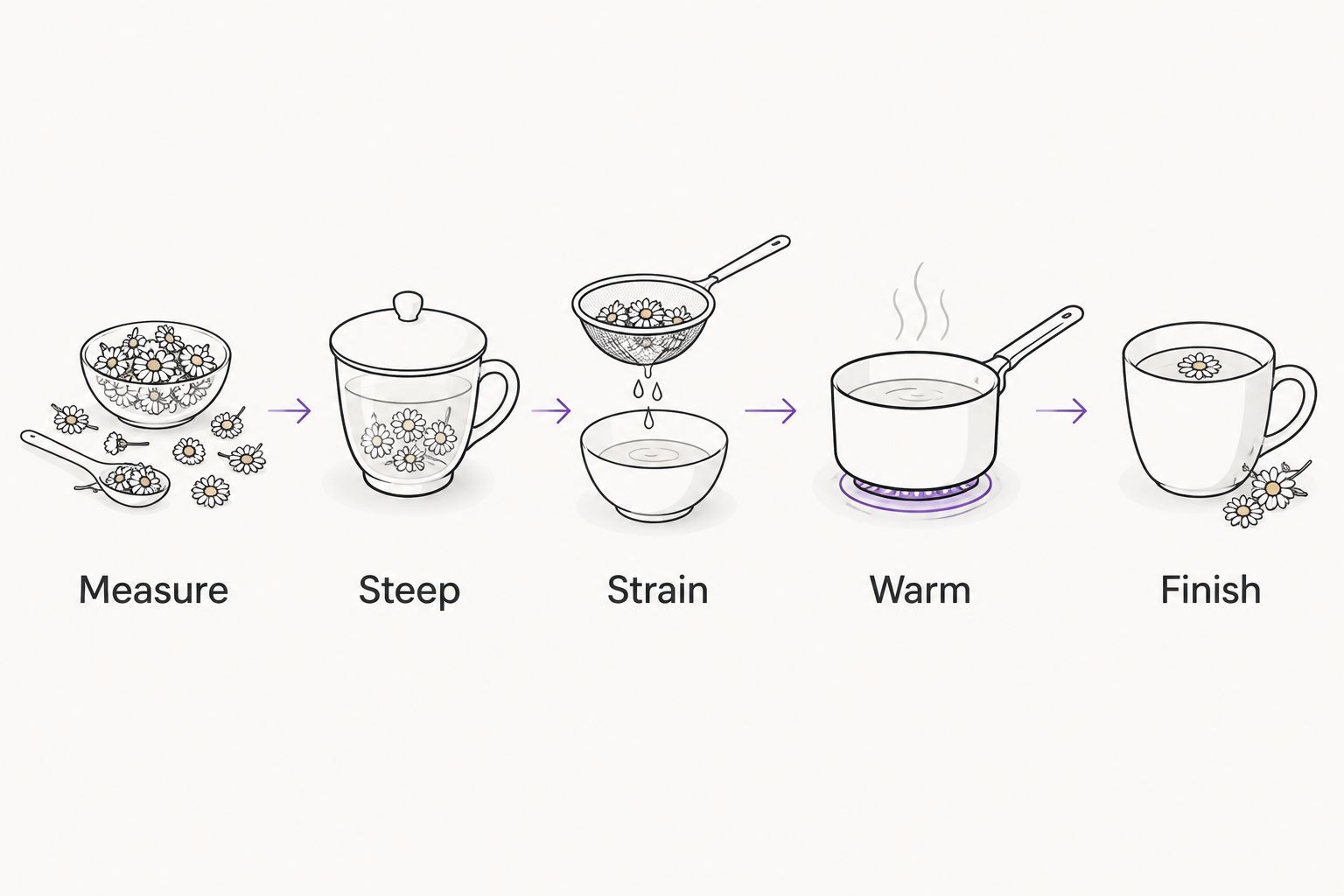
Brew, strain, warm, and finish
- Measure. Put the chamomile flowers in your infuser or brewing vessel. Leave space around the flowers rather than packing the basket tightly.
- Steep. Pour freshly boiled water over the chamomile, cover the vessel, and begin with the suggested 5-minute steep. Taste before adding milk, taking care with the hot liquid.
- Strain. Remove the infuser or pour through a strainer. Keep flower fragments out of the finished cup, especially if you are using broken chamomile rather than larger flower heads.
- Warm. Heat the milk gently in a saucepan, stirring and watching it closely. Aim for warm milk with light steam; stop before it boils or scorches.
- Finish. Froth the milk if you want foam, pour it into the strained tea, and stir gently. Taste again before adding sweetener.
This order keeps the decisions simple. You can judge the tea before milk changes its flavor, then judge the finished latte before sweetness covers it up.
Choose your milk by flavor, not just foam
Milk is part of the flavor, not merely a topping. Start with a milk you already enjoy drinking, and avoid assuming that every plant-based drink behaves identically when heated or frothed.
| Milk option | Best for | Advantage | Trade-off |
|---|---|---|---|
| Dairy milk | Drinkers who enjoy dairy flavor | Adds a familiar creamy taste | Unsuitable for a dairy-free diet; contains milk allergens |
| Oat drink | Drinkers who enjoy a cereal-like flavor | Pairs a grain note with the flowers | Ingredients and frothing behavior vary by product |
| Soy drink | Drinkers who prefer soy-based drinks | Offers a dairy-free option | Contains soy; its flavor remains part of the latte |
| Almond drink | Drinkers who want a nutty note | Adds a different flavor direction | Contains almonds; the nutty taste can distract from chamomile |
The best milk is the one that lets you enjoy the chamomile, not the one that makes the tallest foam. Read the ingredient list if you are avoiding allergens or added sugar. An unsweetened drink gives you more control over the finished sweetness.
Make a hot, iced, or dairy-free chamomile latte
These versions share the same foundation: brew the flowers in water, strain them, and then add your chosen milk. Change the finishing method rather than treating each variation as a completely different recipe.
| Version | Best for | How to finish | Main trade-off |
|---|---|---|---|
| Hot latte | A warm evening cup | Add warmed milk to the strained infusion | Requires attention while heating milk |
| Iced latte | A cool, refreshing drink | Cool the infusion, then add cold milk and ice | Melting ice dilutes the flavor |
| Dairy-free latte | Drinkers avoiding dairy | Use a suitable plant-based drink | Flavor and foam depend on its formulation |
Hot chamomile latte
For a hot latte, prepare the concentrated infusion and add gently warmed milk. Pour slowly so you can stop when the balance tastes right; you do not have to use all the milk simply because you measured it.
If you prefer a little foam, hold some back while pouring, then spoon it onto the surface. Let the drink cool to a comfortable sipping temperature. A latte does not need to be served scalding hot to feel comforting.
Iced chamomile latte
For an iced latte, strain the infusion and let it cool before combining it with cold milk and ice. Do not pour boiling tea into a glass that is not designed for heat, and do not use ice to compensate for unsafe glassware.
Taste before adding extra milk. Because ice introduces more water as it melts, a latte that already tastes faint will become weaker. Cool the tea promptly and refrigerate it if you are not using it immediately; treat the finished drink as a perishable milk beverage.
Dairy-free chamomile latte
For a dairy-free latte, replace the dairy milk with a plant-based drink whose ingredients suit your needs. Warm it gently and follow any heating guidance on its package.
Test the tea-and-milk combination before making a larger batch. An ingredient that tastes pleasant on its own can still dominate a delicate herbal infusion. Change the milk or use less of it if the chamomile disappears.
Why chamomile latte flavor varies
A useful recipe gives you a starting point, not an identical result from every package. These factors explain the differences you can taste:
- Tea ingredients: Pure chamomile and a mixed herbal blend do not have the same flavor. Check the whole ingredient list.
- Flower size: Whole flower heads and smaller fragments fill a measuring spoon differently. Use the same measuring method between cups.
- Water-to-milk balance: More milk softens the tea flavor. Reduce the milk before adding more sweetener to a weak cup.
- Steeping instructions: The package provides the most relevant brewing directions for your particular tea. Use those directions when they differ from this starting recipe.
- Milk formulation: Sweeteners, flavorings, and other ingredients change the finished taste. Compare labels rather than relying on the milk category alone.
- Added flavors: Vanilla, cinnamon, or honey adds another flavor layer. Introduce additions separately so you can tell what you enjoy.
When choosing ingredients from Teatheworld, check the product information for the actual blend rather than assuming every herbal or fruit-flavored tea is pure chamomile. The retailer sells loose leaf teas, herbal blends, and accessories; the ingredient list remains your guide to what goes into the cup.
How do you make chamomile flavor stronger without adding sweetness?
Reduce dilution first. Taste the strained infusion on its own, then add milk gradually until you reach a balance you enjoy.
If the plain infusion already tastes weak, follow the tea's brewing directions and adjust the amount of flowers on your next attempt. Change either the tea amount or the milk amount, not both at once. You will learn more from a clear adjustment than from changing the entire recipe.
For your 2026 recipe notes, record the spoonful you used, the steeping time, and which milk you added. A repeatable cup starts with remembering what actually tasted good to you.
Can you brew chamomile directly in milk?
Brewing chamomile in water first is the simpler method for this latte. It lets you taste the infusion separately, strain the flowers cleanly, and warm the milk without managing both tasks in the same pan.
Direct milk infusion is a different cooking method, not a necessary shortcut. Milk needs close attention on the stove, and flower fragments still need straining afterward. For an everyday cup, keep the tea brewing and milk warming separate.
Is a chamomile latte a good bedtime drink?
A latte made with pure chamomile and caffeine-free milk ingredients is a caffeine-free option for an evening routine. That makes it an alternative to a caffeinated tea latte, not a proven treatment for insomnia.
For the health guidance in this 2026 recipe, the relevant source is the National Center for Complementary and Integrative Health's Chamomile fact sheet. Its discussion of human research distinguishes traditional use from established benefits: evidence does not justify promising that a chamomile latte will make you sleep better.
Know the safety limits
Chamomile is not suitable for everyone. NCCIH identifies allergic reactions and potential medicine interactions, and notes that information about use during pregnancy and breastfeeding is limited.
- Ask a healthcare professional before using chamomile if you take medicines, particularly warfarin or sedatives.
- Take extra care if you have allergies to ragweed or related plants, including daisies and chrysanthemums.
- Discuss use during pregnancy or breastfeeding with your healthcare professional.
- Choose milk ingredients that fit your allergy and dietary needs.
- Seek medical advice for persistent sleep or digestive symptoms rather than trying to manage them with tea alone.
Enjoy the ritual without assigning it a medical job. A warm cup, a quiet place, and a flavor you like are reasons enough to make a latte.
FAQ
How much chamomile loose leaf tea should I use for a latte?
Use 1 tablespoon as a starting point for this recipe, with ½ cup of water and ½ cup of milk. Follow your tea's package instructions when they differ, because flower size and blend ingredients affect the result.
How long should I steep chamomile for a latte?
Start with a 5-minute covered steep for this recipe, unless the package gives different instructions. Taste the strained infusion before adding milk so you can judge whether the tea flavor is strong enough.
Is a chamomile loose leaf tea latte caffeine-free?
A latte made with pure chamomile is caffeine-free if its other ingredients are also caffeine-free. Check blended teas for black tea, green tea, yerba mate, or other caffeine-containing ingredients.
What's the best milk for a chamomile latte?
The best milk is one you enjoy that does not overwhelm the chamomile flavor. Dairy milk and plant-based drinks offer different tastes, and their suitability depends on your dietary needs and the actual ingredient list.
Can I make a chamomile latte without a milk frother?
Yes, you can make a chamomile latte without a frother. Stir warmed milk into the strained tea; foam changes the surface texture, not the basic recipe.
Can I add honey to chamomile tea with milk?
Yes, you can add honey after combining the tea and milk. Taste first and add it gradually; never give honey to a child younger than 12 months, in line with CDC guidance.
Will a chamomile latte help me sleep?
A chamomile latte is not a proven treatment for sleep problems. NCCIH describes limited evidence for chamomile's clinical benefits, so use it as an enjoyable routine rather than a substitute for medical care.
Can I make an iced chamomile latte?
Yes, cool the strained chamomile infusion before adding cold milk and ice. Use suitable glassware, refrigerate ingredients promptly when needed, and remember that melting ice dilutes the tea.
One last thing
Before frothing your next cup, taste a spoonful of the tea and a spoonful of your chosen milk separately. You will notice which ingredient brings sweetness, which brings floral flavor, and whether the pairing needs anything else.
Make that your 2026 brewing habit: taste before you decorate. Foam, honey, and spices cannot tell you whether you actually enjoy the underlying tea-and-milk combination.
Related guides
Continue exploring loose leaf tea and brewing accessories with these Teatheworld guides: