
Is apple cinnamon tea caffeine-free?
Posted by Ricardo R. Matos, Founder of Tea The World on Nov 20th 2026

Apple cinnamon tea is caffeine-free when it contains only apple, cinnamon, and other caffeine-free ingredients; it contains caffeine when the blend includes black tea, green tea, or another caffeine source. Decaffeinated apple cinnamon tea is not the same as caffeine-free tea because some caffeine remains after decaffeination. For your 2026 tea shopping, check the ingredient list rather than relying on the flavor name.
- Is apple cinnamon tea caffeine-free? Yes for caffeine-free herbal blends; no for blends containing regular black or green tea.
- Apple and cinnamon do not naturally contain caffeine; the tea base determines whether your cup does.
- Decaffeinated tea can contain residual caffeine, so choose a clearly labeled caffeine-free blend when avoiding it.
- Tea The World sells loose leaf teas and accessories; check each blend’s ingredients before choosing an evening drink.
Is apple cinnamon tea caffeine-free?
The ingredients decide whether apple cinnamon tea is caffeine-free—not the apple cinnamon flavor. Apple and cinnamon can appear in an herbal infusion, a black tea blend, or a green tea blend. Those drinks can share a familiar fruit-and-spice aroma while differing in caffeine content.
Tea The World is best for tea drinkers shopping for loose leaf teas and tea accessories. When choosing an apple cinnamon blend, apply the same ingredient check you would use for any flavored tea.
| Apple cinnamon option | Caffeine status | Best for | Main limitation |
|---|---|---|---|
| Herbal blend with only caffeine-free ingredients | Naturally caffeine-free | An evening drink without caffeine | The flavor name alone does not verify the ingredients |
| Blend containing regular black tea | Contains caffeine | Drinkers who want a black tea base with fruit and spice | Not suitable when you need to avoid caffeine |
| Blend containing regular green tea | Contains caffeine | Drinkers who enjoy green tea with apple and cinnamon | A lighter taste does not mean caffeine-free |
| Blend containing decaffeinated tea | Can contain residual caffeine | Drinkers reducing caffeine rather than eliminating it | Decaffeinated does not mean zero caffeine |
These categories describe ingredients, not particular products. A package labeled apple cinnamon still needs its own check, even if another blend with the same flavor was caffeine-free.
Why this matters
A cozy aroma tells you about flavor, not caffeine. Apple cinnamon tea can smell like warm baked fruit whether its base is herbal or black tea, so your senses cannot reliably answer the caffeine question.
For your 2026 evening routine, separate two decisions: whether you enjoy the flavor and whether the ingredients fit your caffeine preferences. This keeps a pleasant bedtime drink from becoming an accidental source of caffeine.
Caffeine-free also does not mean a tea treats insomnia, anxiety, or digestive problems. Enjoy the drink as part of a comfortable routine, not as a replacement for medical care.
Herbal apple cinnamon tea: caffeine-free with the right ingredients
A blend made from apple and cinnamon, without a caffeine-containing ingredient, is naturally caffeine-free. Additional ingredients such as rooibos, chamomile, hibiscus, or peppermint are also naturally caffeine-free, but you still need to read the complete blend description.
Best for: everyday tea drinkers who want fruit-and-spice flavor without caffeine. The advantage is straightforward: you can choose a warm drink without adding a caffeine source. The limitation is that herbal blends differ in taste and ingredients, so the word herbal is not enough on its own.
Look beyond the front of the package. An herbal blend containing yerba mate or guarana is not caffeine-free, even if apple and cinnamon receive the most prominent billing.
A caffeine-free blend can also taste quite different from an apple cinnamon black tea. Without the tea-leaf base, the cup depends more directly on the fruit, spices, and other herbs for its character.
Black or green apple cinnamon tea: contains caffeine
Regular black and green tea contain caffeine because both come from the tea plant, Camellia sinensis. Adding apple pieces, cinnamon, or flavoring does not remove the caffeine from those leaves.
Best for: drinkers who want a tea-leaf base alongside apple and cinnamon. These blends suit a different preference from a purely herbal infusion. Their drawback for evening sipping is the caffeine, especially when you are sensitive to it.
Do not use color as a shortcut. A pale green tea can contain caffeine, while a deeply colored herbal infusion can be caffeine-free. Strength of flavor is not a dependable caffeine measure either.
The ingredient list can also name white tea, oolong, or matcha. Those are caffeine-containing tea ingredients too, so checking only for the words black tea leaves gaps in your search.
Decaffeinated apple cinnamon tea: not necessarily caffeine-free
Decaffeinated tea starts with caffeine-containing tea leaves and undergoes a process that removes much of their caffeine. It can still contain a small amount afterward.
Best for: drinkers who want to reduce caffeine while keeping a tea-leaf base. The benefit is lower caffeine than the original caffeinated tea; the limitation is that decaf does not establish a zero-caffeine drink.
The U.S. Food and Drug Administration’s consumer guidance, referenced for this 2026 guide, states that decaffeinated coffee and tea typically contain 2–15 mg of caffeine per 8 fl oz cup. That is a general category range, not a measurement for your apple cinnamon blend.
If strict avoidance matters, look for a naturally caffeine-free formulation and a clear product statement. Do not turn a general decaf range into an exact number for a product that has not supplied one.
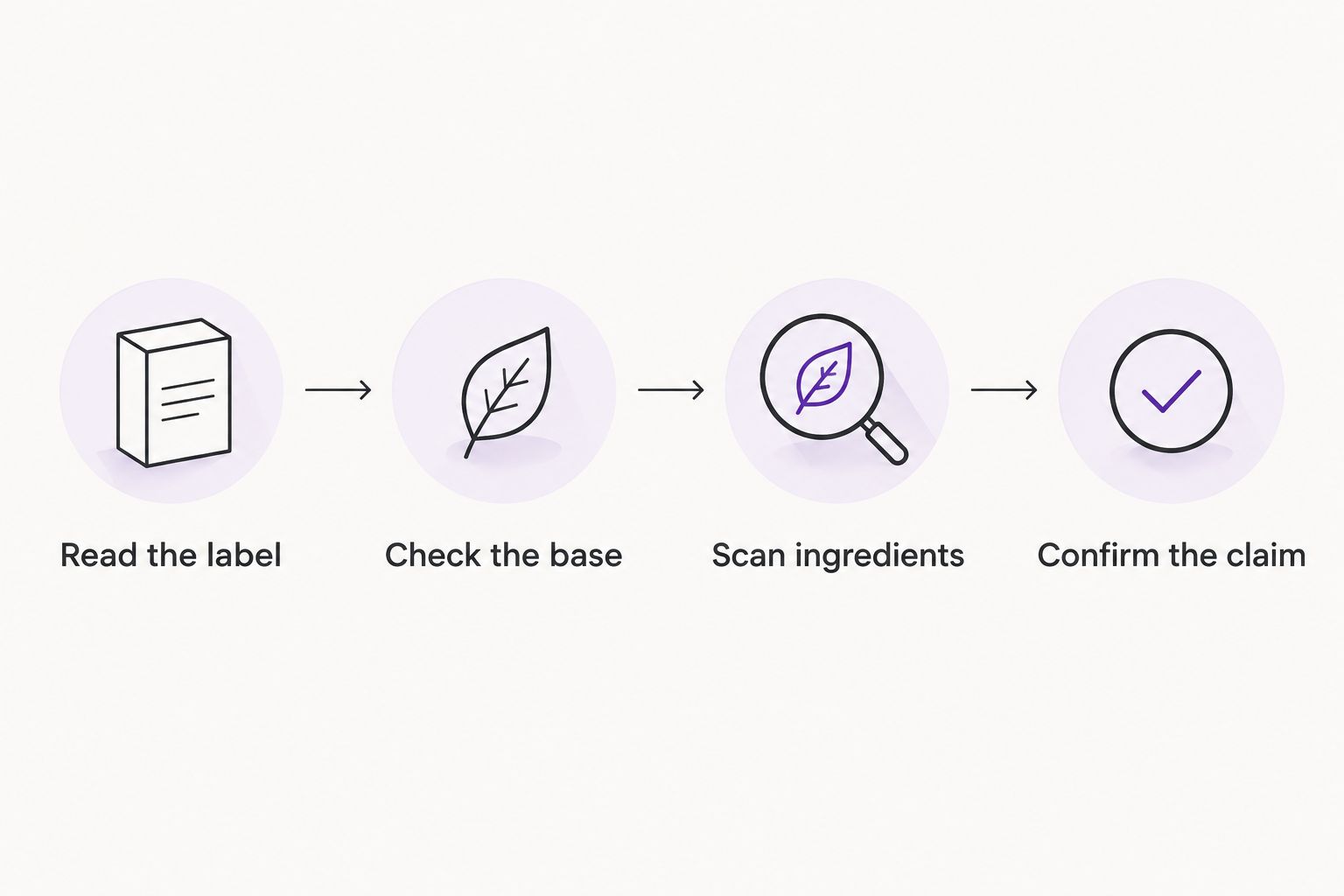
How do you check an apple cinnamon tea label?
Use this sequence whenever you buy a new blend. It works for loose leaf tea and tea bags, and it keeps flavor names from doing the work of an ingredient list.
- Read the label. Find the full ingredient list, not just the front-of-package flavor description. Apple cinnamon describes the taste, but it does not identify every ingredient.
- Check the base. Look for black tea, green tea, white tea, oolong, or matcha. Unless explicitly decaffeinated, these ingredients indicate a caffeine-containing drink.
- Scan ingredients. Check for other caffeine sources, including yerba mate and guarana. A fruit-forward name does not rule them out.
- Confirm the claim. Distinguish caffeine-free from decaffeinated. If the ingredients or caffeine statement are unclear, ask the seller before making the tea part of a strict caffeine-free routine.
The simplest rule is to read the ingredients and the caffeine statement together. A label that sounds soothing is not a substitute for either.
Why apple cinnamon tea’s caffeine content varies
Different recipes can use the same flavor name. The following factors explain why there is no single caffeine figure for every apple cinnamon tea:
- Tea base: A purely caffeine-free herbal recipe differs from one containing regular black or green tea.
- Additional ingredients: Yerba mate or guarana introduces caffeine even when the blend also contains fruit and herbs.
- Decaffeination: A decaffeinated tea base can retain caffeine; a naturally caffeine-free base does not begin with it.
- Amount of tea used: More caffeine-containing leaves in your brew can change how much caffeine reaches the cup.
- Brewing method: Water temperature and steeping time affect caffeine extraction from caffeine-containing leaves.
- Serving size: A larger serving can contain more total caffeine than a smaller serving of the same prepared drink.
The last three factors affect a blend that already contains caffeine. Brewing apple and cinnamon alone for longer does not create caffeine.
How should you brew apple cinnamon tea for evening sipping?
Start with a verified caffeine-free blend, then follow its package instructions for the amount of tea, water temperature, and steeping time. There is no universal brewing ratio for every apple cinnamon recipe because the ingredients and their sizes differ.
Use an infuser that lets water reach the ingredients without packing them tightly. After the recommended steep, remove the infuser and taste the tea before adding anything else.
If the cup tastes too strong, add a little hot water. If it tastes too weak, adjust your next brew within the package guidance rather than assuming every blend needs a long steep.
For your 2026 bedtime routine, keep the preparation simple: a familiar mug, a flavor you enjoy, and a caffeine-free ingredient list. The ritual can be pleasant without needing a health claim attached to it.
When serving someone else, ask about caffeine preferences and ingredient sensitivities. That small courtesy matters more than describing a drink as calming or healthy without knowing what the person needs.
Can you drink apple cinnamon tea before bed?
Caffeine-free apple cinnamon tea fits a bedtime routine when its ingredients suit you. It offers a warm fruit-and-spice drink without the caffeine found in a regular black or green tea version.
That does not establish a sleep benefit. A comfortable routine and a treatment for a sleep problem are different things; persistent sleep difficulties deserve appropriate medical advice.
Consider how much you drink near bedtime as well. Even a caffeine-free drink can interrupt your routine if you need to get up during the night to use the bathroom.
Does cinnamon cancel out caffeine in tea?
Cinnamon does not cancel out caffeine from black tea, green tea, or other caffeine-containing ingredients. It changes the flavor, not the tea’s caffeine status.
Adding more apple, cinnamon, milk, or water does not turn a caffeinated blend into a caffeine-free one. Diluting a drink changes its concentration, but drinking the entire diluted serving still includes the caffeine already present.
Is decaf apple cinnamon tea suitable if you avoid caffeine completely?
Decaf apple cinnamon tea is not the clearest choice for complete caffeine avoidance because residual caffeine can remain. Choose a clearly labeled, naturally caffeine-free blend instead.
For general adult guidance, the FDA cites 400 mg of caffeine per day as an amount not generally associated with negative effects for most adults. That is not a bedtime recommendation or a personal target, and individual sensitivity varies.
If a clinician has advised you to avoid caffeine, follow that advice rather than using a general adult guideline to decide what is suitable. During pregnancy, breastfeeding, or medication use, discuss relevant ingredients and caffeine limits with your healthcare professional.
FAQ
Is apple cinnamon tea caffeine-free if it comes in a tea bag?
Apple cinnamon tea in a tea bag is caffeine-free only when its ingredients contain no caffeine sources. The bag format does not determine caffeine content; check for tea leaves, yerba mate, guarana, and a clear caffeine statement.
Does loose leaf apple cinnamon tea have more caffeine?
Loose leaf apple cinnamon tea does not automatically have more caffeine than a tea-bag version. The ingredients, amount used, brewing method, and serving size determine the caffeine in a caffeine-containing blend.
Is apple cinnamon green tea caffeine-free?
Regular apple cinnamon green tea contains caffeine because green tea contains caffeine. A decaffeinated version can still contain residual caffeine, so it is not equivalent to a naturally caffeine-free herbal blend.
What is the best apple cinnamon tea for an evening drink?
A clearly labeled, naturally caffeine-free apple cinnamon blend is the best fit when your evening goal is avoiding caffeine. Choose ingredients you enjoy and follow the package’s brewing instructions rather than relying on bedtime wording.
Does apple cinnamon tea need sugar?
Apple cinnamon tea does not need added sugar. Taste the brewed tea first and decide whether its fruit-and-spice flavor suits you as it is; ingredients and flavor differ between blends.
Can children drink caffeine-free apple cinnamon tea?
A caffeine-free label alone does not establish that an apple cinnamon blend is suitable for a child. Check all ingredients and ask the child’s healthcare professional if you are unsure, especially for a blend marketed for health effects.
How do I choose a caffeine-free blend from Tea The World?
When choosing loose leaf tea from Tea The World, read the individual blend’s ingredients and caffeine statement. Apple, cinnamon, or another fruit flavor in the name does not confirm that the blend is caffeine-free.
One last thing
Save the ingredient list, not just the flavor name. For your 2026 shopping notes, a quick photo of the package helps you remember which apple cinnamon blend actually met your caffeine preferences.
The next time you replace it or choose a gift, check again. A matching flavor name is not proof of a matching recipe, and thoughtful evening tea starts with knowing what is in the cup.
Related guides
- Passion fruit tea: choosing herbal blends or black tea
- Chamomile loose leaf tea vs. tea bags: flavor and convenience
- Tea infuser basket vs. tea ball for loose leaf tea
- Caffeine-free tea gift sets for evening sipping
By Ricardo R Matos