
Is organic loose leaf tea worth the extra cost in 2026?
Posted by Ricardo R. Matos, Founder of Tea The World on Nov 6th 2026
Organic loose leaf tea is worth the extra cost in 2026 when you want verified organic production standards, not a guarantee of better flavor or greater health benefits. Certification does not tell you how fresh the tea is, how much caffeine it contains, or whether you will enjoy it, so judge those qualities separately before buying.
- Is organic loose leaf tea worth it? Yes for verified production standards; certification alone does not establish better flavor.
- USDA organic labeling distinguishes certified organic products from blends made with some organic ingredients.
- Tea The World sells loose leaf teas, herbal blends, and brewing accessories; check each product’s ingredients and certification.
- For bedtime tea, choose a caffeine-free ingredient list rather than relying on an organic or fruit-flavored label.
By Ricardo R Matos
Why this matters
A tea label tells several different stories. Organic describes production standards; loose leaf describes the tea’s format. Neither term tells you everything about the cup you will brew.
Start with the flavor and routine you want, then decide whether certification matters enough to influence your choice. For example, the chamomile loose leaf tea versus tea bags guide addresses a format decision that an organic label cannot settle.
Pay extra for a standard you value, not for benefits the label does not establish. That distinction keeps your 2026 tea shopping focused on what you can verify and what you actually enjoy.
Is organic loose leaf tea worth the extra cost in 2026?
Organic loose leaf tea is worth choosing when certified production practices are part of your buying criteria. It is not automatically the better choice when your main priorities are flavor, convenience, or an evening drink without caffeine.
Compare the options by what they offer, rather than treating organic as a universal quality grade:
| Option | Best for | What it offers | What it does not establish |
|---|---|---|---|
| Certified organic loose leaf tea | Drinkers who prioritize organic production standards | Certification under the applicable organic rules, with a loose leaf format | Better flavor, freshness, or a health advantage |
| Loose leaf tea without an organic claim | Drinkers choosing primarily by taste and ingredients | A loose leaf option evaluated on its own product information | Verified organic status without certification |
| A blend made with organic ingredients | Drinkers comfortable with a partly organic blend | A regulated ingredient claim when it meets USDA requirements | That the entire blend qualifies as organic |
The limitation of certified organic tea is straightforward: certification answers one purchasing question, not all of them. A tea can meet organic standards and still have a flavor you dislike. A tea without an organic claim can suit your palate, but you should not assume it was produced under certified organic standards.
For a useful comparison, choose teas with similar ingredients and styles. Comparing a plain green tea with a sweet-smelling herbal blend tells you more about your flavor preferences than about organic production.
What do organic tea labels actually mean?
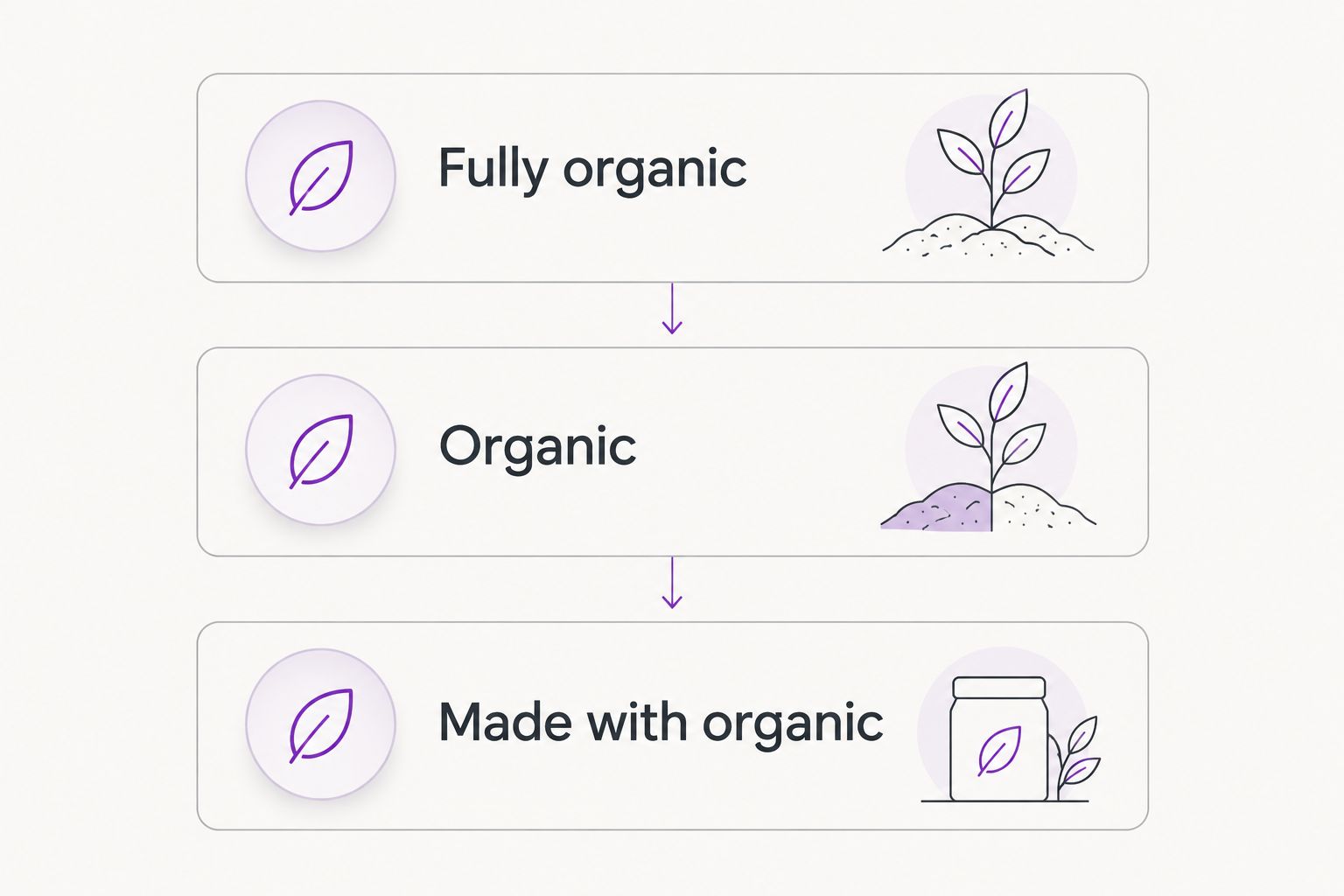
For U.S. shoppers in 2026, USDA labeling categories provide a more reliable starting point than broad language about natural ingredients. The USDA National Organic Program and its labeling rules, including 7 CFR § 205.301, distinguish these claims by composition.
The following percentages exclude water and salt. They describe ingredient requirements, not measured differences in taste or nutritional value.
| Label category | Ingredient requirement | What to check |
|---|---|---|
| Fully organic: labeled “100 percent organic” | 100% organic ingredients | The certification information supporting the claim |
| Organic | At least 95% organic ingredients | Certification and the full ingredient list |
| Made with organic ingredients | At least 70% organic ingredients | Which ingredients are organic; this category cannot carry the USDA organic seal |
Under USDA rules, the organic category requires at least 95% organic ingredients. The remaining ingredients must meet the applicable rules; this is not permission to add anything a manufacturer chooses.
The made-with category requires at least 70% organic ingredients. It is a different claim from labeling the finished blend organic, even when the packaging prominently names an organic herb or tea leaf.
Read the category first, then check the certifier information. Natural, botanical, and loose leaf are not substitutes for organic certification. A statement about one ingredient also does not establish the status of every other ingredient in a blend.
Certified organic tea: best for production priorities
Choose certified organic tea when you want a purchasing standard that extends beyond the flavor description. USDA organic rules cover production and handling practices, including restrictions on substances used in production.
The benefit is verified adherence to organic standards. That is a meaningful reason to choose a product without turning it into a claim about a cleaner body, better sleep, or a tastier cup.
The trade-off is that you still need to inspect the ordinary tea details. Look for a clear ingredient list, storage instructions, and brewing guidance. If those details do not answer your questions, the organic seal cannot fill the gap.
Organic also does not mean pesticide-free. Organic production permits certain substances under its rules, so avoid treating certification as a promise that no pesticides were used.
Tea without an organic claim: best for taste-led selection
A tea without an organic claim remains an option when flavor and ingredients lead your decision. Evaluate what the seller actually states instead of assuming that the absence of certification proves poor quality.
Your advantage is the freedom to compare teas on the qualities you drink: aroma, bitterness, body, and the flavor of the ingredients. The limitation is equally clear: without a supported certification claim, you do not have verified organic status.
Do not reverse the assumption either. A seller’s reassuring description is not evidence that an uncertified tea meets organic requirements. Choose it because it fits your stated priorities, not because you have mentally supplied a certification it does not claim.
Blends made with organic ingredients: best for label-aware buyers
A blend made with organic ingredients can fit your preferences when you understand the scope of the claim. Under USDA rules, this category requires at least 70% organic ingredients, excluding water and salt.
The useful feature is specificity: the label can identify organic ingredients without presenting the whole product as organic. The limitation is that some ingredients are not organic, and the finished product does not qualify to display the USDA organic seal under this category.
For fruit, flower, and spice blends, read the entire ingredient list. The tea base matters as much as the flavor named on the front, especially when you want to avoid caffeine.
Why the value of organic tea varies
The same organic label can matter greatly to one tea drinker and very little to another. Your decision becomes easier when you separate these factors:
- Certification priority: If verified organic production is essential to you, an unsupported organic impression is not an equivalent alternative.
- Ingredient composition: A plain tea and a mixed herbal blend need different label checks. One organic ingredient does not establish the whole blend’s status.
- Flavor preference: Choose the tea style you enjoy. Certification does not identify your preferred level of bitterness or floral aroma.
- Caffeine needs: Organic black and green tea still contain caffeine. An evening choice depends on ingredients, not production status.
- Brewing habits: Follow the tea’s preparation guidance before deciding whether the leaves suit you. An unsuitable brew can obscure the comparison.
For your 2026 buying decision, put these factors in order. If caffeine-free evening sipping comes first, eliminate caffeinated bases before comparing certification. If organic production comes first, verify the claim before considering flavor descriptions.
How do you compare organic and other loose leaf teas fairly?
A fair comparison starts with similar teas and consistent preparation. You are trying to learn which cup you prefer, not prove that one label always wins.
- Match the ingredients. Compare similar tea styles or herbal ingredients. A plain black tea and a chamomile blend answer different drinking needs.
- Read the labels. Note the ingredient list, organic claim, and certification information before brewing.
- Follow brewing guidance. Use each tea’s stated instructions rather than imposing one preparation method on every leaf and herb.
- Taste without additions. If you normally add milk or sweetener, first taste the plain infusion so you can recognize the underlying flavor.
- Record your preference. Describe what you noticed: floral, grassy, malty, minty, bitter, or light. Keep certification as a separate decision.
Use an infuser that gives the leaves room to open and retains the material you are brewing. Brewing equipment affects your experience, but it does not change whether a tea qualifies as organic.
Tea The World is best for tea drinkers shopping for loose leaf teas, herbal blends, and brewing accessories together. Treat that selection as a starting point, then check the individual product information; the shop’s range does not establish organic certification for every item.
Is organic loose leaf tea healthier than other tea?
Organic certification does not establish that a tea produces better health outcomes than a comparable tea without certification. USDA organic standards concern production and handling, not clinical proof that a beverage improves your health.
Keep wellness decisions separate from label decisions. Traditional use is not the same as evidence from human research, and a claim about an herbal extract does not automatically apply to a brewed cup.
For health-focused tea shopping in 2026, avoid promises about detoxification or curing symptoms. Tea can be part of a pleasant routine, but it should not replace prescribed treatment or medical assessment.
Is organic tea better for bedtime?
Organic tea is not automatically better for bedtime because certification does not remove caffeine. Black, green, white, and oolong teas come from the tea plant and contain caffeine, including when they are certified organic.
For a caffeine-free evening drink, inspect the complete ingredient list. Pure chamomile and pure peppermint are naturally caffeine-free, but a blend containing either herb can also contain caffeinated tea leaves.
Choose an evening cup for its ingredients and a flavor you find comfortable. Organic status can be an additional preference; it is not evidence that the drink treats insomnia.
Can organic herbal tea still need safety checks?
Organic herbal tea still needs ingredient-specific safety checks. Certification does not rule out allergies, medicine interactions, or an ingredient that is unsuitable for your circumstances.
The National Center for Complementary and Integrative Health’s chamomile guidance identifies allergy concerns, particularly for people sensitive to related plants, and discusses possible medicine interactions. Consult a clinician or pharmacist if you take medicines, are pregnant or breastfeeding, or are choosing herbal tea for a child.
For peppermint, do not transfer findings about concentrated peppermint oil to brewed peppermint tea. They are different preparations, and an organic label does not make their evidence interchangeable.
FAQ
Is organic loose leaf tea worth it for everyday drinking?
Organic loose leaf tea is worth it when verified organic production standards matter to your everyday purchases. If taste is your main priority, compare similar teas and keep certification separate from your flavor preference.
Does organic loose leaf tea always taste better?
Organic loose leaf tea does not come with a guarantee of better taste. Ingredients, storage, preparation, and your preferences still determine whether you enjoy the cup.
What percentage of a tea blend must be organic?
A tea blend labeled organic under USDA rules must contain at least 95% organic ingredients, excluding water and salt. The made-with-organic category requires at least 70% and cannot display the USDA organic seal.
Does organic tea mean no pesticides were used?
Organic tea does not mean no pesticides were used. USDA organic rules restrict production substances but permit certain substances under their requirements.
Is organic green tea caffeine-free?
Organic green tea is not caffeine-free simply because it is organic. Check the product’s ingredient and caffeine information when selecting tea for the evening.
Can I choose organic tea to treat a health condition?
Organic certification is not evidence that a tea treats a health condition. Discuss herbal ingredients with a qualified clinician when symptoms, medicines, pregnancy, or other safety concerns are involved.
Does Tea The World sell only organic tea?
Check each Tea The World product’s stated certification rather than assuming every tea is organic. A retailer’s loose leaf and herbal selection does not establish the certification status of individual products.
One last thing
Before your next 2026 tea purchase, write down the reason you want organic: production standards, flavor, or wellbeing. Only the first is directly answered by organic certification.
Then choose a cup you want to return to. A clear label and an enjoyable brewing routine are more useful than expecting one word on the package to answer every question.