
Passion fruit tea with milk: which blends work best?
Oct 15th 2026
Passion fruit tea works best with milk when it has a black tea base and gets its fruit character from flavoring rather than a sour fruit infusion. For your 2026 tea cupboard, choose by ingredients: hibiscus, citrus juice, added acids, and passion fruit juice make a smooth milk mixture harder to achieve.
- Passion fruit tea with a black tea base is the best starting point for a creamy cup.
- Hibiscus and added fruit juice can make dairy milk separate; enjoy tart blends without milk.
- Green tea blends need a light hand with milk so their delicate flavor stays noticeable.
- Tea The World suits loose leaf tea drinkers and tea accessory shoppers; check each blend’s ingredients before choosing.
Why this matters
A passion fruit name tells you the intended flavor, not the tea base or how the drink behaves with milk. One blend can be fragrant black tea; another can be a tart mixture of hibiscus and fruit. Those are different starting points for your cup.
Tea The World sells loose leaf teas, herbal blends, and tea accessories. When choosing a blend for milk, let the ingredient list guide you rather than the fruit name or the color of the brewed tea.
For a 2026 shopping decision, the useful distinction is simple: fruit aroma and fruit acidity are not the same thing. You can enjoy a tropical scent in a creamy tea without adding sour juice.
Passion fruit tea with milk: which blends work best?
A passion fruit-flavored black tea without strongly acidic ingredients is the best starting point. Black tea brings a fuller tea flavor that remains noticeable after you add milk. The result still depends on the actual blend, so test a small amount before mixing a full cup.
| Blend or preparation | Best for | What works | What to watch |
|---|---|---|---|
| Passion fruit-flavored black tea | A fuller milk tea | The tea base remains noticeable alongside milk | Fruit acids or hibiscus can still cause separation |
| Passion fruit-flavored green tea | A lighter, lightly milky cup | Gentle fruit and tea aromas | Too much milk can hide the delicate flavor |
| Hibiscus-led passion fruit herbal blend | A tart drink without milk | Bright acidity and fruit character | Dairy can curdle in an acidic infusion |
| Tea mixed with passion fruit juice | A refreshing fruit tea without milk | A direct fruit flavor | The juice adds acidity that complicates dairy mixing |
These are blend types, not verified products from a particular shop. Read the full ingredient list before treating any passion fruit tea as suitable for milk or as caffeine-free.
For more help identifying the base, see the guide to passion fruit tea: herbal blends or black tea. The base determines your brewing approach; acidic ingredients determine whether milk is a sensible addition.
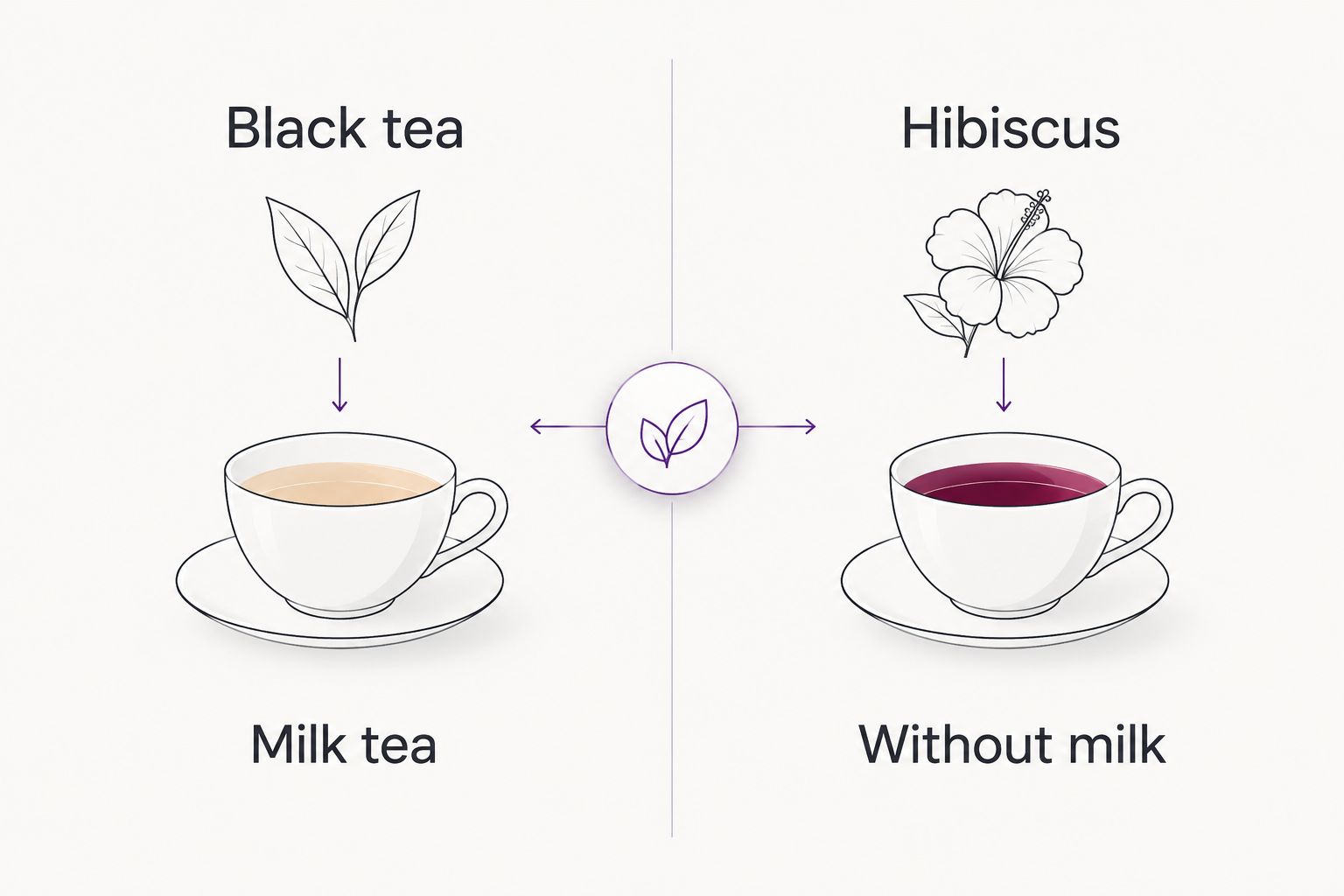
Black tea blends: the best starting point for milk
Choose a blend that lists black tea and passion fruit flavoring, then check for additional fruit ingredients or acids. Flavoring alone does not establish the acidity of the finished drink, but it is a different ingredient from a generous addition of sour juice.
The advantage is balance: black tea gives the milk something substantial to sit alongside. The drawback is that milk softens both the tea’s briskness and its fruit aroma. Add it gradually, stopping while you can still taste the passion fruit character.
Best for: everyday milk tea drinkers who want fruit fragrance without turning the cup into a juice drink. Skip this option for a caffeine-free bedtime routine because black tea contains caffeine.
Green tea blends: use milk sparingly
A passion fruit-flavored green tea can work if you want a lighter cup and the ingredients are not strongly acidic. Start with a small splash of milk rather than treating the drink like a latte.
Green tea’s gentler flavor is its appeal and its limitation. Milk can make the cup feel softer, but it can also leave little of the tea or fruit aroma behind. If the blend tastes balanced on its own, leaving it plain is a good choice.
Best for: drinkers who prefer delicate tea and only a little creaminess. Green tea contains caffeine, so a fruit-flavored green blend is not automatically an evening alternative.
Hibiscus and fruit infusions: better without dairy
If hibiscus is prominent in the ingredient list, start by tasting the infusion without milk. Hibiscus contributes tartness, and acidic drinks can destabilize dairy proteins, creating visible flakes or a separated texture.
A bright red infusion is not proof that hibiscus is present; ingredients are the reliable check. Also look for citrus juice, passion fruit juice, and added acids rather than assuming every dried-fruit blend behaves identically.
Best for: drinkers who enjoy a tangy hot or iced cup without milk. A purely herbal blend can suit a caffeine-free routine, but check for black tea, green tea, yerba mate, or other caffeine-containing ingredients.
Why passion fruit tea behaves differently with milk
The name on the packet cannot predict the finished texture. These factors explain why one blend mixes smoothly and another separates:
- Tea base: Black tea usually retains more of its character after milk is added; a delicate green tea can become muted.
- Acidic ingredients: Hibiscus, fruit juice, and added acids can encourage dairy proteins to clump.
- Milk choice: Dairy and plant-based drinks have different compositions. A plant-based label does not guarantee resistance to separation.
- Temperature: Heat affects protein stability. Adding milk to a very hot acidic drink can make separation more noticeable.
- Proportion: More milk softens the flavor; more sour juice changes the balance and increases the challenge of keeping dairy smooth.
The University of Guelph’s Dairy Science and Technology educational material explains acid coagulation of milk proteins. That food-science principle explains the curdling risk here; it does not establish that every passion fruit blend has the same acidity.
Changing the ingredients is more dependable than changing the pouring order. If the tea is strongly sour, cooling it or pouring slowly does not remove that acidity.
How do you make passion fruit tea with milk?
Brew the tea for its base, strain it, and test the milk in a small portion first. You do not need a complicated recipe to find out whether a blend works.
- Read ingredients. Identify black tea, green tea, or an herbal base. Look separately for hibiscus, fruit juice, and added acids.
- Brew the base. Follow the packet’s instructions for leaf quantity, water temperature, and steeping time. Do not use black tea instructions for every blend.
- Strain fully. Remove the leaves before adjusting the drink. Leaving them in makes the tea continue to steep while you experiment.
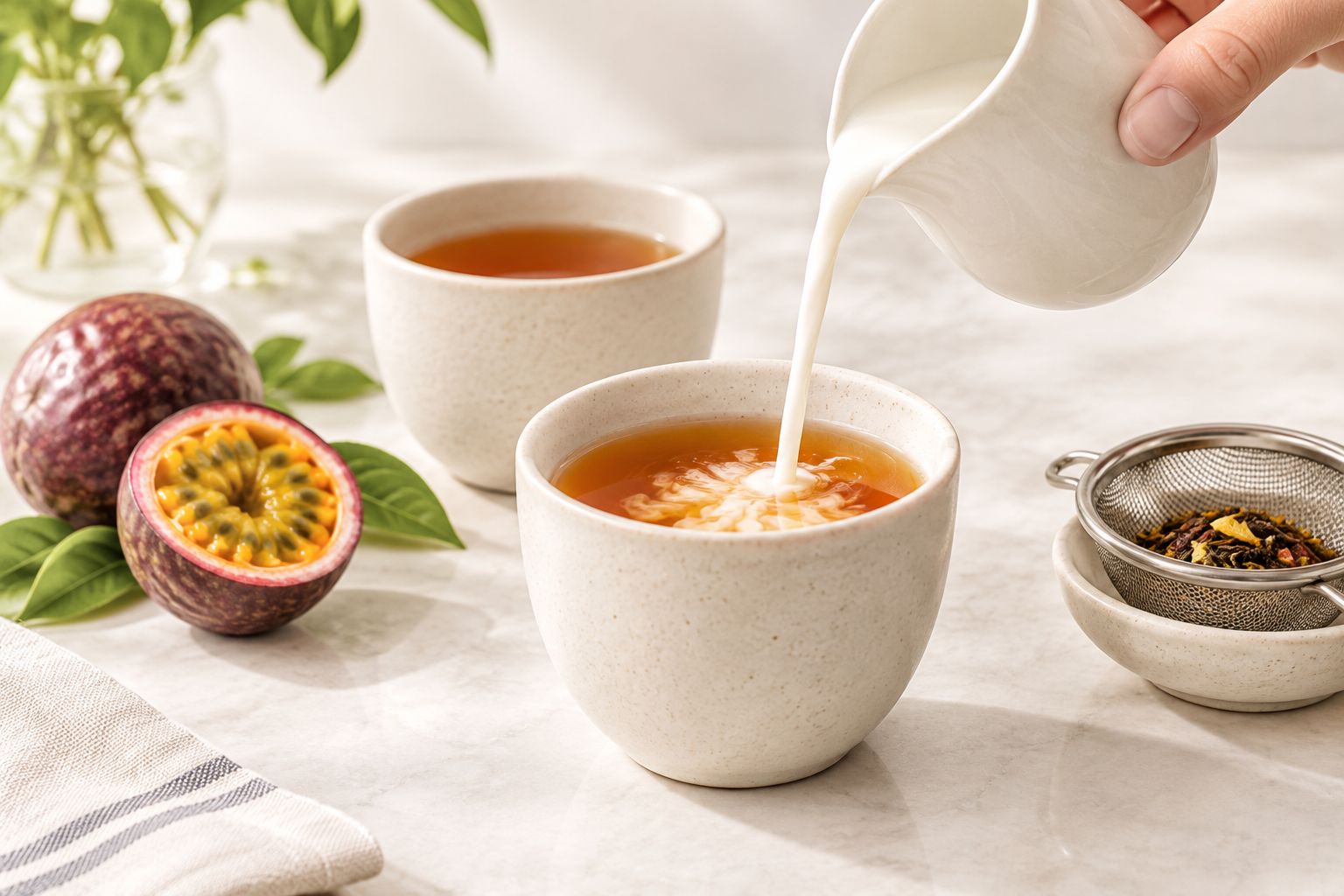
- Test milk. Pour a small portion into a separate cup, let it cool slightly, and stir in a little milk. Watch for flakes or separation.
- Adjust flavor. If the test stays smooth, add milk gradually to the remaining tea. Taste before adding anything sweet.
As a general brewing reference for this 2026 guide, the Tea Association of the U.S.A.’s consumer guidance uses boiling water and a 3–5 minute steep for black tea. At sea level, water boils at 100°C, or 212°F. Your blend’s own directions take priority, particularly when it includes other ingredients.
A longer steep is not the best fix for a cup that tastes weak after milk. It can increase bitterness and astringency. Next time, adjust the amount of tea according to the packet rather than leaving the leaves soaking indefinitely.
Making an iced version
For iced passion fruit milk tea, brew and strain the tea before cooling it. Test the milk after the tea has cooled, then add ice once the mixture tastes balanced.
Cooling reduces the heat involved in mixing, but it does not neutralize fruit acids. A sour infusion that separates with dairy when hot can still separate when cold. Do not mistake a brief smooth appearance for proof that every ingredient combination will remain stable.
Keep milk-containing tea refrigerated rather than leaving it on the counter. Follow the milk’s storage instructions, and use clean cups and utensils when preparing the drink.
Which milk should you use?
Use the milk you already enjoy, then test it with the actual tea. There is no single dairy or plant-based choice that makes every acidic passion fruit blend stable.
Dairy milk adds creaminess but is vulnerable to acid-driven curdling. Plant-based drinks avoid dairy, yet their proteins and other ingredients can also respond to heat and acidity. Read the carton rather than assuming an oat, soy, or almond drink will always behave the same way.
Milk also changes flavor. A strongly flavored plant-based drink can compete with the tea’s fruit notes; a sweetened version changes the balance before you add anything else. For a useful comparison, keep the tea preparation consistent and change only the milk.
If you need to avoid an allergen, check both the tea ingredients and the milk packaging. A tropical flavor name tells you nothing about allergen suitability.
Is passion fruit tea with milk suitable before bed?
Passion fruit tea suits a caffeine-free bedtime routine only when the complete blend contains no caffeine-containing ingredients. Black and green tea remain caffeinated even when their fruit flavor is the most noticeable part of the cup.
For your 2026 evening routine, choose by ingredients rather than by claims about fruit or relaxation. A warm drink can be an enjoyable ritual, but passion fruit tea is not a treatment for insomnia, anxiety, or digestive illness.
Tea The World sells herbal blends as well as loose leaf teas. Check an individual blend’s ingredients before choosing it for evening sipping, and enjoy a tart herbal option without milk if that gives you the better cup.
Why does milk curdle in passion fruit tea?
Milk curdles in passion fruit tea when acidity destabilizes its proteins; heat can contribute to the problem. The result is often visible clumps or a watery-looking separation instead of a smooth drink.
Acid-related curdling is different from milk spoilage, but appearance alone cannot confirm safety. Use properly stored milk within its labeled guidance. If its smell or condition is questionable, discard it rather than trying to hide it in tea.
If fresh milk repeatedly separates in the same blend, serve that blend without milk. You do not need to rescue every fruit tea as a creamy drink.
FAQ
What's the best passion fruit tea to drink with milk?
A passion fruit-flavored black tea without strongly acidic ingredients is the best starting point for milk. Check for hibiscus, fruit juice, and added acids, then test a small portion before mixing the full cup.
Can I add milk to hibiscus passion fruit tea?
Hibiscus passion fruit tea is better enjoyed without dairy because its acidity can make milk separate. Cooling the tea does not remove the acidity.
Is passion fruit tea caffeine-free?
Passion fruit tea is caffeine-free only when all its ingredients are caffeine-free. Blends containing black tea, green tea, or yerba mate contain caffeine despite their fruit flavor.
Can I use oat milk instead of dairy milk?
You can try oat milk, but it is not guaranteed to stay smooth in acidic passion fruit tea. Test the particular oat drink and tea together before preparing a full serving.
Should I add fresh passion fruit juice to milk tea?
Fresh passion fruit juice is a poor starting point for a smooth dairy milk tea because it adds acidity. Use it in tea without milk if you want a direct, tangy fruit flavor.
How long should I steep a black tea passion fruit blend?
A 3–5 minute steep is a general black tea reference, but follow the blend's own brewing directions. Strain the leaves before adding milk so the tea does not continue steeping.
How do I choose a passion fruit blend from Tea The World?
Choose a Tea The World blend by its listed tea base and full ingredients, not by the fruit name alone. For milk tea, look for a black tea base and check separately for ingredients that add acidity.
One last thing
For your next 2026 brew, taste the passion fruit tea plain before reaching for milk. If the pleasure of the cup is its bright, sour finish, milk works against that character rather than improving it.
Keep tart fruit tea tart; choose a fuller tea base when you want creaminess. That small decision matters more than an elaborate recipe.